





Julio Aguirre-Ghiso, Rose C. Falkenstein Chair in Cancer Biology at Albert Einstein College of Medicine shared a post on LinkedIn:
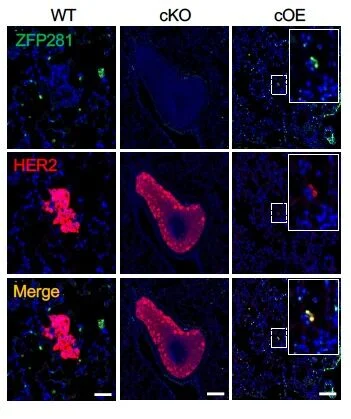
“Thrilled to share our new preprint developed at our Cancer Dormancy Institute. Montefiore Einstein Comprehensive Cancer Center on how enforcing the dormancy gatekeeper ZFP281 can provide long‑term, even lifelong, suppression of breast cancer metastasis by uncoupling dissemination from outgrowth and locking disseminated cancer cells into a durable dormant state.
We show that sustained ZFP281 expression not only restrains HER2‑driven tumor initiation but also maintains a metabolically fit, angiogenesis‑low, immune‑evasive dormant state in disseminated cancer cells, preventing their reactivation into lethal metastases across the lifespan of the mouse. By integrating ZFP281‑regulated mesenchymal‑like and dormancy signatures with METABRIC and DCIS cohorts, we find that these programs are selectively enriched in human breast lesions that relapse late and in DCIS lesions prone to invasive recurrence, linking dormancy mechanisms to human relapse dynamics.
Huge congratulations to first author Deepak Singh and all co‑authors, including David Entenberg and Deyou Zheng and also to Christina Curtis and Artem Lomakin for leading the human relapse and signature analyses, and to Jianlong Wang for foundational insights into ZFP281 biology that enabled this work.”
Title: Enforced ZFP281 expression delays breast cancer initiation and can provide lifelong protection against breast cancer metastasis
Authors: Deepak Kumar Singh, Hongwei Zhou, Nyima Sherpa, Xiang Yu Zheng, Artem Lomakin, Pedram Razghandi, Xin Huang, Rama Kadamb, Suryansh Shukla, Luis E Valencia Salazar, David Entenberg, Deyou Zheng, Christina Curtis, Jianlong Wang, Julio A. Aguirre-Ghiso.
Other articles featuring Julio Aguirre-Ghiso on OncoDaily.