






Joshua Omale, Pediatric Oncology Advocate, Innovation Council Member at Coalition Against Childhood Cancer (CAC2), shared a post on LinkedIn:
“As World Immunization Week comes to a close, one thing stands out clearly:
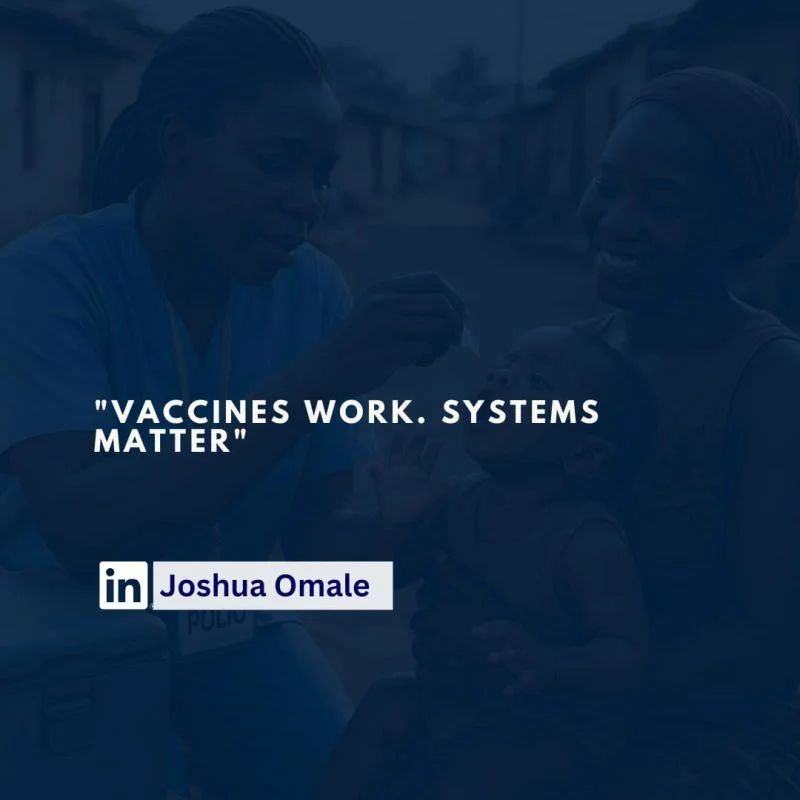
Vaccines are not just about prevention, they are one of the strongest expressions of a functioning health system.
For over 50 years, immunization has saved more than 150 million lives. That is not just science. That is structure. That is systems working – reaching communities early, consistently, and equitably.
But beyond infectious diseases, vaccines also sit at the intersection of long-term health outcomes. The HPV vaccine, for example, represents one of the clearest links between immunization and cancer prevention, protecting against cancers that would otherwise emerge years later.
In many underserved settings, the same gaps that affect immunization also affect other critical areas of care, including childhood cancer.
When systems struggle with:
- Early access
- Community-level awareness
- Continuity of care
The consequences go beyond missed vaccines. They show up in delayed diagnoses, missed warning signs, and late presentation of conditions where timing matters deeply.
This is why strengthening health systems cannot happen in silos.
The same pathways that deliver vaccines effectively – trust, early contact with care, and strong primary health systems, are the same pathways that can support earlier recognition and referral for childhood cancer.
Young people also have a critical role to play here, not just as beneficiaries of immunization, but as drivers of awareness, trust, and community-level engagement.
As we think about the future of health, especially for children, the focus must remain clear:
Not just building new solutions, but strengthening the systems that make timely care possible.
Because when systems work early, outcomes change.”
Other articles featuring Joshua Omale on OncoDaily.