





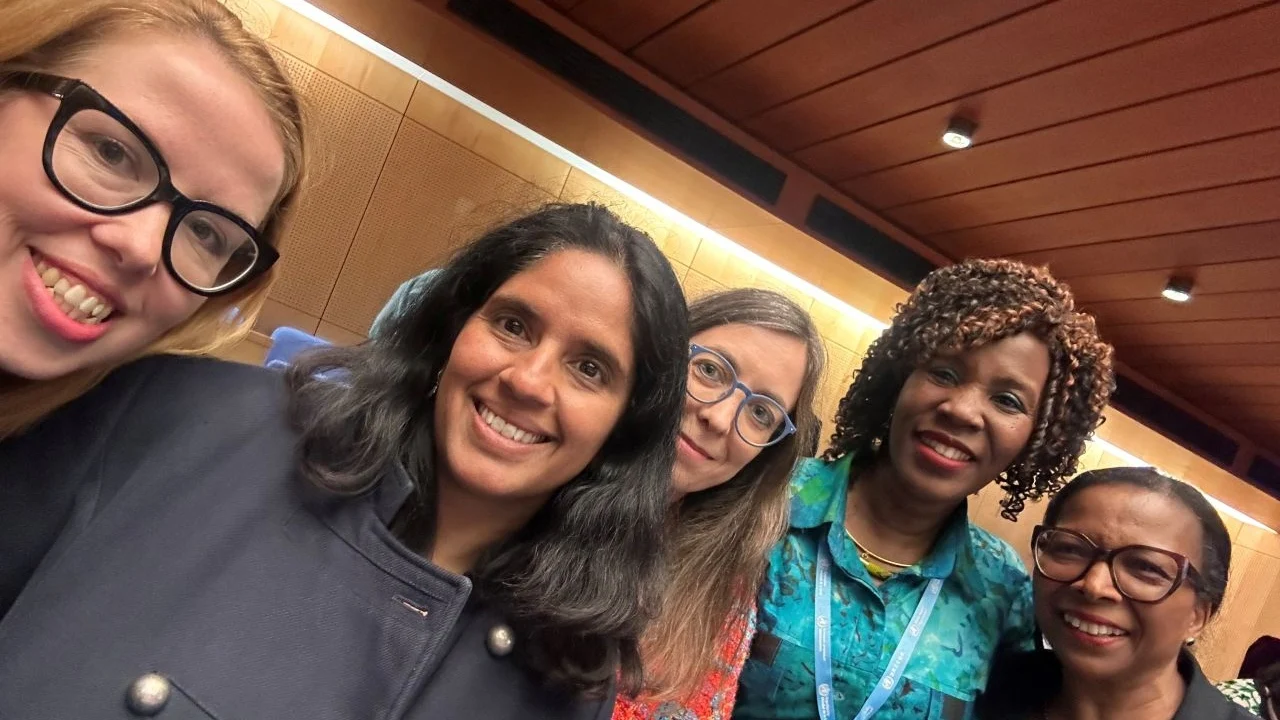
Hayley Jones, Director at McCabe Centre for Law and Cancer, Co-Chair at Australian WHO Collaborating Centre Network, shared a post on LinkedIn:
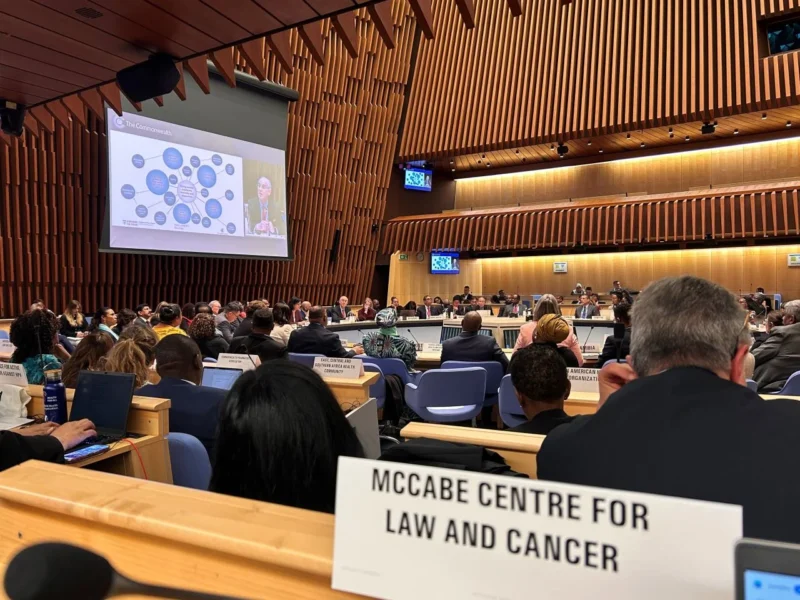
“The first Commonwealth Health Coordination Forum held in Geneva yesterday brought to the front of my mind both the scale of the challenge and the opportunity of strength in diversity which we can draw on.
Across 56 member states and 2.7 billion people, the Commonwealth already accounts for 14.3% of global cancer cases, with 1.6 million new cases recorded in 2020 and more than 3.3 million projected annually by 2050.
Across sub-Saharan Africa and South Asia, rapid urbanisation, population ageing, tobacco consumption, and persistent infection-related cancers are accelerating incidence rates. At the same time, we see profound inequalities in survival, infrastructure, financing, and workforce capacity shaping outcomes across the Commonwealth.
As highlighted by Dr. Rifat Atun and the Lancet Commission on Cancer in the Commonwealth, the policy challenge is therefore no longer whether cancer should be prioritised, but how countries can respond at the scale and speed required.
At the Forum, which was attended by Health Ministers and high-level officials from Commonwealth countries and civil society representatives, we heard from Small Island Developing States, who emphasised that the challenge is not necessarily the absence of policy frameworks, it is ensuring sustainable implementation.
Razmi Farook, Director-General of the Commonwealth Foundation, emphasised the role of civil society in bringing forward the voices of people with lived experience. The galvanising presentation from Dr. Miriam Mutebi, MD,MSc,FACS on the pathway to cervical cancer elimination launched a new toolkit to support countries and highlighted that we have the tools – did we act, or did we not?
A number of countries highlighted the need for legal interventions to support action on cancer, including health taxes, cancer registries, and stronger patient rights. The UK’s new Tobacco-Free Generation law was rightly celebrated, as were European examples of ‘right to be forgotten’ laws that help protect cancer survivors from financial discrimination.
A powerful intervention from Dr. Tom Frieden of Resolve To Save Lives reinforced that taxes on unhealthy products like tobacco, alcohol, and sugary drinks are among the highest-impact interventions available. And as the McCabe Centre for Law & Cancer’s training programs show, building the legal capacity of government lawyers and policymakers is essential if countries are to turn ambition into action.
Registration is now open for our next online course on using law for NCD prevention and control — government representatives from Commonwealth countries are welcome to join.
As Sir Jeremy Farrar said, ‘Everyone in this room has power and agency. Use it.'”
Other articles featuring Hayley Jones on OncoDaily.