






Global Colon Cancer Association shared a post on LinkedIn:
“Not all biomarker tests in colorectal cancer ask the same question.
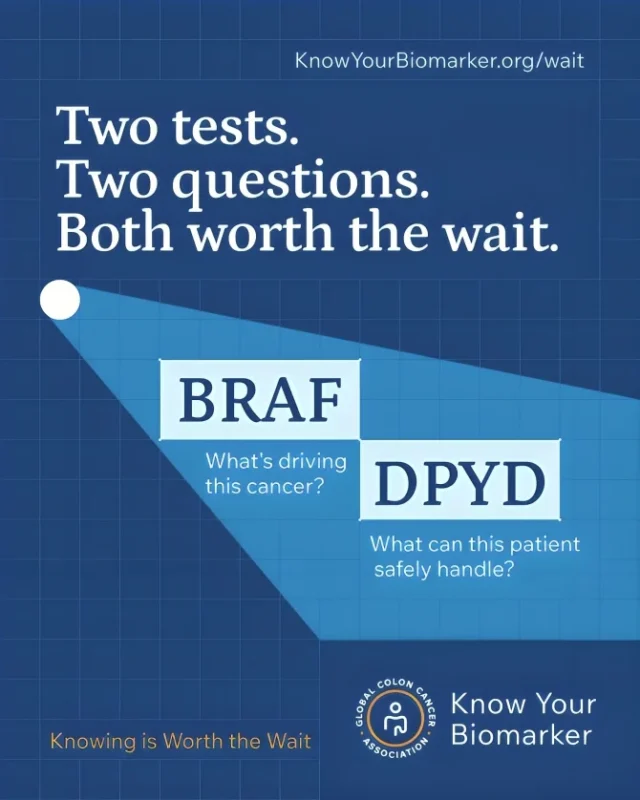
Some tests test the tumor. Like testing for BRAF to see whether the cancer carries a mutation driving aggressive growth and whether targeted therapies might be beneficial. BRAF is tested in tumor tissue or a liquid biopsy. Present in 10–15% of colorectal cancers.
Some tests test the patient. DPYD testing reveals whether a patient can safely metabolize fluoropyrimidine chemotherapy — 5-FU, capecitabine, FOLFOX. Tested in blood or saliva. It has nothing to do with the tumor’s genetics. A DPYD variant affects 2–8% of the global population, and patients who carry one face a significantly elevated risk of severe toxicity at standard doses.
Both are guideline-recommended. Both are underutilized. And both are underutilized for different reasons, in different populations, at different points in the treatment pathway.
Precision oncology is not one test. It’s knowing which question each test answers and making sure both get asked. This is what “Knowing Is Worth The Wait” looks like in practice. Waiting for the right test results before the next treatment decision.
Learn more about BRAF, DPYD, and the full spectrum of colorectal cancer biomarkers at here.
In your practice, which of these two tests are patients less likely to have received before treatment begins and why?”
Other articles from Global Colon Cancer Association on OncoDaily.