






France Dube, Director of Global Oncology Policy, Precision Medicine and Breast Cancer at AstraZeneca, shared a post on LinkedIn:
”Over the past decade, progress in breast cancer has accelerated, driven by advances in precision medicine coupled with increasingly sophisticated diagnostic tools.
However, breast cancer remains an urgent and growing global health challenge, as the most common cancer of women and a leading cause of cancer-related death worldwide.
Increasingly, it is also extending beyond a clinical issue and driving significant economic, societal and health system impact.
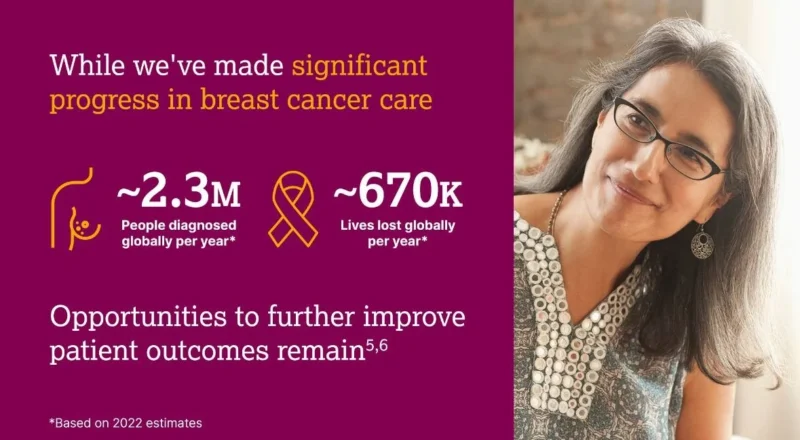
As incidence rises, so too does the pressure on already stretched healthcare systems, workforces and economies.
While scientific innovation is helping to redefine what is possible, too many patients still face barriers to care.
Against this backdrop, the World Health Assembly (WHA) convened this month. A critical moment to translate global ambition into coordinated and measurable action, working alongside the World Health Organization, City Cancer Challenge (C/Can) and partners to strengthen health systems and expand equitable access to breast cancer care.
The implementation gap
Five years into the WHO Global Breast Cancer Initiative (GBCI), there has been important progress in understanding what drives better outcomes in breast cancer beyond innovation alone.
As the WHO-C/Can collaboration marks three years since launch and enters Phase II, I have seen that early implementation efforts are already demonstrating how locally led approaches can improve timely diagnosis, expand access to biomarker testing, strengthen coordinated care, and support patient outcomes across health systems.
We know that early detection can improve survival.
Guideline-based care can lead to improved health outcomes.
And coordinated and navigated assisted care pathways reduce delays and improve patients’ experience.
We now have an opportunity, and responsibility, to scale what we know works and ensure these approaches are implemented consistently and equitably across health systems.
Across many countries, with national cancer plans increasingly in place; the priority is now turning these into fully funded, operational programmes that can deliver impact at scale.
Expanding access to diagnostics and biomarker testing will be critical to enabling precision medicine, to ensure the right patient receives the right care at the right time.
Tools such as the Breast Cancer Care Quality Index (BCCQI) and Call to Action (CTA), will also play an important role in helping health systems identify gaps, measure progress and improve care consistently over time.
Why WHA convening creates opportunity to drive coordinated measurable action
The five-year milestone of the GBCI is a moment of accountability for us all. The initiative set an ambition to reduce breast cancer mortality by 2.5% annually, which could save 2.5 million lives over a 20-year period.
As incidence and mortality rise, so too will the impact of breast cancer on patients, healthcare systems and wider society, reinforcing the need for more coordinated and equitable care across the full continuum.
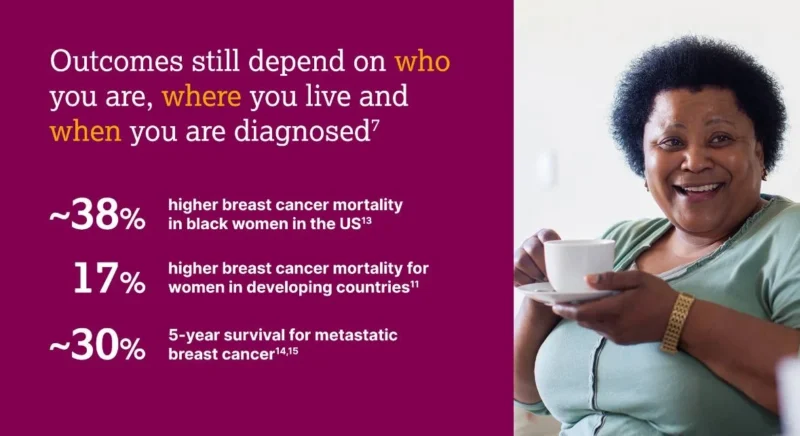
These disparities highlight to me that where a patient lives and who they are still too often determines outcomes more than clinical need. And that too often, policy efforts continue to focus on screening alone.
Screening is just one part of a patient’s journey, but if it is not followed by accurate diagnosis and access to timely, high-quality care, patients will not achieve optimal outcomes.
WHA provided a unique opportunity to align stakeholders, not around new commitments, but around implementation, accountability and measurable progress.
A Shared Commitment at WHA
Scientific innovation must be matched with health system transformation to ensure care reaches patients earlier and more equitably.
Delivering progress against this at scale requires collaboration.
Because scientific innovation needs to be matched with health system transformation to ensure care reaches patients earlier and more equitably.
This means working alongside governments, health organisations, non-governmental organisations (NGOs) and patient communities to connect ambition with delivery, including:
- Collaborating with the GBCI and the Union for International Cancer Control (UICC) to translate global targets into national action and cost-effective interventions
- Advancing partnerships that enable implementation at the city level, including collaborations with City Cancer Challenge
- Participating in multi-stakeholder working groups and convening a multi-sectoral council of senior advisors to strengthen coordination, accountability and implementation efforts
- Engaging across women’s health initiatives, namely with the Global Alliance for Women’s Health, to elevate breast cancer within broader health and economic agendas
What needs to happen next
If the next phase of progress is to deliver measurable impact, we must make our priorities clear. We must:
- Move from frameworks to funded, accountable national plans. Countries with well-resourced cancer control strategies consistently achieve better health outcomes.
- Embed guideline-based care as the foundation of high-quality breast cancer management. Variation in care delivery remains a major driver of survival differences across countries. By 2030, our ambition is to partner with health systems to increase concordance with guidelines closer to 90%, creating a clear opportunity to improve outcomes for patients.
- Strengthen the system enablers of high-quality care. This includes scaling access to precision diagnostics and biomarker testing, improving data systems, and embedding reimbursed patient navigation, an evidence-based approach shown to improve patient experience, reduce delays and support more timely access to care.
- Align stakeholders around shared metrics. Without consistent measurement, progress cannot be effectively tracked or improved. Tools such as the BCCQI and CTA can support countries in identifying gaps, prioritising interventions and tracking improvements over time.
From commitment to measurable progress
There is no shortage of global commitment to breast cancer. But commitment alone does not improve health outcomes.
The opportunity now is to translate that ambition into measurable progress, by strengthening health systems, scaling what works and ensuring innovation reaches every patient who could benefit.
Because ultimately, progress in breast cancer will not be defined by what we promise, but by what we deliver for patients, everywhere.”
Other Articles Featuring France Dube on OncoDaily.