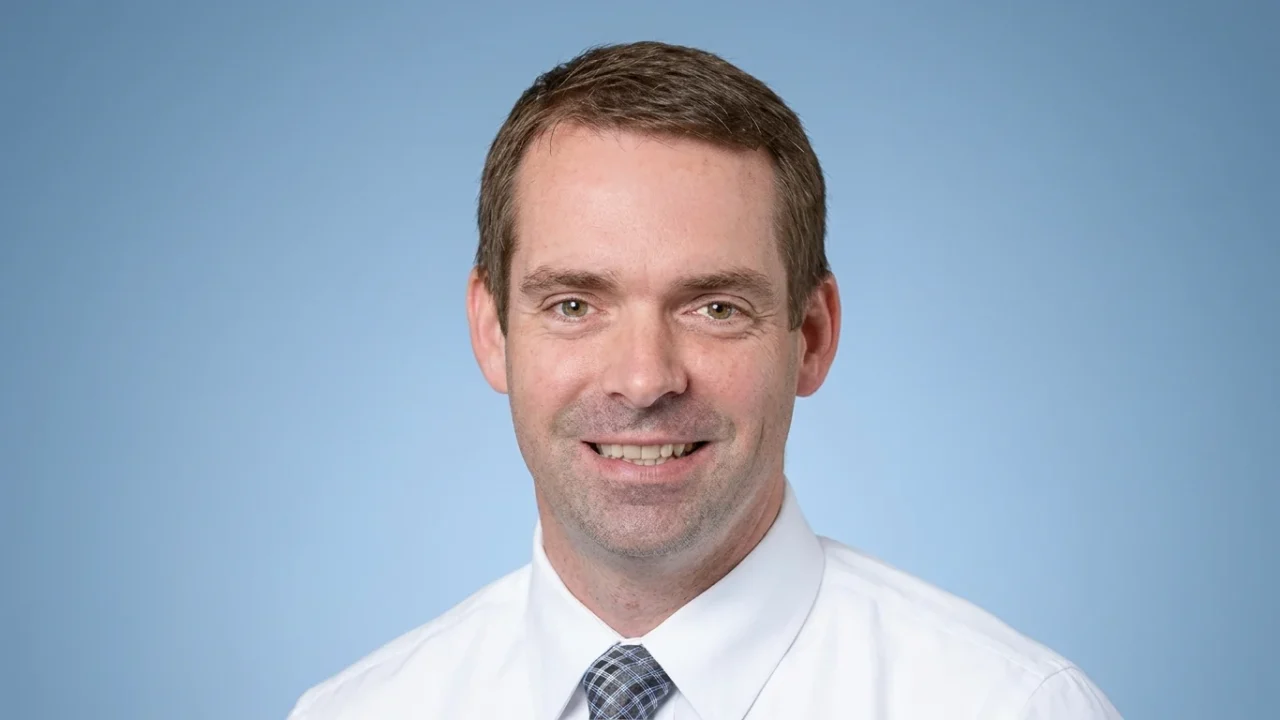
Daniel Flora, Medical Oncologist and Hematologist at St. Elizabeth Healthcare, shared on Substack:
“One of the most frustrating aspects of cancer research is knowing that promising treatment options exist for some of my patients, yet they may never learn about them or have the opportunity to access them.
I’ve been involved in cancer research for most of my professional life, initially as an oncology pharmacist and now as a medical oncologist and director of a community oncology research program.
We have 13 oncologists in our practice and a fairly robust research infrastructure, especially for a community cancer center. We have dedicated research staff and the ability to conduct some very sophisticated clinical trials, including early-phase studies. Yet well under 10% of our cancer patients will ever participate in a cancer clinical trial.
I’m continually amazed by the science behind some of the studies we’re opening at our cancer center. We have trials exploring personalized cancer vaccines, genetically engineered immune cells, novel targeted therapies, and technologies that can detect the earliest traces of cancer from a simple blood test. Yet there is a strange disconnect between the sophistication of the science and some of the rather antiquated processes we use to bring that science to patients.
I’ve become increasingly interested in learning about how some entrepreneurs, researchers, and companies are trying to address some of these challenges.
Over the next several months, I’d like to dive a little deeper into this work, interview some of these individuals, and evaluate their approaches from the perspective of someone who might actually use these technologies in a community cancer center.
I thought a good place to start would be to outline some of the biggest challenges I see in my own practice.
1. Nobody knows what clinical trials we have.
We spend months getting clinical trials open at our cancer center, investing considerable time and resources in reviewing protocols, negotiating contracts, meeting regulatory requirements, and training our staff. Yet once a study is open, our ability to let people know about it is surprisingly limited. Our marketing budget for cancer research is relatively small, and patients, referring physicians, and sometimes even physicians within our own healthcare system are unaware of the studies we have available.
Think about this from a patient’s perspective. There could be a clinical trial appropriate for your particular type of cancer at a cancer center less than 20 miles from your home, and neither you nor your oncologist knows it exists. After investing so much time into getting that trial open, shouldn’t we ensure that information gets into the hands of the people who need it?
2. We do a poor job educating patients about clinical research.
For many of my patients, their first meaningful conversation about clinical research happens only after a cancer diagnosis. They often fear being treated as guinea pigs and are understandably anxious about the unknown. I hear these concerns frequently from my own patients.
Unfortunately, we often try to explain the entire concept of clinical research during a brief oncology appointment, at a time when patients are already overwhelmed. I would love to see better ways to educate patients and the public about clinical trials, including what safety measures we have in place, potential benefits and risks, and the various reasons someone might consider participating. These conversations should begin much earlier in a patient’s cancer journey, and patients should always feel they have enough information to be comfortable accepting or declining participation.
3. Oncologists are overwhelmed.
Most oncologists I know would genuinely like to get more of their patients on appropriate clinical trials. The reality, however, is that many of us are struggling to keep up with the volume and increasing complexity of patients we’re seeing every day. The additional time required to search for clinical trials, review eligibility criteria and communicate with research teams at other institutions is difficult to find.
I see this as one of the more practical applications of artificial intelligence in oncology. Imagine if, while reviewing a patient’s chart before their appointment, I could see potentially relevant clinical trials based on their diagnosis, molecular profile, prior treatments and other medical conditions. Ideally, this would be incorporated into my existing clinical workflow rather than requiring me to log into yet another platform. My research team could then verify eligibility and availability. Even a relatively small improvement in this process could open up opportunities for patients that we might otherwise miss.
4. Good research coordinators are hard to find and even harder to keep.
It takes a considerable amount of time to train a really good oncology research coordinator. These individuals are responsible for an incredible number of tasks, many of which patients never see. They are also often the people who develop close relationships with patients throughout their participation in a clinical trial.
Once they develop these skills, they become incredibly valuable to pharmaceutical companies, contract research organizations and other industry partners that can often offer more competitive compensation. Community research programs can find themselves in a perpetual cycle of recruiting and training new staff.
I’d love to see technology that allows our research coordinators to spend more time with patients and less time entering the same information into multiple systems, tracking down documents and performing repetitive administrative tasks. We have some incredibly talented people working in cancer research. Are we making the best use of their talents?
5. Clinical trials often exclude the patients I actually treat.
My patients have diabetes, heart disease, kidney disease, autoimmune disorders and all sorts of other medical issues. That’s community oncology. That’s the real world.
Yet many of these patients are excluded from clinical trials evaluating drugs they may eventually receive after FDA approval. I completely understand the rationale for certain eligibility criteria, particularly in early-phase studies where we’re still learning about the safety of a drug. But it can be incredibly frustrating to tell a patient that they appear to be an otherwise reasonable candidate for a trial but are excluded because of a particular lab value, a prior cancer diagnosis or another medical condition.
I think there are opportunities to use real-world data, better risk assessment and more thoughtful trial design to reconsider some of these restrictions while maintaining patient safety. We also need to involve more community oncologists in the design and feasibility assessment of clinical trials. Unfortunately, the feedback I provide to pharma or biotech companies is rarely acknowledged or acted upon.
6. Geography can determine your treatment options.
Some of my patients live an hour or more away from our cancer center. Participating in a clinical trial might require additional visits, blood draws, EKGs, imaging studies and other assessments beyond what would be required with standard treatment.
For someone who is already sick, trying to maintain a job or relying on a family member for transportation, this can be a deal-breaker. There are also expenses associated with travel, lodging, childcare and time away from work.
I’ve often wondered how much of what we require patients to do at our research site could safely be done closer to their homes. Telemedicine, remote monitoring, local laboratory testing and partnerships between cancer centers could potentially make participation a lot more practical. Where someone lives and their ability to take time away from work shouldn’t unnecessarily limit their access to cancer research.
7. No individual cancer center can offer enough clinical trials.
Even with our relatively robust research infrastructure, we may only have 20 or 30 clinical trials available at any given time. When you consider the number of different cancers we treat, the molecular subtypes within those cancers and the various lines of therapy, that’s a relatively small number.
This is particularly problematic for some of my patients with rare cancers or uncommon molecular alterations. The likelihood that I happen to have an appropriate trial open at my own cancer center is pretty small.
I would love to see a more interconnected research ecosystem where I could easily identify relevant trials across multiple cancer centers, communicate directly with their research teams and help facilitate enrollment while maintaining my relationship with the patient. There are also institutional and financial barriers to this kind of collaboration that deserve some attention. We shouldn’t have to open every clinical trial ourselves to give our patients access to research.
8. The economics of community cancer research are tough.
In my experience, conducting cancer research in the community is often close to budget neutral. There is a substantial investment in personnel, infrastructure, regulatory support and physician time.
As much as many of us believe in the importance of cancer research, healthcare systems still have bills to pay. It can be difficult to continually make the argument for expanding a research program that generates relatively little financial return.
This has very real implications for patients. If community cancer centers cannot financially sustain research programs, fewer patients will have access to clinical trials close to home. I think there is considerable opportunity for entrepreneurs to help reduce the cost of conducting research, improve operational efficiency and rethink some of the financial arrangements between research sites and study sponsors.
9. We have a trust problem.
There is considerable skepticism about the pharmaceutical industry right now, and I understand a lot of it. Pharmaceutical companies are businesses with commercial interests. As an oncologist, my only obligation is to the patient in front of me. Many of the people I’ve worked with in the pharmaceutical industry over the years are genuinely passionate about improving the lives of cancer patients. And while our interests often align, there are times when they don’t. I think it’s important to acknowledge that.
We need to be more transparent with patients about why studies are being conducted, who is funding them, and what we hope to learn. We also need to be honest about our own relationships with industry and any potential conflicts of interest. And I think we owe it to the patients who participate in clinical trials to do a much better job communicating the results of those studies, even when the results are negative.
Rebuilding trust will depend largely on our willingness to have honest conversations with our patients and acknowledge the shortcomings of the system.
10. Who is going to fund the research that doesn’t make anyone money?
Some of the most interesting questions my patients ask me involve exercise, nutrition, metabolic health and other integrative approaches to cancer care. Unfortunately, I often have limited high-quality clinical data to help guide some of these conversations.
Who is going to fund a large randomized clinical trial evaluating the impact of a dietary intervention on cancer recurrence? What about combinations of inexpensive generic drugs? How do we investigate interventions that could potentially improve cancer outcomes but offer very little opportunity for commercial return?
There are excellent investigators doing this type of work, but the financial incentives are considerably different from those associated with developing a new cancer drug. I’d like to explore alternative funding models, philanthropic initiatives and collaborative research networks that might allow us to answer more of these important questions.
11. The administrative and regulatory burden is ridiculous.
I can’t tell you how much time I’ve spent trying to remember which website I need to log into to review a safety report or sign a document for a clinical trial. Different pharmaceutical companies use different platforms, each with its own username, password and workflow. Even different studies conducted by the same company can involve different systems.
Sometimes figuring out how to get to the information I need to review takes longer than reviewing the information itself.
Patient safety and regulatory oversight are absolutely essential to conducting good clinical research. But surely, with the technology we have available today, we can figure out a more efficient way to accomplish these things. Every hour my research team and I spend navigating fragmented systems is an hour we could potentially spend identifying patients for trials, opening new studies or taking better care of the patients already participating in them.
Rethinking cancer research
I love being involved in cancer research. It’s one of the most rewarding aspects of my job. I’ve seen patients benefit enormously from having access to investigational therapies years before they became commercially available. I’ve also had patients participate in studies that ultimately failed, but whose contributions helped us better understand their disease and informed the development of subsequent treatments.
That’s probably why some of these things frustrate me as much as they do.
If we were designing the cancer clinical research ecosystem from scratch today, with all the technologies available to us, I have a hard time believing it would look much like the system we currently have.
I also believe community oncology needs to have a much bigger voice in these conversations. We have an opportunity to bring research to the places where patients are already receiving their cancer care, study more real-world patient populations and give more people access to innovative treatments.
Over the course of this series, I’m going to take each of these 11 problems and explore it in considerably more detail. I’ll review the science, look at the companies and technologies emerging in these areas, and interview the entrepreneurs, researchers and other individuals who are trying to solve these problems.
I’m particularly interested in understanding what these innovations look like when they leave the laboratory, the academic medical center or the startup’s conference room and enter a busy community oncology practice like mine.
What problem are they solving? What evidence supports their approach? How would I actually use their technology? What are the economics? And would it ultimately improve the experience or outcomes of my patients?
I suspect AI and other emerging technologies can help us solve some of these problems. Others will require changes in how we fund research, how we collaborate across institutions and how we communicate with patients.
If you’re a cancer patient or caregiver, I’d love to hear about your experiences trying to access clinical trials. If you’re an oncologist, research coordinator or someone working in the research industry, I’d love to hear what challenges you’re facing.
And if you’re an entrepreneur building something that might help us solve one of these problems, I’d love to talk to you.
There is a tremendous amount of innovation happening in cancer science right now. I think it’s time we devote a little more of that innovative energy to how we actually bring that science to patients.
Thanks for taking to the time to read this! I hope you found it helpful.”
You can also read:
- Expert Discussion at COGC 2026: Why Clinical Trials Are Still Failing to Reach the Community
- Cancer Research Funding: Underfunded or Unequally Distributed?
- Cancer Research Breakthroughs We’re Thankful For in 2026