Key takeaways
- Cancer research is not only underfunded; it is also unevenly funded.
- Highly lethal cancers do not always receive investment that reflects mortality or years of life lost.
- Funding is concentrated in high-income countries, drug development, and preclinical research.
- Advocacy strength, commercial interest, geography, and racial disparities can shape funding priorities.
- A fairer model would align investment more closely with disease burden, unmet need, and population impact.
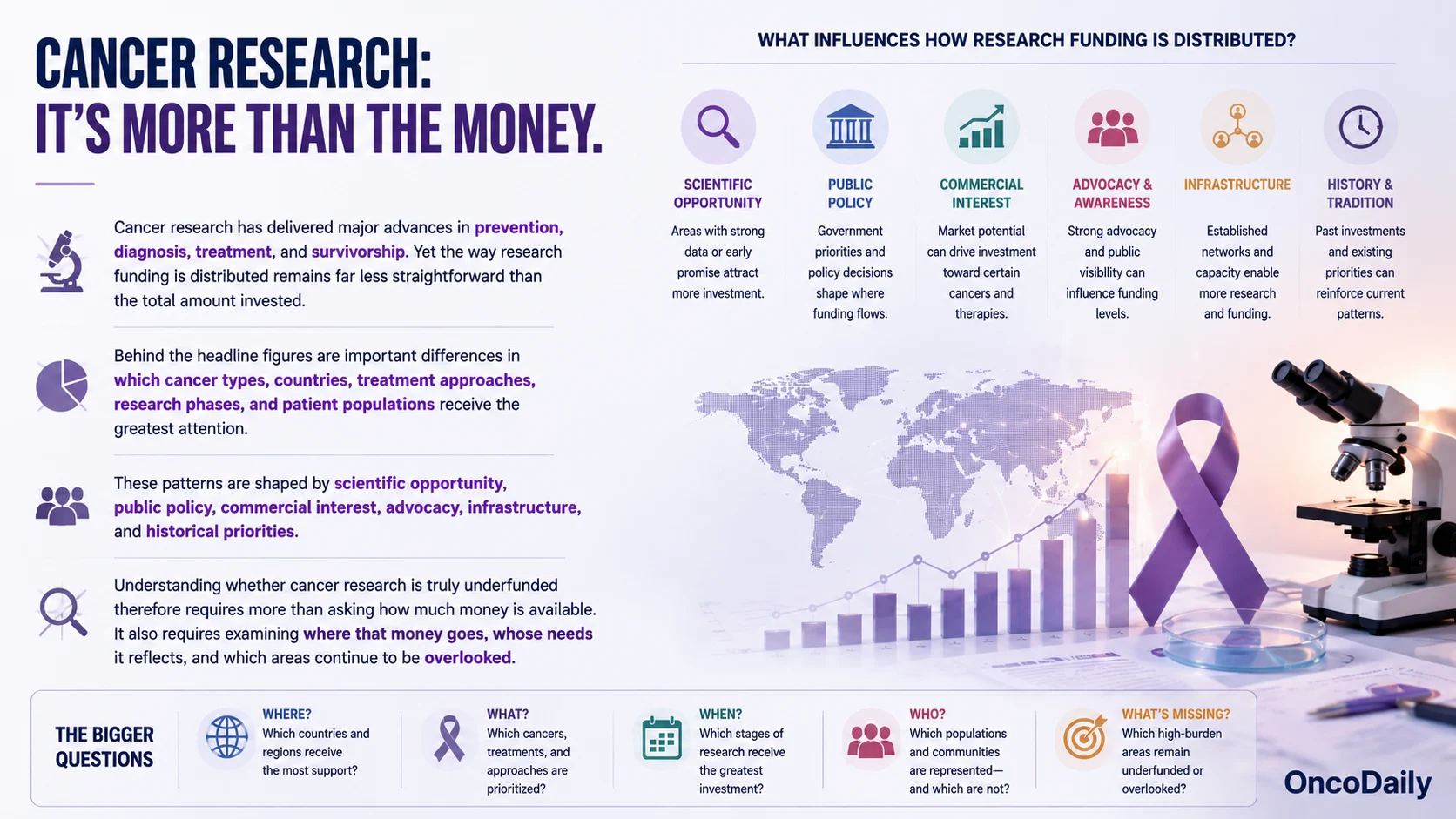
Cancer research has delivered major advances in prevention, diagnosis, treatment, and survivorship. Yet the way research funding is distributed remains far less straightforward than the total amount invested.
Behind the headline figures are important differences in which cancer types, countries, treatment approaches, research phases, and patient populations receive the greatest attention. These patterns are shaped by scientific opportunity, public policy, commercial interest, advocacy, infrastructure, and historical priorities.
Understanding whether cancer research is truly underfunded therefore requires more than asking how much money is available. It also requires examining where that money goes, whose needs it reflects, and which areas continue to be overlooked.
Overall Cancer Research Funding and Disease Burden
Cancer research funding is not simply too low overall it is distributed unevenly across different cancer types. Some cancers receive considerably more research funding relative to the number of deaths they cause, while highly lethal cancers receive much less.
A 2026 US analysis found that breast cancer received approximately $1.58 billion in federal research funding in fiscal year 2025, compared with about $663 million for prostate cancer, $227 million for non–small cell lung cancer, and only $63 million for small-cell lung cancer. Together, the two major lung cancer categories were associated with more than 151,000 estimated deaths, far exceeding the estimated mortality associated with breast or prostate cancer.
The imbalance becomes even clearer when funding is calculated per estimated cancer death. Breast cancer received approximately $69,800 per death, while prostate cancer received around $126,992 per death. In comparison, small-cell lung cancer received only about $2,818 per death, non-small cell lung cancer about $1,754, and pancreatic cancer approximately $8,945.
These findings suggest that cancers with the poorest survival outcomes do not always receive funding that reflects their clinical burden. Research investment is also influenced by factors such as historical funding patterns, established research infrastructure, scientific opportunities, public awareness, and patient advocacy. Therefore, cancer research may be better described as unequally funded rather than uniformly underfunded. (Mohindroo, 2026)
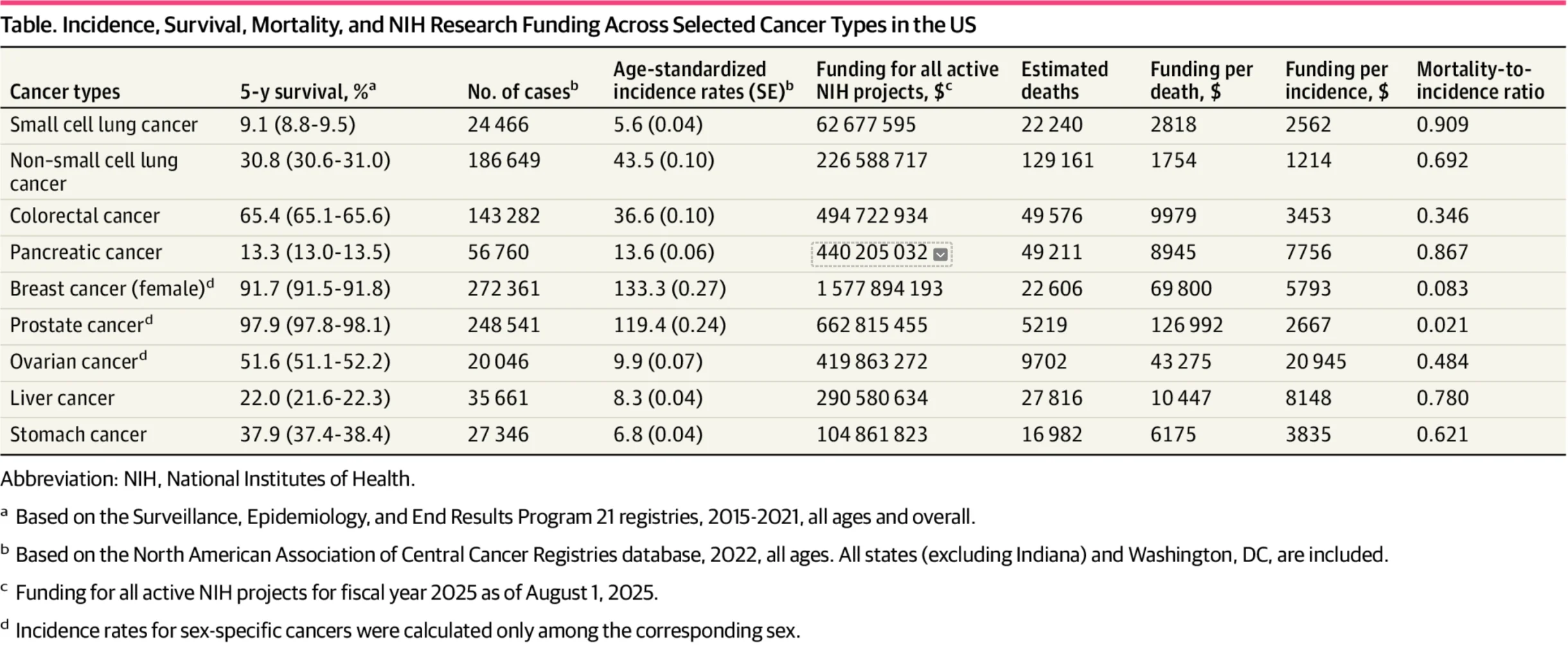
Photo: Incidence, Mortality, and Federal Research Funding by Cancer Type in the US/ JAMA Network
Funding Imbalances Across Cancer Types
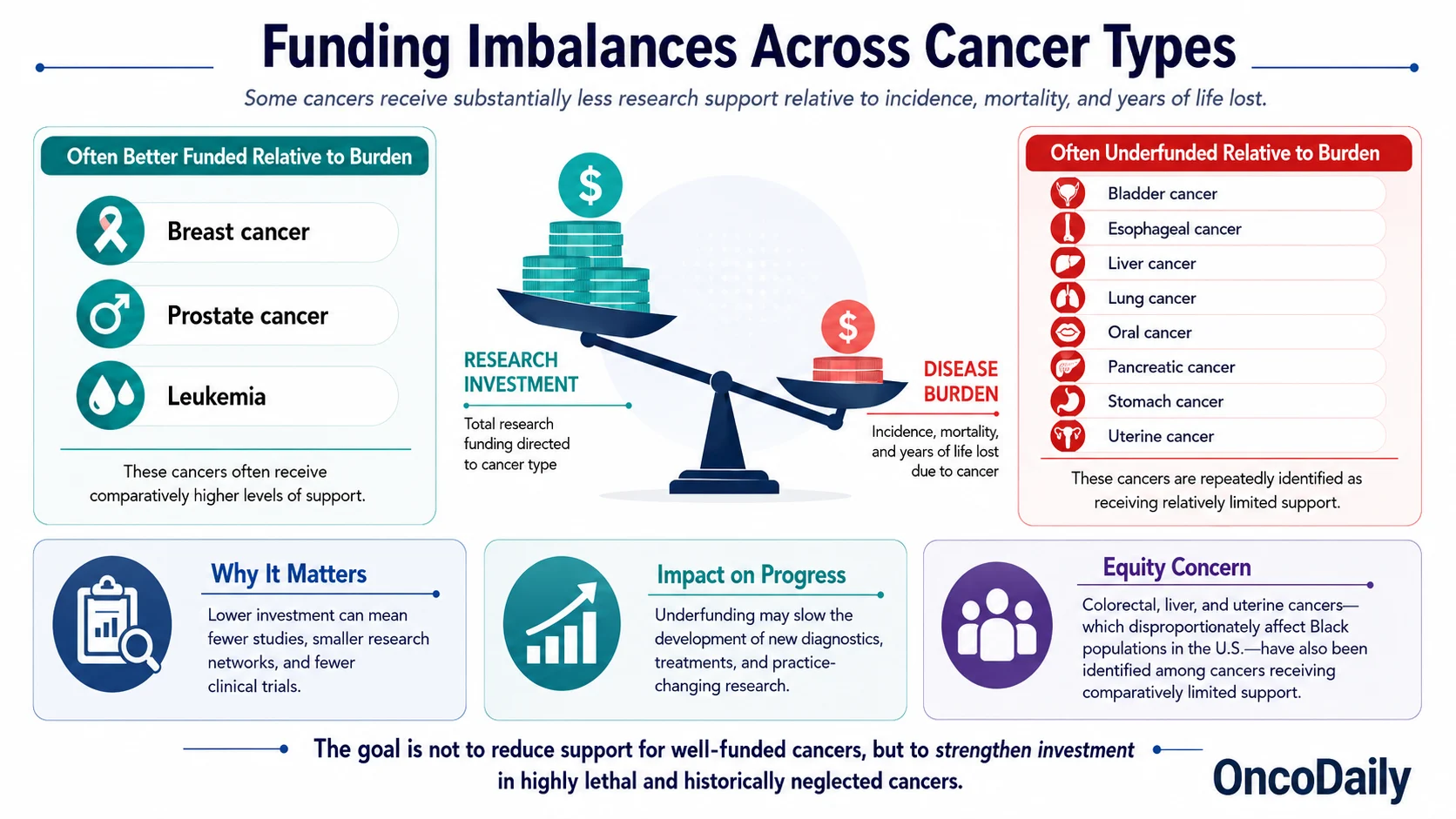
The unequal distribution of funding extends beyond differences in the amount of money assigned to each cancer type. Analyses comparing research investment with incidence, mortality, and years of life lost have repeatedly identified bladder, esophageal, liver, lung, oral, pancreatic, stomach, and uterine cancers as receiving relatively limited support in relation to their disease burden. Breast cancer, prostate cancer, and leukemia, by contrast, often receive higher levels of funding relative to these measures.
These disparities can shape the entire research landscape. Cancer types receiving less investment generally have fewer funded studies, smaller research networks, and fewer clinical trials, potentially slowing the development of new diagnostic approaches and treatments. Limited funding can also make it more difficult to attract investigators and build the infrastructure needed to conduct large, practice-changing studies.
The imbalance may further reinforce existing health disparities. Colorectal, liver, and uterine cancers, which disproportionately affect Black populations in the United States, have been identified among the cancers receiving comparatively limited federal research support. This suggests that funding decisions may influence not only scientific progress but also which patient populations benefit most rapidly from advances in cancer care.
The issue is therefore not that well-funded cancers deserve less attention. Rather, highly lethal and historically neglected cancers require stronger investment so that research opportunities better reflect mortality, years of life lost, unmet clinical need, and disparities between patient populations (Carter, 2012; Kamath, 2024).
Geographic Concentration and LMIC Underinvestment
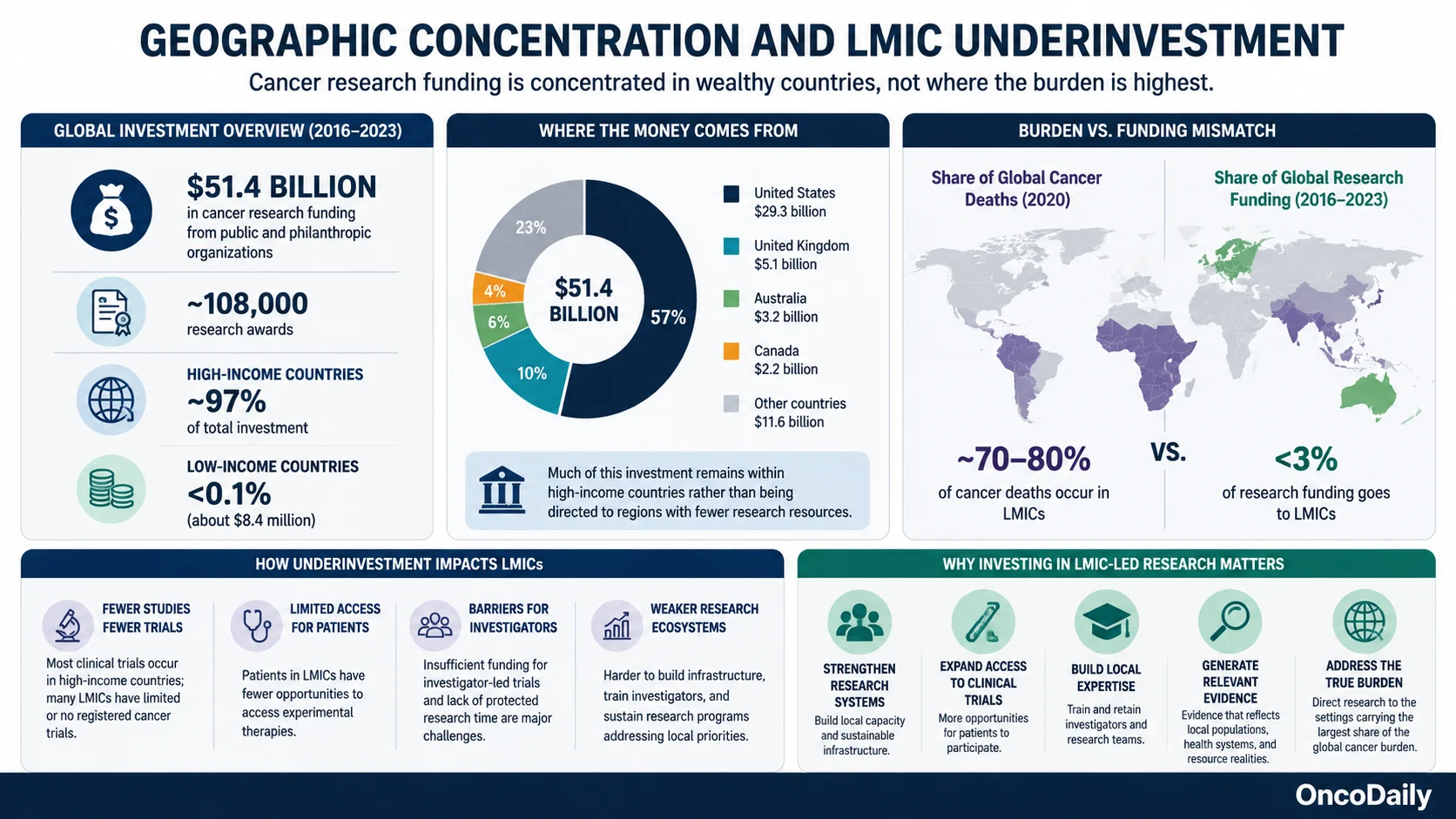
Cancer research funding is concentrated in a small number of wealthy countries. Between 2016 and 2023, public and philanthropic organizations provided approximately $51.4 billion through nearly 108,000 cancer research awards. High-income countries accounted for around 97% of this investment, while low-income countries received less than 0.1%, equivalent to only about $8.4 million.
The United States was the largest contributor, providing approximately $29.3 billion, or around 57% of total global funding. It was followed by the United Kingdom, Japan, Australia, and Canada. Much of this investment remained within high-income countries rather than being directed toward regions with fewer research resources.
This distribution does not reflect the geographic burden of cancer. LMICs account for a substantial proportion of global cancer deaths and disability, yet only a small share of research funding is directed toward cancer priorities in these settings. Important questions involving affordable treatment, late diagnosis, access to care, resource-adapted therapies, and implementation of existing evidence therefore remain insufficiently studied.
Geographic inequalities are also evident in clinical research. Most oncology clinical trials are conducted in high-income countries, while many LMICs have limited trial activity or no registered cancer trials. This reduces opportunities for patients to access experimental treatments and limits the production of evidence that reflects local populations, healthcare systems, treatment availability, and financial constraints.
Clinicians working in LMICs have identified insufficient funding for investigator-led trials and a lack of protected research time as major barriers. Without sustained investment, countries with limited research capacity may struggle to develop infrastructure, train investigators, and lead studies addressing their own cancer priorities.
Greater investment in LMIC-led research would therefore do more than increase the number of studies. It could strengthen local research systems, expand access to clinical trials, support capacity building, and produce evidence that is more relevant to populations carrying a large share of the global cancer burden. (Du et al., 2025; Pramesh et al., 2022; Eldridge et al., 2025)
The Modality Divide: Drugs, Surgery, and Radiotherapy
Cancer research funding is unevenly distributed not only across cancer types but also across treatment modalities. Within treatment-focused research, considerably more funding is directed toward cancer drugs than toward surgery or radiotherapy.
A global analysis of public and philanthropic cancer research funding between 2016 and 2020 found that drug-treatment research received approximately $4.6 billion, representing 19.6% of total investment. By comparison, radiotherapy research received about $0.7 billion, or 2.8%, while surgery research received only $0.3 billion, equivalent to 1.4%. These figures show a substantial funding gap between drug development and the study of established non-drug treatments. However, drug research did not account for most cancer research funding overall, as cancer biology received a larger share of investment.
The imbalance is also visible in the sponsorship of late-stage clinical trials. An analysis of active phase III randomized oncology trials found that 48% of targeted-therapy trials and 32% of chemotherapy trials received industry funding. In comparison, industry supported only 4% of radiotherapy trials and 5% of multimodality trials involving radiotherapy. This suggests that commercial research investment is considerably more concentrated in drug-based treatments than in radiotherapy or combined-treatment strategies.
Surgery, radiotherapy, and systemic therapy are among the most widely used approaches to cancer treatment. Historically, these modalities developed alongside one another and became increasingly integrated rather than one treatment simply replacing another. The relatively small share of research funding allocated to surgery and radiotherapy is therefore notable, particularly because progress in cancer care also depends on improving treatment techniques, patient selection, sequencing, safety, accessibility, and the integration of different modalities.
The disparity does not necessarily mean that drug research receives too much support. Rather, it indicates that surgery and radiotherapy research receive comparatively limited investment despite their established roles in cancer care. A more balanced research portfolio would support innovation across all major treatment modalities instead of concentrating resources primarily on interventions with stronger commercial sponsorship. (McIntosh et al., 2023; Jairam et al., 2017; Pickstone, 2007; European Parliament, 2021)
Imbalances Across Research Phases and Domains
Cancer research funding is distributed unevenly across both stages of research and areas of scientific focus. Most public and philanthropic investment is directed toward preclinical laboratory research, while clinical trials, public-health research, survivorship, and implementation-focused studies receive considerably smaller shares.
Between 2016 and 2020, preclinical research received approximately 73.5% of global cancer research funding, equivalent to around $18 billion. By comparison, phase 1–4 clinical trials received only 7.4%, or approximately $1.8 billion, while public-health research accounted for 9.4%, or about $2.3 billion. Research covering more than one phase represented roughly 5% of total investment.
An updated analysis covering 2016 to 2023 found a similar pattern. Approximately 76% of public and philanthropic funding, equivalent to around $39 billion, was allocated to preclinical research, while clinical trials received about 7.3%, or approximately $3.7 billion. The consistency of these findings suggests that cancer research investment remains concentrated at the discovery stage, with much less funding available to test interventions in patients and introduce effective approaches into clinical practice.
Funding also differs substantially across research domains. Cancer biology and treatment research attract a large proportion of investment, while prevention, cancer control, survivorship, outcomes research, and implementation science receive comparatively limited support. These areas are essential for understanding how to prevent cancer, improve quality of life, address long-term treatment effects, and ensure that proven interventions reach patients in routine care.
Strong investment in laboratory research remains essential for identifying new biological mechanisms and therapeutic targets. However, discoveries cannot improve cancer outcomes without adequate support for clinical evaluation, implementation, population-level research, and long-term patient care. A more balanced funding model would therefore support the entire research pathway, from early discovery to clinical testing and real-world delivery. (McIntosh et al., 2023; Du et al., 2025; Abudu et al., 2021)
Racial, Ethnic, and Advocacy-Related Funding Disparities
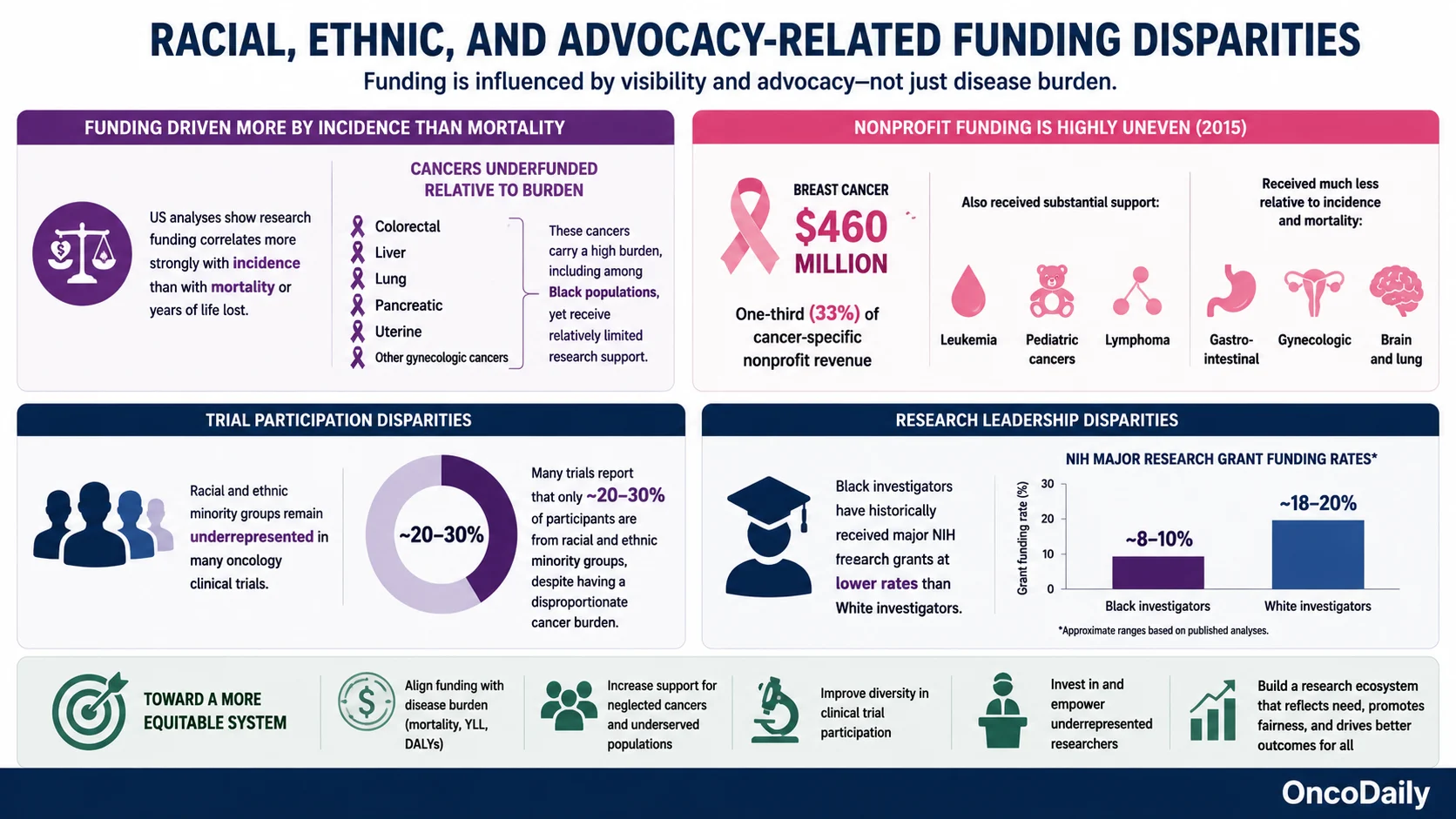
Cancer research funding is shaped not only by disease burden but also by public visibility, fundraising capacity, and the strength of patient advocacy. As a result, cancers that disproportionately affect racial and ethnic minority populations—or lack well-established advocacy organizations can receive less support.
US analyses show that funding is more closely associated with cancer incidence than with mortality or years of life lost. Colorectal, liver, lung, pancreatic, uterine, and other gynecologic cancers have been identified among those receiving relatively limited support despite their substantial burden, including among Black populations.
Nonprofit funding is particularly uneven. In 2015, breast cancer organizations received about $460 million, accounting for one-third of cancer-specific nonprofit revenue. Leukemia, pediatric cancers, and lymphoma also attracted considerable support, while gastrointestinal, gynecologic, brain, and lung cancers received much less funding relative to incidence and mortality.
Disparities also affect who participates in and leads cancer research. Racial and ethnic minority groups remain underrepresented in many oncology trials, while Black investigators have historically received major NIH research grants at lower rates than White investigators. These gaps can limit the development of evidence addressing underserved populations.
A more equitable system would combine funding based on disease burden with stronger support for neglected cancers, diverse trial participation, and underrepresented researchers. (Kamath et al., 2019; Mutale et al., 2022; Haghighat et al., 2023; Kamath et al., 2024., White, 2024)
Changes in Funding Priorities Over Time
Cancer research funding has not increased steadily. Global public and philanthropic investment fell from approximately $6.6 billion in 2016 to $2.9 billion in 2020, with the sharpest decline occurring between 2019 and 2020.
Funding priorities have also shifted. Between 2006 and 2018, treatment and early detection gained a larger share of investment, while cancer biology and etiology declined proportionally. Prevention, survivorship, cancer control, and outcomes research remained relatively unchanged.
Changes were also seen across cancer types. Breast and colorectal cancer funding increased in absolute terms but declined as a proportion of total investment, while brain, lung, pancreatic cancer, leukemia, and melanoma gained a larger share.
In the United States, the NCI budget increased overall during the past decade, although annual growth varied and some funding mechanisms declined slightly in recent years. These trends show that cancer research priorities are shaped by scientific advances, policy decisions, budget pressures, and external events. (McIntosh et al., 2023; Abudu et al., 2021; National Cancer Institute, 2026)
Policy Decisions and Their Impact on Research Investment
Policy decisions can influence how much cancer research is funded, which projects receive support, and whether long-term studies can continue without interruption. Public investment, regulatory policies, reimbursement systems, and partnerships between government, academia, and industry all shape the cancer research environment.
Recent US policy debates demonstrate how funding levels alone do not provide the full picture. Although the NIH received a $415 million budget increase for fiscal year 2026, the NCI funded 334 fewer grants in 2025, a decline of 21% from the previous year. Delayed reviews, workforce reductions, administrative requirements, and changes in how multiyear grants are funded were identified as contributing factors.
A federal grantmaking rule proposed in May 2026 would allow senior political appointees to review awards before they are issued and permit agencies to terminate active grants when priorities change. The proposal would also restrict the use of grant funding for journal subscriptions, publication fees, conferences, and some international collaborations. Oncology organizations warned that these changes could weaken scientific peer review, interrupt clinical trials, and create uncertainty for research requiring sustained support.
Policy can therefore strengthen cancer research through stable investment and supportive research infrastructure, or weaken it through funding delays, changing priorities, and unpredictable grant rules. Sustained and transparent policies are particularly important because cancer discoveries and clinical trials frequently depend on many years of continuous work. (Gontarchick, 2026; Association for Clinical Oncology, 2026)
You can read more about OncoGrants on OncoDaily.
Building a More Equitable Cancer Research Funding Model
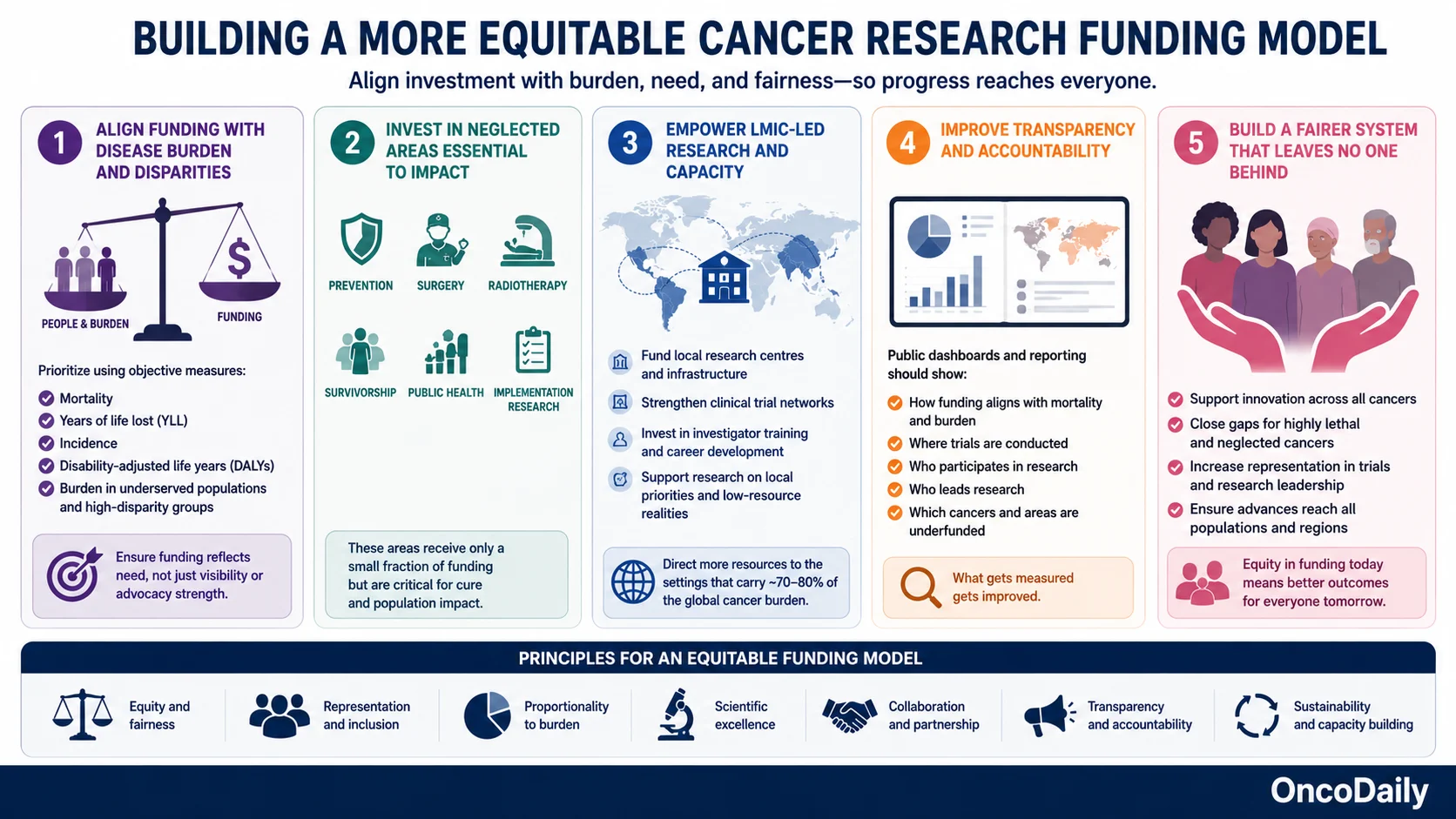
A more equitable funding model would align research investment with disease burden, unmet need, and disparities rather than relying mainly on visibility, advocacy strength, or commercial potential.
Funding decisions could give greater weight to mortality, years of life lost, incidence, and the burden carried by underserved populations. Dedicated support is also needed for neglected areas such as prevention, surgery, radiotherapy, survivorship, public health, and implementation research.
Greater investment in LMIC-led research is equally important. Funding local research centres, trial networks, and investigator training would help countries study the cancers and treatment challenges most relevant to their populations.
Transparency should also improve. Public reporting could show whether funding, trials, and research output reflect mortality, geographic need, and health disparities.
The aim is not to reduce support for well-funded cancers, but to ensure that highly lethal cancers, neglected treatment areas, and underrepresented populations receive investment that better reflects their needs. (The Lancet, 2024; Haghighat et al., 2023; Sullivan, 2023)
FAQ
Is cancer research underfunded?
In some areas, yes. However, the larger issue is that available funding is distributed unevenly across cancer types, regions, treatment modalities, and research stages.
Which cancers receive the most research funding?
Breast cancer, prostate cancer, and blood cancers often receive relatively high levels of funding, supported by strong research networks, public awareness, and advocacy.
Which cancers are commonly underfunded?
Lung, pancreatic, liver, stomach, esophageal, bladder, uterine, and some other highly lethal cancers often receive less funding relative to mortality or years of life lost.
Does funding reflect the number of cancer deaths?
Not consistently. Funding often correlates more closely with incidence than with mortality, survival outcomes, or years of life lost.
Why does drug research receive more funding?
Drug development attracts substantial commercial investment because successful therapies can be patented and marketed. Surgery and radiotherapy depend more heavily on public and academic funding.
Why is so much funding directed toward laboratory research?
Preclinical research helps identify cancer mechanisms and potential treatments. However, limited investment in clinical and implementation research can slow the translation of discoveries into routine care.
Why do LMICs receive less cancer research funding?
Many LMICs have limited research infrastructure, fewer funding organizations, and less capacity to lead large clinical trials, creating a cycle of continued underinvestment.
Does advocacy influence cancer research funding?
Yes. Strong patient organizations can raise awareness, attract donations, influence policy, and support research. Cancers with smaller or less visible advocacy networks may receive less attention.
How do racial and ethnic disparities affect funding?
Cancers that disproportionately affect underserved racial and ethnic populations can receive comparatively limited funding, while these populations also remain underrepresented in trials and research leadership.
How can cancer research funding become more equitable?
Funding decisions can give greater weight to mortality, years of life lost, geographic need, health disparities, and neglected research areas while maintaining support for established fields.