





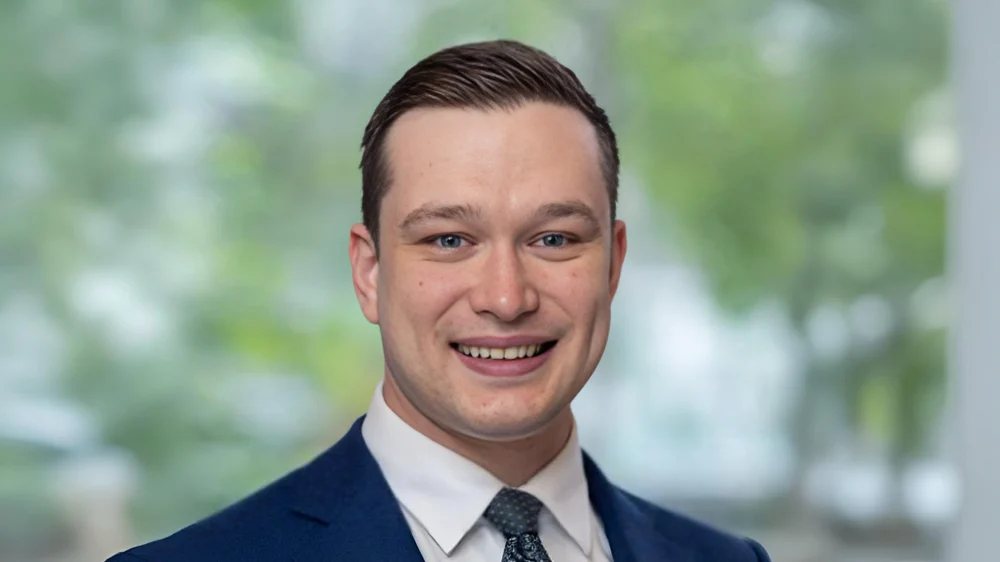
Anton Safonov, Breast Medical Oncologist at Memorial Sloan Kettering Cancer Center, shared a post on LinkedIn:
“Just published in Nature: Our latest work with Pedram Razavi, Sarat Chandarlapaty, and Minna Lee shows how germline–somatic genomic interactions can predict trajectories of treatment resistance in breast cancer.
Leveraging a cohort of >5,800 breast cancer patients, we found that RB1 alterations are enriched in gBRCA2 tumors, particularly in HR+/HER2– disease. These tumors show shorter responses to endocrine therapy + CDK4/6 inhibitors, driven by a distinctive evolutionary mechanism.
Key mechanistic findings:
- RB1 and BRCA2 both lie on chromosome 13q, and BRCA2-driven tumors frequently undergo large LOH events that leave only one functional RB1 allele.
- Tumors with RB1 hemizygosity are primed to acquire a second RB1 “hit” under the selective pressure of CDK4/6i therapy, leading to complete RB1 loss and resistance.
- HRD-driven mutagenesis further accelerates this process, as evidenced by telltale genomic “fingerprints” in the gBRCA2 context.
- Preclinical models confirm this biology: HR-deficient tumors develop CDK4/6 resistance through RB1 loss, while tumors with BRCA2 reversion remain sensitive.
- PARP inhibitors are particularly effective in this setting, both in experimental models and in our clinicogenomic data.
Translational Implications
- These findings strongly suggest that frontline PARP inhibition in HRD or gBRCA2 HR+/HER2– tumors could improve initial outcomes and shape more effective treatment sequencing.
- This concept is now being tested in the EvoPAR-Breast01 phase III trial (NCT06380751):
- Our work illustrates how RB1 hemizygosity predisposes to an acquired “second hit”. This serves as a satisfying mirror image of Knudson’s two hit hypothesis, while begging the question whether this framework may extend to other mechanisms of resistance across therapeutic scenarios.
- We believe the ability to act proactively, rather than reactively, and stay one step ahead of treatment resistance will be a valuable paradigm in precision oncology
Congratulations to all co-authors, and major thanks to collaborators at Memorial Sloan Kettering Cancer Center. This work was elevated by important contributions from UPenn, Institut Curie, Vall d’Hebron, Royal Mardsen/ ICR, Pfizer, and AstraZeneca. Above all, thank you to patients without whom this research would not be possible!”
Antonio Marra, Medical Oncologist at European Institute of Oncology, shared this post, adding:
“Excited to see our work published in Nature.
We show how germline–somatic genomic interactions can shape the evolutionary path toward treatment resistance in breast cancer. Using data from >5,800 patients, we identify a mechanism linking gBRCA2 tumors and RB1 loss that can drive resistance to endocrine therapy and CDK4/6 inhibitors, while highlighting potential opportunities for earlier use of PARP inhibitors.
Grateful to collaborate with an outstanding international team, and congratulations to my friends and colleagues Anton Safonov, Pedram Razavi, and Sarat Chandarlapaty from Memorial Sloan Kettering Cancer Center for the tremendous effort and leadership behind this work.”
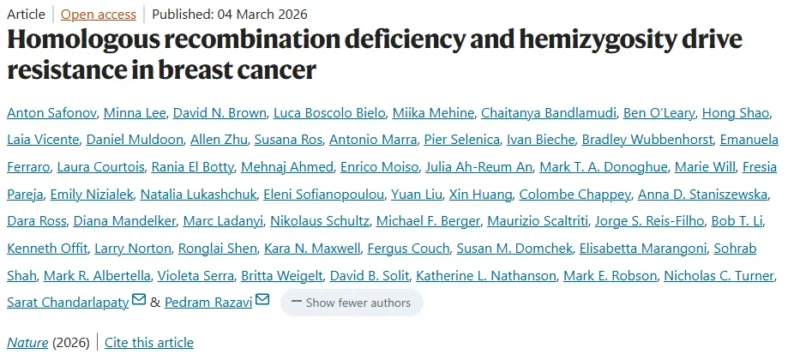
Title: Homologous recombination deficiency and hemizygosity drive resistance in breast cancer
Authors: Anton Safonov, Minna Lee, David N. Brown, Luca Boscolo Bielo, Miika Mehine, Chaitanya Bandlamudi, Ben O’Leary, Hong Shao, Laia Vicente, Daniel Muldoon, Allen Zhu, Susana Ros, Antonio Marra, Pier Selenica, Ivan Bieche, Bradley Wubbenhorst, Emanuela Ferraro, Laura Courtois, Rania El Botty, Mehnaj Ahmed, Enrico Moiso, Julia Ah-Reum An, Mark T. A. Donoghue, Marie Will, Fresia Pareja, Emily Nizialek, Natalia Lukashchuk, Eleni Sofianopoulou, Yuan Liu, Xin Huang, Colombe Chappey, Anna D. Staniszewska, Dara Ross, Diana Mandelker, Marc Ladanyi, Nikolaus Schultz, Michael F. Berger, Maurizio Scaltriti, Jorge S. Reis-Filho, Bob T. Li, Kenneth Offit, Larry Norton, Ronglai Shen, Kara N. Maxwell, Fergus Couch, Susan M. Domchek, Elisabetta Marangoni, Sohrab Shah, Mark R. Albertella, Violeta Serra, Britta Weigelt, David B. Solit, Katherine L. Nathanson, Mark E. Robson, Nicholas C. Turner, Sarat Chandarlapaty, Pedram Razavi
Read the Full Article.
Other articles about Breast Cancer on OncoDaily.