





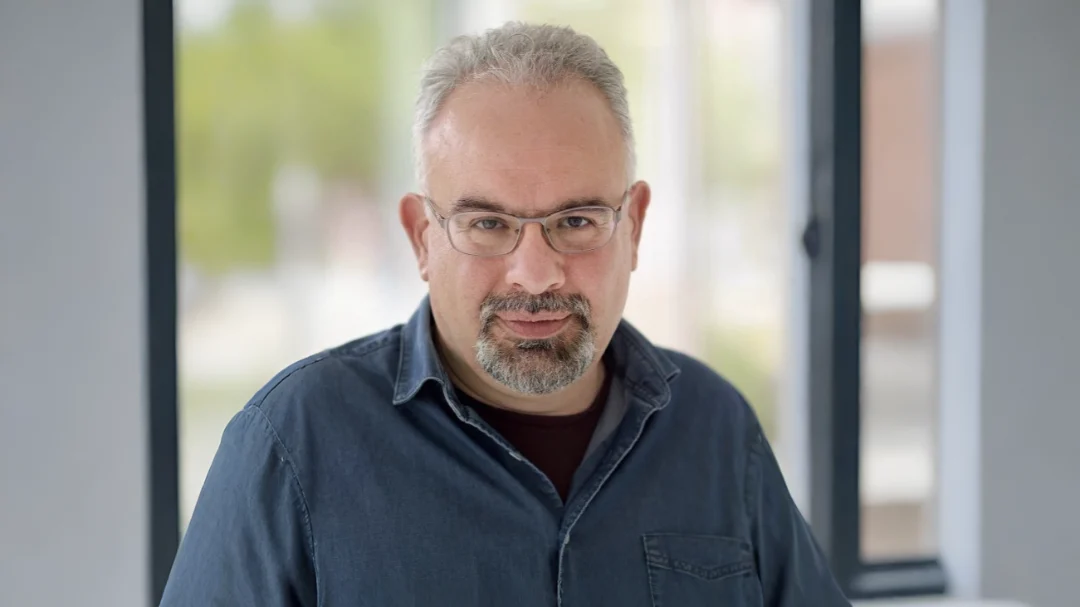
Anastassis Perrakis, Research Group Leader and Head Of Division of Biochemistry at The Netherlands Cancer Institute (NKI), shared a post on LinkedIn:
“One of the things I find interesting about research is how people collaborate internally in institutes. Who works with whom? Are groups siloed or deeply connected? Does a big institute actually collaborate more than a small one, or does it just look that way?
Co-authorship networks are a beautiful way to visualize this. If two researchers share a paper, they’re connected. Map that across an entire institute and you start seeing clusters, bridges, isolated nodes, the connective tissue of a scientific community.
People have been doing this for years. The problem is that most standard metrics (e.g. density, edge counts) are mathematically biased by institute size. A small tightly-knit group of 10 PIs and a large well-connected institute of 50 will look completely different on those numbers even if their collaboration culture is identical.
So, together with Claude (Anthropic) as a coding partner, we built something to fix that: the CollaborationIndex, a size-fair score on a fixed 0–100 scale that lets you study collaboration networks meaningfully, and also compared between institutes, regardless of how many PIs they have. I’ve been testing it for the The Netherlands Cancer Institute, and its sister institutes in EU-LIFE and it surfaces genuinely interesting patterns.
The tool pulls publication data automatically from OpenAlex, builds interactive network maps you can explore in a browser, and produces a summary with the CollaborationIndex for every group. No installation. No Python. Just upload a file with your researchers’ names in Hugging Face and run.
Everything is open source and free:
Would love to hear from anyone who tries it on their own institute.”
Other articles featuring Anastassis Perrakis on OncoDaily.