





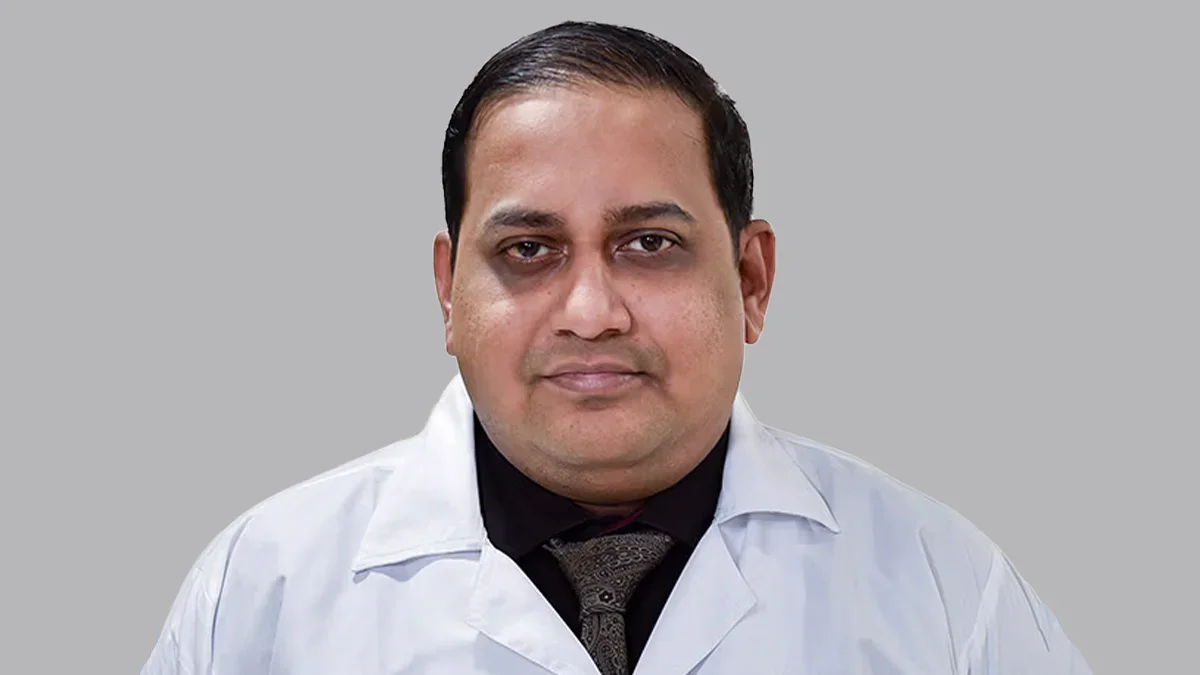
Amol Akhade, Senior Consultant Medical Oncologist and Hemato-Oncologist at Suyog Cancer Clinics and Reliance Hospitals, shared a post on LinkedIn:
“In oncology today, we often find ourselves pulled between two competing instincts.
On one side is the drive to innovate at any cost—the belief that every new drug, every molecular target, and every incremental gain represents progress.
On the other is the push for universal access—the conviction that treatment must be affordable, equitable, and available to all, even if that means accepting constraints on what can realistically be delivered.
These positions are often framed as opposites, but in practice, neither fully captures the complexity of real-world cancer care.
The ongoing debate around RAS inhibitors in pancreatic cancer, particularly newer agents like daraxonrasib, illustrates this tension clearly.
For decades, KRAS was considered undruggable, and the emergence of targeted inhibitors represents a genuine scientific achievement. Yet, when these therapies enter the clinic, the conversation will quickly shifts from possibility to value. The benefits, while promising, are often modest and come with substantial costs.
This raises uncomfortable but necessary questions about how we define meaningful progress in a disease as aggressive and unforgiving as pancreatic cancer.
A purely innovation-driven approach risks equating novelty with value. When drugs developed at enormous financial and intellectual cost deliver only incremental improvements, the justification for widespread use becomes less clear, particularly in resource-constrained settings. At the same time, dismissing such advances outright in the name of affordability risks stagnation.
Breakthroughs rarely arrive fully formed; they are often the result of iterative progress, where early, imperfect steps pave the way for more effective therapies in the future.
Conversely, a purely access-driven model, while ethically compelling, can struggle to sustain the very ecosystem that produces innovation. Systems that aim to provide everything to everyone may find themselves limited by delays, infrastructure gaps, and difficult prioritization decisions.
In such environments, the promise of equity can paradoxically translate into compromised quality or restricted availability of newer treatments.
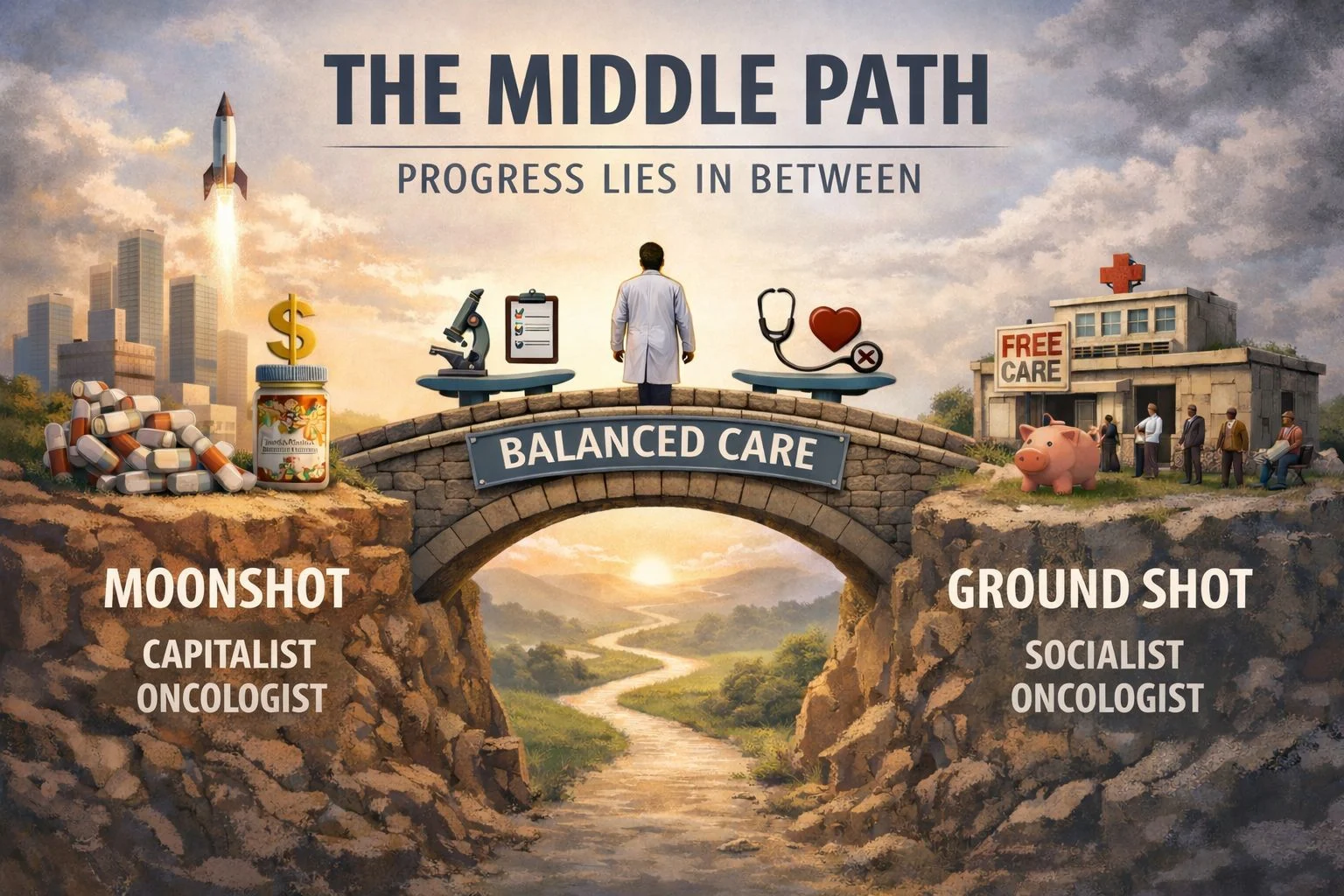
The reality is that oncology is not practiced at either extreme. It unfolds in the space between them, where clinicians must constantly balance evidence with affordability, and hope with realism.
In the end, the path forward is neither a moonshot driven solely by ambition nor a ground-level compromise constrained by idealism.
It is a middle path, shaped by critical appraisal, contextual judgment, and an unwavering focus on patient-centered value.
This is where meaningful progress resides—not in extremes, but in the careful navigation between them.
Between the ground shot and moon shot lies the choice that really matters.”
More posts featuring Amol Akhade.