





Amar Rewari, Chief of Radiation Oncology at Luminis Health, shared a post on LinkedIn:
“We often talk about cancer as if it’s mostly genetics or bad luck.
But population data tells a different story.
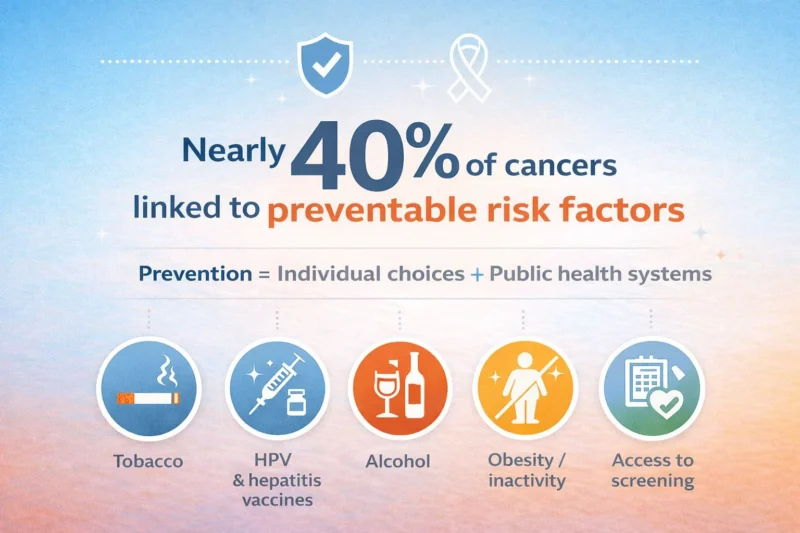
I was recently featured in Prevention at Hearst Magazines discussing new research published in Nature Medicine suggesting nearly 40% of cancers worldwide are linked to risk factors we already understand.
This shifts the conversation. Cancer prevention isn’t just about treatment breakthroughs, many of the biggest gains against cancer over the past decades have come from reducing exposures in the first place.
A small number of risks drive a large share of cases: tobacco, certain infections (like HPV and hepatitis viruses), alcohol, obesity, and physical inactivity.
What’s important is that prevention doesn’t look the same everywhere.
‘In higher-income countries, lifestyle factors like smoking, obesity, and alcohol play a larger role, while in lower-resource settings, infection-related cancers remain a major driver.’
Which leads to a bigger point I tried to emphasize in the article:
‘Individual actions are important, but so are broader policies that support clean air, safer workplaces, and access to preventive care. Cancer prevention works best when people are supported by healthier environments, not left to do it all on their own.’
We often ask patients to take responsibility for their health, and that matters.
But vaccines, screening access, tobacco policy, and the environments people live in may have just as large an impact.
If nearly 40% of cancers are linked to modifiable risks, where should we focus most: educating individuals, or shaping the environments people live in?”
Other articles featuring Amar Rewari on OncoDaily.