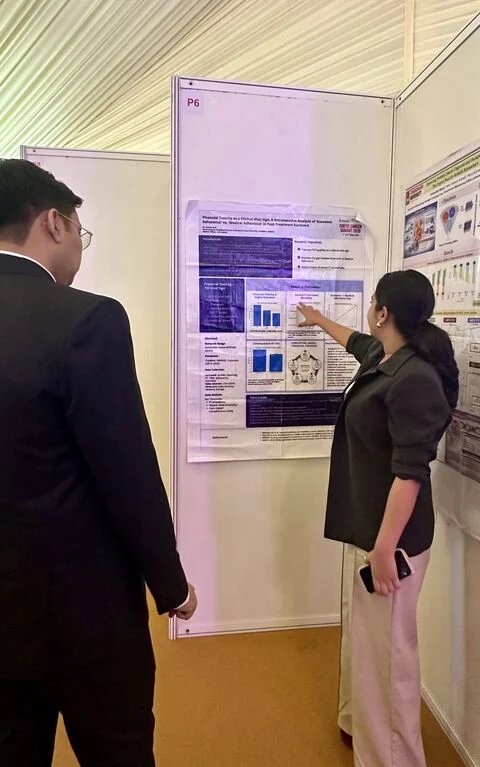
Aastha Naik, Founder of Cancer.cure, Government Medical Officer at RH and CHC Dabhoi, shared a post on LinkedIn:
“Most post-treatment cancer patients don’t relapse because of biology. They relapse because of their bank account. That’s not a provocation, it’s increasingly what the data shows.
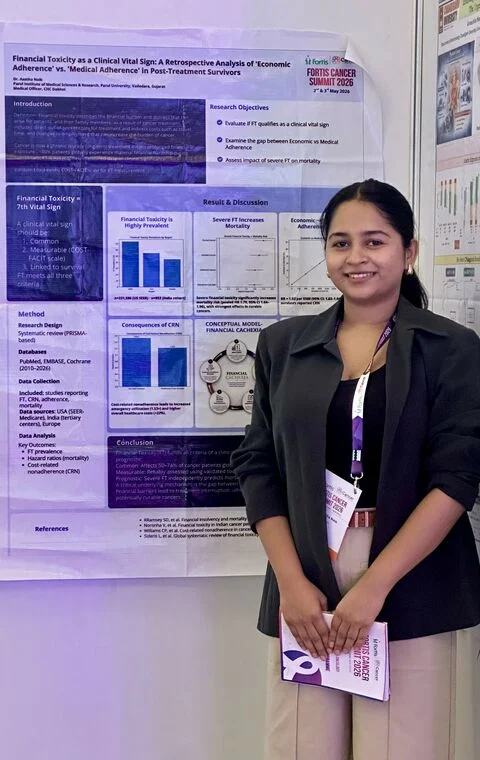
This past weekend, I presented my research at the Fortis Cancer Summit 2026, New Delhi – a poster titled ‘Financial Toxicity as a Clinical Vital Sign: A Retrospective Analysis of Economic vs Medical Adherence in Post-Treatment Survivors.’
The core argument is that financial toxicity isn’t a social footnote. It is a clinical variable one that predicts adherence failures, missed follow-ups, and survivorship outcomes just as meaningfully as tumor biology. We need to start treating it like one. Presenting this work made the gap real. Standing in front of clinicians and researchers and defending the framing of economic adherence as distinct from medical adherence pushed me to think more rigorously about what we actually mean when we say ‘the patient was non-compliant.’ Noncompliance is rarely failure of will. It’s often failure of system.
That’s why I am building Cancer.cure , where every aspect of supportive care is valued.”
Aruni Ghose, Director and Chief Executive Officer at Canprecise AI, Chief Medical Officer at Shiksak, shared the post, adding:
“Dr. Aastha Naik hits the nail on its head – Fantastic Presentation at the Fortis Cancer Summit 2026
Key take home message here:
The Indian Cancer Epidemic is a Financial Toxicity-driven Access and Affordability Gap for Treatment as well as Treatment Toxicity.”
Other articles about Financial Toxicity in Cancer Care on OncoDaily.