Douglas Flora, President-Elect Association of Cancer Care Centers at Association of Cancer Care Centers, shared on LinkedIn:
“Our legacy screening rules were built to find an established, billion-cell mass. But when detection enters the molecular realm, we are no longer just sharpening our tools. We are confronting a biologically different problem.
Early in our training, every young physician learns to treat early diagnosis with a healthy measure of suspicion. We sit in lecture halls and absorb the cautionary parables of our predecessors: well-intentioned screening initiatives that discovered thousands of indolent thyroid cancers that never would have caused a day of illness, leading to unneeded surgeries, severed vocal nerves, and lifetimes of hormone replacement.
We learn the formal vocabulary of diagnostic illusion. There is lead-time bias, where finding a tumor three years earlier simply means a patient lives three years longer with the fear of their diagnosis, while their date of death remains unchanged. There is length-time bias, where screening disproportionately catches sluggish, harmless tumors while aggressive ones burst through between checkups. And there is the Will Rogers phenomenon, where sharper scans reclassify patients into different stages, making survival statistics look prettier on paper without changing a single outcome.
These principles were hard-won. They emerged over decades to protect healthy people from the overreach of well-meaning medicine. From that wisdom grew a strict evidentiary standard: before a new screening tool is recommended to the public, it must demonstrate a statistically significant reduction in disease-specific mortality in prospective randomized trials that often span ten to fifteen years.
That standard made good sense for twentieth-century medicine. It was designed for an era when finding cancer meant finding an anatomical mass: a lump you could feel with your fingers, a density on a mammogram, or a shadow on a chest radiograph.
The Limitation of One Billion Cells
The limitation of this approach is biological. By the time a solid epithelial tumor reaches one centimeter across-the typical threshold of visibility on standard imaging-it already contains roughly one billion cells.
To reach that scale, the malignancy has divided dozens of times. It has generated an extensive family tree of subclonal mutations, remodeled its local tissue, and developed the vascular scaffolding required to shed metastatic seeds into the bloodstream. In this macroscopic world, our skepticism is warranted: catching a tumor at one billion cells instead of two billion often buys very little leverage. You are already fighting an entrenched adversary that has acquired the genetic diversity to resist therapy.
The Molecular Gray Zone
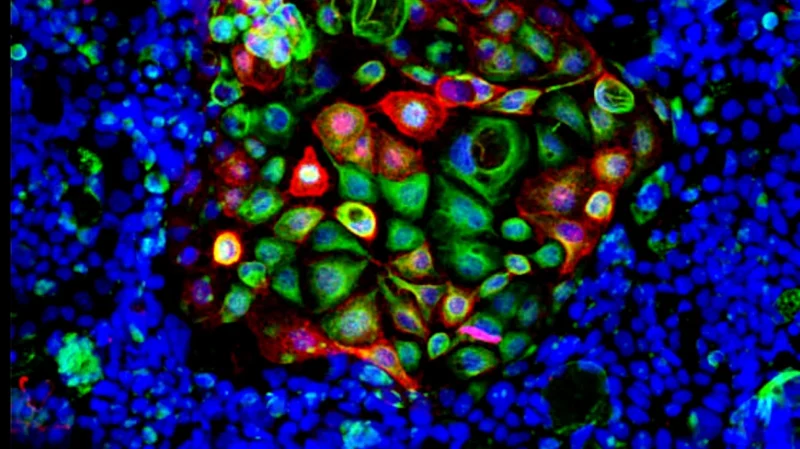
Today, we are beginning to catch glimpses of a different physical domain. High-throughput molecular assays analyzing cell-free DNA methylation signatures, fragmentomics, circulating proteomic arrays, and metabolic profiles are detecting the faint footprints of malignancy at parts-per-million resolution. In theory, this moves the potential threshold of detection from a billion cells down toward a hundred thousand.
This brings us to a gray zone our clinics are just beginning to see: the patient with a confirmed, repeatable positive molecular signal, but completely normal, pristine imaging.
Let us call this state Molecular-Only Disease (MOD). It represents a phase where aberrant biology is demonstrably active in the circulation, but has not yet organized into an anatomical, radiographically visible mass.
When you encounter Molecular-Only Disease today, our legacy playbook creates clinical paralysis. Without a visible target on a scan to biopsy or resect, guideline-directed care offers only watchful waiting: we send the patient home and ask them to return in six months to see if a mass has finally grown large enough to find.
There is a profound tension in that posture. Imagine an army that intercepts clear intelligence of an adversary setting up an outpost in an open valley. Rather than dispatching a small patrol to disperse the camp while it is unorganized and vulnerable, the generals order their troops to wait on the ridge until the enemy finishes building stone ramparts, digging trenches, and mounting artillery-simply because our tactical manuals only explain how to conduct a siege.
Why do we wait for the adversary to fortify its defenses before we engage?
Preparing for the ‘Pre-Patient’
To be clear: the commercial multi-cancer early detection tests available today are not yet sensitive or specific enough to guide this kind of definitive intervention. Localized, early-stage tumors shed very little cell-free DNA into five liters of circulating blood, and single-modality blood tests alone will not solve that physical limitation. We are likely two to three years away from the integrated, next-generation screening packages we need multimodal panels that combine DNA methylation and fragmentomics with high-throughput proteomics, metabolomics, and AI-driven radiomics.
Yet as these tools mature, we as a clinical community must begin preparing our diagnostic and treatment algorithms for the ‘Pre-Patient.’
A cluster of Molecular-Only Disease comprising a hundred thousand cells is biologically fragile. It has not yet undergone the successive rounds of Darwinian mutation that generate treatment resistance. It lacks the dense fibrous scaffolding and immunosuppressive microenvironment that shield mature tumors from our therapies. It is clonally uniform, metabolically vulnerable, and confined.
What if we moved our most effective modern therapies into this far more hospitable biological neighborhood?
Instead of waiting for a mature mass that requires extensive surgery, cytotoxic chemotherapy, and radiation, what if Molecular-Only Disease could be intercepted early? Could a personalized neoantigen mRNA vaccine train the immune system to recognize and clear that specific molecular signature? Could a short, low-toxicity course of targeted therapy or immunotherapy eliminate those unanchored cells before they ever establish a blood supply?
Holding Both Rigor and Innovation
We do not know the answers yet. But finding out requires us to hold two ideas at once: maintaining our commitment to rigorous science, while remaining willing to re-examine the sacred cows of twentieth-century screening orthodoxy.
If we insist that software-driven, iterative molecular diagnostics and interceptive therapies must complete fifteen-year static mortality trials before we act on their promise, we will lock progress behind procedural delay. By the time such a trial concludes, the sequencing chemistry, the computational models, and the paired interceptive drugs will be long obsolete.
We can investigate these questions with determination and care. Regulators and clinical trialists should evaluate validated intermediate endpoints: Does an interceptive therapy produce sustained molecular clearance the complete disappearance of circulating tumor markers from the blood? Does longitudinal monitoring demonstrate a measurable reduction in late-stage presentations across real-world cohorts?
The physics of cancer detection are shifting from macroscopic anatomy to molecular systems. Moving oncology from late-stage rescue to early interception does not require abandoning scientific rigor; it requires matching our evidentiary tools to the biology of the disease we are trying to cure.”
This also can be interesting:
Cancer Screening by Age: What Tests Do You Need and When?