Andrea Reis, Medical Manager at Further Group, shared on LinkedIn:
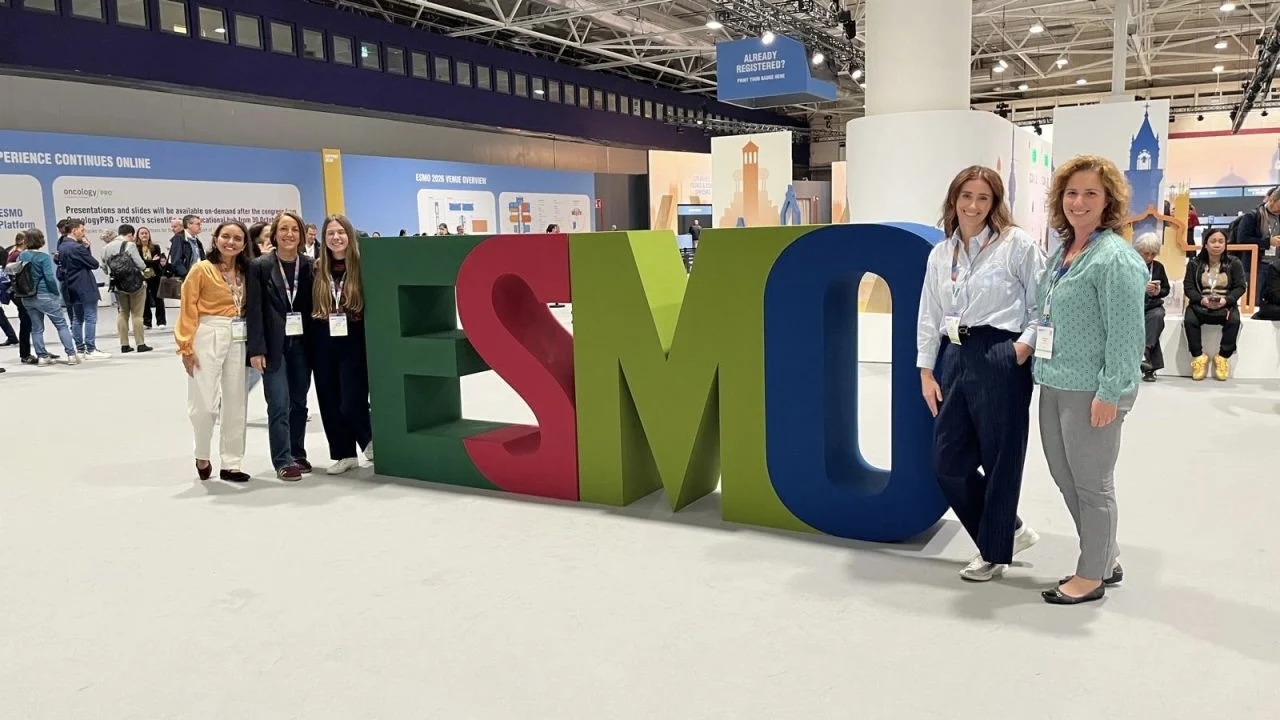
“ESMO 2026 is officially underway in Madrid!
I started the congress with the ESMO 2026 Opening Session, led by ESMO Congress President Fabrice André, with Scientific Co-Chairs Yelena Janjigian and James Larkin, and Educational Chair Nadia Harbeck helping shape this year’s scientific programme.
An opening session is an opportunity to step back from individual studies and consider the bigger picture: where oncology is heading, how quickly the evidence is evolving, and what these advances will mean for patients and healthcare systems.
For me, one of the central challenges remains connecting scientific progress with meaningful clinical decisions. New treatments and technologies create opportunities, but their impact depends on the quality of evidence, appropriate patient selection, access to specialist expertise and the ability to navigate increasingly complex treatment pathways.
This is closely connected to my work as Medical Manager at Further Group, where clinical assessment and access to appropriate medical expertise are central to supporting informed healthcare decisions.
As an OncoDaily Ambassador, I’m also delighted to be part of a community that brings oncology professionals together and helps share important developments beyond the congress halls. Looking forward to the discussions, new evidence and conversations ahead.
The cost of cancer care is not just an economic issue. It is an access, equity and clinical decision-making issue.
Today at ESMO 2026, I attended the educational session ‘The Exorbitant Costs of Cancer Care: What Can We Do?’
Two topics on the programme stood out: ‘Financial Toxicity: Magnitude and Solutions’ and ‘Modelling Economic Impact to Deliver Population Health Impact.’
They reflect a challenge that oncology can no longer afford to overlook. Scientific progress is bringing new diagnostic tools and treatments, but these advances also raise difficult questions about affordability, sustainability and equitable access.
Financial toxicity can affect patients and families in ways that extend beyond the price of a medicine. The wider impact may include travel, time away from work, additional care needs and the financial consequences of living with cancer.
At the healthcare-system level, economic modelling can help inform decisions about how resources are allocated and how the impact of interventions should be assessed. The challenge is to consider cost alongside clinical benefit, patient outcomes and access – not in isolation.
This is highly relevant to Further Group and our work. Appropriate clinical assessment, access to relevant specialist expertise and informed decisions about treatment pathways are important parts of navigating complex healthcare needs. The objective is not simply to reduce expenditure, but to support clinically appropriate decisions while recognizing the value of care to individual patients.
How can we ensure that innovation in cancer care remains both clinically meaningful and financially sustainable?
From generative AI to autonomous agents: How do we move from promise to proof in oncology?
At ESMO 2026, the educational session ‘Transforming Oncology with Generative AI and Autonomous Tools’ explored a question that is becoming increasingly important for cancer care: how can we translate rapidly evolving AI capabilities into safe, clinically meaningful applications?
One of the key messages I took away is that innovation alone is not enough. Clinical validation and responsible implementation are essential.
The AI-related presentations and discussions highlighted three important steps:
- PREDICT: AI-driven digital pathology may help extract genomic risk information from routine H&E images, potentially supporting recurrence prediction and risk stratification.
- TEST: Large language models and AI-assisted tools must be evaluated rigorously. The session highlighted research into LLM-assisted chemotherapy side-effect management, including a randomised controlled trial, as well as the need for stronger clinical evidence for AI agents.
- IMPLEMENT: AI must demonstrate value in real clinical workflows, including multidisciplinary decision-making. Accuracy in a controlled setting does not automatically translate into better decisions or improved patient outcomes in routine practice.
Caroline Chung from MD Anderson Cancer Center, addressed ‘Validating AI for Oncology: Navigating the Road to Clinical Implementation‘ – an important perspective on the work required to bridge technical innovation and clinical adoption.
For me, the central challenge is not simply what AI can do, but what it can reliably, safely and meaningfully improve for patients. Human clinical expertise, appropriate governance, transparency and continuous evaluation remain essential as we explore increasingly autonomous systems.
This is also where I see an important connection with my work at Further Group: supporting informed clinical decisions requires more than access to information. It requires critical appraisal of evidence, specialist expertise and an understanding of each patient’s individual circumstances.
And through my involvement with OncoDaily, I see the importance of communicating these developments clearly – helping the oncology community distinguish promising innovation from validated clinical benefit.
The future of AI in oncology should not be measured only by what algorithms can achieve, but by the difference they make to clinical practice and patient care.”
You can also read: 20 Posts Not to Miss from ESMO Congress 2026: Day 1