The 2025 Annual Report from the Union for International Cancer Control (UICC) presents a year of sustained global action in cancer control during a period shaped by geopolitical uncertainty, pressure on health systems, and uneven progress in global health. The report highlights how UICC and its worldwide membership continued to advance prevention, treatment, advocacy, access, and equity across more than 170 countries.
A Year Defined By Collaboration And Resilience
The 2025 report reflects the strength of a global cancer community working through uncertainty with a shared sense of purpose. UICC’s members remained central to this work, supporting efforts to keep cancer control on the global health and development agenda while helping countries address prevention, diagnosis, treatment, and care.
Across the year, UICC focused on practical, evidence-based action. Its priorities included people-centred care, women’s cancers, lung cancer, access to medicines and technologies, national cancer control planning, and stronger multi-sectoral partnerships.
Advancing People-Centred Cancer Care
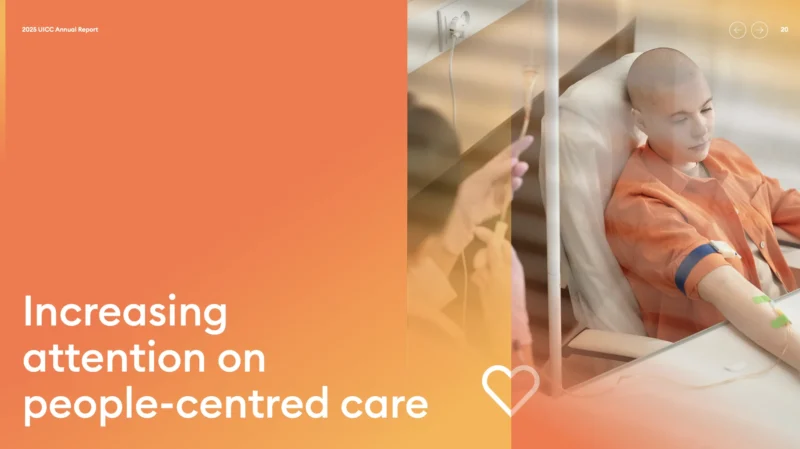
One of the major themes of the report is the growing attention to people-centred care. UICC continued to emphasize that cancer care must be shaped not only around disease management, but also around the needs, experiences, and realities of people affected by cancer.
This approach was strongly reflected in the World Cancer Day 2025 campaign, “United By Unique,” which encouraged individuals, families, caregivers, health professionals, advocates, and communities to share personal cancer experiences. The campaign highlighted the importance of care that is compassionate, accessible, and responsive to each person’s journey.
Strengthening Action On Women’s Cancers
The report also outlines UICC’s work to increase global attention on women’s cancers, particularly breast and cervical cancer. Through advocacy, learning opportunities, and support for civil society organisations, UICC helped advance practical action around prevention, screening, treatment, and policy change.
This included continued engagement with global initiatives focused on breast cancer control and cervical cancer elimination. UICC also supported advocacy tools, training, and country-level implementation efforts designed to improve access to HPV vaccination, cervical cancer screening, and breast cancer care.
Expanding Access Through The ATOM Coalition
A key area of progress in 2025 was access to medicines and technologies through the Access to Oncology Medicines (ATOM) Coalition. The report describes how the Coalition continued to develop practical pathways to improve access to quality-assured cancer medicines and diagnostics in low- and lower-middle-income countries.
The ATOM Coalition’s work focused on moving beyond commitments toward delivery. This included strengthening country readiness, supporting access pathways, improving diagnostic availability, and working with governments, industry, technical agencies, and civil society to address barriers across the cancer care continuum.
Building Stronger National Cancer Control Plans
UICC also placed major emphasis on improving health systems for cancer control. A central milestone was the inaugural Cancer Planners Forum, held in Geneva in partnership with WHO, IARC, and IAEA. The Forum brought together national cancer control planners from 40 countries to exchange practical experience and strengthen cancer planning at the country level.
The report underlines that strong cancer control plans are essential, but that plans must translate into real implementation. UICC’s work in this area focused on evidence-based planning, financing, monitoring, stakeholder engagement, and practical support for countries seeking to strengthen cancer prevention, diagnosis, treatment, and care.
Renewed Global Focus On Lung Cancer
The 2025 Annual Report also highlights growing international attention on lung cancer and lung health. UICC supported global advocacy around integrated lung health, including efforts connected to the adoption of the WHO Integrated Lung Health Resolution at the World Health Assembly.
This work reflects the need to address lung cancer within broader health systems, including tobacco control, air pollution, early detection, treatment access, and policy implementation. UICC’s engagement helped bring together members, partners, and policymakers around a shared agenda for stronger lung cancer control.
Convening The Global Cancer Community
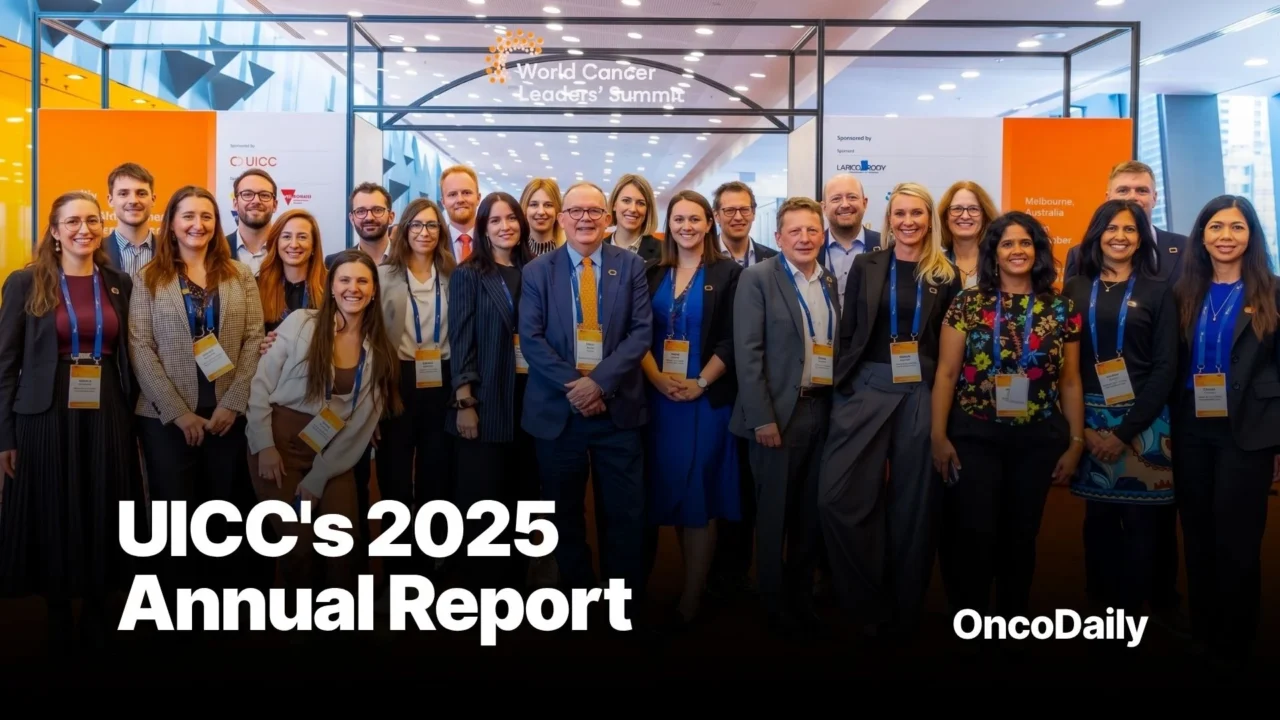
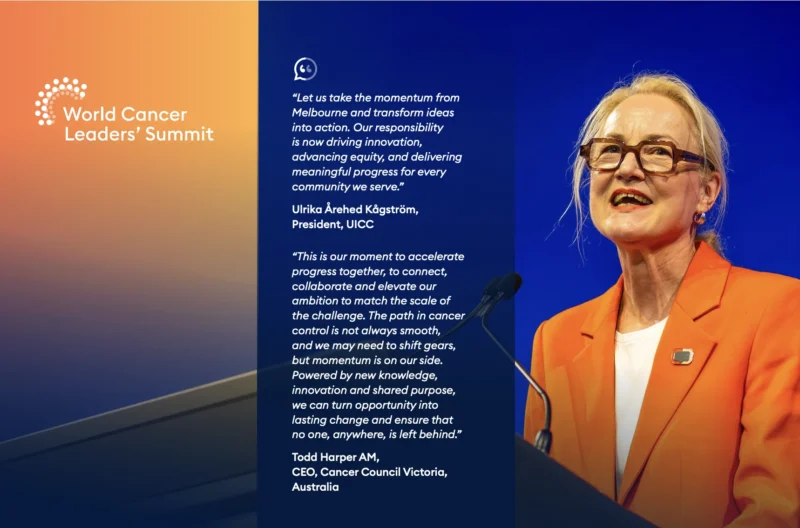
In 2025, UICC continued to serve as a global platform for connection and collaboration. The World Cancer Leaders’ Summit in Melbourne brought together leaders from across the cancer community to discuss shared challenges and future priorities.
The Summit also marked the launch of the World Cancer Declaration 2025–2035, a shared framework intended to support accountability, investment, and coordinated action in cancer control over the next decade. The Declaration reflects UICC’s broader commitment to equity, collaboration, evidence, sustainability, and accountability.
Supporting Members Across More Than 170 Countries
Throughout the year, UICC supported its members through advocacy, training, fellowships, scholarships, online learning, and knowledge-sharing platforms such as UICC Connect. These activities helped cancer organisations strengthen their capacity, exchange experience, and contribute more effectively to national and global cancer control efforts.
The report shows how UICC’s membership remained the foundation of its work. By connecting organisations across regions and sectors, UICC helped amplify the role of civil society, cancer centres, patient groups, professional associations, research institutions, and advocacy organisations in shaping cancer policy and practice.
A Shared Direction For Cancer Control
The 2025 Annual Report presents a clear message: progress in cancer control depends on collaboration, evidence-based action, and the meaningful inclusion of lived experience. In a difficult year for global health, UICC and its members continued to advance practical solutions, strengthen national leadership, and support a more equitable future for cancer prevention, treatment, and care worldwide.
Stay informed with more articles like this on OncoDaily
Written by Nare Hovhannisyan,MD