The therapeutic landscape of recurrent or metastatic head and neck squamous cell carcinoma (R/M HNSCC) has evolved substantially with the introduction of immune checkpoint inhibitors targeting the PD-1/PD-L1 axis. Trials such as KEYNOTE-048 and CheckMate 141 established pembrolizumab and nivolumab as important standards of care, improving overall survival in selected patient populations. However, these pivotal studies primarily enrolled patients with ECOG performance status 0–1 and relatively preserved organ function, leaving a major evidence gap for frail patients, individuals with substantial comorbidities, platinum-refractory disease, or those considered unfit for cisplatin-based chemotherapy.
In real-world clinical practice, a considerable proportion of patients with R/M HNSCC are elderly, malnourished, heavily pretreated, or burdened by smoking-related cardiopulmonary disease. Many are unable to tolerate platinum-containing polychemotherapy, while others remain unsuitable for single-agent immunotherapy because of rapid disease progression requiring immediate cytoreduction. In this difficult clinical setting, alternative chemoimmunotherapy strategies using less intensive cytotoxic backbones have become increasingly relevant.
The NIVOTAX TTCC study explored this unmet need by evaluating weekly paclitaxel combined with nivolumab in previously untreated cisplatin-ineligible R/M HNSCC patients. The trial specifically focused on a vulnerable and underrepresented population rarely included in landmark immunotherapy studies.
Biological and Clinical Rationale for the Combination
Taxane-based chemotherapy possesses immunomodulatory properties extending beyond direct cytotoxicity. Preclinical evidence has demonstrated that paclitaxel can enhance dendritic cell activation, increase tumor antigen presentation, and promote CD8-positive T-cell infiltration within the tumor microenvironment. These effects provide a mechanistic rationale for combining taxanes with immune checkpoint blockade.
Nivolumab, a PD-1 inhibitor, restores exhausted T-cell function by preventing inhibitory signaling mediated through the PD-1 receptor. Combining nivolumab with paclitaxel therefore offers the possibility of simultaneous tumor debulking and immune reactivation. In frail patients with aggressive disease kinetics, such an approach could theoretically provide faster clinical responses than PD-1 blockade alone while maintaining the potential for durable immune-mediated disease control.
The comparator arm utilized the ERBITAX regimen, consisting of paclitaxel plus cetuximab, which had previously demonstrated activity and tolerability in platinum-unfit populations and represented an accepted standard in Spain for patients unsuitable for platinum-based therapy.
Study Design and Patient Population
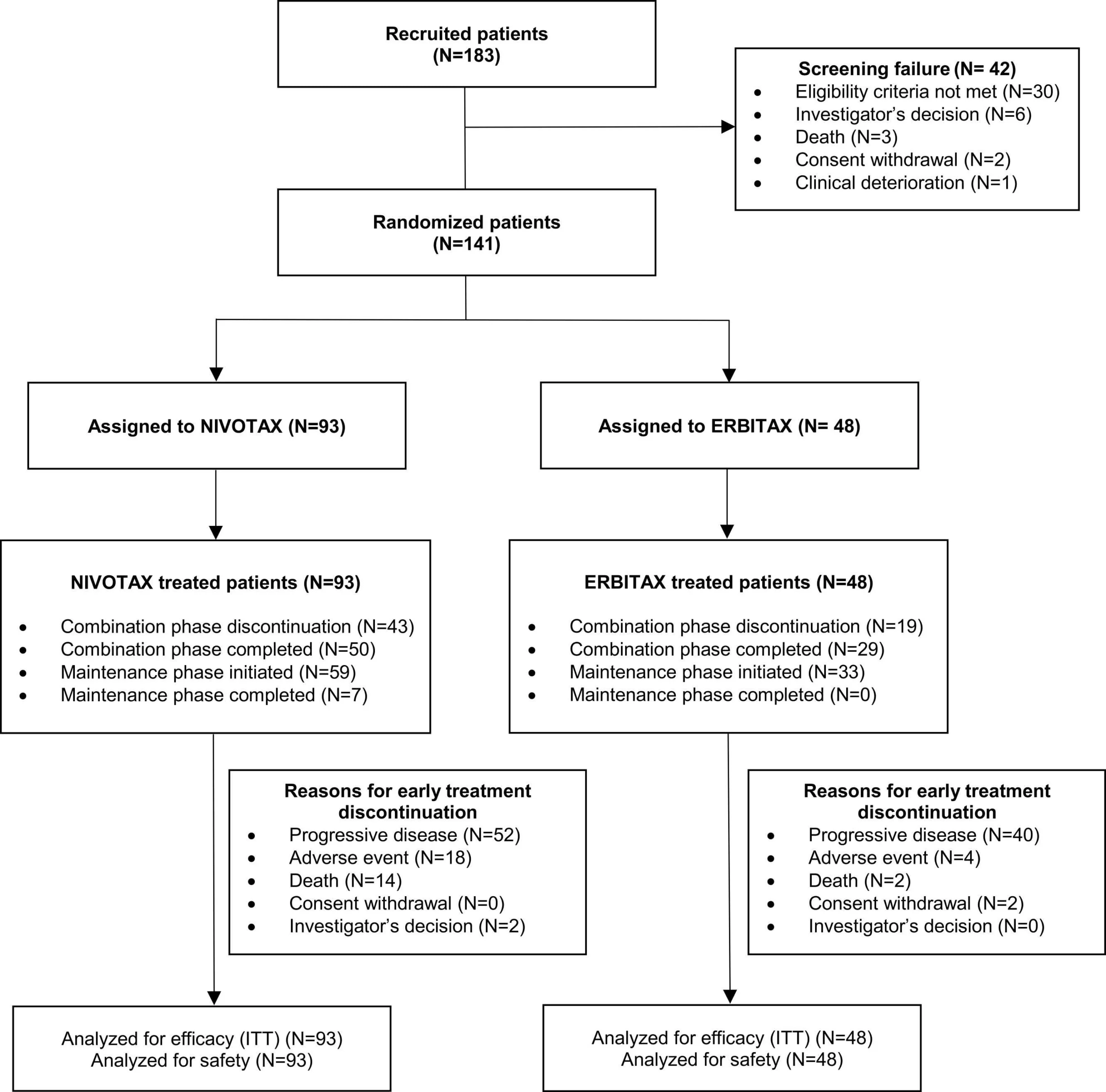
NIVOTAX trial was a randomized, open-label, multicenter, non-comparative phase II study conducted across 20 Spanish centers. Patients were randomized in a 2:1 ratio to receive paclitaxel plus nivolumab (“nivotax”) or paclitaxel plus cetuximab (“erbitax”).
Eligibility criteria specifically targeted cisplatin-ineligible patients. These included individuals with poor functional reserve, renal impairment, hearing loss, neuropathy, prior cumulative cisplatin exposure, platinum-refractory disease, or significant cardiovascular comorbidity. Importantly, patients with ECOG 2 or Karnofsky Performance Status (KPS) 70 were eligible, making this one of the few immunotherapy studies intentionally focused on a frail head and neck cancer population.
A total of 141 patients were randomized, including 93 patients in the nivolumab-paclitaxel arm and 48 patients in the cetuximab-paclitaxel arm. Baseline characteristics were relatively balanced between groups.
Key Baseline Characteristics
- Median patient age was 65 years.
- Approximately 40% of patients in the nivolumab arm were ≥70 years old.
- ECOG 2 performance status was present in 38% of patients receiving nivotax.
- More than 75% of tumors demonstrated PD-L1 CPS ≥1.
Importantly, nearly one-third of patients were platinum-refractory, representing an especially aggressive disease subset historically associated with poor survival outcomes.
Treatment Strategy
Patients in the experimental arm received weekly paclitaxel at 80 mg/m² combined with nivolumab 240 mg every two weeks for 12 weeks, followed by nivolumab maintenance every four weeks. The comparator arm received weekly cetuximab plus paclitaxel followed by maintenance cetuximab.
Treatment could continue for up to 24 months unless progression, unacceptable toxicity, or withdrawal occurred.
Because the paclitaxel-nivolumab combination had not previously been extensively studied in this population, the trial incorporated a dedicated safety monitoring committee that reviewed toxicity throughout the study.
Efficacy Outcomes
The primary endpoint of the study was the 2-year overall survival rate. This endpoint was selected because long-term survival is increasingly recognized as one of the defining features of successful immunotherapy strategies.
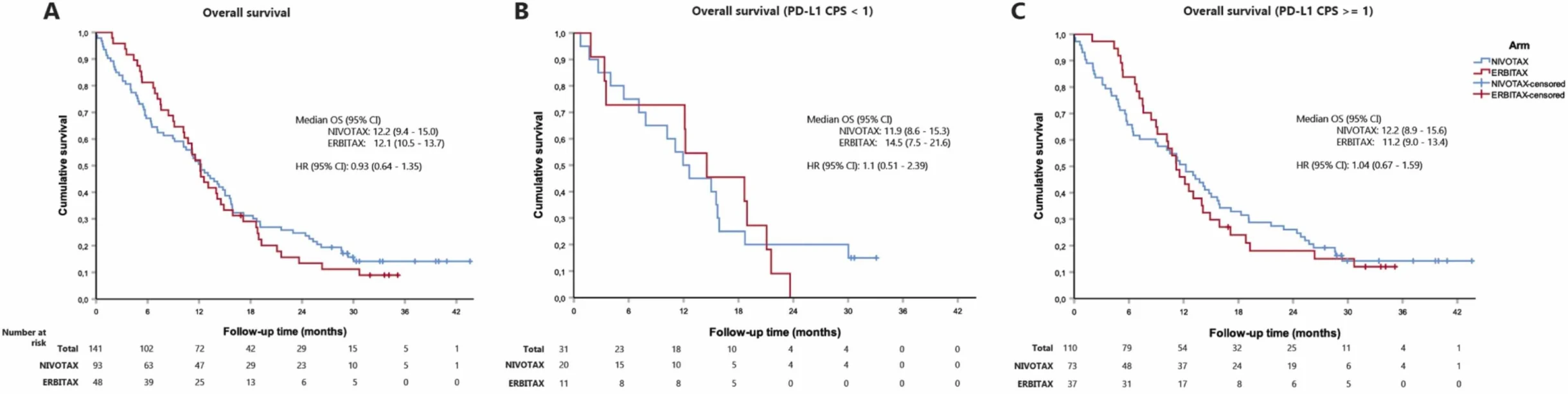
The trial successfully met its predefined primary endpoint. The 2-year overall survival rate reached 24.7% in the nivotax arm, exceeding the historical benchmark used for trial design.
Major Efficacy Results
- 2-year overall survival reached 24.7% with nivotax versus 13.4% with erbitax.
- Median overall survival was 12.2 months with nivotax.
- Median progression-free survival was 5.6 months.
- Objective response rate reached 37.6%.
Notably, median overall survival was similar between treatment arms despite the numerically higher long-term survival rate observed with nivolumab-paclitaxel. This pattern resembles the characteristic delayed separation of survival curves frequently observed with immunotherapy-based strategies, where a subset of patients derive prolonged benefit despite modest effects on median endpoints.
The disease control rate exceeded 74% in the nivotax arm, suggesting meaningful antitumor activity even within this frail and clinically complex patient population.
PD-L1 and Biomarker Analysis
Interestingly, PD-L1 CPS status did not significantly influence efficacy across the overall study population. However, exploratory analyses suggested potential enrichment of benefit in tumors with very high PD-L1 expression.
Among patients with PD-L1 CPS ≥20, the nivolumab-paclitaxel combination demonstrated encouraging signals, including prolonged progression-free survival and notably longer duration of response.
Exploratory PD-L1 CPS ≥20 Findings
- Median overall survival reached 15 months with nivotax.
- Median progression-free survival increased to 10.4 months.
- Median duration of response reached 10.9 months.
- Responses appeared more durable than with cetuximab-paclitaxel.
Although these findings were exploratory and not statistically powered, they suggest that highly inflamed tumors with elevated PD-L1 expression may derive enhanced benefit from chemoimmunotherapy combinations incorporating nivolumab.
Platinum-Refractory Disease
One of the most clinically relevant aspects of the study involved outcomes among platinum-refractory patients. This subgroup historically demonstrates poor responsiveness to therapy and rapid disease progression.
Despite the aggressive biology of this population, the nivolumab-paclitaxel combination produced clinically meaningful activity. Median progression-free survival approached five months, and objective response rates remained substantial even within this difficult-to-treat subgroup.
These observations support the concept that combining immunotherapy with taxane chemotherapy may partially overcome some mechanisms of resistance associated with platinum-refractory disease.
Safety and Toxicity Profile
The safety analysis revealed a complex balance between tolerability and clinical risk. Overall rates of grade 3–4 treatment-related adverse events were relatively manageable and comparable between treatment arms.
Key Safety Findings
- Grade 3–4 treatment-related adverse events occurred in 38% of nivotax patients.
- Serious adverse events occurred in 57% of patients.
- No grade 5 treatment-related toxicities were observed.
- Respiratory adverse-event–related deaths occurred more frequently in the nivotax arm.
The most common toxicities included fatigue, anemia, diarrhea, mucosal inflammation, neuropathy, and hypothyroidism. Immune-related toxicities appeared broadly consistent with the known safety profile of nivolumab.
However, an important safety concern emerged regarding respiratory complications. Although these respiratory events were considered treatment-unrelated by investigators, mortality associated with pulmonary complications was substantially higher in the nivotax arm.
Most respiratory events occurred among frail “unfit” patients with poor baseline clinical reserve. This observation likely reflects the extreme vulnerability of this patient population, many of whom had significant smoking history, chronic pulmonary disease, aspiration risk, malnutrition, or advanced systemic inflammation.
Importantly, the study was conducted during the SARS-CoV-2 pandemic, which may also have contributed to increased pulmonary complications and mortality.
Clinical Interpretation
The NIVOTAX study highlights both the promise and complexity of chemoimmunotherapy in frail head and neck cancer populations. The regimen demonstrated meaningful long-term survival activity in a population with historically poor outcomes and limited therapeutic options.
At the same time, the increased incidence of respiratory adverse events emphasizes the challenges of applying immunotherapy-based combinations in medically vulnerable patients. Unlike highly selected trial populations, real-world patients frequently harbor substantial comorbidity burdens that may amplify treatment-associated risks even when toxicities are not directly immune-mediated.
The findings also reinforce the importance of individualized treatment selection. While fit patients may tolerate intensive platinum-based chemoimmunotherapy regimens, frail populations may require modified approaches balancing efficacy with preservation of quality of life and minimization of treatment-related complications.
Read Full Article Here