
Immune checkpoint inhibitors targeting the PD-1/PD-L1 pathway have fundamentally reshaped the treatment landscape of advanced cervical cancer. After decades during which platinum-based chemotherapy with or without bevacizumab represented the primary systemic option for recurrent or metastatic disease, immunotherapy has emerged as a central therapeutic strategy capable of producing more durable responses in selected patients. Among these agents, the anti–PD-1 monoclonal antibody Cemiplimab demonstrated clinically meaningful survival benefit in the phase III EMPOWER-Cervical 1 trial and subsequently became an approved therapy for patients with recurrent or metastatic cervical cancer progressing after platinum-based chemotherapy.
As checkpoint inhibitors move into routine clinical practice, increasing attention has shifted toward immune-related adverse events (irAEs), a unique spectrum of toxicities generated by nonspecific immune activation. Unlike conventional chemotherapy-associated toxicities, irAEs result from immune-mediated inflammation affecting healthy tissues and organs. Although these toxicities represent a major clinical challenge, accumulating evidence increasingly suggests that irAEs may also reflect effective immune activation and enhanced antitumor response.
A recent multicenter real-world study conducted by the Polish–Czech Cervical Cancer Immunotherapy Group evaluated the incidence, severity, and clinical implications of irAEs in patients treated with cemiplimab for persistent, recurrent, or metastatic cervical cancer. The study provides one of the largest real-world datasets from Central and Eastern Europe assessing the safety profile of cemiplimab while simultaneously exploring the relationship between immune-mediated toxicity and clinical outcomes.
Clinical Background and Study Population
Cervical cancer continues to represent a major global health burden despite advances in vaccination and screening programs. Although early-stage disease can frequently be cured with surgery and chemoradiotherapy, recurrent or metastatic cervical cancer remains associated with poor long-term survival, with historical 5-year survival rates remaining below 20%. The introduction of immune checkpoint inhibition has therefore represented an important therapeutic advance in this disease setting.
The PCCIG-01 study included 101 patients treated across 13 oncology centers in Poland and the Czech Republic. All patients had persistent, recurrent, or metastatic cervical cancer previously treated with platinum-based chemotherapy, with or without bevacizumab, and subsequently received cemiplimab monotherapy. Importantly, the cohort reflected real-world practice rather than the highly selected populations typically enrolled in clinical trials.
The median age of the cohort was 60 years, and the majority of patients initially presented with locally advanced disease. Most had previously undergone chemoradiotherapy, and approximately two-thirds had ECOG performance status 1 at the time of cemiplimab initiation. The most common metastatic sites included nonregional lymph nodes, lungs, and liver.
Safety Profile of Cemiplimab
Overall, cemiplimab demonstrated a manageable safety profile consistent with prior clinical trial data. Adverse events of any grade occurred in 44.6% of patients, while most toxicities remained low grade and clinically manageable. Importantly, severe toxicities were relatively uncommon, and no treatment-related deaths were observed.
Key Safety Findings
- Immune-related adverse events occurred in 33.7% of patients.
- Grade 3 irAEs developed in 7.9% of the cohort.
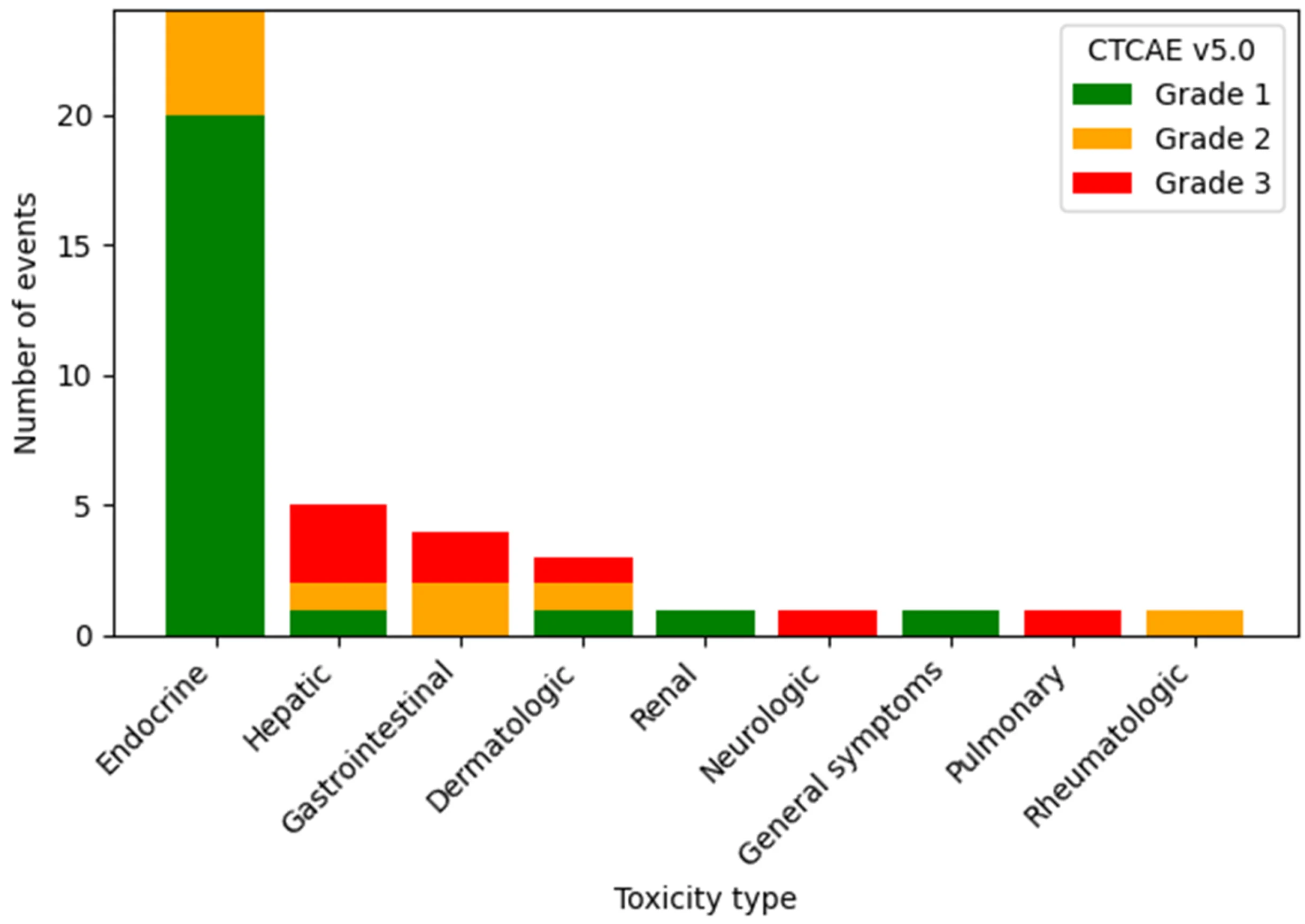
- Endocrine toxicities represented 58.5% of all irAEs.
- Treatment discontinuation due to irAEs occurred in only 5.9% of patients.
The predominance of endocrine toxicities is particularly noteworthy. Thyroid dysfunction, including hypothyroidism and hyperthyroidism, represented the most common immune-mediated complication. Hepatic toxicities, gastrointestinal inflammation, dermatologic reactions, pneumonitis, neurologic complications, renal toxicities, and rheumatologic manifestations were observed less frequently.
Importantly, most immune-related toxicities developed relatively early during therapy. The median time to irAE onset was approximately two months after treatment initiation, indicating that the critical window for toxicity surveillance occurs early during immunotherapy administration. This observation emphasizes the importance of close clinical monitoring during the initial treatment period.
The majority of irAEs were successfully managed with corticosteroids alone, without requiring additional immunosuppressive therapies. This finding further supports the overall tolerability of cemiplimab in routine clinical practice.
Biological Basis of Immune-Related Toxicities
The emergence of irAEs reflects the fundamental mechanism underlying immune checkpoint inhibition. PD-1 normally functions as a physiologic inhibitory receptor limiting excessive T-cell activation and preventing autoimmune tissue damage. By blocking PD-1 signaling, checkpoint inhibitors restore cytotoxic T-cell activity against tumor cells but may simultaneously disrupt peripheral immune tolerance toward normal tissues.
This duality explains why effective antitumor immunity and autoimmune toxicity frequently occur together. The same activated immune system capable of recognizing malignant cells may also target endocrine organs, skin, liver, lungs, gastrointestinal mucosa, and other normal tissues.
Recent mechanistic studies have further refined understanding of PD-1 biology at the molecular level. Investigators recently demonstrated that PD-1 signaling occurs at specialized nanoscale microvillar T-cell contacts, where inhibitory signaling is integrated with T-cell receptor activation during the earliest stages of immune recognition. At these contact sites, PD-1 recruits SHP2 phosphatase and suppresses sustained T-cell activation. These findings suggest that successful PD-1 blockade may fundamentally alter the earliest stages of immune synapse formation and T-cell signaling dynamics.
Such mechanistic insights help explain why immune activation sufficient to overcome tumor-induced immune suppression may also increase the probability of autoimmune inflammatory complications.
Association Between irAEs and Clinical Outcomes
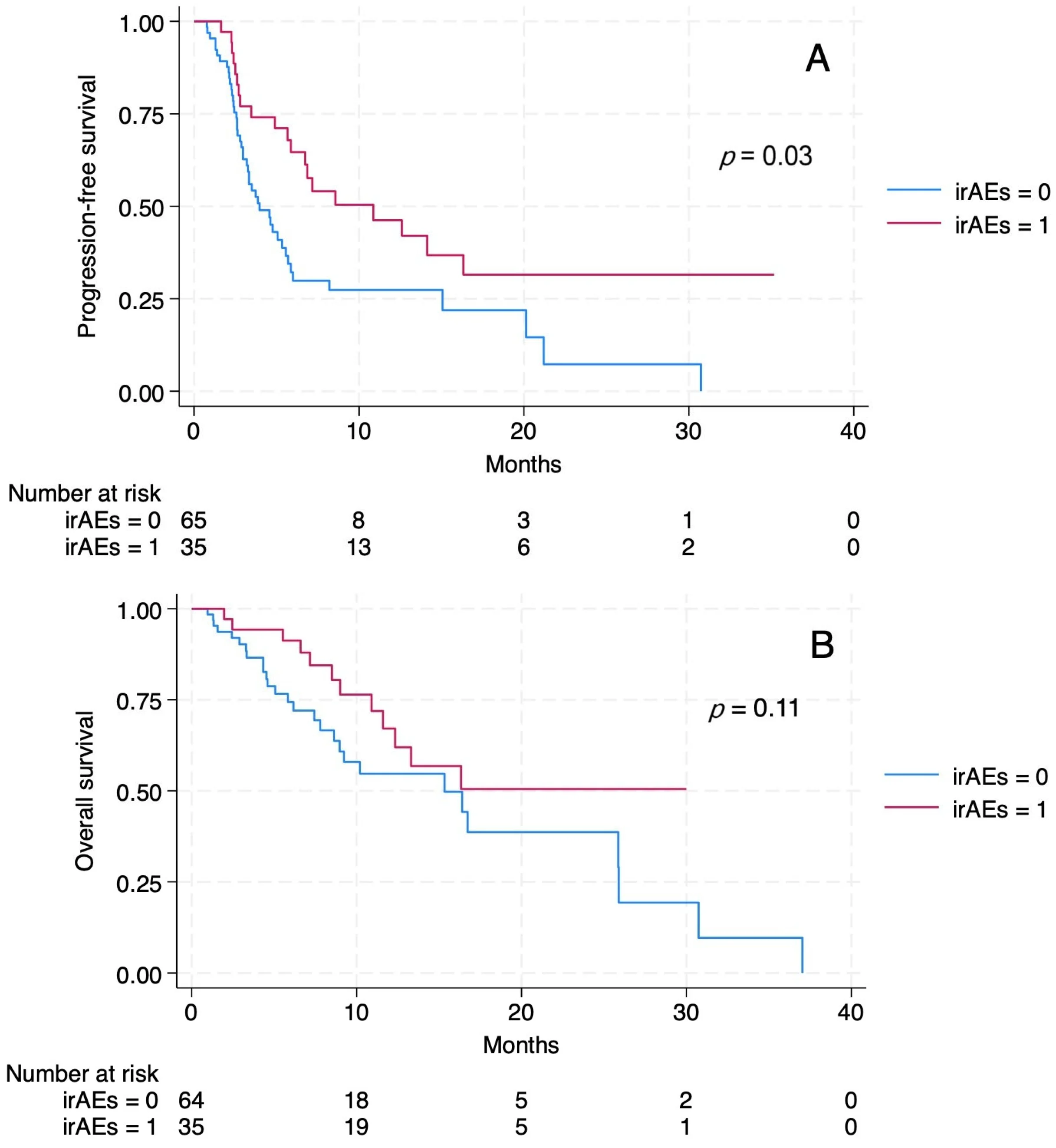
One of the most important findings of the PCCIG study was the strong association between irAE development and improved progression-free survival. Patients who experienced immune-related toxicities demonstrated markedly prolonged disease control compared with those who did not develop irAEs.
Key Efficacy Findings
- Median progression-free survival increased from 3.9 months to 10.9 months in patients who developed irAEs.
- Development of irAEs was associated with a 54% reduction in risk of progression or death.
- Disease control rate increased from 35.8% to 55.9% in patients with irAEs.
- Overall survival was numerically longer in patients with irAEs, although statistical significance was not reached.
These observations are consistent with findings across multiple malignancies, including melanoma, lung cancer, renal cell carcinoma, and urothelial carcinoma, where irAEs have repeatedly been associated with improved clinical outcomes.
The biological explanation likely relates to the intensity and persistence of systemic immune activation. Patients capable of mounting stronger immune responses against normal tissues may simultaneously generate more effective and sustained antitumor immunity. In this context, irAEs may serve as indirect clinical biomarkers of robust immune checkpoint blockade activity.
Interestingly, thyroid-related toxicities appeared particularly associated with improved outcomes. Patients developing thyroid irAEs demonstrated significantly prolonged progression-free survival and a trend toward improved overall survival. Similar associations between endocrine irAEs and favorable outcomes have been reported in several prior immunotherapy studies, suggesting that thyroid dysfunction may represent one of the clearest clinical correlates of effective immune activation.
Clinical Implications
The findings of this study have important implications for modern immuno-oncology practice. First, they reinforce the need for early recognition and proactive management of immune-related toxicities. Because most irAEs emerged within the first two months of therapy, close monitoring during early treatment cycles is critical.
Second, the study supports the growing concept that mild-to-moderate irAEs should not necessarily be viewed solely as negative treatment complications. Instead, carefully managed immune toxicities may represent evidence of active and biologically effective immune stimulation.
Third, these observations highlight the importance of balancing adequate immune activation with acceptable toxicity. Excessive immunosuppression used to control irAEs could theoretically compromise antitumor immunity, whereas delayed recognition of severe toxicities may lead to life-threatening complications.
Finally, the study underscores the growing need for predictive biomarkers capable of distinguishing beneficial immune activation from harmful autoimmunity. Future strategies incorporating cytokine profiling, immune signatures, spatial immunophenotyping, and multi-omic approaches may eventually allow clinicians to better individualize checkpoint inhibitor therapy.
Read Full Article Here