
Key takeaways
- High MCV and MCH usually do not mean cancer. Most causes are noncancerous and treatable.
- Vitamin B12 and folate deficiencies are common causes of enlarged red blood cells.
- Alcohol, liver disease, hypothyroidism, and medications can also increase MCV and MCH.
- Persistent elevations with anemia or other abnormal blood counts may require further investigation.
- Treatment depends on the underlying cause, and MCV and MCH often return to normal once it is addressed.
High MCV and MCH levels on a blood test can raise questions about cancer, particularly when the results are unexpected. However, high MCV and MCH usually do not mean cancer. These measurements describe the size of red blood cells and the amount of hemoglobin they contain.
When both values are elevated, the most common finding is macrocytosis, a condition in which red blood cells are larger than normal. Common causes include vitamin B12 or folate deficiency, alcohol consumption, liver disease, hypothyroidism, and certain medications. Most cases are unrelated to cancer, although persistent abnormalities sometimes require further investigation (Aslinia et al., 2006).
Does High MCV and MCH Mean Cancer?
High MCV and MCH are not cancer markers, and an isolated increase does not indicate that a person has cancer. These values are part of a complete blood count (CBC), a routine test used to assess red blood cells, white blood cells, and platelets.
Cancer is an uncommon explanation for macrocytosis. Certain bone marrow disorders, particularly myelodysplastic syndromes (MDS), can cause enlarged red blood cells. However, these conditions often produce additional blood count abnormalities, including anemia or reduced white blood cell and platelet counts (Oster and Mittelman, 2024).
Doctors are generally more concerned when elevated MCV and MCH persist without an identifiable cause, occur alongside other abnormal blood results, or are accompanied by symptoms such as unexplained fatigue, bruising, or recurrent infections.
What Are MCV and MCH in a Blood Test?
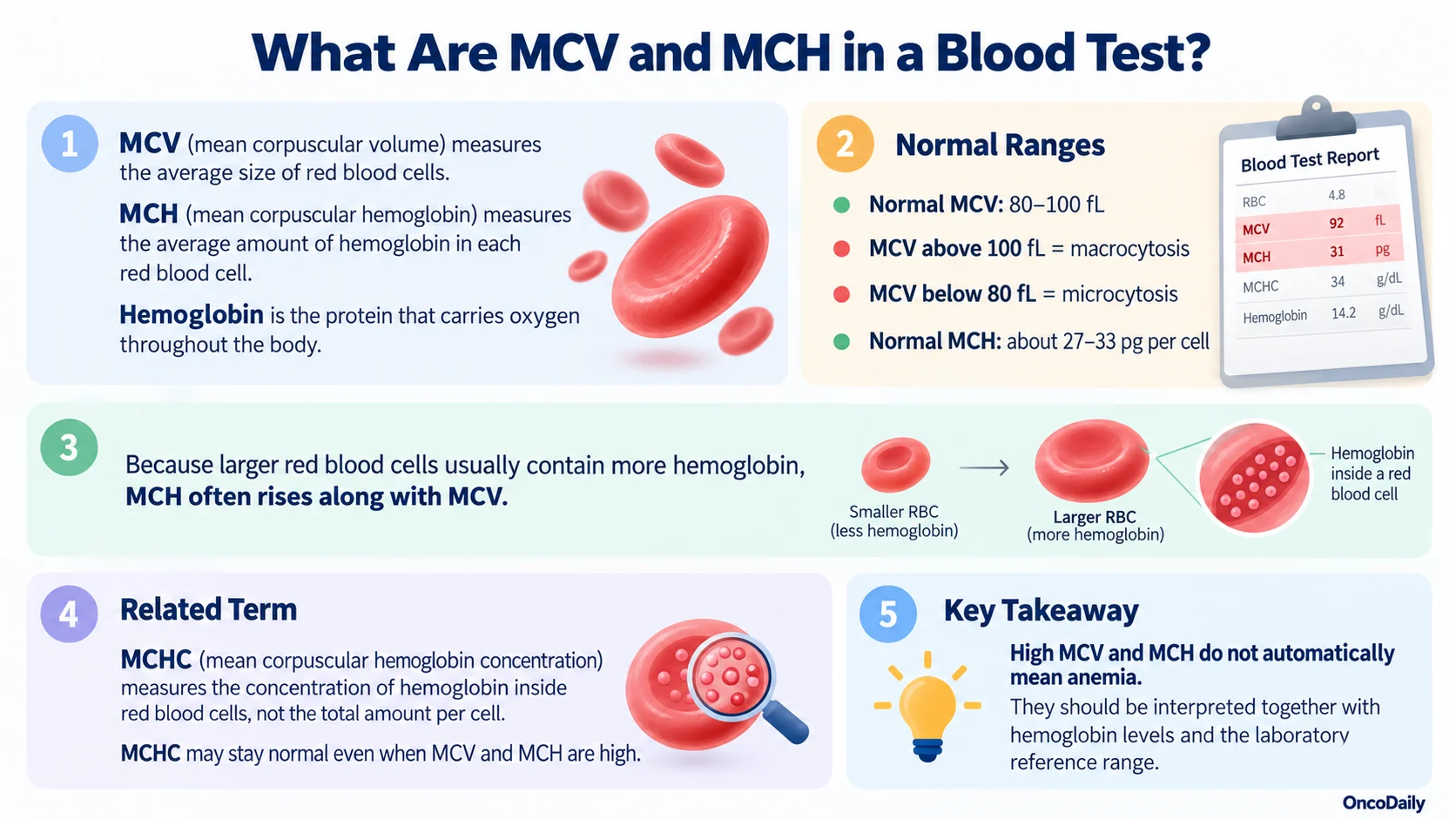
MCV (mean corpuscular volume) measures the average size of red blood cells, while MCH (mean corpuscular hemoglobin) measures the average amount of hemoglobin contained in each red blood cell. Hemoglobin is the protein responsible for transporting oxygen throughout the body.
In adults, normal MCV values are generally between 80 and 100 femtoliters (fL). An MCV above 100 fL indicates macrocytosis, while a value below 80 fL indicates microcytosis, meaning the red blood cells are smaller than normal.
MCH is measured in picograms (pg), with a typical reference range of approximately 27–33 pg per cell. Because larger red blood cells usually contain more hemoglobin, MCH often increases alongside MCV (Kaferle and Strzoda, 2009).
Another related measurement, MCHC (mean corpuscular hemoglobin concentration), describes the concentration of hemoglobin inside red blood cells rather than the total amount per cell. Unlike MCH, MCHC may remain normal when red blood cells become larger.
These measurements should always be interpreted together with hemoglobin levels and the laboratory’s reference ranges. High MCV and MCH do not necessarily indicate anemia, which is defined by a low hemoglobin level.
What Causes High MCV and MCH?
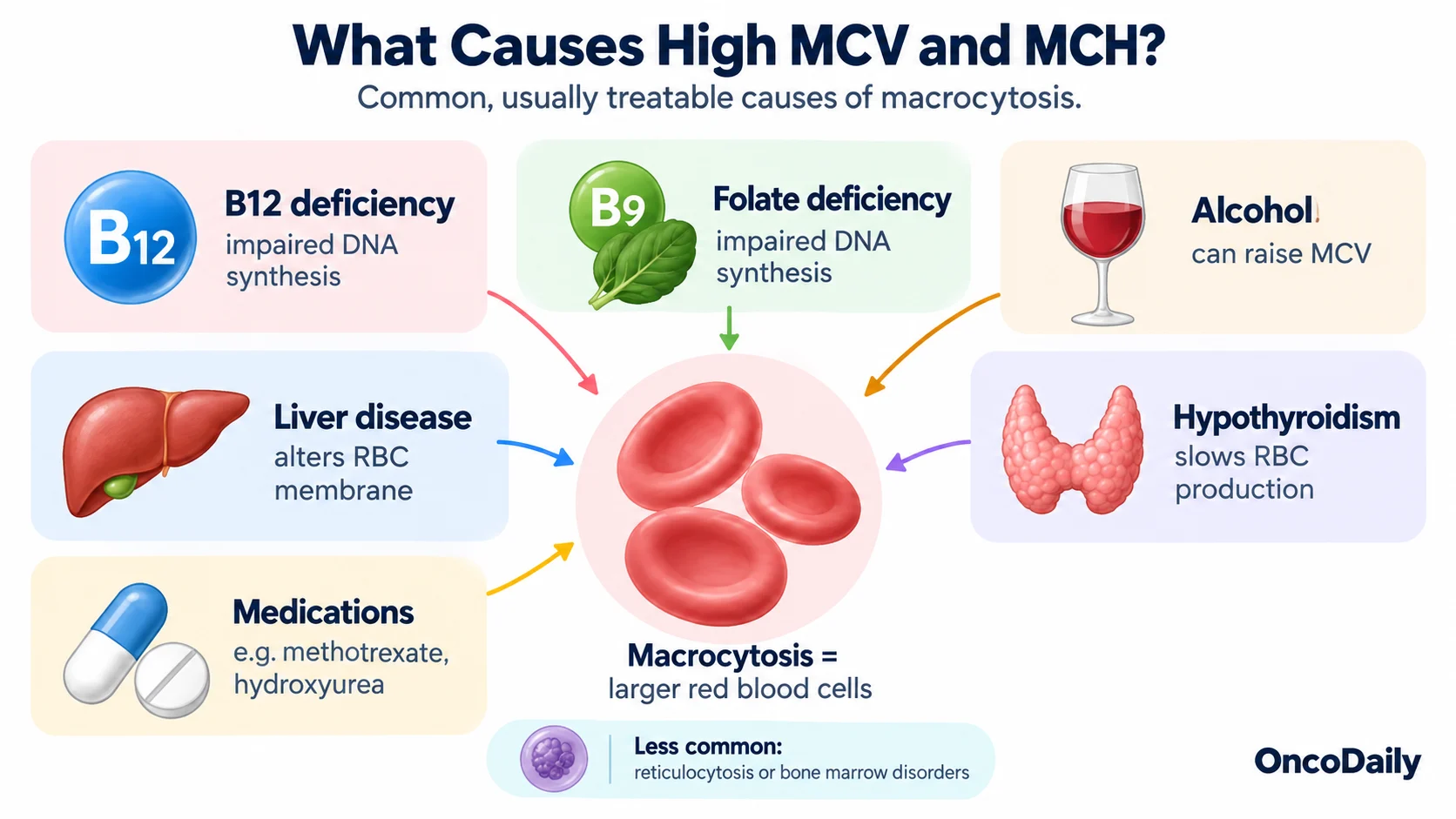
Several conditions can interfere with normal red blood cell production or maturation. Many are common, noncancerous, and treatable.
Vitamin B12 deficiency is a well-recognized cause of macrocytosis. Vitamin B12 is essential for DNA synthesis and normal red blood cell development. Without sufficient B12, cells cannot mature properly, resulting in enlarged red blood cells and sometimes megaloblastic anemia. Causes include inadequate dietary intake, impaired absorption, gastrointestinal surgery, and pernicious anemia.
Folate deficiency produces similar changes because folate (vitamin B9) is also necessary for DNA synthesis. Deficiency may result from poor nutrition, alcohol use, malabsorption, or increased nutritional requirements during pregnancy (Nagao and Hirokawa, 2017).
Alcohol consumption can increase MCV even when vitamin B12 and folate levels are normal. Alcohol directly affects red blood cell production and may also contribute to nutritional deficiencies. Macrocytosis can therefore develop before significant anemia appears.
Liver disease may cause enlarged red blood cells through changes in their membrane composition. Both alcohol-related and non-alcohol-related liver conditions can contribute to elevated MCV.
Hypothyroidism, or an underactive thyroid gland, can also affect red blood cell production. In some individuals, macrocytosis improves after thyroid hormone levels are corrected (Aslinia et al., 2006).
Medications, including methotrexate, hydroxyurea, certain antiseizure drugs, antiretroviral treatments, and some chemotherapy agents, may interfere with red blood cell maturation.
Less commonly, MCV increases when the bone marrow releases more reticulocytes, which are young red blood cells. This can occur after significant bleeding or during hemolysis, when red blood cells are destroyed more rapidly than normal (Kaferle and Strzoda, 2009).
When Can High MCV and MCH Be a Sign of Cancer?
Cancer-related macrocytosis generally occurs when a malignancy affects blood cell production in the bone marrow or when cancer treatment interferes with red blood cell development.
One of the most important malignant conditions associated with persistent macrocytosis is myelodysplastic syndromes (MDS), a group of bone marrow cancers characterized by ineffective blood cell production.
In MDS, the bone marrow produces abnormal blood cells that often fail to mature or function properly. Patients may develop macrocytic anemia, reduced white blood cell counts, or low platelets. MDS occurs predominantly in older adults and may cause fatigue, weakness, recurrent infections, or unusual bleeding (Oster and Mittelman, 2024).
Other cancers, including leukemia and lymphoma, may disrupt normal blood cell production when they involve the bone marrow. Advanced solid tumors can occasionally spread to the marrow and cause blood count abnormalities, although macrocytosis is not a typical isolated finding.
A high MCV or MCH result alone cannot diagnose MDS, leukemia, or another malignancy. Concern increases when macrocytosis is unexplained and accompanied by persistent anemia, additional low blood counts, or abnormal cells on a peripheral blood smear (Oster and Mittelman, 2024).

High MCV and MCH in Breast Cancer
In patients with breast cancer, elevated MCV and MCH are more commonly related to treatment or other medical conditions than to the cancer itself. Breast cancer does not typically cause macrocytosis directly.
One important treatment-related cause is capecitabine, an oral chemotherapy drug converted into 5-fluorouracil (5-FU). Its active metabolite interferes with DNA synthesis, affecting the maturation of developing red blood cells and causing them to become larger (Wenzel et al., 2003).
A retrospective study involving 76 women with metastatic breast cancer found that 57% developed macrocytosis during capecitabine treatment. Among women receiving at least nine cycles, the proportion increased to 85%. These changes were related to treatment exposure and could occur without significant anemia or other major blood count abnormalities (Karvellas et al., 2004).
Some other breast cancer treatments, including CDK4/6 inhibitors, have also been associated with increased MCV. However, these changes are not established indicators of treatment effectiveness or disease progression.
Research has also examined whether MCV and MCH are associated with breast cancer risk. A 2025 population-based study found that higher values were associated with lower breast cancer incidence. However, this observational finding does not mean that elevated MCV or MCH protects against breast cancer (Fu et al., 2025).
For patients receiving breast cancer treatment, an increase in MCV should therefore be interpreted alongside medications, hemoglobin levels, nutritional status, and other clinical findings rather than being considered evidence that the cancer has worsened.

Does High MCV Predict Cancer Risk or Prognosis?
Researchers have investigated whether red blood cell measurements might help predict cancer development or outcomes, but MCV is not a validated cancer-screening test.
A large prospective study published in BMC Cancer in 2025 examined 455,897 participants from the UK Biobank. Over a median follow-up of 10.9 years, 47,177 participants developed cancer.
The researchers found that higher MCV and MCH were associated with a lower overall cancer incidence. Both measurements had an adjusted hazard ratio of 0.83 when comparing the highest and lowest quintiles, corresponding to approximately 17% lower relative risk in the highest groups (Fu et al., 2025).
The relationship differed by cancer type. Higher MCV and MCH were associated with lower incidence of breast cancer, leukemia, lymphoma, and kidney cancer, while some analyses suggested positive associations with colorectal cancer.
These findings describe statistical associations rather than cause and effect. Nutritional status, inflammation, lifestyle, underlying diseases, and other factors may influence both red blood cell indices and cancer risk.
Studies have also examined MCV in patients already diagnosed with cancer. Some have linked elevated pretreatment MCV to poorer outcomes in specific malignancies, while others have investigated treatment-related increases as possible indicators of drug response.
However, the evidence remains inconsistent. Cancer prognosis depends primarily on the type and stage of cancer, tumor biology, treatment response, and the patient’s overall health. MCV cannot independently predict whether someone will develop cancer or how an existing cancer will progress.
When Should High MCV and MCH Be a Concern?
A mildly elevated MCV with otherwise normal blood results is often not urgent. However, persistent macrocytosis deserves further evaluation, especially when no common explanation can be identified.
An MCV above 100 fL generally indicates macrocytosis. Markedly elevated values, particularly above 115 fL, may suggest vitamin B12 or folate deficiency, although the result alone cannot establish a diagnosis (Kaferle and Strzoda, 2009).
Doctors pay particular attention when high MCV occurs with low hemoglobin, reduced white blood cell counts, low platelets, or abnormal findings on a blood smear.
Symptoms that warrant medical assessment include:
- Persistent fatigue, weakness, dizziness, or shortness of breath
- Unexplained bruising, bleeding, or recurrent infections
- Numbness, tingling, or difficulty maintaining balance
- Unexplained weight loss, persistent fever, or night sweats
- Progressive changes in blood count results
Neurological symptoms are particularly important because vitamin B12 deficiency can damage the nervous system even before anemia develops. Delayed treatment may lead to lasting neurological complications (Nagao and Hirokawa, 2017).
Severe shortness of breath, chest pain, fainting, uncontrolled bleeding, or fever in someone with significant neutropenia requires urgent medical attention.
How Are High MCV and MCH Investigated?
The evaluation usually begins with a review or repeat of the complete blood count to determine whether macrocytosis is persistent and whether other blood cells are affected.
Doctors also review medical history, diet, alcohol consumption, medications, and possible liver or thyroid disease.
A peripheral blood smear allows blood cells to be examined under a microscope. Large oval-shaped red blood cells and hypersegmented neutrophils may suggest vitamin B12 or folate deficiency, while abnormal immature cells may raise concern for a bone marrow disorder.
A reticulocyte count helps determine whether the bone marrow is producing increased numbers of young red blood cells, as may occur after bleeding or hemolysis.
Additional tests commonly include vitamin B12 and folate levels, liver function tests, and thyroid-stimulating hormone (TSH). When vitamin B12 results are borderline, methylmalonic acid testing may help clarify the diagnosis (Kaferle and Strzoda, 2009).
Bone marrow biopsy is not routinely required. It may be considered when macrocytosis remains unexplained, particularly alongside persistent anemia, reduced white blood cells or platelets, or suspicious blood smear findings. In suspected MDS, bone marrow examination and cytogenetic testing help establish the diagnosis (Oster and Mittelman, 2024).

How Are High MCV and MCH Treated?
Treatment focuses on the underlying cause rather than the elevated laboratory values themselves. Once the cause is corrected, MCV and MCH often improve gradually as new red blood cells enter circulation.
Vitamin B12 deficiency is treated with oral or injectable vitamin B12, depending on the cause and severity. Patients with pernicious anemia or permanent absorption problems may require lifelong replacement.
Folate deficiency is generally treated with folic acid supplementation and correction of dietary or absorption problems. Vitamin B12 deficiency should be excluded or treated alongside folate deficiency to avoid overlooking potentially serious neurological complications.
When hypothyroidism is responsible, thyroid hormone replacement may improve red blood cell production. Alcohol-related macrocytosis may improve after alcohol consumption is reduced or stopped, although people with alcohol dependence may need medically supervised withdrawal.
Medication-related macrocytosis does not always require treatment changes. For example, patients receiving capecitabine may continue treatment with blood count monitoring when macrocytosis occurs without other concerning abnormalities (Wenzel et al., 2003).
If a bone marrow disorder such as MDS is diagnosed, treatment depends on disease risk, symptoms, and overall health. Options may include observation, supportive care, transfusions, disease-modifying medications, or stem cell transplantation in selected patients.
The aim is not simply to lower MCV or MCH, but to identify why these measurements are elevated. Most causes are not related to cancer, and appropriate investigation can help distinguish common, treatable conditions from those requiring specialist care.
FAQ
Does high MCV and MCH mean cancer?
No. High MCV and MCH are usually caused by vitamin deficiencies, alcohol use, liver disease, or certain medications rather than cancer.
Can high MCV and MCH occur without anemia?
Yes. Red blood cells can be larger than normal even when hemoglobin levels remain within the normal range.
What MCV level is considered dangerously high?
MCV above 100 fL indicates macrocytosis. Values above 115 fL require closer evaluation, but no single MCV level automatically indicates danger.
Can high MCV and MCH return to normal?
Yes. These values often return to normal once the underlying cause is treated, although recovery may take several weeks or months.
Can high MCV and MCH indicate leukemia?
Rarely, elevated MCV may be associated with bone marrow disorders. However, high MCV and MCH alone cannot diagnose leukemia or another blood cancer.