Key takeaways
- Anemia is common during cancer treatment and can have several causes.
- Fatigue, weakness, dizziness, and shortness of breath are common symptoms.
- A complete blood count helps diagnose anemia and assess its severity.
- Treatment depends on the cause and may include supplements, transfusion, or other supportive care.
- New or worsening symptoms should be discussed with the oncology team.
Anemia during cancer treatment is a common problem that can leave patients feeling unusually tired, weak, dizzy, or short of breath. It happens when the blood does not have enough healthy red blood cells or hemoglobin to carry oxygen effectively throughout the body.
For some patients, anemia develops gradually and causes only mild symptoms, while for others it can have a greater effect on daily activities, physical function, and overall quality of life. Understanding what anemia means during cancer care can help patients recognize important changes and know when to speak with their oncology team.
What Is Anemia During Cancer Treatment?
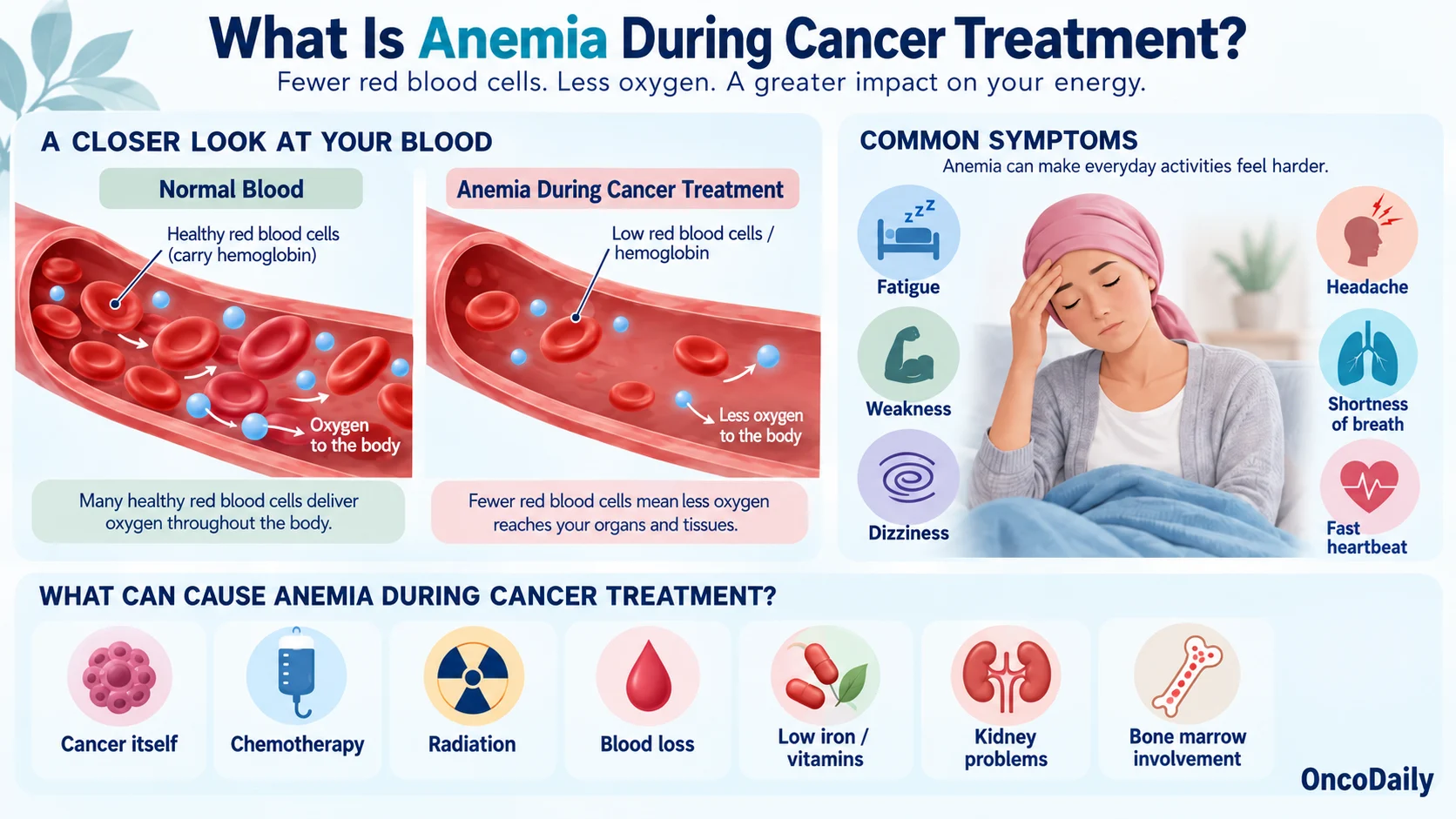
Anemia is a condition in which the blood does not have enough healthy red blood cells or hemoglobin to carry oxygen effectively throughout the body. It is common in people with cancer and can develop because of the cancer itself or as a result of treatment. Possible causes include chemotherapy, radiation therapy, blood loss, nutritional deficiencies, inflammation, kidney problems, or cancer involving the bone marrow (Aapro et al., 2018).
When hemoglobin levels fall, less oxygen reaches the body’s tissues. Patients may experience fatigue, weakness, dizziness, shortness of breath, headaches, or a faster heartbeat. How noticeable these symptoms are depends partly on how severe the anemia is and how quickly it develops.
Anemia can affect daily activities, physical function, and overall quality of life during cancer treatment. Because there are many possible causes, identifying what is contributing to the anemia is an important part of choosing the right treatment (Aapro et al., 2018; National Cancer Institute).
Why Does Cancer Treatment Cause Anemia?
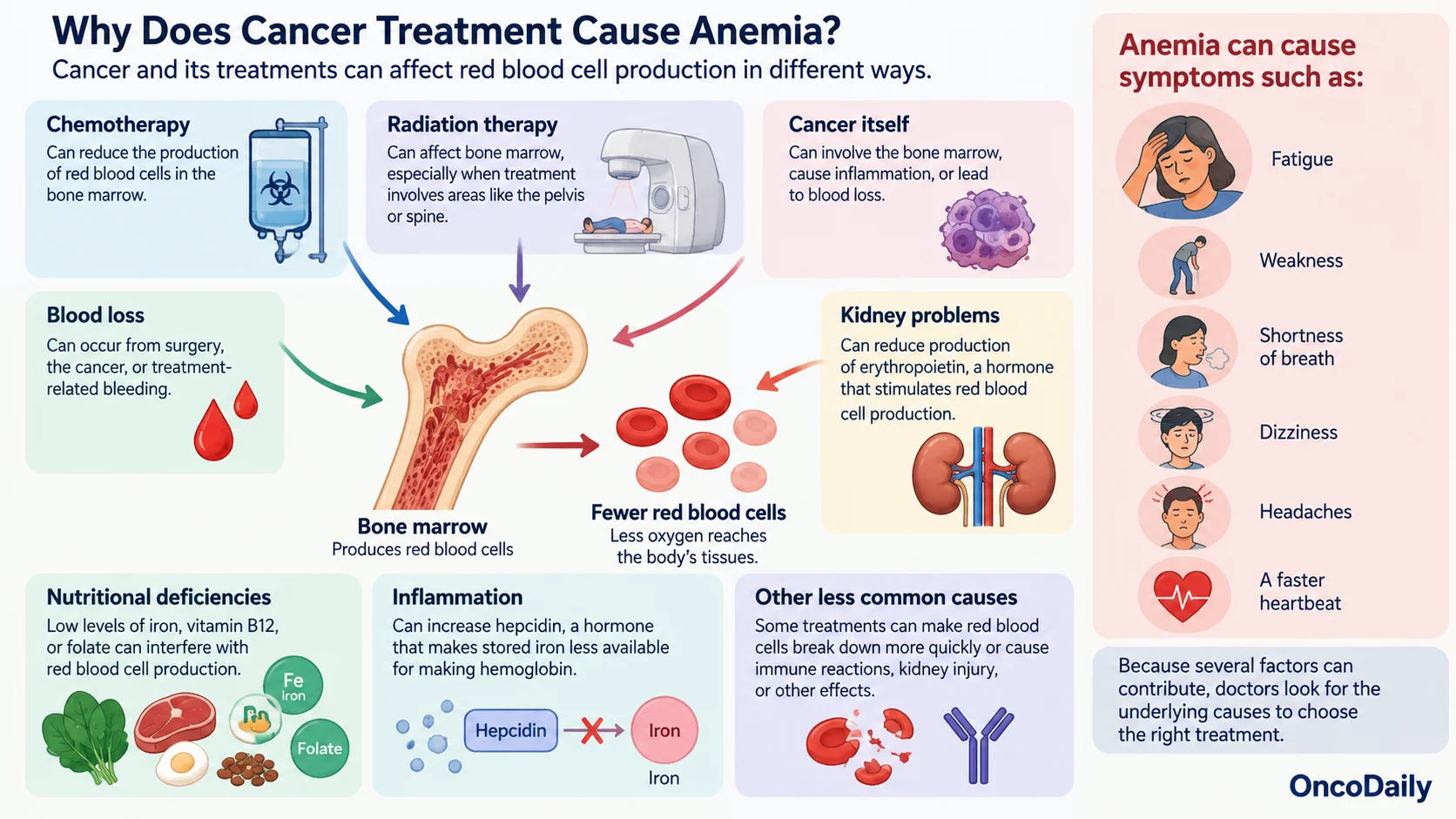
Cancer treatment can cause anemia in several ways, and more than one factor may be involved at the same time. One of the most common mechanisms is reduced production of red blood cells in the bone marrow.
Chemotherapy can contribute because many chemotherapy drugs affect rapidly dividing cells, including the developing blood cells in the bone marrow. This temporary reduction in blood-cell production is called myelosuppression. Radiation therapy can also affect red blood cell production, particularly when treatment involves areas containing large amounts of active bone marrow, such as the pelvis or spine (Gilreath and Rodgers, 2020).
Other causes include blood loss from surgery or the cancer itself, kidney problems, nutritional deficiencies, and inflammation. Inflammation can increase levels of hepcidin, a hormone that makes stored iron less available for producing hemoglobin. This can lead to functional iron deficiency, where iron is present in the body but cannot be used effectively for red blood cell production (Weiss and Goodnough, 2005).
Reduced kidney function can also contribute because the kidneys produce erythropoietin, a hormone that stimulates the bone marrow to make red blood cells. Low levels of iron, vitamin B12, or folate can further interfere with normal red blood cell production.
Less commonly, some treatments can cause red blood cells to break down more quickly, a process known as hemolysis. Certain immunotherapies and targeted therapies may also contribute to anemia through inflammation, bleeding, kidney injury, immune reactions, or effects on the bone marrow (Gilreath and Rodgers, 2020).
Because cancer-related anemia is often caused by several factors, doctors usually look for the underlying causes rather than assuming that chemotherapy alone is responsible.
What Are the Symptoms of Anemia in Cancer Patients?
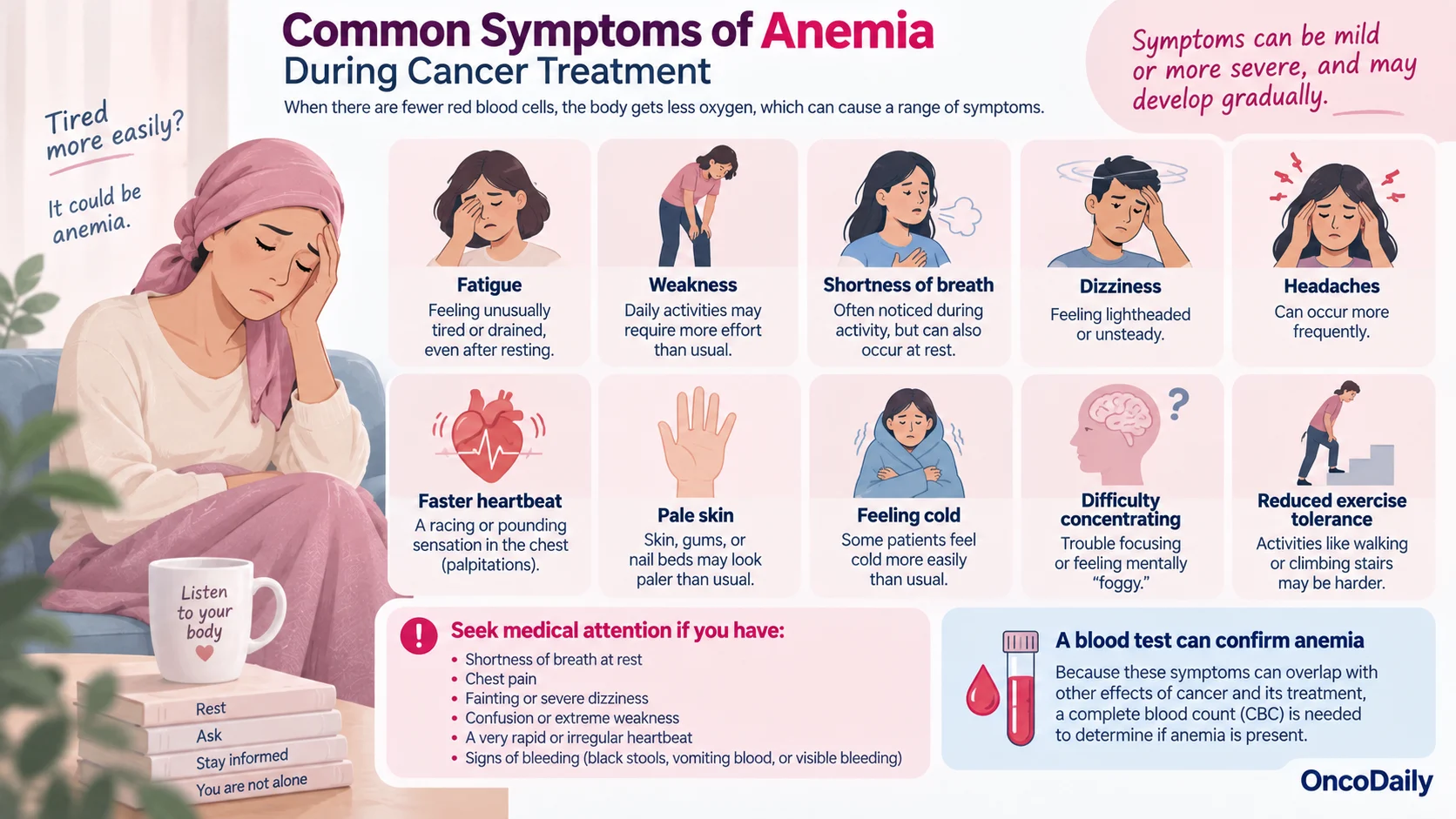
Anemia may cause few or no symptoms when it is mild or develops slowly. As hemoglobin falls, less oxygen is delivered to the body’s tissues, which can lead to fatigue, weakness, shortness of breath, dizziness, headaches, and a faster heartbeat (National Cancer Institute).
Fatigue is one of the most common symptoms. Patients may feel unusually tired or drained even after resting, and everyday activities such as walking, working, or climbing stairs may require more effort. However, fatigue during cancer treatment can also have other causes, including medications, infection, pain, poor sleep, or the cancer itself, so fatigue alone does not confirm anemia.
Shortness of breath is often first noticed during physical activity, although more severe anemia can cause breathlessness even at rest. Some patients also experience dizziness or lightheadedness.
The heart may compensate for reduced oxygen delivery by beating faster, which can cause palpitations or a noticeable pounding sensation in the chest. Other possible symptoms include pale skin, feeling unusually cold, headaches, difficulty concentrating, and reduced exercise tolerance.
Symptoms depend not only on the hemoglobin level but also on how quickly anemia develops and whether the patient has underlying heart, lung, or other medical conditions.
More severe anemia may cause shortness of breath at rest, chest pain, fainting, confusion, extreme weakness, or a very rapid or irregular heartbeat. These symptoms require prompt medical evaluation. Signs of possible blood loss, including black stools, vomiting blood, or significant visible bleeding, should also be reported quickly.
Because these symptoms can overlap with many other effects of cancer and its treatment, a blood test is needed to determine whether anemia is actually present (National Cancer Institute; American Cancer Society).
How Is Anemia Diagnosed During Cancer Treatment?
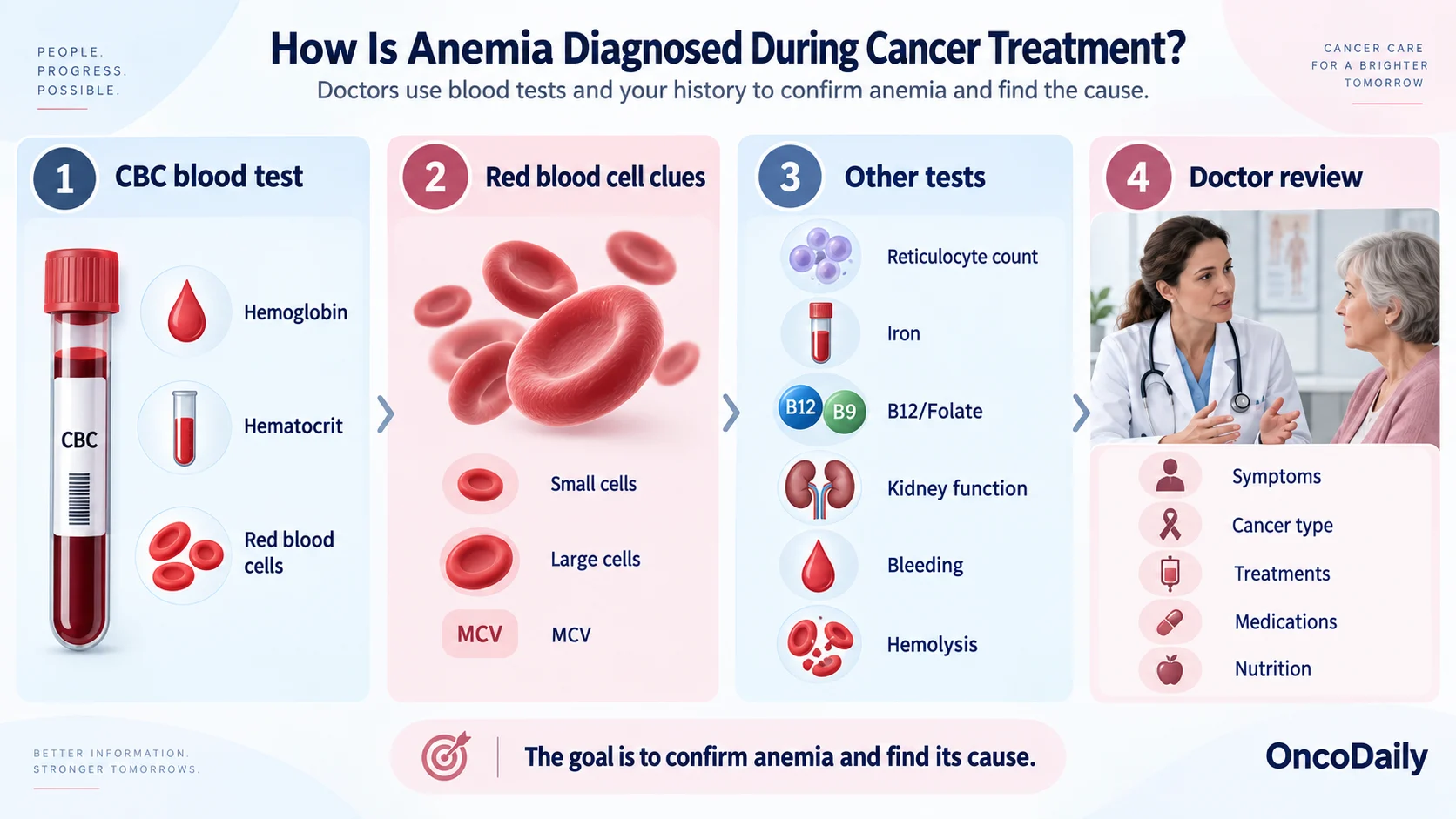
Anemia during cancer treatment is usually identified with a complete blood count (CBC). This routine blood test measures hemoglobin, hematocrit, red blood cell count, and other characteristics of the blood. Anemia is identified when hemoglobin falls below the expected range, although the appropriate reference range can vary between individuals and laboratories (Gilreath et al., 2014).
The CBC can also provide clues about the cause. For example, the mean corpuscular volume (MCV) measures the average size of red blood cells. Smaller red blood cells may be seen with iron deficiency or chronic blood loss, while larger cells can occur with vitamin B12 or folate deficiency and certain medications.
A reticulocyte count measures young red blood cells and helps show whether the bone marrow is responding appropriately. Doctors may also order iron studies, including ferritin and transferrin saturation, to determine whether enough iron is available for hemoglobin production.
Interpreting iron levels can be more complicated in people with cancer because inflammation can raise ferritin even when iron is not readily available for red blood cell production (Aapro et al., 2018).
Additional testing may include vitamin B12 and folate levels, kidney function, and tests for bleeding or hemolysis. Doctors also consider the type of cancer, recent treatments, medications, symptoms, nutritional status, and how quickly the hemoglobin level has changed.
The goal is therefore not only to confirm anemia but also to understand why it has developed, so that treatment can address the underlying problem.
How Is Anemia Treated in Cancer Patients?
Treatment depends on the cause of anemia, how severe it is, the symptoms it is causing, and the patient’s overall cancer treatment plan. Management usually focuses on correcting the underlying problem whenever possible (Aapro et al., 2018).
If anemia is caused by iron, vitamin B12, or folate deficiency, replacing the missing nutrient may help restore normal red blood cell production. Iron can be given by mouth or intravenously depending on the type and severity of iron deficiency, how well oral iron is tolerated and absorbed, and the individual clinical situation.
A red blood cell transfusion may be considered when anemia is severe, causes significant symptoms, develops rapidly, or when hemoglobin needs to be increased quickly. The decision is individualized and takes into account symptoms, active bleeding, cardiovascular disease, and the patient’s overall clinical condition rather than relying on a single hemoglobin value.
Another option for selected patients is an erythropoiesis-stimulating agent (ESA), such as epoetin or darbepoetin. These medications stimulate the bone marrow to produce more red blood cells.
ASCO and ASH guidelines state that ESAs may be offered to selected patients with chemotherapy-associated anemia when cancer treatment is not intended to be curative and hemoglobin has fallen below 10 g/dL. ESAs are generally avoided when chemotherapy is being given with curative intent. They can increase the risk of blood clots and have been associated with worse outcomes in some clinical settings, so their benefits and risks need to be carefully considered (Bohlius et al., 2019).
If anemia becomes significant, the oncology team may occasionally adjust the timing or dose of cancer treatment while addressing reversible causes such as bleeding, nutritional deficiency, or kidney problems. The goal is to improve symptoms while maintaining effective and safe cancer treatment.
Can Diet and Nutrition Help With Anemia During Cancer Treatment?
Good nutrition can support red blood cell production, especially when anemia is related to deficiencies in iron, vitamin B12, folate, or inadequate overall nutrition. However, diet alone usually cannot correct anemia caused by chemotherapy-related bone marrow suppression, inflammation, kidney disease, significant blood loss, or cancer affecting the bone marrow (Aapro et al., 2018).
Iron is essential for producing hemoglobin. Dietary sources include meat, poultry, fish, beans, lentils, tofu, leafy green vegetables, seeds, and iron-fortified cereals. Iron from animal foods is generally absorbed more efficiently, while absorption of plant-based iron can be improved by eating it with foods rich in vitamin C, such as citrus fruits, tomatoes, peppers, or broccoli (NIH Office of Dietary Supplements).
Vitamin B12 and folate are also needed for normal red blood cell formation. Vitamin B12 is found mainly in meat, fish, eggs, dairy products, and fortified foods. Folate is found in foods such as leafy greens, beans, lentils, broccoli, asparagus, and fortified grains.
Maintaining adequate protein and calorie intake is also important during cancer treatment, particularly when nausea, mouth sores, taste changes, swallowing difficulties, or reduced appetite make eating more difficult.
Nutrition is most helpful when an actual deficiency is present. Patients should not automatically start iron or high-dose vitamin supplements because not every type of anemia is related to nutrition. Blood tests can help determine whether iron, vitamin B12, or folate replacement is needed.
When anemia is mainly caused by chemotherapy, inflammation, kidney disease, ongoing bleeding, or bone marrow involvement, medical treatment may still be required. In these situations, good nutrition remains an important part of supportive care but does not replace appropriate medical treatment.
When Should Cancer Patients Contact Their Doctor About Anemia?
Cancer patients should contact their oncology team if fatigue, weakness, dizziness, shortness of breath, or a rapid heartbeat is new, worsening, or beginning to interfere with normal daily activities. Anemia can develop gradually, so changes may become noticeable before patients know that their hemoglobin level has fallen (National Cancer Institute).
The cancer care team should also be contacted if there are signs of possible blood loss, such as black or bloody stools, blood in the urine, vomiting blood, unusually heavy bleeding, or repeated bleeding from another site. These symptoms may indicate that blood loss is contributing to the anemia.
More urgent medical attention is needed when symptoms become severe. Chest pain, severe shortness of breath at rest, fainting, confusion, extreme weakness, or a very rapid or irregular heartbeat can indicate that the body is not receiving enough oxygen or that another serious medical problem is present.
Heavy or uncontrolled bleeding also requires immediate assessment. Patients should not wait until their next scheduled cancer appointment if symptoms are clearly getting worse.
A complete blood count (CBC) can quickly show whether hemoglobin has fallen, while additional testing can help identify the underlying cause and determine the most appropriate treatment (National Cancer Institute; American Cancer Society).
FAQ
Is anemia common during cancer treatment?
Yes. Anemia is common during cancer treatment, especially with chemotherapy, but it can also result from the cancer itself, blood loss, inflammation, kidney problems, or nutritional deficiencies.
What hemoglobin level is considered anemia in cancer patients?
Anemia is diagnosed when hemoglobin falls below the expected range. The exact cutoff can vary depending on factors such as sex, age, laboratory reference ranges, and the patient’s overall health.
Can anemia make cancer treatment harder to tolerate?
Yes. Anemia can cause fatigue, weakness, dizziness, and shortness of breath, which may make daily activities and treatment more difficult. Severe anemia may sometimes require additional treatment or changes to the cancer treatment plan.
Can anemia during chemotherapy go away on its own?
Sometimes. If anemia is caused by temporary bone marrow suppression from chemotherapy, blood counts may recover between cycles or after treatment ends. However, persistent or worsening anemia should be evaluated for other causes.
What should cancer patients eat if they have anemia?
Foods rich in iron, vitamin B12, folate, protein, and vitamin C can support red blood cell production, especially when a nutritional deficiency is present. However, diet alone may not correct anemia caused by chemotherapy, inflammation, bleeding, kidney disease, or bone marrow involvement.