Key takeaways
- There is no single diet for everyone during chemotherapy. Food choices should reflect symptoms, treatment, weight, and overall health.
- Protein and energy-rich foods help maintain strength. Small meals with eggs, dairy, fish, chicken, beans, lentils, or nut butter can support recovery.
- Small, frequent meals are often easier to tolerate. Mild, soft, cold, or low-odour foods may help when nausea or appetite loss occurs.
- Hydration and food safety are essential. Drink fluids regularly and avoid raw, undercooked, unpasteurised, or poorly stored foods when immunity is reduced.
- Supplements and certain foods can interact with treatment. Discuss alcohol, grapefruit, vitamins, herbal products, and special diets with the oncology team.
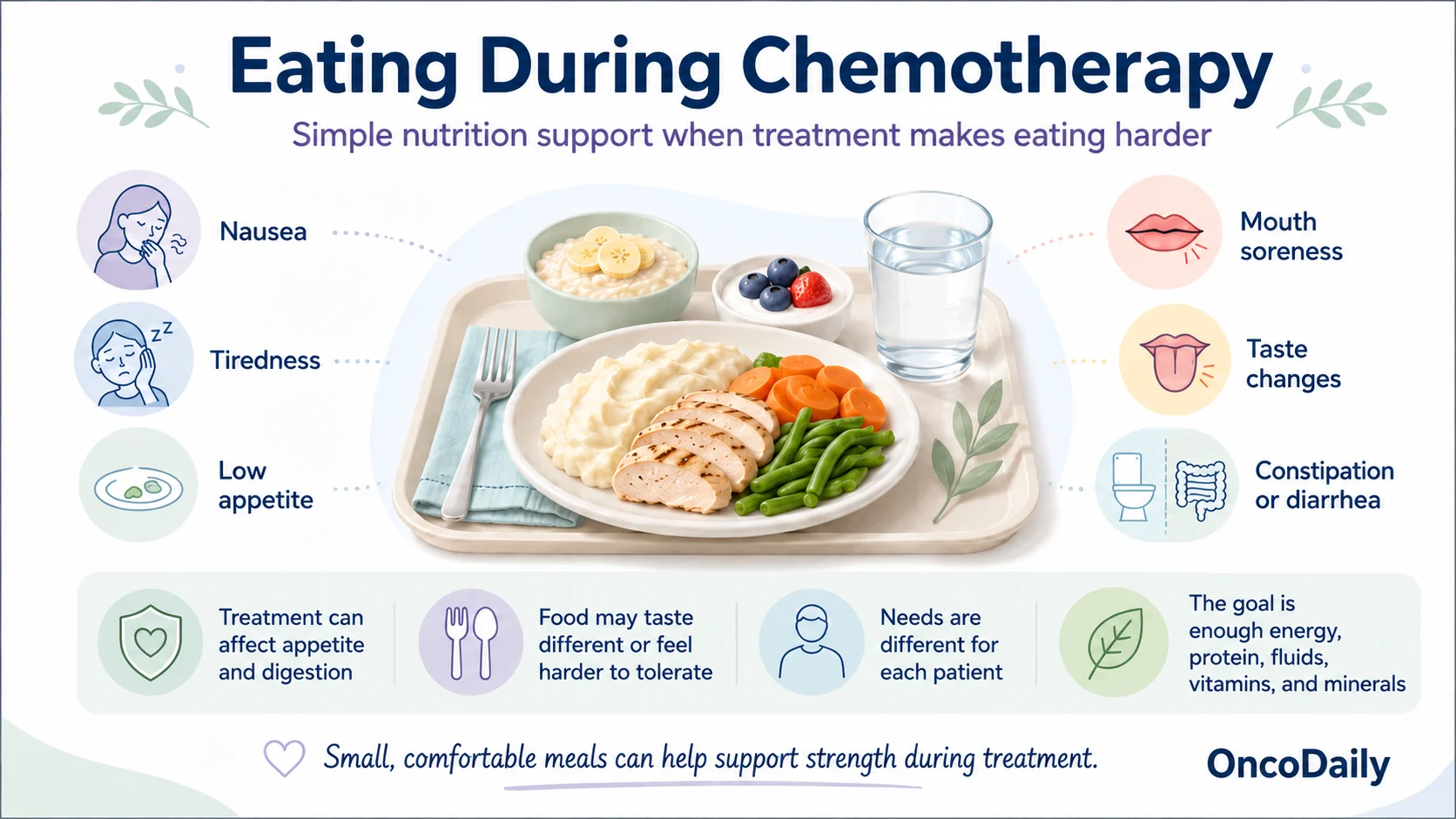
Eating during chemotherapy is not always easy. Treatment may cause nausea, tiredness, appetite loss, mouth soreness, taste changes, constipation, or diarrhea. Foods that were previously enjoyable may suddenly taste different or become difficult to tolerate.
There is no single diet that is right for everyone during chemotherapy. Nutritional needs depend on the type of cancer, treatment plan, side effects, body weight, and other health conditions. The main goal is to help the body receive enough energy, protein, fluids, vitamins, and minerals while making eating as comfortable as possible.
Best Foods to Support Energy and Strength
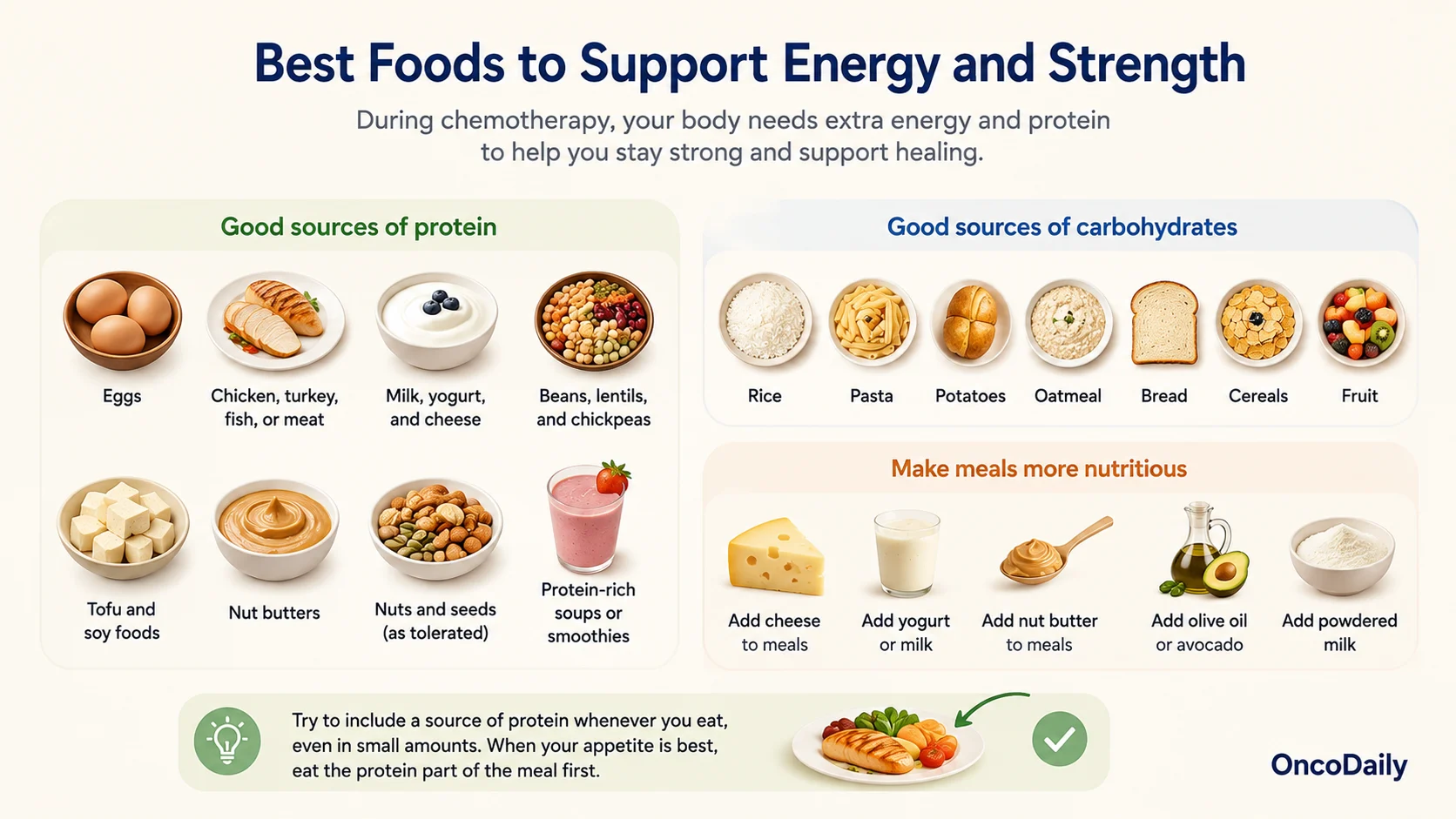
During chemotherapy, the body may need more energy and protein than usual. Protein helps maintain muscle strength, repair tissues, support healing, and keep essential body functions working properly. Carbohydrates and healthy fats provide energy for daily activities and recovery.
Try to include a protein-rich food whenever you eat, even if the portion is small. Good options include eggs, chicken, fish, well-cooked meat, milk, yogurt, cheese, beans, lentils, tofu, nut butters, nuts, seeds, and protein-rich soups or smoothies. Rice, pasta, potatoes, oatmeal, bread, cereals, and fruit can also help maintain energy.
When appetite is poor or weight loss is a concern, make smaller portions more nutritious by adding cheese, yogurt, milk, nut butter, olive oil, avocado, or powdered milk. Eat when your appetite is strongest and consider starting with the protein-rich part of the meal. Small, frequent meals and snacks may be easier to manage than three large meals (National Cancer Institute, 2024).
Foods That Help Manage Nausea
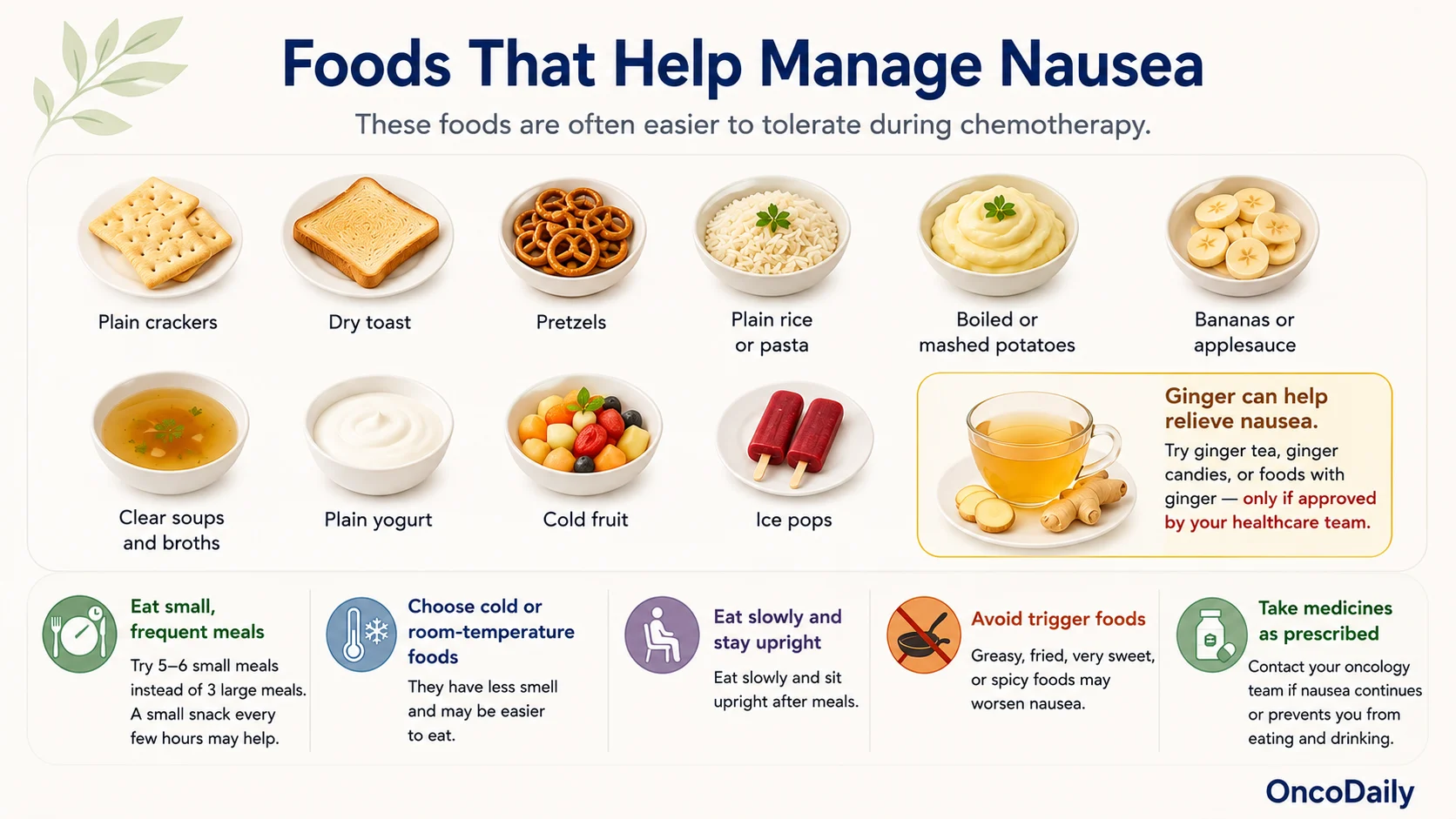
Nausea is common during chemotherapy, and finding foods that feel tolerable may take some trial and error. Plain, mild foods such as crackers, dry toast, rice, pasta, potatoes, bananas, applesauce, yogurt, clear soups, cold fruit, or ice pops may be easier to manage. Ginger tea or ginger-containing foods may also help when approved by the healthcare team.
Try eating five or six small meals instead of three large ones, as an empty stomach can sometimes worsen nausea. Cold or room-temperature foods may be easier to tolerate because they have less smell. Eat slowly, remain upright after meals, and avoid greasy, fried, spicy, or very sweet foods if they make symptoms worse (Johns Hopkins Medicine).
Take anti-nausea medicines exactly as prescribed. Contact the oncology team if nausea continues, worsens, or prevents you from eating and drinking.
Easy-to-Tolerate Meals When Appetite Is Low
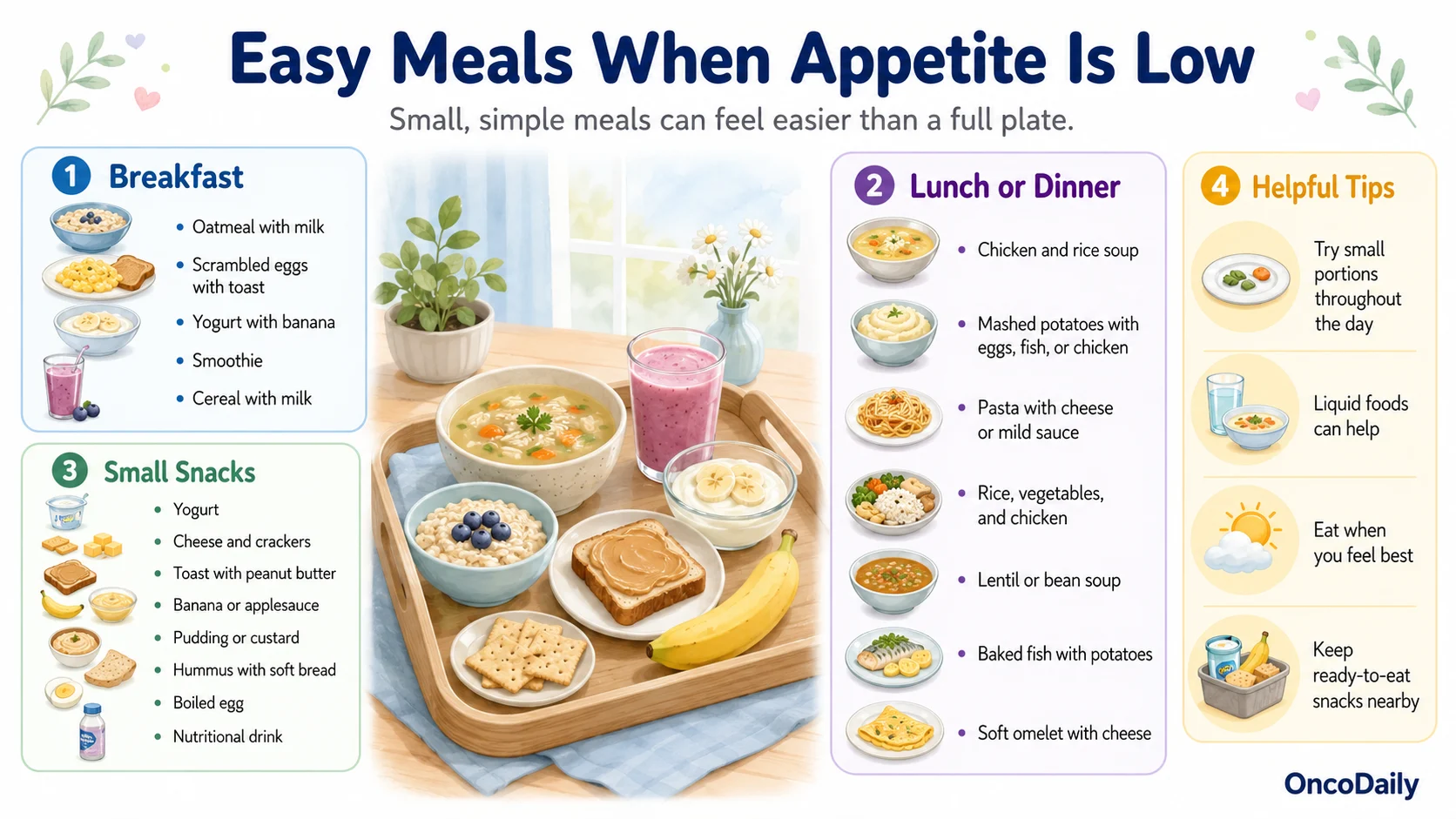
When appetite is poor, a large meal can feel overwhelming. Eating smaller portions several times throughout the day may be easier and can help maintain energy, strength, and body weight.
Simple options include oatmeal with milk, scrambled eggs with toast, yogurt with banana, smoothies, chicken and rice soup, mashed potatoes with fish or chicken, pasta with cheese, lentil soup, and soft omelets.
Small snacks such as yogurt, cheese and crackers, peanut butter toast, banana, applesauce, pudding, hummus, or a boiled egg may also be easier to manage. When solid food feels difficult, soups, smoothies, milkshakes, yogurt drinks, and nutritional drinks can provide energy, protein, and fluids in a smaller volume.
Try to eat at the time of day when your appetite is strongest and keep simple, ready-to-eat snacks nearby.
Hydration and Fluids During Chemotherapy
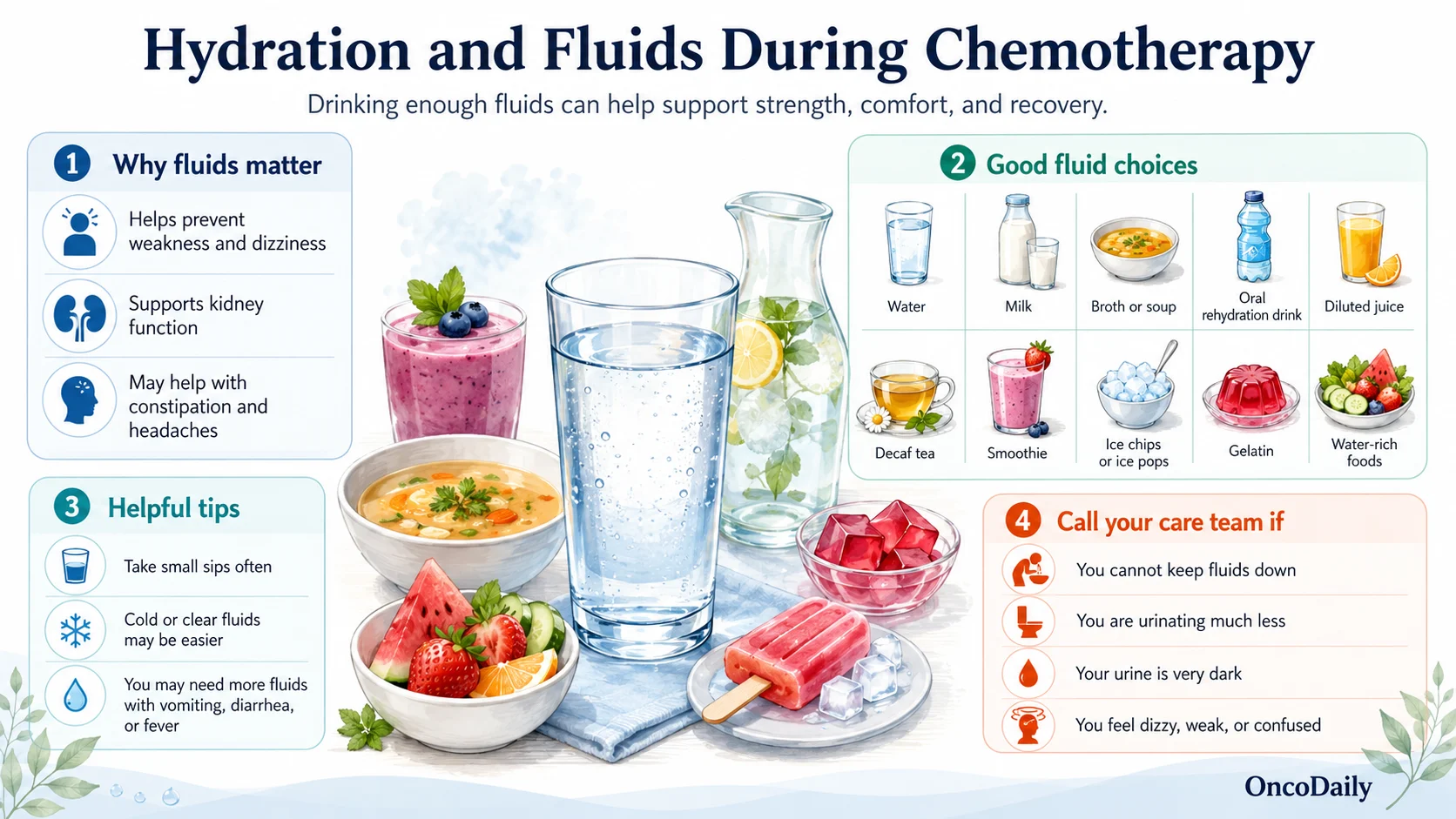
Staying well hydrated during chemotherapy can help reduce weakness, dizziness, headaches, constipation, and kidney problems. Suitable options include water, milk, broth, oral rehydration drinks, diluted juice, decaffeinated tea, smoothies, ice chips, ice pops, gelatin, and water-rich foods such as melon, cucumber, or soup.
When nausea is present, take small, frequent sips rather than drinking a full glass at once. Cold or clear fluids may also be easier to tolerate.
You may need more fluids if you have vomiting, diarrhoea, fever, or poor food intake. However, people with kidney or heart problems, swelling, or a fluid restriction should follow their healthcare team’s advice.
Contact the healthcare team if you cannot keep fluids down, urinate much less than usual, have very dark urine, feel dizzy when standing, or develop increasing weakness or confusion.
Foods to Limit or Avoid During Treatment
Some foods may be harder to tolerate during chemotherapy, while others can increase the risk of foodborne infection. The best choices often depend on your symptoms and blood counts.
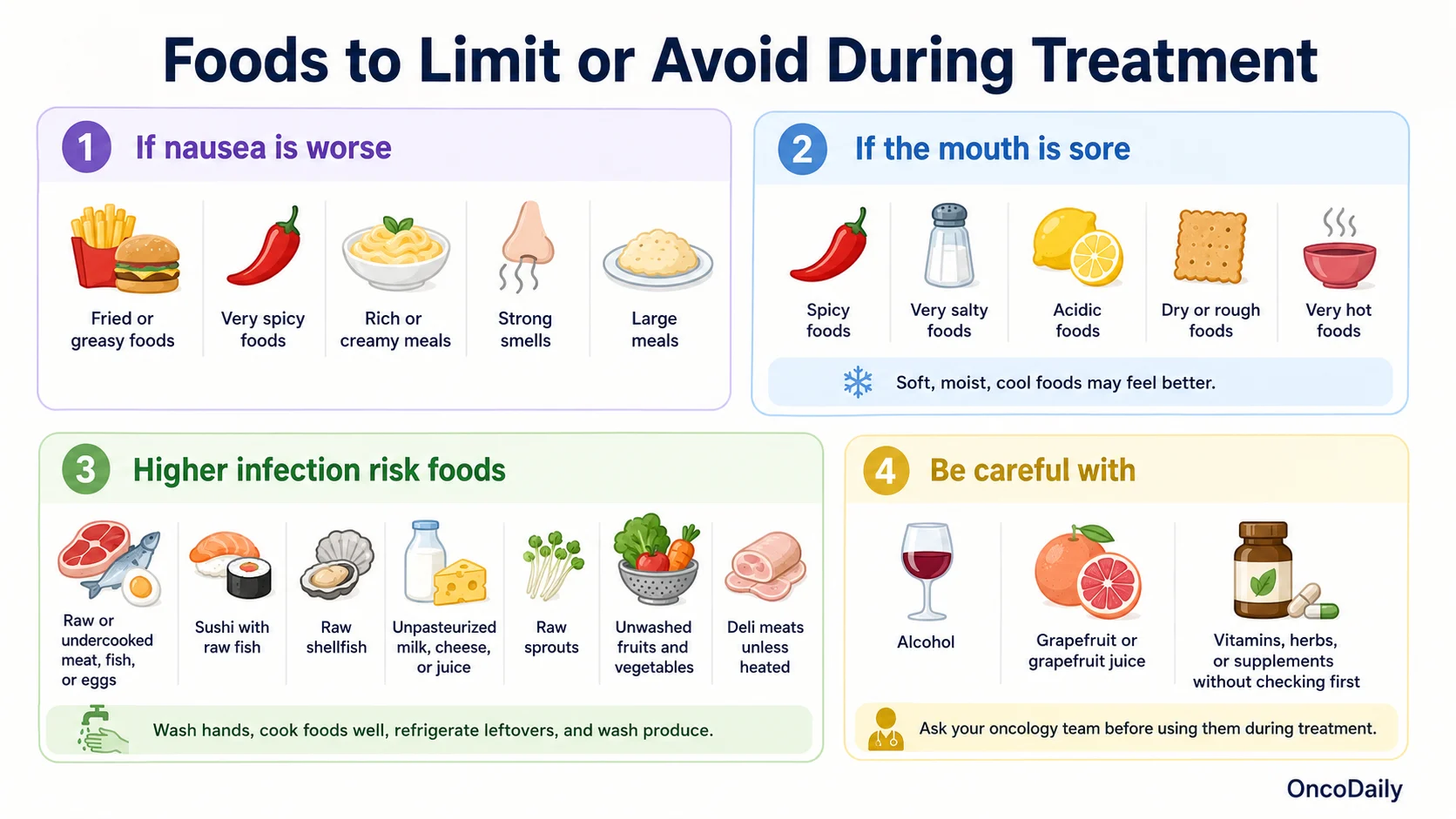
When nausea is present, fried, greasy, spicy, rich, or strongly scented foods may make symptoms worse. Large meals and very sweet foods can also be difficult to tolerate. These foods do not need to be avoided permanently and can be reintroduced when you feel better.
If you have mouth or throat sores, choose soft, moist, and cool foods. Spicy, salty, acidic, dry, rough, or very hot foods may cause further irritation. Citrus fruits, tomato products, crackers, and crusty foods are common triggers.
Food safety is especially important when chemotherapy lowers white blood cell levels. Avoid raw or undercooked meat, fish, shellfish, poultry, and eggs, as well as raw-fish sushi, unpasteurised dairy products or juice, raw sprouts, and unwashed produce. Deli foods may also need to be avoided when white blood cell levels are low.
Wash your hands, produce, and food-preparation surfaces carefully. Keep raw meat separate from ready-to-eat foods, cook meals thoroughly, refrigerate leftovers promptly, and discard food that is expired or has been left out too long.
Your oncology team may recommend additional precautions if your immune system is severely weakened (American Cancer Society, 2025).
You can also read Does Red Meat Cause Cancer? Myth vs. Reality in Light of the Latest Evidence by OnocDaily.
Be Careful With Alcohol, Grapefruit, and Supplements
Alcohol may worsen dehydration, nausea, mouth sores, liver problems, or other treatment side effects. It may also interact with some medicines. Ask the oncology team whether alcohol is safe during your specific treatment.
Grapefruit and grapefruit juice can change how certain medicines are processed by the body. They do not interact with every chemotherapy medicine, but patients should check their medication instructions or ask a pharmacist before consuming them.
Do not begin vitamins, herbal products, antioxidant supplements, special teas, or high-dose nutritional supplements without discussing them with the oncology team. Some products can affect how cancer medicines work or increase side effects.
Listen to Your Body
During chemotherapy, eating well does not always mean following a perfect diet. Some days, the priority may simply be eating something that can be tolerated and keeping enough fluid down.
Choose foods that feel comfortable, eat small amounts regularly, and adjust meals according to your symptoms. Inform the healthcare team if you are losing weight, eating very little, having difficulty swallowing, vomiting repeatedly, or struggling to stay hydrated. An oncology dietitian can provide an individualized plan based on your treatment and nutritional needs.
The best diet during chemotherapy is one that is safe, manageable, nourishing, and adapted to how you feel.
You can also read Does Microwaved Food Cause Cancer: Separating Myths from Scientific Facts by OnocDaily.
Written by Marine Marachlian, MD
FAQ
What are the best foods to eat during chemotherapy?
Choose foods that provide protein, energy, and fluids, such as eggs, yogurt, chicken, fish, beans, rice, potatoes, oatmeal, soups, and smoothies.
What should I eat when I feel nauseous?
Plain, low-odor foods may be easier to tolerate, including crackers, toast, rice, bananas, applesauce, potatoes, and clear soups.
Is it better to eat small meals during chemotherapy?
Yes. Five or six small meals may be easier to manage than three large meals, especially when appetite is low or nausea is present.
What can I eat when I have no appetite?
Try small, high-energy foods such as yogurt, eggs, cheese, nut butter, smoothies, soup, or nutritional drinks recommended by your healthcare team.
How much should I drink during chemotherapy?
Fluid needs vary, but regular small sips throughout the day can help prevent dehydration. Water, soup, milk, tea, and oral rehydration drinks may be suitable.
Are there foods I should avoid during chemotherapy?
Avoid foods that worsen your symptoms and limit raw or undercooked meat, eggs, seafood, unpasteurized products, raw sprouts, and unwashed produce.
What should I eat if I have mouth sores?
Choose soft, moist, cool foods such as yogurt, mashed potatoes, oatmeal, soups, smoothies, or scrambled eggs. Avoid spicy, acidic, rough, or very hot foods.
Can I drink alcohol during chemotherapy?
Alcohol may worsen dehydration, nausea, mouth sores, or liver problems and may interact with treatment. Ask your oncology team before drinking it.
Can I take vitamins or supplements during chemotherapy?
Do not start vitamins, herbal products, or high-dose supplements without medical advice, as some may interfere with cancer treatment.
When should I contact my healthcare team?
Contact your healthcare team if you cannot eat or drink, are vomiting repeatedly, are losing weight, have difficulty swallowing, or show signs of dehydration.