Key takeaways
- Mammography is a low-dose X-ray examination used to detect breast changes, often before symptoms appear.
- Very little preparation is needed, but avoiding deodorant, lotions, and powders can help prevent image artifacts.
- A routine screening mammogram usually takes around 20 minutes, and normal activities can be resumed immediately afterward.
- Breast compression is brief and helps produce clearer images while keeping the radiation dose low.
- - Being called back for additional imaging does not necessarily mean cancer; sometimes the radiologist simply needs a clearer or closer view.
First mammogram appointments can feel unfamiliar, and it is completely normal to have questions about what will happen, whether it will hurt, how you should prepare, and when you will receive your results.
A mammogram is a low-dose X-ray examination of the breast used to detect changes that may not yet cause symptoms or be felt during a breast examination. It is one of the main tools used in breast cancer screening.
Knowing what to expect at each stage can make the process feel more familiar and easier to approach.
How Should You Prepare for a Mammogram?
Very little preparation is needed before a mammogram, but a few practical steps can help.
If your breasts tend to feel sore or swollen around your period, you may find the examination more comfortable if you schedule it for a time when they are less sensitive. For many people, this is during the week after menstruation.
On the day of the test, avoid applying deodorant, antiperspirant, powder, lotion, or cream to the breasts or underarms. Some of these products can leave tiny particles on the skin that may appear on the mammogram and interfere with interpretation.
A two-piece outfit is usually more convenient because you will need to remove clothing from the waist up.
Before the examination, tell the technologist if you have breast implants, are pregnant or may be pregnant, are breastfeeding, or have noticed a new breast symptom such as a lump, nipple discharge, or skin change. If you have had mammograms at another facility, previous images can also be useful for comparison.
There is usually no need to fast or change your normal activities before the test.

What Happens During a Mammogram?
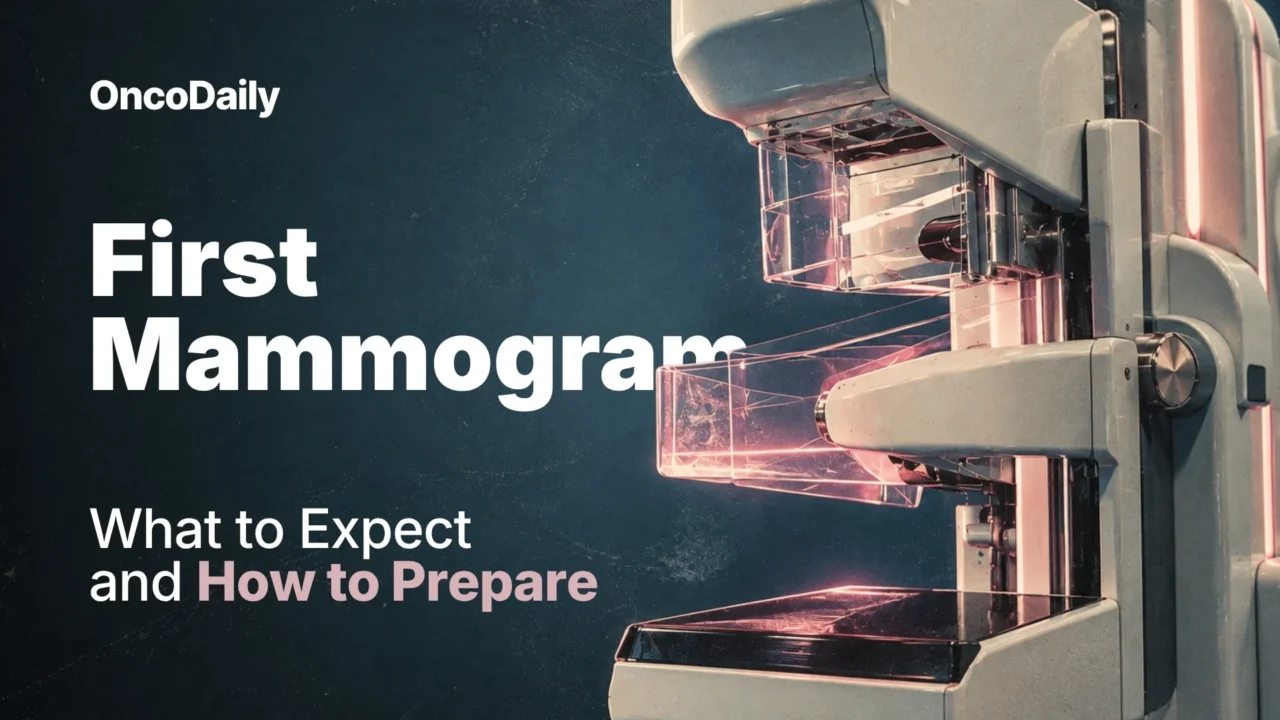
During the examination, you will stand in front of the mammography unit while the technologist positions one breast at a time on the imaging platform.
A second plate is then lowered to compress the breast for a few seconds while the X-ray is taken. Compression is an important part of mammography because it spreads the breast tissue, reduces overlap between structures, and helps produce a clearer image using a low radiation dose.
For a routine screening mammogram, images are usually taken from at least two standard views of each breast. You may be asked to change your position slightly or hold your breath briefly while the image is being taken.
Before the examination is complete, the technologist will check that the required views are clear. Occasionally, another image is needed if part of the breast was not fully included or if positioning needs to be repeated.

Does a Mammogram Hurt?
The compression used during mammography can be uncomfortable, and some people find it painful. The experience varies considerably from person to person.
Breast tenderness, particularly around menstruation, can make the pressure more noticeable. The compression itself usually lasts only a few seconds for each image.
If the pressure feels too painful, tell the technologist. Positioning can sometimes be adjusted while still obtaining the images needed for an accurate examination.
Although the compression may be uncomfortable, it is brief and is released immediately after each image is taken.
How Long Does a Mammogram Take?
A routine screening mammogram usually takes around 20 minutes from start to finish.
The X-ray exposure itself takes only a few seconds. Most of the appointment is spent positioning the breast correctly, taking the required views, and checking that the images are suitable for interpretation.
The examination may take slightly longer if another view is needed. This alone does not mean that an abnormality has been found.
Once the images are complete, you can get dressed and continue with your normal activities.

What Happens After a Mammogram?
There is no recovery period after a standard mammogram.
The images are reviewed by a radiologist, a doctor trained to interpret medical imaging. The time it takes to receive results varies between screening programs and healthcare facilities.
In some cases, you may be asked to return for additional mammogram views or another imaging test, such as a breast ultrasound. A callback does not automatically mean that breast cancer has been found. Additional imaging may be needed because an area was not clearly seen, because breast tissue overlapped on the original image, or because the radiologist wants to examine a finding more closely.
If the mammogram does not show anything that requires further assessment, you will usually be advised when your next screening is due. If more tests are needed, your healthcare team will explain the findings and the next steps.

FAQ
How should you prepare for a mammogram?
Very little preparation is needed. Avoid deodorant, antiperspirant, powder, lotion, or cream on the breasts or underarms, wear a two-piece outfit, and bring previous mammogram images if available.
What happens during a mammogram?
One breast at a time is positioned on the mammography unit and briefly compressed while X-ray images are taken from different angles.
Does a mammogram hurt?
It can feel uncomfortable, and some people do experience pain, but the compression usually lasts only a few seconds for each image.
How long does a mammogram take?
A routine screening mammogram usually takes around 20 minutes from start to finish, although each X-ray image takes only a few seconds.
What happens after a mammogram?
You can return to normal activities immediately. A radiologist reviews the images, and if anything needs a closer look, you may be asked to return for additional mammogram views or an ultrasound.