Electric cars have experienced explosive growth, with global sales reaching approximately 20.7 million units in 2025 a 20-21% increase from 2024 fueled by falling battery costs, expanding charging infrastructure, government subsidies like Europe’s CO2 standards and China’s NEV mandates, and corporate pledges for zero-emission fleets.
Photo: Depositphotos
China dominated with 12.9 million units (62% market share), Europe hit 4.3 million amid a 33% surge, while North America lagged at 1.8 million due to policy shifts. This boom, representing over 25% of new car sales worldwide, underscores EVs’ shift from niche to mainstream amid climate goals, yet it has amplified public anxieties about onboard electromagnetic fields (EMFs) potentially causing cancer, amplified by viral social media claims and misinterpretations of IARC classifications. Krzysztof Gryz Sensors (Basel). 2022
Non-Ionizing ELF EMFs vs. Ionizing Radiation
Non-ionizing extremely low-frequency (ELF) EMFs (typically 3-300 Hz in EVs) carry insufficient photon energy (under 1.24 µeV) to ionize atoms or directly rupture DNA strands, distinguishing them fundamentally from ionizing radiation like X-rays (keV range) or UV light, which trigger cellular damage and mutations via free radicals.
In Electric vehicle EVs, ELF magnetic fields (measured in microteslas, µT) stem primarily from high-current components: traction inverters (up to 20-50 µT at 50 Hz), electric motors (peaks of 30-100 µT body-side), and DC-DC converters, with electric fields under 10 V/m; these attenuate exponentially (inverse cube law) beyond 30-50 cm, keeping whole-body exposure below 2-6 µT for occupants. Static magnetic fields from batteries reach 0.2-1 mT at the floor during fast charging but pose no thermal or genotoxic risks per ICNIRP guidelines, unlike ionizing sources. Shaowen Dong Sensors (Basel). 2025 Sep
Origins and Measurement of Electric Cars EMFs
EV EMFs originate from pulsed currents in powertrains: ELF magnetic fields dominate during acceleration (harmonics up to 5 kHz), while radiofrequency (RF) fields (300 MHz-3 GHz) from keyless entry, Bluetooth, or V2X communication stay under 1-5 V/m—far below ICNIRP’s 61 V/m limit. PubMed-monitored studies (e.g., Gryz et al., 2022) used triaxial Hall-effect probes in real vehicles, logging 1-33 µT averages (99th percentile <200 µT), compliant with EU Directive 2013/35/EU for workers and ICNIRP 2020 public limits (200 µT for ELF-MF). Exposure varies by model/position: driver’s seat sees higher motor fields, but shielding and distance ensure safety margins. Myrtill Simkó Mutat Res Rev Mutat Res . 2025
Thesis: No Conclusive Cancer Evidence
Recent PubMed-indexed studies (2021-2026) confirm no exceeded exposure limits or causal cancer evidence from EVs; ELF-MF is IARC Group 2B (“possibly carcinogenic”) based on proxy studies (e.g., power lines >0.4 µT chronic childhood leukemia odds ratio 1.7, 95% CI 1.2-2.4), but EV-specific dosimetry shows averages <0.3 µT whole-body, lacking dose-response or mechanistic data (e.g., no ROS induction or tumor promotion in vitro). Comprehensive reviews emphasize precautionary monitoring for occupational drivers over 2,000 hours/year, but population risks remain unsubstantiated, aligning with WHO’s low-priority classification. Praveen Chinniah QJM . 2026 Feb
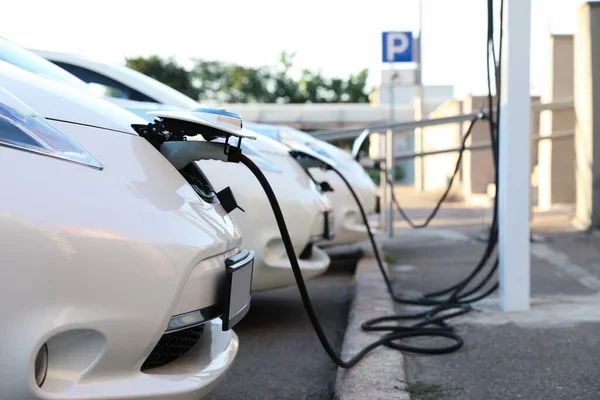
Photo: Depositphotos
Regional EV Growth Breakdown
Global sales hit 20.7 million in 2025 (25%+ of new cars),electric vehicles and cancer risk
but disparities highlight policy impacts: China’s 12.9 million units reflect NEV subsidies (60% BEV share); Europe’s 4.3 million (19-20% share per ICCT/ACEA) surged via CO2 penalties; U.S. 1.8 million (12% share) slowed post-IRA tweaks. This fuels EMF fears, yet studies like Gryz (Sensors 2022) show no unique risks.
You Can Also Read Does 5G Mobile Network Cause Cancer? Myths and Facts by OncoDaily
Myth 1: EV Batteries Emit Cancer-Causing Radiation
EV lithium-ion batteries allegedly leak ionizing radiation akin to nuclear reactors, directly damaging DNA and causing tumors, especially with heat buildup.
Batteries produce non-ionizing static magnetic fields (SMF up to 0.2-1 mT at floor) and ELF-MF (<30 µT away), incapable of ionization (photon energy <1.24 µeV vs. keV for X-rays). IARC’s ELF-MF Group 2B (“possibly carcinogenic”) derives from epidemiological power-line studies (chronic >0.4 µT exposure linked to childhood leukemia, pooled OR 1.7, 95% CI 1.2-2.4), but EV whole-body averages <0.3 µT show no dose-response, genotoxicity (e.g., no DNA strand breaks in vitro), or ROS induction promoting oncogenesis. Gryz et al. (Sensors 2022) measured compliance with ICNIRP 2020 (200 µT public limit), deeming long-term risks negligible absent causal mechanisms.
Myth 2: Driving EVs Causes Heart Problems
ELF EMFs induce arrhythmias, oxidative stress, or ECG alterations, heightening cardiovascular disease risk during commutes.
EV exposures (1-33 µT RMS, 50 Hz dominant) stay below ICNIRP basic restrictions (e.g., induced E-field <0.4 mV/m in heart); no pacing inhibition or tachycardia in CIED patients tested across BEVs/chargers. Older ELF-PEMF studies note minor RR-interval shifts (e.g., 0.18 s) or HRV changes (LF/HF ratio), but recent EV-specific reviews find no acute interference with pacemakers/implants or significant ECG (P/QRS/PR/QT) disruptions. Europace 2023 trial (high-power chargers) detected zero EMI events, confirming safety for CVD patients. Qiang Fang Int J Environ Res Public Health. 2016 Nov
Myth 3: EVs Are EMF “Boxes” Worse Than Gas Cars
Sealed cabins amplify/trap EMFs, creating chronic “electrosmog” worse than ICE alternators/ignition.
EV ELF averages 1-33 µT (99th percentile <200 µT driver’s seat) match gasoline cars (2.2 µT peaks from alternators); PEVs/HEVs max 2.6 µT urban driving. Pääkkönen measurements (40-70 km/h) confirm 8-10 Hz dominance in EVs but equivalent totals; shielding/distance ensures EU 2013/35/EU compliance for workers, with no cabin-trapping amplification. Long-term monitoring recommends precautions, but risks not elevated vs. ICE. Lei Yang Int J Environ Res Public Health. 2019
Written by Aharon Tsaturyan, MD, Editor at OncoDaily Intelligence Unit
FAQ
Do electric vehicles cause cancer from radiation?
No conclusive evidence; ELF fields (up to 30 µT) are IARC 2B based on power-line proxies, but EV exposures lack dose-response or mechanism for tumors.
Are EV batteries emitting harmful EMF radiation?
Non-ionizing static fields (<1 mT near battery) drop rapidly; safe per ICNIRP, no DNA damage unlike ionizing radiation.
Is it safe to drive electric cars with electromagnetic fields?
Yes, averages 1-6 µT whole-body comply with 200 µT public limits; no acute effects verified.
Can EVs give you cancer like cell phones?
Unlike RF phones (IARC 2B), EV ELF lacks thermal/carcinogenic proof; exposures far lower.
What are EV radiation levels compared to safety limits?
Peaks 30-100 µT near sources (inverse cube falloff); below ICNIRP 2020 (200 µT ELF-MF).
Do electric car chargers produce dangerous magnetic fields?
Static up to 0.2 mT at floor during DC fast charge, but internal dosimetry safe—no bioeffects.
EVs vs gas cars: which has higher EMF health risks?
Comparable/similar averages (<33 µT); EVs peak during regen but overall compliant.
Can EV EMFs affect heart or implants?
No significant ECG/pacemaker interference; subtle effects unproven at EV levels.
Non-ionizing radiation in EVs: cancer risk real?
Insufficient energy for genotoxicity; epidemiological links weak, non-causal for vehicles.
Debunked myths: electric vehicles and health concerns?
All major claims (cancer, symptoms) refuted by dosimetry showing limit compliance, no verified risks.