Key takeaways
- Celiac disease is associated with a slightly increased overall cancer risk.
- Lymphoma and small-bowel cancer have the strongest established associations.
- Untreated or refractory celiac disease and persistent intestinal damage are linked to higher risks.
- A strict gluten-free diet promotes intestinal healing and may reduce certain cancer risks.
- - Additional cancer screening is generally unnecessary unless concerning symptoms or complications develop.
Celiac disease is a chronic autoimmune disorder that affects the small intestine, but its consequences may extend beyond digestive symptoms and nutrient malabsorption. Research has shown that people with celiac disease have a slightly increased overall risk of certain cancers, particularly lymphoma and small-bowel adenocarcinoma.
The connection is largely associated with chronic intestinal inflammation, immune system activity, and persistent damage to the intestinal lining. However, the risk varies considerably between cancer types, and most people with celiac disease will never develop cancer.
So, which cancers are linked to celiac disease, does a gluten-free diet reduce the risk, and should patients undergo additional cancer screening? Understanding the scientific evidence can help distinguish established risks from common misconceptions.
Does Celiac Disease Increase Cancer Risk?
Celiac disease is associated with a slightly increased overall risk of cancer, although the risk varies considerably depending on the type of malignancy. The strongest associations are with certain non-Hodgkin lymphomas, particularly enteropathy-associated T-cell lymphoma (EATL), and small-bowel adenocarcinoma (Elli et al., 2020).
A large Swedish population-based study involving 47,241 people with celiac disease found an approximately 11% higher relative risk of cancer compared with individuals without the condition. However, the absolute increase was small, with 6.5 cancer cases per 1,000 person-years among patients with celiac disease compared with 5.7 among those without it (Lebwohl et al., 2022).
Importantly, an 11% increase in relative risk does not mean that 11% of patients will develop cancer. Even malignancies with substantially elevated relative risks, such as EATL and small-bowel adenocarcinoma, remain rare.
The study also found that the overall increase in cancer risk was concentrated in the first year following celiac disease diagnosis, particularly among adults diagnosed after age 40. Beyond the first year, overall cancer risk was comparable to that of the general population, although elevated risks persisted for certain malignancies, including lymphoproliferative cancers (Lebwohl et al., 2022).
Long-standing intestinal inflammation, persistent villous damage, and refractory celiac disease may contribute to the development of certain malignancies. However, most people with celiac disease will never develop these cancers, particularly when the condition is appropriately managed with a strict gluten-free diet and regular medical follow-up (Pelizzaro et al., 2021).

Why Can Celiac Disease Increase Cancer Risk?
Celiac disease can increase the risk of certain cancers because of chronic intestinal inflammation, persistent immune activation, and damage to the small-intestinal lining. In people with untreated celiac disease, continued exposure to gluten triggers an immune response that can gradually damage intestinal tissue and create conditions that favor abnormal cell growth (Elli et al., 2020).
Inflammatory molecules, including interleukin-15 (IL-15) and interferon-gamma, play important roles in this process. Prolonged immune activation can contribute to oxidative stress, DNA damage, and changes in the regulation of intestinal immune cells. In some patients, abnormal lymphocytes may accumulate and eventually undergo malignant transformation, helping explain the association between celiac disease and enteropathy-associated T-cell lymphoma (EATL) (Abadie and Jabri, 2014).
Another important factor is persistent villous atrophy, a condition in which the small intestine’s finger-like projections remain damaged despite treatment. A population-based study found that patients with persistent villous atrophy had a higher risk of lymphoproliferative malignancies than those whose intestinal lining had healed (Lebwohl et al., 2013).
The risk is particularly concerning in patients with refractory celiac disease, especially type II, which involves abnormal intestinal lymphocytes and carries a substantially elevated risk of EATL (Chander et al., 2018).
These mechanisms help explain why lymphoma and small-bowel adenocarcinoma have stronger associations with celiac disease than most other cancers. However, chronic inflammation does not inevitably lead to malignancy, and the absolute risk remains low for most patients.
What Types of Cancer Are Linked to Celiac Disease?
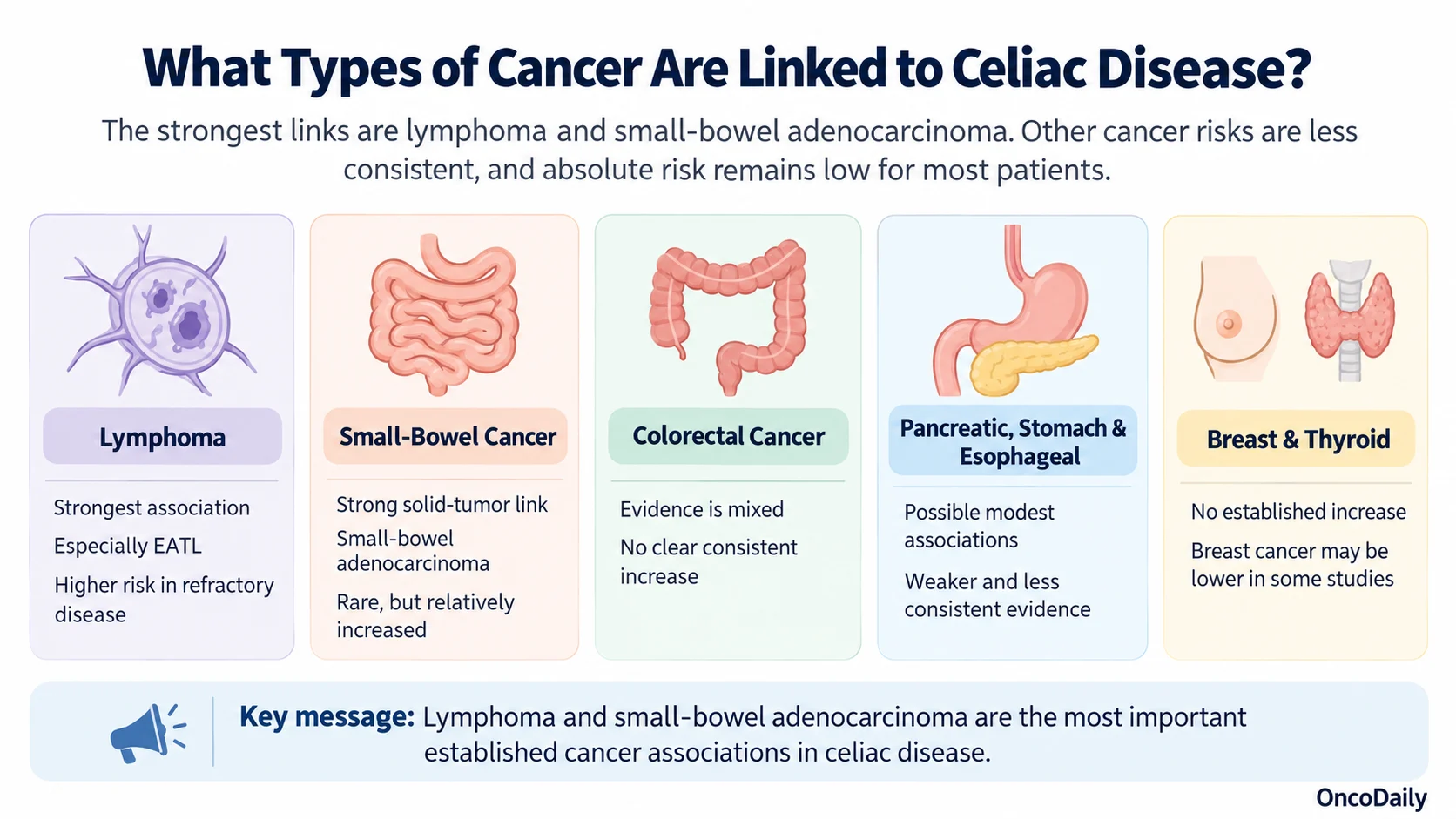
Celiac disease is associated with an increased risk of certain cancers, particularly those affecting the small intestine and lymphatic system. The strongest associations involve non-Hodgkin lymphoma, especially enteropathy-associated T-cell lymphoma (EATL), and small-bowel adenocarcinoma. For other malignancies, the evidence is less consistent, and the absolute risk remains low for most patients (Zabit et al., 2026).
Lymphoma and Celiac Disease
Lymphoma is one of the most established cancer associations in celiac disease. The strongest link is with enteropathy-associated T-cell lymphoma (EATL), a rare and aggressive form of non-Hodgkin lymphoma that typically develops in the small intestine.
The risk is particularly elevated in patients with refractory celiac disease, persistent villous atrophy, or long-standing intestinal inflammation. Other types of non-Hodgkin lymphoma have also been associated with celiac disease, although the strength of these associations varies (Coeliac UK, 2026).
Small-Bowel Cancer
Small-bowel adenocarcinoma is another malignancy strongly associated with celiac disease. Chronic inflammation and repeated injury to the intestinal lining may contribute to malignant transformation.
Although studies report a substantially increased relative risk compared with the general population, small-bowel adenocarcinoma remains rare, meaning the likelihood of developing it is still low for most people with celiac disease.
Colorectal Cancer
The relationship between celiac disease and colorectal cancer remains uncertain. While some population studies have reported an increased risk of colon cancer, others have found no significant association.
Importantly, colorectal cancer should be distinguished from small-bowel cancer, for which the association with celiac disease is much better established. Current evidence does not consistently demonstrate an increased risk of colorectal cancer (Dhali et al., 2026).
Pancreatic, Stomach, and Esophageal Cancers
Some studies have identified modest associations between celiac disease and pancreatic, gastric, and esophageal cancers.
A large French population-based study reported increased risks for all three malignancies, although the associations were considerably weaker than those observed for lymphoma and small-bowel cancer. Differences between study populations and potential confounding factors make these findings more difficult to interpret (2025, Clinical Gastroenterology and Hepatology).
Breast and Thyroid Cancer
Current evidence does not establish an increased risk of breast or thyroid cancer among people with celiac disease.
Several population-based studies have reported a lower incidence of breast cancer, although the reasons remain uncertain. This finding does not mean that celiac disease protects against breast cancer.
Similarly, while autoimmune thyroid disorders are more common in people with celiac disease, studies have not consistently demonstrated a corresponding increase in thyroid cancer risk (Dhali et al., 2026).
Overall, the relationship between celiac disease and cancer is highly dependent on the cancer type. Lymphoma and small-bowel adenocarcinoma remain the most important established associations, while risks involving other organs require more research.
Does a Gluten-Free Diet Reduce Cancer Risk?
A strict, lifelong gluten-free diet is the standard treatment for celiac disease and may help reduce the risk of certain associated cancers, particularly lymphoma. By eliminating gluten, the diet reduces intestinal inflammation, allows the damaged intestinal lining to heal, and limits the prolonged immune activation associated with untreated disease (Elli et al., 2020).
Intestinal healing appears particularly important. A Swedish population-based study involving 7,625 patients with celiac disease found that those with persistent villous atrophy had more than twice the risk of developing lymphoproliferative malignancies compared with patients whose intestinal lining had healed (HR 2.26). However, the study assessed mucosal healing rather than dietary adherence directly, so it cannot prove that a gluten-free diet alone prevents lymphoma (Lebwohl et al., 2013).
Persistent villous atrophy may result from ongoing gluten exposure, delayed intestinal recovery, or refractory celiac disease. Patients with continuing symptoms, unexplained weight loss, or nutritional deficiencies may require further investigation, including follow-up intestinal biopsy when clinically indicated.
Although observational studies suggest that controlling intestinal inflammation may lower certain cancer risks, a gluten-free diet does not completely eliminate the possibility of developing cancer. Consistent dietary adherence, nutritional monitoring, and appropriate medical follow-up remain essential for long-term management.

Who Is at Higher Risk of Developing Cancer With Celiac Disease?
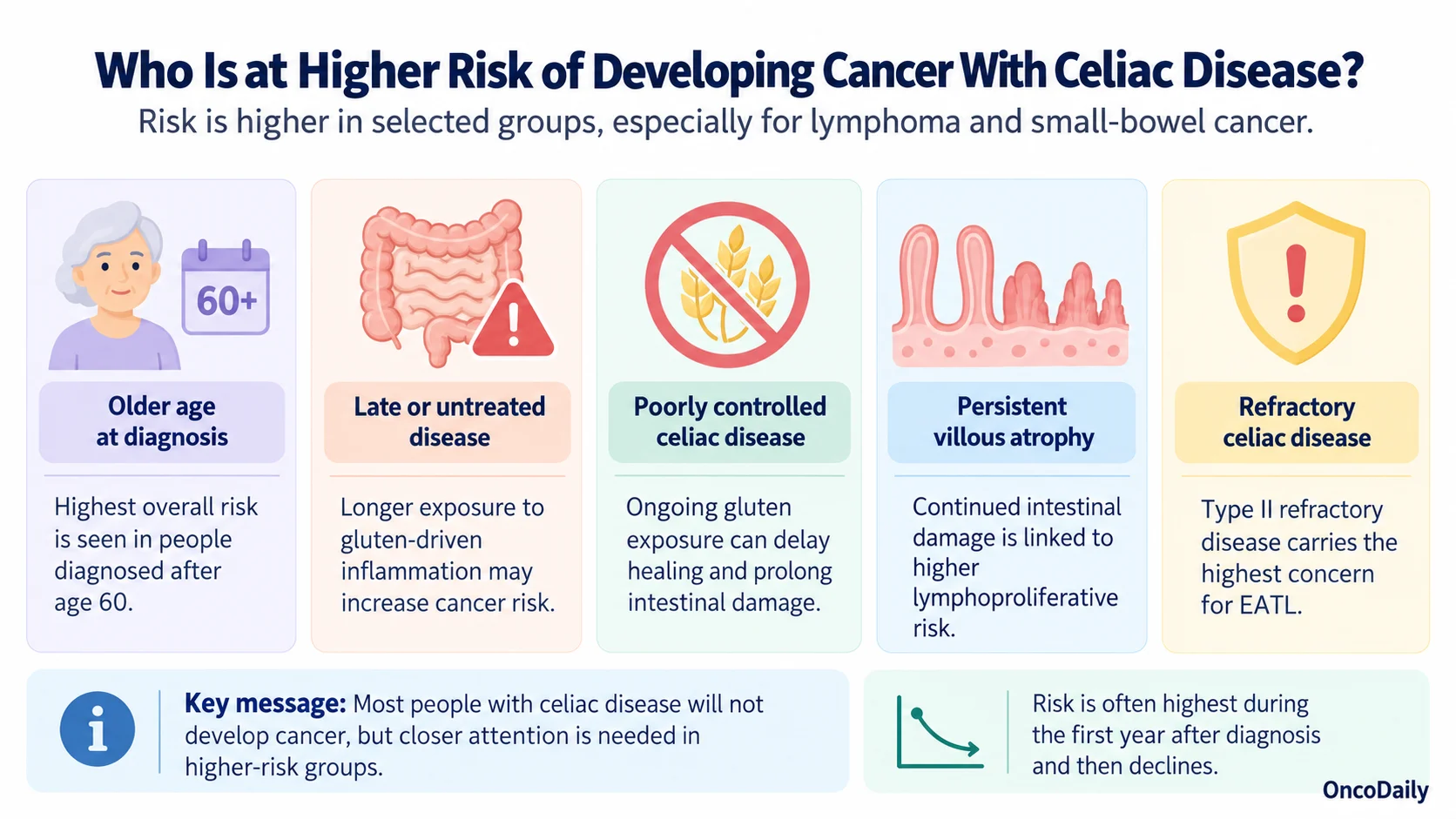
Cancer risk in celiac disease is not the same for everyone. Certain factors, including older age at diagnosis, prolonged untreated disease, persistent intestinal damage, and refractory celiac disease, are associated with a greater likelihood of developing specific malignancies, particularly lymphoma and small-bowel cancer.
A large Swedish study involving 47,241 patients with celiac disease found that cancer risk was highest among individuals diagnosed after age 60, with a 22% higher relative risk compared with people without celiac disease. No significant overall increase was observed among those diagnosed before age 40 (Lebwohl et al., 2022).
Several factors may contribute to increased cancer risk:
Late diagnosis: Prolonged exposure to gluten-driven inflammation before diagnosis may contribute to intestinal damage, particularly in older adults.
Untreated or poorly controlled celiac disease: Continued gluten exposure can maintain intestinal inflammation and delay mucosal healing.
Persistent villous atrophy: Ongoing damage to the small-intestinal lining is associated with an increased risk of lymphoproliferative malignancies, particularly when healing does not occur despite treatment.
Refractory celiac disease: Patients with refractory celiac disease type II, characterized by abnormal intestinal lymphocytes, face a particularly elevated risk of enteropathy-associated T-cell lymphoma (EATL) (Lebwohl et al., 2013; Malignancies in Celiac Disease, 2025).
Cancer risk also changes over time following diagnosis. In the Swedish cohort, overall cancer risk was approximately 2.5 times higher during the first year after diagnosis but was no longer significantly elevated afterward. This early increase may partly reflect cancers already present when celiac disease is diagnosed, rather than cancers developing as a direct consequence of the diagnosis (Lebwohl et al., 2022).
Although these findings identify groups requiring closer clinical attention, most people with celiac disease will not develop cancer. Early diagnosis, consistent gluten-free treatment, and appropriate follow-up remain important for reducing ongoing intestinal injury and identifying complications.
What Are the Warning Signs of Cancer in People With Celiac Disease?
Most people with celiac disease will never develop cancer. However, certain symptoms require medical attention, particularly when they are persistent, worsening, or continue despite following a strict gluten-free diet. These symptoms may occasionally indicate complications such as enteropathy-associated T-cell lymphoma (EATL) or small-bowel adenocarcinoma (Al-Toma, 2025).
Warning signs that should be evaluated include:
Unexplained weight loss: Particularly significant or progressive weight loss without changes in diet or activity.
Persistent abdominal pain: Severe or worsening pain, especially when accompanied by bloating or vomiting.
Gastrointestinal bleeding: Blood in the stool, black stools, or unexplained iron-deficiency anemia.
Persistent diarrhea or malabsorption: Symptoms that fail to improve despite consistent gluten avoidance.
Fever and night sweats: Particularly unexplained fevers, drenching night sweats, or enlarged lymph nodes, which may occur with lymphoma.
Bowel obstruction: Severe abdominal pain, vomiting, abdominal swelling, or inability to pass stool or gas.
Many of these symptoms can also occur with active celiac disease or other noncancerous gastrointestinal conditions. However, symptoms that persist despite treatment should not automatically be attributed to gluten exposure.
Patients with persistent symptoms or intestinal damage after approximately 12 months on a gluten-free diet require further evaluation. This may include reviewing dietary adherence, blood tests, endoscopy with biopsies, or imaging when clinically indicated (Al-Toma et al., 2026).
Importantly, severe abdominal pain, repeated vomiting, signs of bowel obstruction, or significant gastrointestinal bleeding require urgent medical attention. 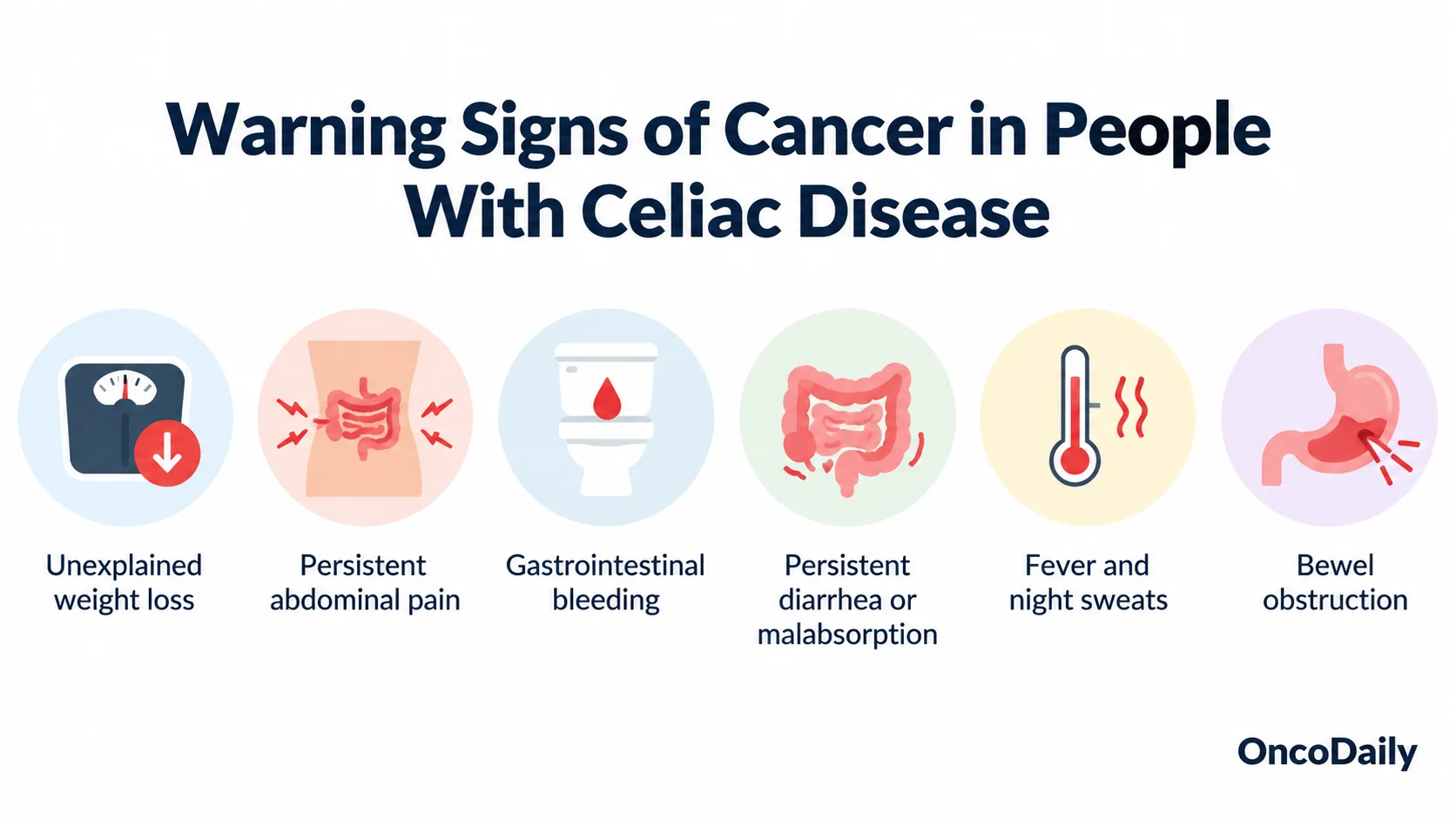
Do People With Celiac Disease Need Additional Cancer Screening?
Most people with celiac disease do not need additional cancer screening beyond standard recommendations for their age and individual risk factors. Although celiac disease is associated with a slightly increased risk of certain malignancies, the absolute risk remains low, particularly in patients whose disease is well controlled with a gluten-free diet (Al-Toma et al., 2026).
The updated European Society for the Study of Coeliac Disease (ESsCD) guidelines recommend routine, age-appropriate cancer screening rather than additional surveillance for patients with stable, non-refractory celiac disease. This includes screening for colorectal, breast, cervical, and other cancers according to general population guidelines and individual risk factors.
However, additional investigations may be necessary when symptoms persist or new warning signs develop, particularly in patients with refractory celiac disease or persistent intestinal damage. Unexplained weight loss, gastrointestinal bleeding, persistent abdominal pain, or worsening malabsorption may require further evaluation, including endoscopy, intestinal biopsies, or imaging when clinically indicated (Al-Toma et al., 2026).
Long-term management should focus on maintaining a strict gluten-free diet, monitoring nutritional status, and assessing symptoms during regular medical follow-up. Avoiding tobacco, limiting alcohol, and maintaining a healthy lifestyle can also help reduce general cancer risk.
For most patients, the priority is not additional cancer testing but effective control of celiac disease and timely investigation of symptoms that do not improve with treatment.

FAQ
Does celiac disease increase cancer risk?
Yes. Celiac disease is associated with a slightly increased overall cancer risk, particularly lymphoma and small-bowel cancer. However, most people with celiac disease never develop cancer.
What cancers are most commonly linked to celiac disease?
The strongest associations are with non-Hodgkin lymphoma, especially enteropathy-associated T-cell lymphoma (EATL), and small-bowel adenocarcinoma.
Does celiac disease increase colon cancer risk?
The evidence remains inconsistent. Most large studies have not found a significant increase in colorectal cancer risk among people with celiac disease.
Can a gluten-free diet prevent cancer?
A strict gluten-free diet reduces intestinal inflammation and promotes healing, which may lower the risk of certain cancers, particularly lymphoma. However, it does not guarantee cancer prevention.
Can untreated celiac disease lead to cancer?
Long-standing untreated celiac disease may increase the risk of certain malignancies because of persistent intestinal inflammation and immune activation.
What are the warning signs of cancer in celiac disease?
Unexplained weight loss, persistent abdominal pain, gastrointestinal bleeding, unexplained anemia, and symptoms that continue despite a gluten-free diet should be medically evaluated.
Do people with celiac disease need additional cancer screening?
Generally, no. Most patients should follow routine age-appropriate cancer screening guidelines. Additional investigations may be needed for persistent symptoms or refractory celiac disease.