Key takeaways
- Chemotherapy can be used at any cancer stage, from I to IV.
- Not every patient needs chemotherapy, even with advanced cancer.
- Treatment depends on cancer type, stage, biomarkers and recurrence risk.
- Chemotherapy may cure cancer, prevent recurrence or control its growth.
At what stage of cancer is chemotherapy needed? This is one of the most common questions people ask after a cancer diagnosis. Many patients assume chemotherapy is only used when cancer has reached stage III or IV, but that is not always the case.
Chemotherapy can be used at any stage of cancer, from stage I to stage IV. Some patients receive chemotherapy even when their cancer is found early, while others may not need it despite having more advanced disease. The decision depends on the type of cancer, how far it has spread, how likely it is to return and which treatments are most likely to work.
Chemotherapy may be given to cure cancer, reduce the risk of recurrence, shrink a tumor before surgery or control cancer that has spread. It may also be combined with radiation, immunotherapy or targeted treatments. Understanding why chemotherapy is recommended at different stages can help patients feel more informed when discussing their treatment options (National Cancer Institute, 2025).
At What Stage of Cancer Is Chemotherapy Used?
There is no single stage at which chemotherapy becomes necessary. Although cancer is often described using stages I, II, III and IV, the stage number is only one part of the treatment decision.
Cancer staging helps doctors understand where the tumor is located, how large it is and whether cancer has spread to nearby lymph nodes or other organs. Generally, a higher stage means the cancer has spread further. However, two people with cancer at the same stage may need very different treatments.
For example, a patient with stage I breast cancer may be advised to receive chemotherapy if the tumor has features associated with a higher risk of recurrence. Another patient with early-stage breast cancer may need only surgery, radiation or hormone therapy. Even at stage IV, some patients may receive targeted therapy or immunotherapy rather than conventional chemotherapy.
Doctors also consider how quickly the cancer is growing, whether surgery is possible, the patient’s general health and the expected benefits of treatment. The aim is to recommend chemotherapy when it has a meaningful chance of improving the patient’s outcome, rather than simply because a cancer has reached a particular stage (National Cancer Institute, 2025; Andre et al., 2022).
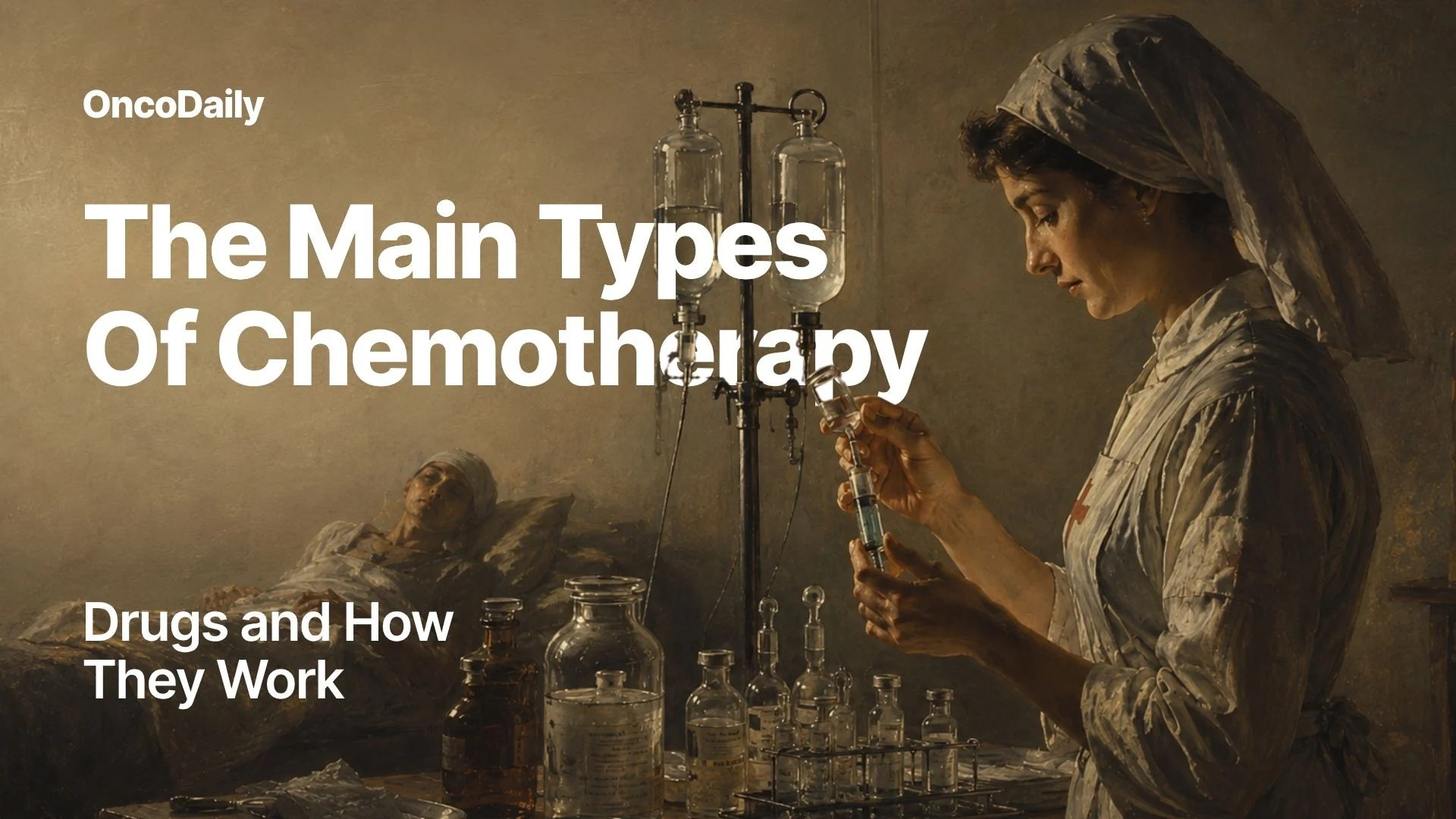
Chemotherapy by Cancer Stage: Stage I to Stage IV
Chemotherapy has different purposes depending on the cancer’s stage. For some patients, it is part of treatment intended to cure the disease. For others, it helps keep the cancer under control, sometimes for a long period.
Stage I Cancer and Chemotherapy
Many stage I cancers do not require chemotherapy. At this stage, the tumor is usually still limited to its original location, and surgery or radiation therapy may be enough to treat it.
However, a small tumor does not always mean a low-risk cancer. Some cancers are more likely to return or grow quickly because of their biological characteristics. In these cases, chemotherapy may be recommended even after the tumor has been completely removed.
For example, certain early-stage breast cancers may benefit from chemotherapy, particularly when the tumor is triple-negative, HER2-positive or has other high-risk features. When chemotherapy is used at stage I, the goal is usually to improve the chance of cure by reducing the risk of recurrence (National Cancer Institute, 2025; Andre et al., 2022).
Stage II Cancer and Chemotherapy
In stage II cancer, the tumor may be larger or have reached nearby tissues or lymph nodes, depending on the type of cancer. Chemotherapy becomes more common at this stage, but it is still not necessary for every patient.
Some patients receive chemotherapy before surgery to shrink the tumor and make it easier to remove. Others receive it after surgery to lower the chance that cancer will return.
The difference between cancer types is important. Chemotherapy is often part of treatment for selected stage II breast cancers, particularly those with higher-risk features. In stage II colon cancer, however, many patients are treated with surgery alone, and chemotherapy is generally considered when there are additional concerns about recurrence (National Cancer Institute, 2025; PDQ Adult Treatment Editorial Board, 2025).
Stage III Cancer and Chemotherapy
Stage III cancer often requires a combination of treatments, and chemotherapy is frequently one of them.
At this stage, cancer may have grown into nearby tissues or spread to regional lymph nodes, although distant organs are generally not involved. Chemotherapy may be given before surgery, after surgery or alongside radiation therapy.
For certain cancers, combining chemotherapy with radiation helps make treatment more effective. This approach is used in some patients with locally advanced lung, cervical and head and neck cancers.
Being diagnosed with stage III cancer does not automatically mean the disease cannot be cured. Many stage III cancers are still treated with the aim of eliminating the cancer and preventing it from returning. The likelihood of success depends on the cancer type, its characteristics and how well it responds to treatment (National Cancer Institute, 2025; PDQ Adult Treatment Editorial Board, 2026).
Stage IV Cancer and Chemotherapy
Stage IV usually means that cancer has spread from its original location to distant parts of the body, such as the liver, lungs or bones. This is also called metastatic cancer.
Because chemotherapy works throughout the body, it can help treat cancer cells in several locations at once. For many metastatic cancers, the main goals are to slow growth, reduce symptoms and help patients live longer.
Chemotherapy may shrink tumors that are causing pain, bleeding, breathing problems or pressure on nearby organs. Sometimes it is combined with immunotherapy or targeted drugs. In other situations, chemotherapy may not be the best first treatment.
Although most common metastatic solid tumors are difficult to cure, certain advanced cancers, including some lymphomas, leukemias and testicular cancers, can still respond to treatment with the possibility of cure (National Cancer Institute, 2026).
Why Is Chemotherapy Given Before or After Surgery?
Chemotherapy is not always the first treatment a patient receives. In many cancers, it is planned around surgery, and its purpose depends on when it is given.
When chemotherapy is given before surgery, it is called neoadjuvant chemotherapy. The aim is to shrink the tumor so that it can be removed more easily. Sometimes this makes a less extensive operation possible. It also allows doctors to see how well the cancer responds to the medicines being used.
When chemotherapy is given after surgery, it is called adjuvant chemotherapy. Even when surgery successfully removes everything doctors can see, a small number of cancer cells may remain elsewhere in the body. These cells may be too small to appear on scans. Chemotherapy is used to reduce the chance that they will eventually cause the cancer to return.
Some patients receive chemotherapy together with radiation therapy. This is known as chemoradiation. Certain chemotherapy drugs make cancer cells more sensitive to radiation, allowing the two treatments to work together.
Chemotherapy may also be used when surgery is not possible or when the cancer has spread. In this situation, treatment may focus on controlling the disease and easing symptoms. This is sometimes called palliative chemotherapy, but it does not mean treatment has stopped. Chemotherapy may still help a patient live longer while reducing problems caused by the cancer (National Cancer Institute, 2025).
Which Cancer Types Require Chemotherapy at Different Stages?
One of the reasons chemotherapy recommendations can seem confusing is that every cancer behaves differently. A treatment that is important for one type of cancer may offer little benefit for another, even when both are diagnosed at the same stage.
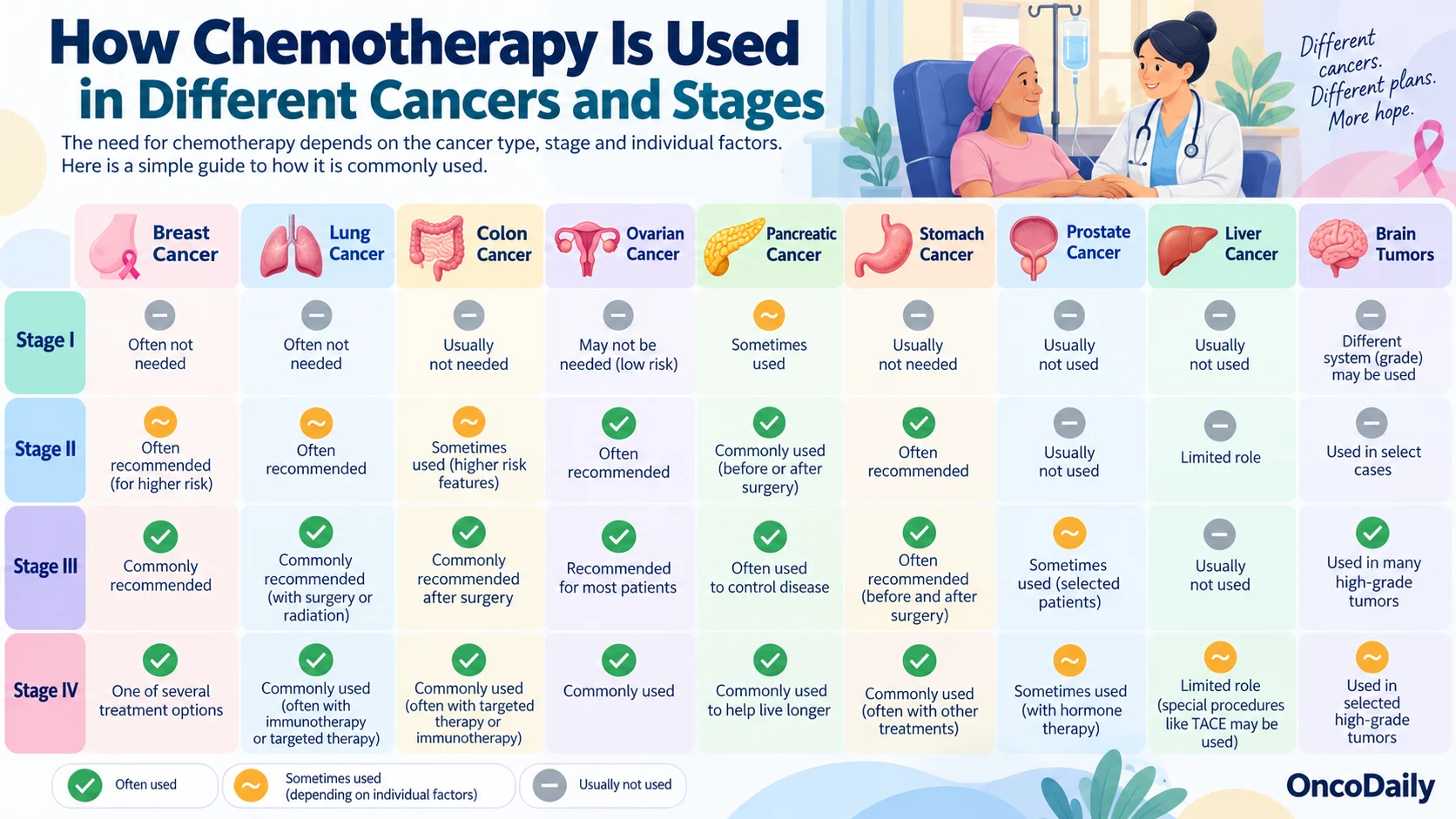
Here is how chemotherapy is commonly used in several major cancer types.
Breast Cancer Chemotherapy by Stage
Chemotherapy is not necessary for everyone diagnosed with breast cancer. The decision depends on the stage, whether cancer has reached the lymph nodes and the characteristics of the tumor.
In stage I breast cancer, many patients can be treated without chemotherapy. However, chemotherapy is more likely to be recommended for triple-negative or HER2-positive breast cancers, particularly when the tumor has features associated with a greater risk of recurrence.
Some patients with hormone receptor-positive, HER2-negative breast cancer may undergo a genomic test, such as Oncotype DX, to help determine whether chemotherapy is likely to provide additional benefit.
For stages II and III, chemotherapy is more frequently used before or after surgery. In some patients, giving chemotherapy before surgery can shrink the tumor enough to make breast-conserving surgery possible.
For stage IV breast cancer, chemotherapy is one of several available treatments. Patients whose tumors are hormone receptor-positive may benefit from hormone therapy combined with targeted drugs, while HER2-positive cancers may be treated with HER2-directed medicines. Chemotherapy is selected according to the cancer subtype, previous treatment and how the disease is behaving (Andre et al., 2022; National Cancer Institute, 2025).
Lung Cancer Chemotherapy by Stage
Lung cancer treatment depends partly on whether a patient has non-small cell lung cancer (NSCLC) or small cell lung cancer (SCLC). These are different diseases and do not follow identical treatment plans.
In stage I non-small cell lung cancer, surgery or radiation therapy is often the main treatment. Many patients do not require chemotherapy, although some with higher-risk tumors may benefit from additional treatment.
For stages II and III, chemotherapy is more commonly used. It may be given before or after surgery or combined with radiation therapy. In patients with stage III cancer that cannot be removed surgically, chemotherapy and radiation are often used together, sometimes followed by immunotherapy.
In stage IV non-small cell lung cancer, treatment depends heavily on tumor testing. Some patients receive chemotherapy together with immunotherapy, while others may benefit more from targeted drugs if their cancer carries a particular genetic change.
Small cell lung cancer is usually treated with systemic chemotherapy because it often grows and spreads quickly. Depending on the extent of the disease, chemotherapy may be combined with immunotherapy or radiation therapy (PDQ Adult Treatment Editorial Board, 2026).
Colon Cancer Chemotherapy by Stage
For many patients with colon cancer, the need for chemotherapy becomes clearer as the cancer progresses through the stages.
In stage I colon cancer, surgery is usually sufficient, and chemotherapy is generally not recommended.
In stage II, most patients have surgery first. Chemotherapy may be considered if the tumor has characteristics that make recurrence more likely, such as growth through the outer layers of the bowel wall or certain complications at diagnosis.
For stage III colon cancer, chemotherapy is commonly recommended after surgery because cancer cells have reached nearby lymph nodes. Treatments such as FOLFOX or CAPOX are used to reduce the chance of recurrence.
In stage IV colon cancer, treatment may include chemotherapy, targeted therapy, immunotherapy and sometimes surgery for selected patients with limited metastatic disease. Biomarker testing is especially important because certain tumors, including those with high microsatellite instability (MSI-H), may respond particularly well to immunotherapy (PDQ Adult Treatment Editorial Board, 2025).
Ovarian Cancer Chemotherapy by Stage
Chemotherapy plays an important role in the treatment of many ovarian cancers, especially the common epithelial type.
Some patients with low-risk stage I ovarian cancer may not require chemotherapy after surgery. However, when the cancer has higher-risk features, additional treatment is often recommended.
For stages II, III and IV, chemotherapy is generally an important part of treatment. A common combination includes carboplatin and paclitaxel, often given alongside surgery.
In more advanced disease, chemotherapy may be started before surgery if doctors believe that removing all visible cancer immediately would be difficult or unsafe. After several treatment cycles, surgery may be performed, followed by further chemotherapy.
Depending on the tumor’s characteristics and response to treatment, some patients also receive maintenance therapy to help delay recurrence (PDQ Adult Treatment Editorial Board, 2024).
Pancreatic Cancer Chemotherapy by Stage
In pancreatic cancer, doctors look at both the cancer stage and whether the tumor can be removed through surgery.
When surgery is possible, chemotherapy may be given beforehand to improve the chances of removing the tumor completely. It is also commonly recommended after surgery because pancreatic cancer has a significant risk of returning.
In stage III pancreatic cancer, the tumor may involve important nearby blood vessels, making surgery difficult or impossible. Chemotherapy is often used to control the cancer and, in selected patients, may improve the possibility of surgery later.
For stage IV pancreatic cancer, chemotherapy is generally used to slow the disease and help patients live longer. Depending on overall health and ability to tolerate treatment, options may include FOLFIRINOX, NALIRIFOX or gemcitabine-based combinations.
Not every patient can tolerate the same regimen, so the choice of treatment takes into account physical condition, other medical problems and personal priorities (National Cancer Institute).
Stomach Cancer Chemotherapy by Stage
Chemotherapy is commonly used for stomach cancer, although its role changes with the stage of the disease.
Some very early stomach cancers can be removed through endoscopy or surgery without chemotherapy. For other localized tumors, additional treatment may be needed.
In stages II and III, chemotherapy may be given before and after surgery to shrink the cancer and reduce the risk of recurrence. One frequently used combination is called FLOT, which includes four chemotherapy medicines.
For stage IV stomach cancer, chemotherapy often remains an important treatment. Depending on the tumor’s biomarkers, immunotherapy or targeted medicines may also be added. These combinations allow treatment to be tailored more closely to the characteristics of the cancer (National Cancer Institute, 2025).
Prostate, Liver and Brain Cancer
Not all cancers rely heavily on conventional chemotherapy, even when they are advanced.
Prostate cancer is often treated with surgery, radiation or hormone-based treatments rather than chemotherapy in its early stages. Chemotherapy, particularly docetaxel, may be recommended for selected patients with metastatic prostate cancer, sometimes together with hormone treatment.
Liver cancer is different because conventional chemotherapy has a limited role in the most common type, hepatocellular carcinoma. Treatment may involve surgery, liver transplantation, procedures that destroy or block the blood supply to tumors, immunotherapy or targeted medicines. A procedure called TACE delivers chemotherapy directly into the blood vessels feeding liver tumors and is different from chemotherapy given throughout the body.
Brain tumors also follow a different classification system. Most primary brain tumors are described by their WHO grade rather than stage I through IV. Glioblastoma, for example, is a grade 4 brain tumor. When appropriate, treatment commonly includes surgery followed by radiation and a chemotherapy medicine called temozolomide (PDQ Adult Treatment Editorial Board, 2026).
Can Chemotherapy Cure Stage IV Cancer, and Is It Worth Having?
A stage IV cancer diagnosis can bring difficult questions, particularly about whether treatment can still lead to a cure.
For most common metastatic solid tumors, chemotherapy is intended to control the cancer rather than eliminate it permanently. Treatment may shrink tumors, slow their growth, reduce symptoms and help patients live longer. Some people experience long periods in which their cancer remains stable.
However, stage IV cancer is not always incurable. Certain lymphomas, leukemias and germ-cell tumors, including some testicular cancers, can be cured with treatment even when the disease is advanced. There are also selected patients with a small number of metastases, known as oligometastatic disease, who may have a chance of long-term remission or cure when chemotherapy is combined with surgery or radiation.
Whether chemotherapy is worthwhile depends on what it can realistically achieve for that individual patient. Some treatments offer a substantial chance of slowing cancer growth, while others may provide a smaller benefit. Side effects such as fatigue, nausea, low blood counts or nerve damage can also affect everyday life.
Before deciding, patients should feel comfortable asking their oncologist what the treatment is expected to accomplish, how likely it is to help and whether other options are available. For some people, the main priority is living as long as possible. Others may place greater importance on remaining active, spending time at home or avoiding burdensome side effects.
There is no single answer that is right for every patient. Good cancer care considers both the medical evidence and what matters most to the person receiving treatment. Supportive and palliative care can be provided alongside chemotherapy at any stage to help manage symptoms and treatment-related problems (National Cancer Institute, 2026).

Chemotherapy vs Immunotherapy and Targeted Therapy: What Is the Difference?
Chemotherapy has been used to treat cancer for decades, but patients today have more treatment options than ever before. Depending on the cancer type, doctors may recommend chemotherapy, immunotherapy, targeted therapy, hormone therapy or a combination of these treatments.
Chemotherapy works by damaging cancer cells and interfering with their ability to grow and divide. Because some healthy cells are also affected, chemotherapy can cause side effects such as fatigue, nausea, hair loss and low blood counts.
Immunotherapy works differently. Certain immunotherapy medicines help the immune system recognize and attack cancer cells. These treatments have become important options for some patients with lung cancer, melanoma, kidney cancer and several other malignancies.
Targeted therapy focuses on particular changes in cancer cells that help them grow. For example, some lung cancers have a change in a gene called EGFR. Patients with certain EGFR mutations may benefit from drugs designed to block the activity of that altered protein.
Hormone therapy is used when cancer depends on certain hormones to grow. It is an important treatment for many hormone receptor-positive breast cancers and prostate cancers.
To understand which treatment is most likely to work, doctors may recommend biomarker testing. These tests examine cancer cells for particular genes, proteins or other features. The results can help identify whether targeted therapy or immunotherapy is appropriate.
For example, two patients with stage IV lung cancer may receive different treatment plans. One patient may have a tumor with an EGFR mutation that can be treated with a targeted medicine, while another may benefit more from immunotherapy or chemotherapy.
Newer treatments have not made chemotherapy unnecessary. For many cancers, chemotherapy remains one of the most effective available treatments, and some patients receive it together with immunotherapy or targeted drugs.
What matters most is choosing treatment based on the type of cancer, its characteristics, the available evidence and the patient’s overall health. The stage is important, but it is only part of the picture (National Cancer Institute, 2021; PDQ Adult Treatment Editorial Board, 2026).
FAQ
At what stage of cancer is chemotherapy usually needed?
Chemotherapy can be used at any stage, from stage I to stage IV. It is more commonly recommended for certain stage II and III cancers, but the decision depends on the cancer type, tumor characteristics and treatment goals.
Does stage I cancer require chemotherapy?
Not always. Many stage I cancers can be treated with surgery or radiation alone. However, chemotherapy may be recommended when the tumor has aggressive features or a higher risk of returning.
Is chemotherapy necessary for stage III cancer?
Chemotherapy is frequently part of stage III cancer treatment, often combined with surgery or radiation. Many stage III cancers are still potentially curable, although treatment depends on the specific cancer type.
Can stage IV cancer be cured with chemotherapy?
Most stage IV solid tumors cannot be cured with chemotherapy, but treatment may control cancer, relieve symptoms and prolong survival. Certain lymphomas, leukemias and testicular cancers can still be cured, even when advanced.
Can immunotherapy or targeted therapy replace chemotherapy?
Yes, in some cancers. Patients with certain genetic mutations or biomarkers may benefit more from targeted therapy or immunotherapy. In other cases, these treatments are combined with chemotherapy to improve outcomes.