Key takeaways
- Surgical oncology and medical oncology treat cancer in different ways. Surgical oncology mainly uses local treatment to remove cancer, while medical oncology uses medicines that can work throughout the body.
- Surgery can be used for more than removing a tumor. It may also help diagnose cancer, assess lymph nodes, determine pathologic stage, or relieve symptoms caused by advanced disease.
- Medical oncologists use several types of systemic treatment. These include chemotherapy, immunotherapy, targeted therapy, and hormonal therapy, depending on the cancer type and its biological characteristics.
- Many patients need both surgery and systemic therapy. Treatment may be given before surgery, known as neoadjuvant therapy, or after surgery, known as adjuvant therapy, depending on the cancer and treatment goals.
- The order of treatment is individualized. Cancer type, stage, tumor biology, resectability, risk of recurrence, and overall health all help determine whether surgery or systemic therapy should come first.
Cancer treatment is rarely handled by just one specialist. Depending on the type and stage of cancer, different experts may become involved at different points in care, each bringing a distinct approach to treatment.
Two of the specialists patients commonly meet are surgical oncologists and medical oncologists. Although both are focused on treating cancer, they do so in very different ways. One primarily uses surgery to treat disease in a specific area of the body, while the other uses anticancer medicines that can act throughout the body.
Understanding what each specialist does can make the treatment process feel much clearer. It can also help explain why some patients go directly to surgery, why others receive medication first, and why many are cared for by both specialists as part of the same treatment plan.
What Is Surgical Oncology?
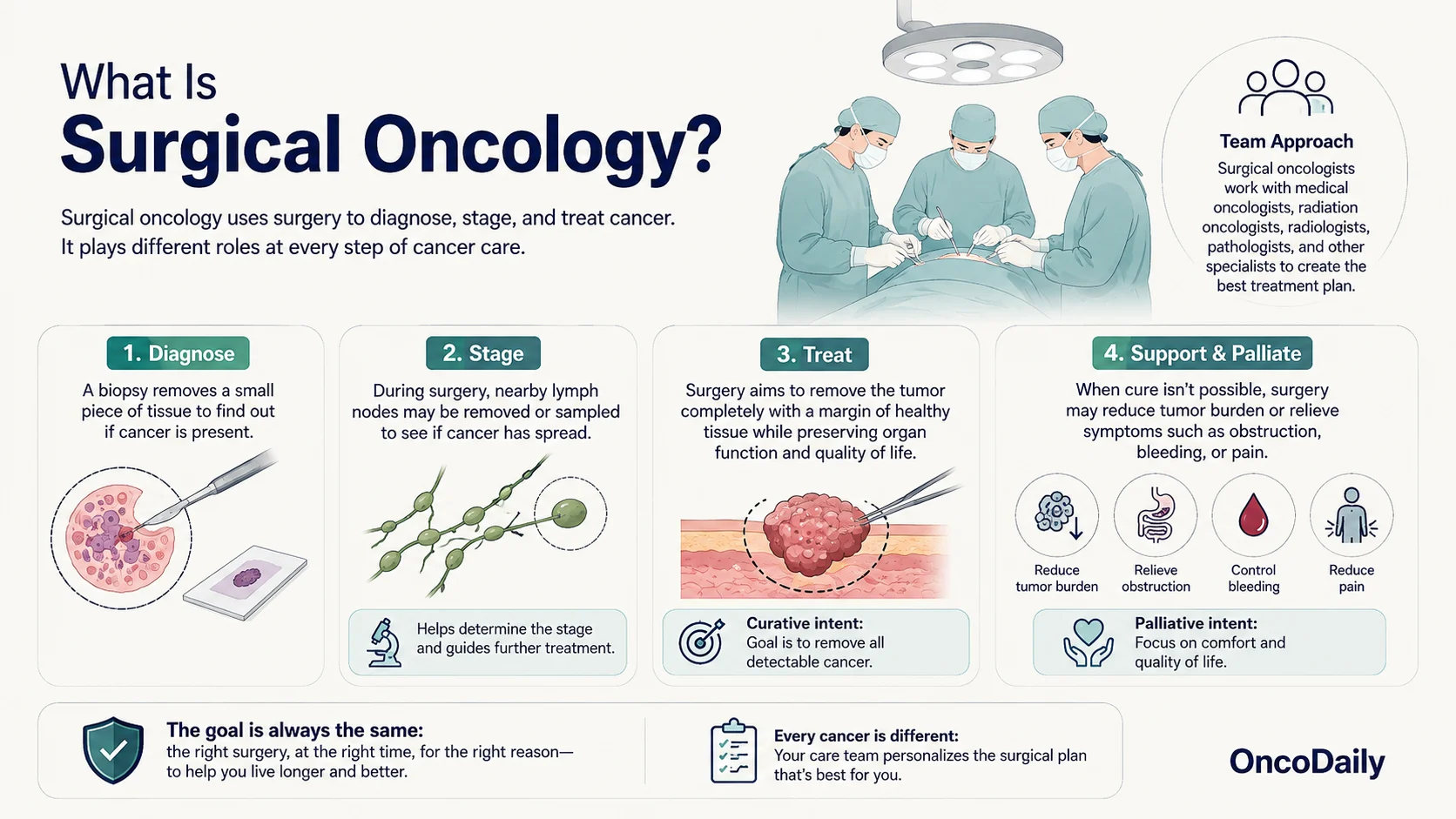
Surgical oncology is the field of cancer care that uses surgery to help diagnose, stage, and treat cancer. Depending on the type and stage of cancer, surgery may be used to remove the tumor completely, obtain tissue for diagnosis, evaluate whether cancer has reached nearby lymph nodes, or relieve symptoms caused by the disease. Surgical oncologists work closely with medical oncologists, radiation oncologists, radiologists, pathologists, and other specialists to decide when surgery should be part of the treatment plan (Sullivan et al., 2015).
Surgery can play different roles at different points in cancer care. A biopsy may be performed to remove tissue so that a pathologist can determine whether cancer is present and identify its characteristics. During cancer surgery, nearby lymph nodes may also be removed or sampled to provide additional information about how far the cancer has spread. These findings can help establish the pathologic stage and guide decisions about whether additional treatment is needed after surgery (Sullivan et al., 2015).
For many localized solid tumors, surgery may be performed with curative intent, meaning that the goal is to remove all detectable cancer. The surgeon generally aims to remove the tumor with an appropriate margin of surrounding tissue while preserving as much healthy tissue, organ function, and quality of life as possible. The exact operation depends on the cancer type, its location and extent, and the patient’s overall health (Sullivan et al., 2015).
Surgery does not always have to remove every cancer cell to be useful. In selected cancers, cytoreductive or debulking surgery may be performed to reduce the amount of cancer present so that other treatments can work more effectively or symptoms can be better controlled. Surgery may also be used with palliative intent to relieve problems caused by advanced cancer, such as obstruction, bleeding, or pain, even when the operation is not expected to cure the disease (Sullivan et al., 2015).
What Is Medical Oncology?
Medical oncology is the field of cancer care that focuses on treating cancer with medicines. Unlike surgery, which acts directly on a particular area of the body, most treatments used by medical oncologists are systemic, meaning that they can reach cancer cells beyond the original tumor site. Medical oncologists consider the cancer type, stage, tumor characteristics, biomarkers, previous treatments, and the patient’s overall health when deciding which treatment may be most appropriate (Cufer et al., 2023).
Medical oncologists use several different types of anticancer treatment. Chemotherapy interferes with the growth and division of cancer cells. Immunotherapy helps the immune system recognize or fight cancer. Targeted therapies act on particular proteins, genes, or pathways that cancer cells use to grow and survive. Hormonal, or endocrine, therapyinterferes with hormones that help certain cancers grow, particularly some breast and prostate cancers (Ostios-Garcia et al., 2024).
These treatments may be used on their own or together with surgery or radiation therapy. Systemic treatment may be given before a local treatment such as surgery, after surgery to lower the risk of recurrence, or as the main treatment when cancer cannot be treated with surgery alone. The exact approach is different for each cancer and is increasingly influenced by the biological and molecular features of the tumor (Cufer et al., 2023; Ostios-Garcia et al., 2024).
Medical oncologists also monitor patients throughout treatment. They assess whether the cancer is responding, review blood tests and imaging when appropriate, watch for side effects, and adjust treatment when needed. They may also help manage long-term effects of treatment, symptoms related to cancer, supportive care needs, and follow-up as part of the broader multidisciplinary cancer care team (Cufer et al., 2023).
You can also read Medical Oncology vs Radiation Oncology: Who Does What in Cancer Care? by OncoDaily.
How Do Surgical and Medical Oncology Differ?
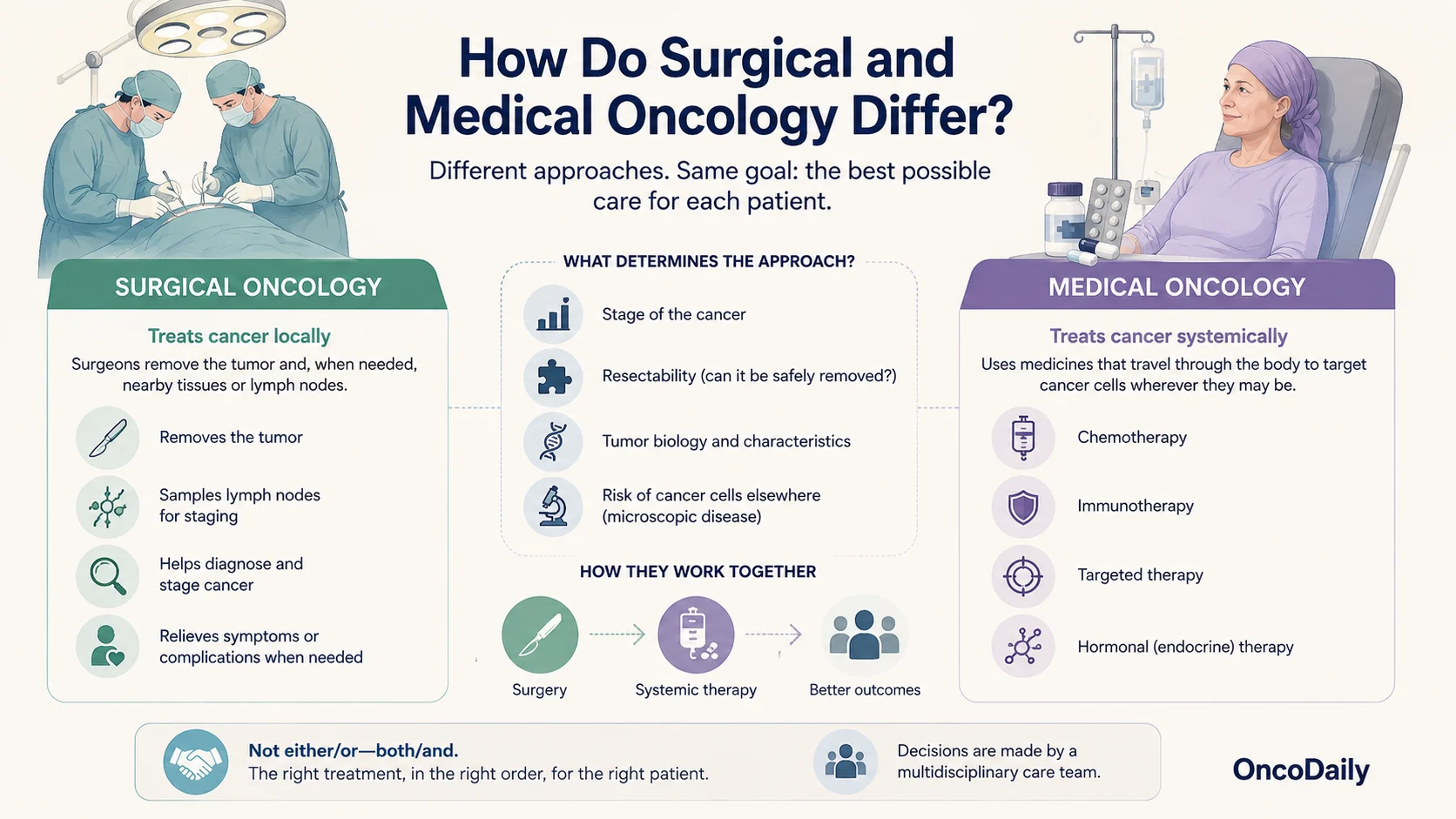
The simplest difference is where the treatment works. Surgical oncology mainly provides local treatment: the surgeon directly removes cancer from a specific part of the body. Medical oncology mainly provides systemic treatment with medicines that can reach cancer cells in different parts of the body. This is why the two specialties often have different—but complementary roles in cancer treatment (Sullivan et al., 2015; Ostios-Garcia et al., 2024).
Whether surgery, systemic therapy, or both are needed depends on much more than whether a tumor can be seen on a scan. Doctors consider the stage of the cancer, whether the tumor can be safely removed, its biological characteristics, and the likelihood that cancer cells may exist elsewhere in the body even when they are too small to detect with current imaging. These factors help determine whether local treatment alone is enough or whether systemic treatment should also be included (Cufer et al., 2023).
For example, some localized cancers can be treated primarily with surgery, while others benefit from systemic therapy as well. In advanced or metastatic disease, systemic treatment often becomes particularly important because the cancer is no longer confined to one location. Even then, surgery may still be useful in carefully selected situations, such as treating a complication, relieving symptoms, or removing selected areas of disease as part of a broader treatment strategy (Sullivan et al., 2015).
This means surgical and medical oncology should not be viewed as competing approaches. In many cancers, the best treatment combines both. The important question is not simply “surgery or medication?”, but rather which treatments are needed, in what order, and for what purpose (Kaul et al., 2023).
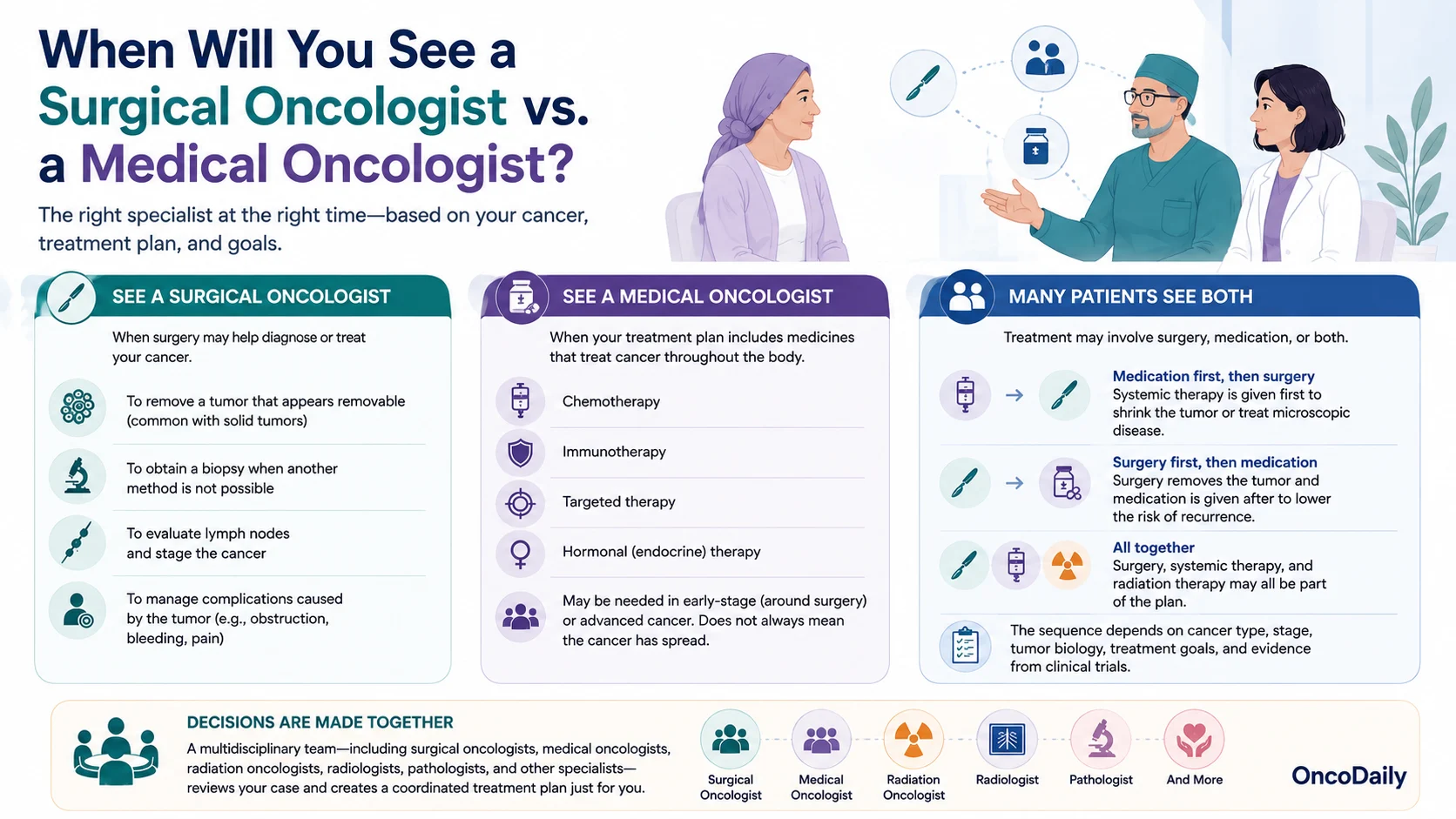
When Will You See a Surgical Oncologist vs a Medical Oncologist?
You may be referred to a surgical oncologist when surgery could play a role in diagnosing or treating your cancer. This is particularly common with solid tumors that appear removable, but surgical consultation may also be needed to obtain a biopsy, evaluate whether an operation is possible, assess lymph nodes, or manage complications caused by the tumor (Sullivan et al., 2015).
You may see a medical oncologist when your treatment plan includes chemotherapy, immunotherapy, targeted therapy, hormonal therapy, or another systemic treatment. This can happen in both early-stage and advanced cancer. Seeing a medical oncologist does not necessarily mean that the cancer has spread; systemic treatment is also commonly used around surgery to lower the risk of recurrence or improve the overall effectiveness of treatment (Cufer et al., 2023; Ostios-Garcia et al., 2024).
Many patients see both specialists. For some cancers, systemic therapy is given first and surgery follows. For others, surgery comes first and medication is recommended afterward. In still other situations, surgery, systemic therapy, and radiation therapy may all be part of the same treatment plan. The sequence depends on the cancer type, stage, tumor biology, treatment goals, and evidence from clinical trials (Kaul et al., 2023).
Because of this, decisions are often made through multidisciplinary care, with several cancer specialists reviewing the same case and agreeing on a coordinated treatment plan. This helps ensure that decisions about surgery and systemic treatment are considered together rather than independently (Kaul et al., 2023).
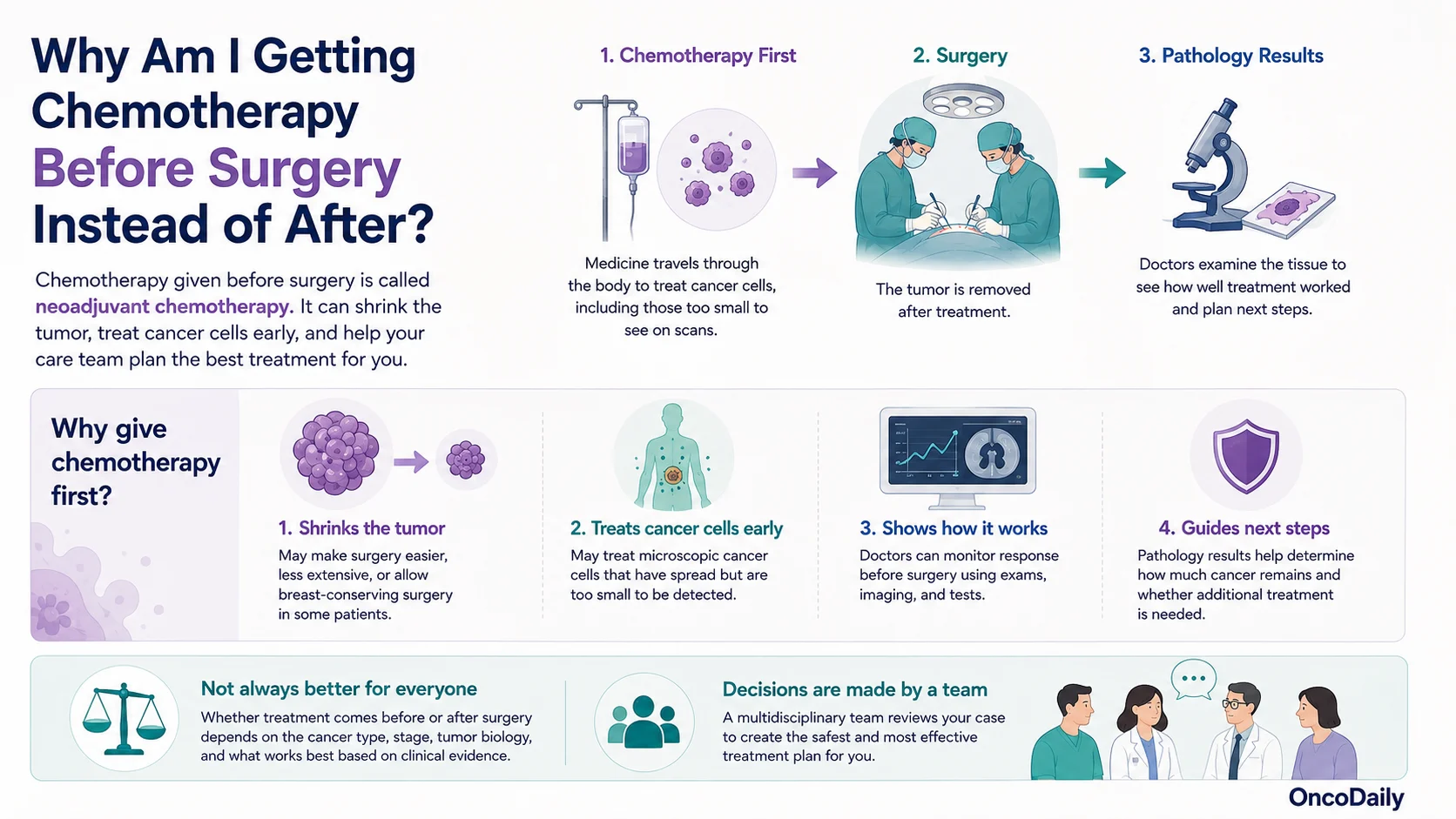
Why Am I Getting Chemotherapy Before Surgery Instead of After?
Chemotherapy given before surgery is called neoadjuvant chemotherapy. Your cancer care team may recommend this approach when treating the cancer first could make the later operation more effective, make the tumor easier to remove, or begin systemic treatment earlier. Whether chemotherapy should come before or after surgery depends on the cancer type, stage, biology of the tumor, and the treatment approach that has been shown to work best in that particular setting (John et al., 2023).
One reason for giving chemotherapy first is to shrink the tumor. In some cancers, a smaller tumor may be easier to remove or may allow a less extensive operation. For example, in selected patients with breast cancer, treatment before surgery can increase the possibility of breast-conserving surgery. Neoadjuvant therapy may also begin treating cancer cells that have already moved away from the original tumor but are still too small to be detected on scans—sometimes referred to as micrometastatic disease (John et al., 2023).
Another advantage is that the tumor remains in place while treatment is being given, allowing doctors to see whether it is responding. Changes can be followed with physical examination, imaging, and other tests depending on the cancer. After surgery, the pathologist can examine the removed tissue to determine how much cancer remains. This can provide useful information about how well the treatment worked and, in some cancers, can help doctors decide whether additional therapy is needed afterward (Spring et al., 2020).
You may hear the term pathologic complete response, or pCR, after neoadjuvant treatment. This generally means that no residual invasive cancer is found in the tissue examined after surgery, although the exact definition varies according to the cancer and clinical setting. In breast cancer, achieving a pCR after neoadjuvant therapy is associated with better long-term outcomes, particularly in triple-negative and HER2-positive disease. However, pCR is not a guarantee that cancer will never return, and its meaning differs across cancer types (Spring et al., 2020).
It is also important to understand that chemotherapy before surgery is not automatically better than chemotherapy after surgery for every patient. The advantages of neoadjuvant treatment depend on the cancer and the specific treatment being used. In some diseases, treatment before surgery has become an important part of curative-intent care because clinical trials have demonstrated meaningful benefits (John et al., 2023).
One example is resectable non-small cell lung cancer. In the phase 3 CheckMate 816 trial, patients who received nivolumab plus chemotherapy before surgery had better outcomes than those who received neoadjuvant chemotherapy alone. At a median follow-up of 68.4 months, the 5-year overall survival rate was 65.4% with nivolumab plus chemotherapy compared with 55.0% with chemotherapy alone. Importantly, this trial compared two neoadjuvant approaches; it did not show that giving the same treatment before surgery is universally better than giving it afterward (Forde et al., 2025).
Ultimately, the timing of chemotherapy is chosen for a reason specific to your cancer. Your care team considers whether treatment before surgery may shrink the tumor, treat possible cancer cells elsewhere in the body, provide information about how the cancer responds, or influence treatment decisions after the operation. For some patients, surgery first remains the preferred approach; for others, beginning systemic treatment first offers important advantages (John et al., 2023).
Written by Marine Marachlian, MD
FAQ
What is the main difference between a surgical oncologist and a medical oncologist?
A surgical oncologist treats cancer mainly through operations, while a medical oncologist treats cancer using medicines such as chemotherapy, immunotherapy, targeted therapy, and hormonal therapy.
Does seeing a medical oncologist mean my cancer has spread?
No. Medical oncologists treat both early-stage and advanced cancers. Systemic therapy may be recommended before or after surgery even when cancer has not spread to distant parts of the body.
Does every cancer patient need surgery?
No. Whether surgery is appropriate depends on the type, location, stage, and biological characteristics of the cancer. Some cancers are primarily treated with systemic therapy, radiation therapy, or a combination of treatments.
Can surgery alone cure cancer?
In some localized solid tumors, surgery may be enough to achieve long-term cancer control. In other cases, additional treatment may be recommended before or after surgery to reduce the risk of recurrence.
Why would I need chemotherapy if my tumor was completely removed?
Even after successful surgery, very small numbers of cancer cells may remain elsewhere in the body but be too small to detect on scans. Adjuvant systemic therapy may be recommended to reduce the risk that these cells cause the cancer to return.
What is neoadjuvant therapy?
Neoadjuvant therapy is treatment given before surgery. It may be used to shrink a tumor, make surgery easier or less extensive, begin treating possible microscopic disease earlier, and show how the cancer responds to treatment.
What is adjuvant therapy?
Adjuvant therapy is treatment given after surgery. Its main purpose is to reduce the risk of cancer recurrence by treating cancer cells that may remain after the visible tumor has been removed.
Is chemotherapy before surgery better than chemotherapy after surgery?
Not necessarily. The best timing depends on the cancer type, stage, tumor biology, and the specific treatment being used. Neoadjuvant therapy provides important advantages in some cancers, while surgery followed by adjuvant treatment remains preferred in others.
What does pathologic complete response mean?
A pathologic complete response, often called pCR, generally means that no residual invasive cancer is found in the tissue examined after surgery following neoadjuvant treatment. Its exact definition and significance can vary between cancer types.
Who decides whether I should have surgery or systemic treatment first?
The decision is usually made by a multidisciplinary cancer care team. Surgical oncologists, medical oncologists, radiation oncologists, radiologists, pathologists, and other specialists may review the case together and recommend the treatment sequence most appropriate for the individual patient.