Key takeaways
- Medical oncology focuses mainly on systemic treatments, including chemotherapy, immunotherapy, targeted therapy, and hormone therapy.
- Radiation oncology uses radiation to treat defined areas of the body, with treatment carefully planned around the tumor and nearby healthy tissues.
- The right specialist depends on the cancer type, stage, location, and treatment goals. Some patients mainly need one specialty, while others need both.
- Side effects differ between the two approaches. Drug treatments can affect the whole body, while radiation side effects are usually more closely related to the area being treated.
- Medical and radiation oncologists often work together as part of a multidisciplinary team to coordinate treatment and keep care aligned throughout the cancer journey.
Medical oncology vs radiation oncology is a distinction many patients encounter soon after a cancer diagnosis, yet the difference between the two is not always immediately clear. Both specialties are central to cancer care, but they focus on different treatment approaches and can become involved at different stages of the treatment journey.
As patients move through consultations, testing, treatment planning, and follow-up, they may meet several oncology specialists, each with a specific role. Understanding how medical oncologists and radiation oncologists differ can make these appointments easier to navigate and help patients better understand why a particular specialist has been involved in their care.
Cancer treatment is also rarely managed by one doctor alone. Different specialists often contribute to the same treatment plan, depending on the type and stage of cancer, the goals of treatment, and the patient’s individual needs. Knowing how these roles fit together can give patients and families a clearer picture of the broader cancer care team.
What Is Medical Oncology?
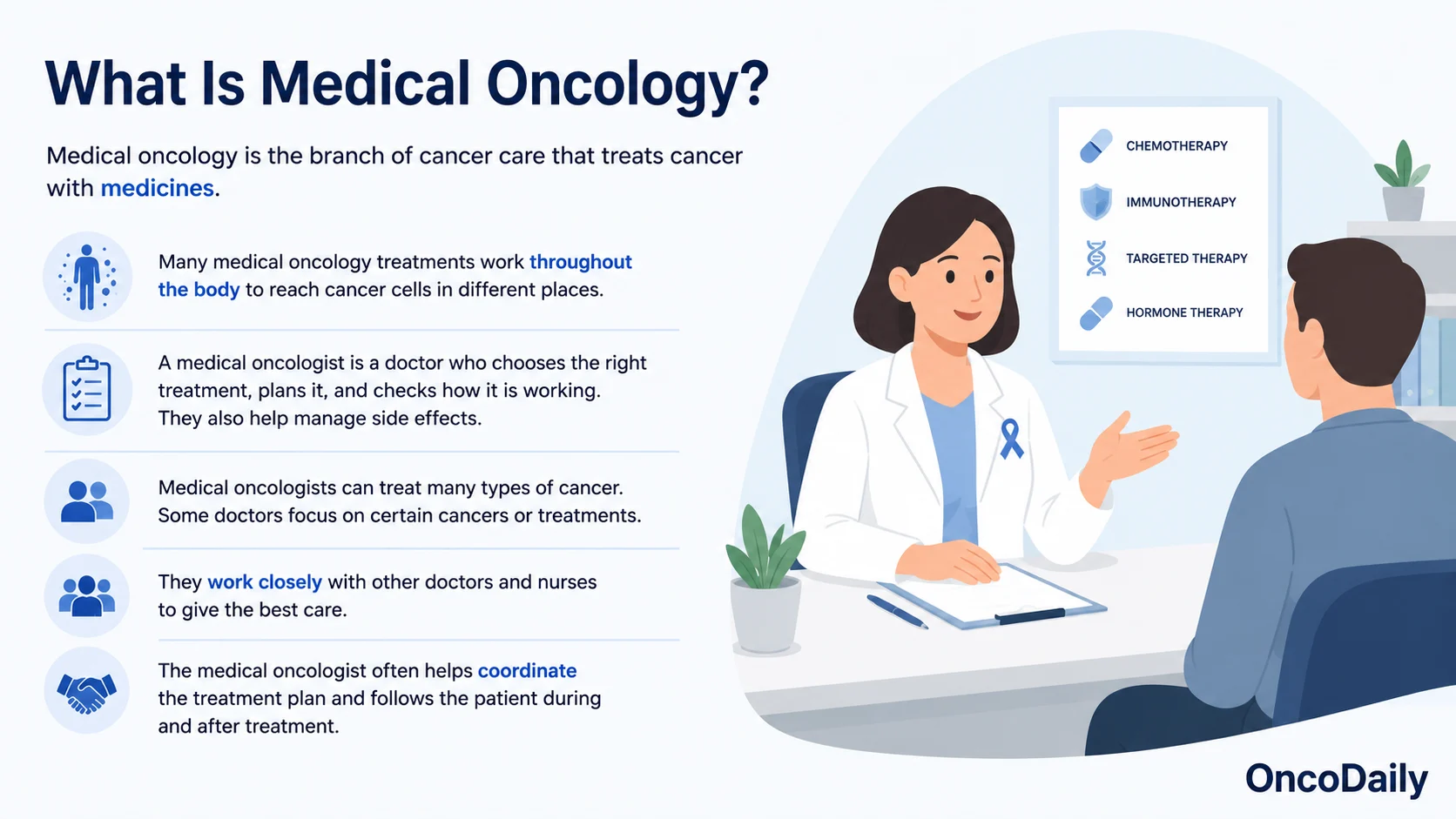
Medical oncology is the branch of cancer care that focuses mainly on treating cancer with medicines. These treatments can include chemotherapy, hormone therapy, immunotherapy, biological therapies, and other anticancer drugs.Unlike treatments that are directed only at one specific area of the body, many medical oncology treatments work throughout the body, allowing them to reach cancer cells in different locations.
A medical oncologist is a doctor who specializes in assessing and managing people with cancer. They help determine which drug treatment is appropriate, plan how and when it will be given, monitor how the cancer responds, and manage side effects or complications that can occur during treatment. Medical oncologists can care for people with many different cancers and may also specialize in particular cancer types or treatments.
Medical oncologists also work closely with other members of the cancer care team, including surgeons, radiation oncologists, pathologists, radiologists, nurses, and other healthcare professionals. In many cases, the medical oncologist helps coordinate different parts of the treatment plan and continues to follow the patient during and after treatment. This multidisciplinary approach allows chemotherapy and other drug treatments to be combined with surgery or radiation therapy when appropriate. (Costello, 2024)
What Is Radiation Oncology?
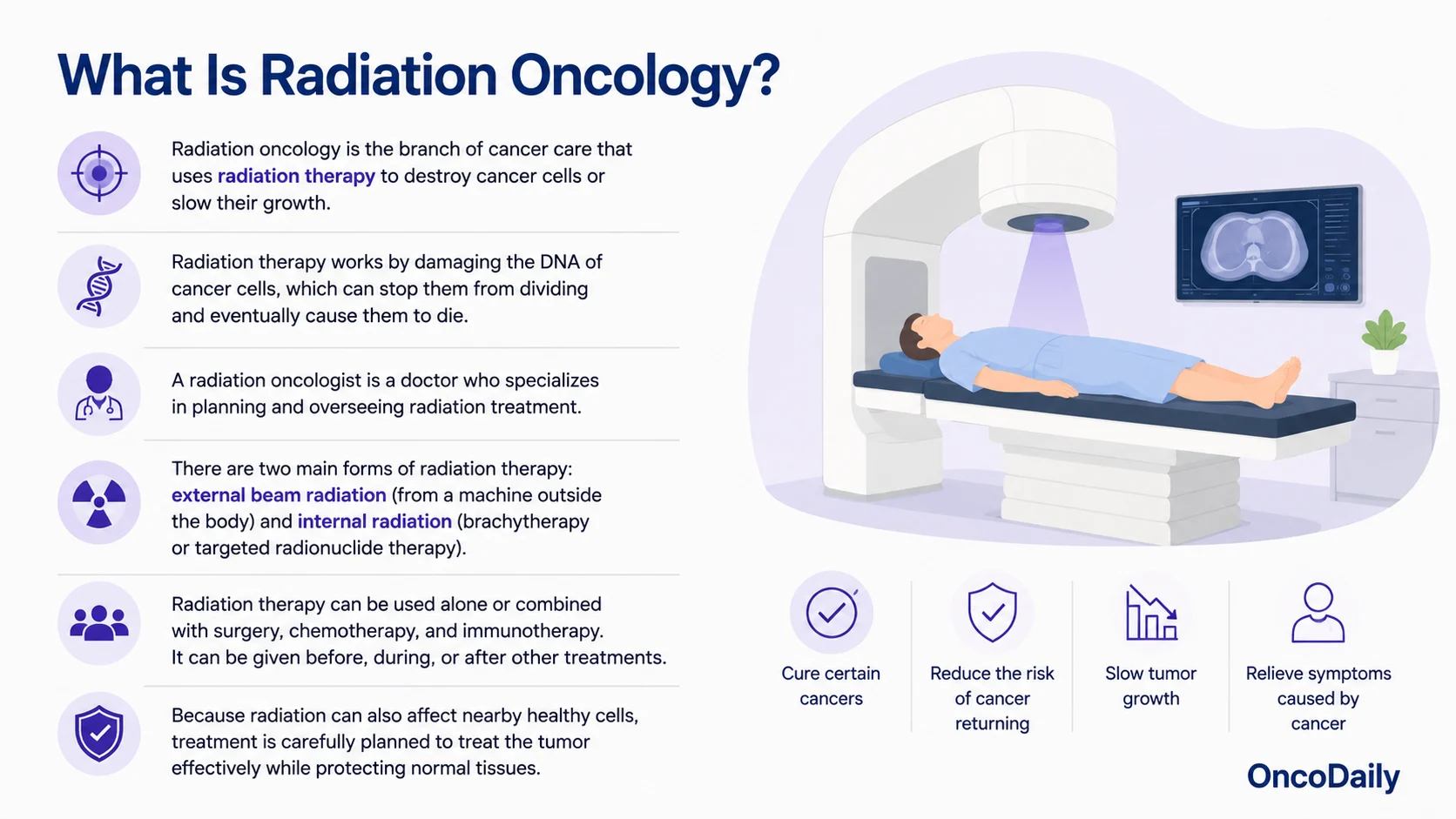
Radiation oncology is the branch of cancer care that uses radiation therapy to destroy cancer cells or slow their growth. Radiation therapy works by damaging the DNA of cancer cells, which can stop them from dividing and eventually cause them to die. It can be used to cure certain cancers, reduce the risk of cancer returning, slow tumor growth, or relieve symptoms caused by cancer.
A radiation oncologist is a doctor who specializes in planning and overseeing radiation treatment. The type of radiation used depends on several factors, including the type, size, and location of the cancer, how close the tumor is to radiation-sensitive normal tissues, the patient’s overall health, and whether other cancer treatments are also being given.
There are two main forms of radiation therapy: external beam radiation therapy and internal radiation therapy. External beam radiation comes from a machine that directs radiation toward a specific part of the body. Because it targets a defined area, it is considered a local treatment. Internal radiation therapy places a radiation source inside the body; when a solid source is positioned in or near the tumor, this is known as brachytherapy. Some forms of internal radiation, such as targeted radionuclide therapy, can also travel through the bloodstream and act systemically.
Radiation therapy can be used on its own or combined with treatments such as surgery, chemotherapy, and immunotherapy. Depending on the cancer and the treatment goal, radiation can be given before, during, or after other therapies. Because radiation can also affect nearby healthy cells, treatment is carefully planned to balance effective tumor treatment with protection of surrounding normal tissues. National Cancer Institute, 2025)
How Do Medical Oncology and Radiation Oncology Differ?
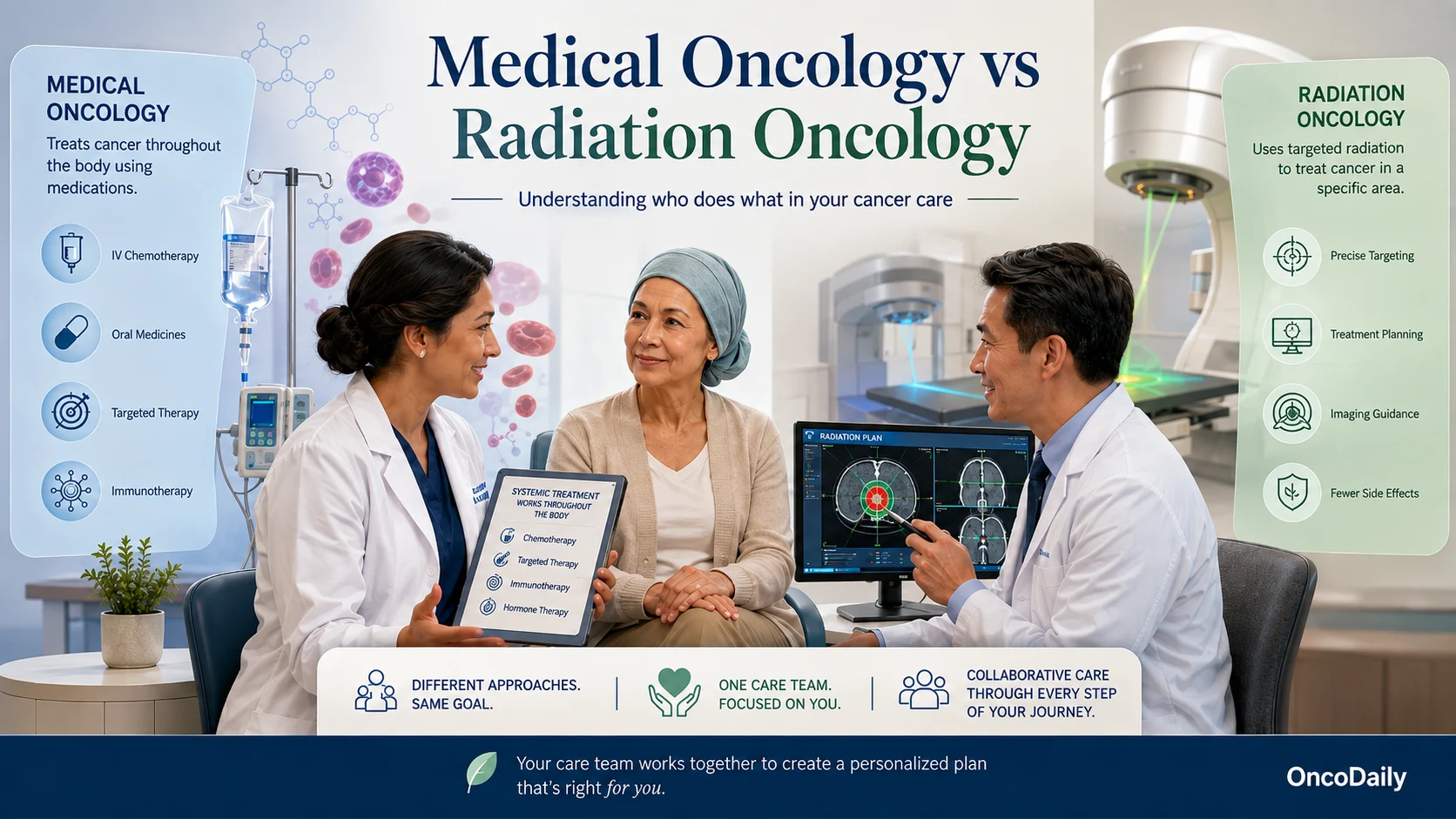
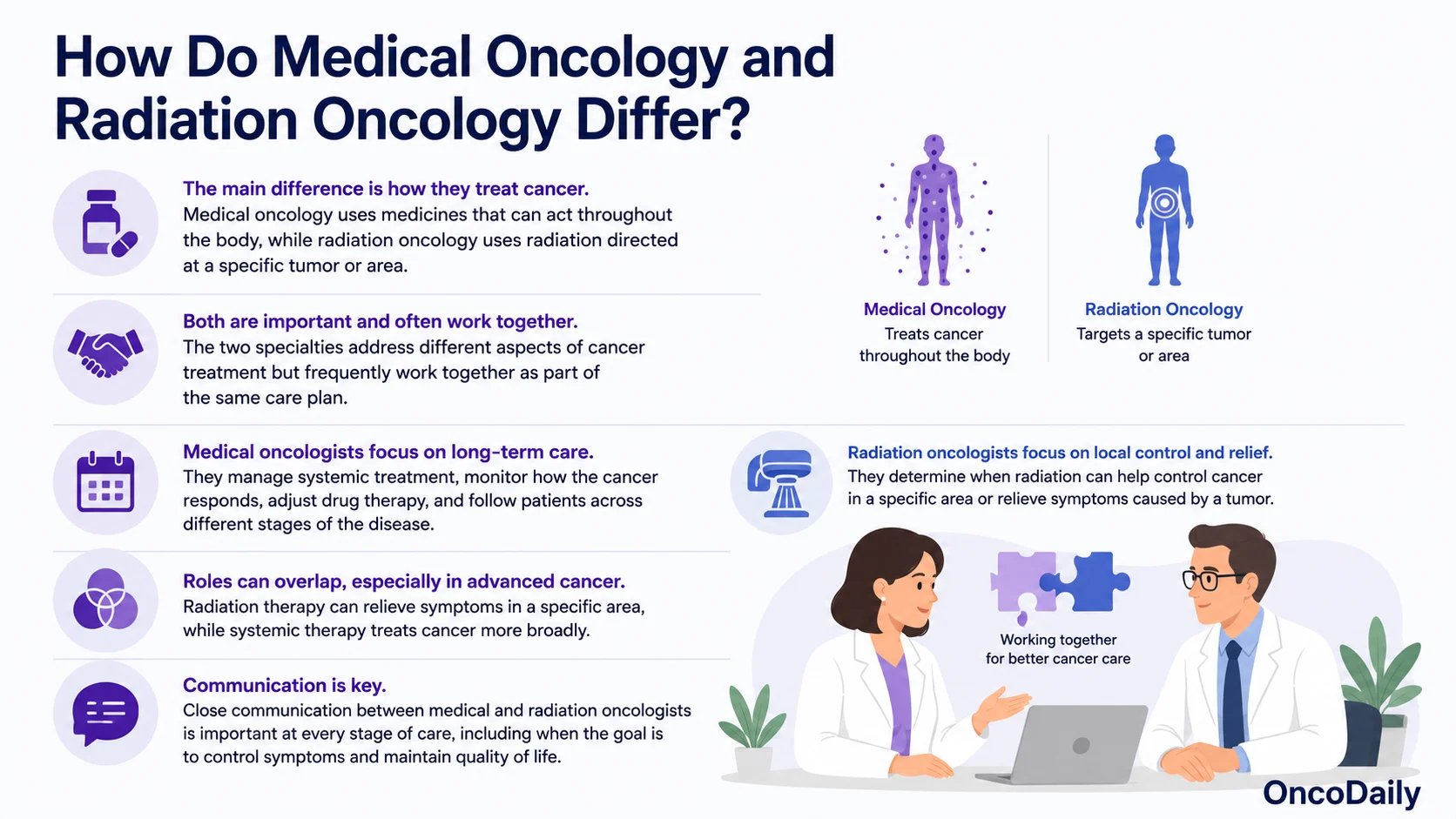
The main difference between medical oncology and radiation oncology is how they treat cancer. Medical oncology primarily uses medicines that can act throughout the body, while radiation oncology uses radiation directed at a specific tumor or area. Because of this, the two specialties often address different aspects of cancer treatment but frequently work together as part of the same care plan.
Medical oncologists are commonly involved in the long-term management of cancer, particularly when systemic treatment is needed. They follow how the cancer responds to treatment, adjust drug therapy when necessary, and help manage the patient’s care across different stages of the disease. Radiation oncologists, in contrast, specialize in determining when radiation therapy can help control cancer in a particular area or relieve symptoms caused by a tumor.
These roles can overlap, particularly in people with advanced cancer. Radiation therapy can provide important local symptom relief, including relief from pain or other problems caused by tumor growth, while systemic therapy addresses cancer more broadly. For this reason, close communication between medical and radiation oncologists is important throughout cancer care, including when treatment is focused on controlling symptoms and maintaining quality of life. (Costello, 2024; National Cancer Institute, 2025; McClelland and Mitin, 2020)
When Might You See a Medical Oncologist, a Radiation Oncologist, or Both?
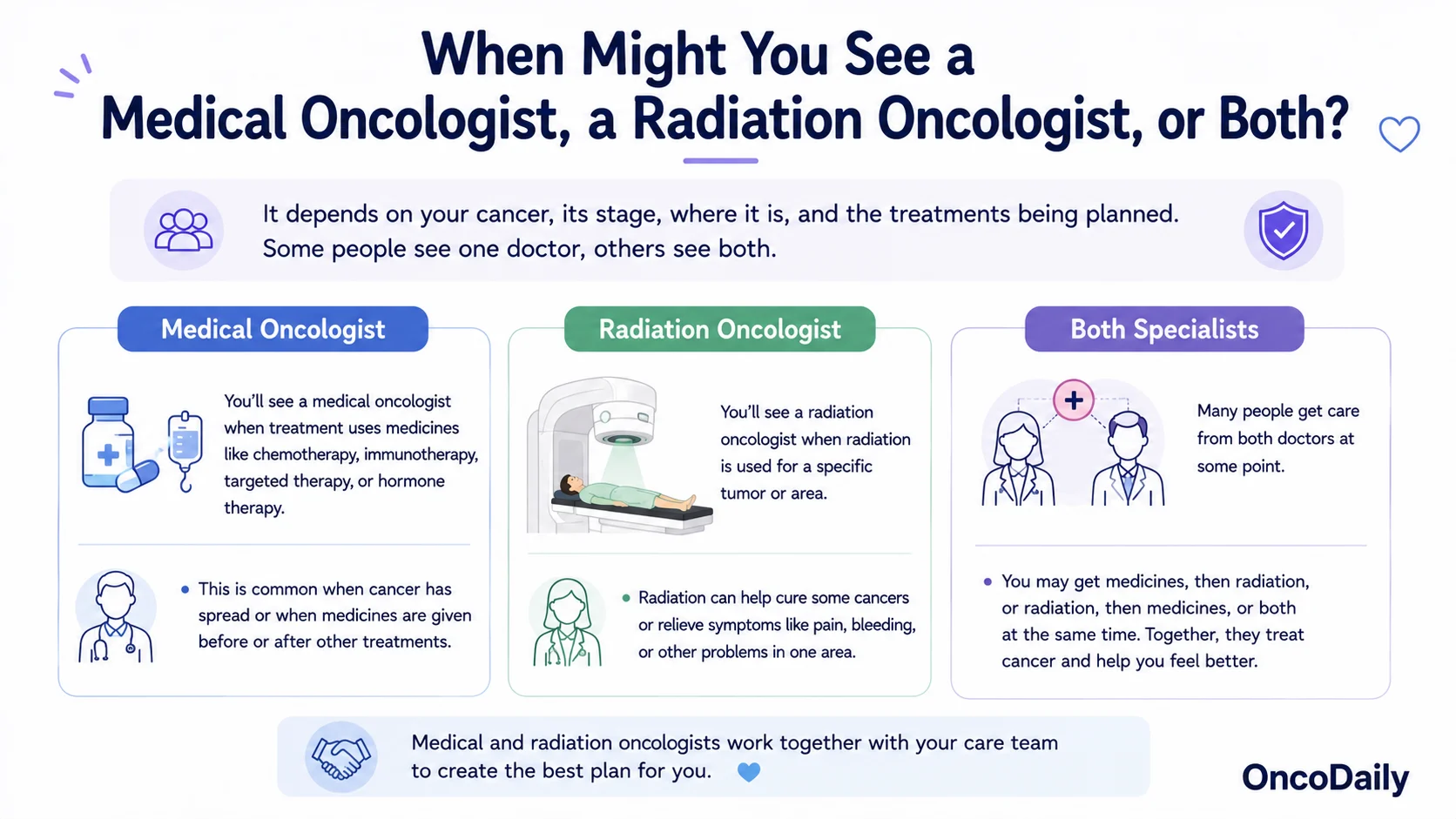
Which oncologist you see and when depends on the type of cancer, its stage, where it is located, and the treatments being considered. Some people mainly need systemic treatment, others need treatment directed at a particular area, and many receive care from both medical and radiation oncologists as part of the same treatment plan.
You are more likely to see a medical oncologist when treatment involves medicines such as chemotherapy, immunotherapy, targeted therapy, or hormone therapy. This is particularly important when cancer has spread to other parts of the body or when systemic treatment is being given before or after another treatment. For example, chemotherapy can be given before surgery or radiation to shrink a tumor, known as neoadjuvant chemotherapy, or afterward to destroy cancer cells that may remain, known as adjuvant chemotherapy.
You may see a radiation oncologist when radiation is being considered for a specific tumor or area of the body. For some localized cancers, radiation can be an important part of treatment with curative intent. It can also be used in advanced cancer to relieve symptoms, for example by reducing pain caused by bone metastases or treating tumors that are causing bleeding or other local problems.
In many situations, however, it is not a choice between one specialist and the other. Medical and radiation oncologists often work together. A patient may receive systemic therapy followed by radiation, radiation followed by systemic treatment, or both treatments during the same period, depending on the cancer and the goals of care. Their collaboration is also important in advanced and palliative cancer care, where systemic treatment can address cancer throughout the body while radiation can help control particular tumors or symptoms. (National Cancer Institute, 2025; McClelland and Mitin, 2020)
What Side Effects Can Occur With Each Type of Treatment?
Both medical oncology treatments and radiation therapy can cause side effects because treatment can also affect healthy cells and tissues. However, the type and severity of these effects vary greatly from person to person and depend on the specific treatment being used.
With medical oncology treatments, side effects depend on the drug or combination of drugs given. Common problems can include fatigue, nausea and vomiting, diarrhea or constipation, hair loss, mouth and throat problems, anemia, increased risk of infection due to neutropenia, bleeding or bruising related to low platelet counts, and peripheral neuropathy. Some treatments have more specific effects. For example, certain immunotherapies can trigger inflammation in organs such as the bowel, lungs, liver, thyroid, or other hormone-producing glands.
With radiation therapy, side effects are more closely related to the area of the body being treated. Fatigue is common, while other effects depend on which healthy tissues are exposed to radiation. Treatment to the head and neck, for example, can cause mouth and throat problems, difficulty swallowing, taste changes, or dry mouth. Radiation to the chest can affect the esophagus or lungs, while treatment to the abdomen or pelvis can cause nausea, diarrhea, bowel problems, or urinary and bladder symptoms. Skin changes can also develop in the treated area.
Some effects appear during treatment and improve afterward, while others can persist or develop months or years later. These are known as late effects. The likelihood of late effects depends on factors such as the area treated, radiation dose, other cancer treatments received, and individual patient factors. (National Cancer Institute, 2025.)
You can also read Chemotherapy and Side Effects: What to Expect and How to Manage Them and Side Effects of Radiotherapy: Risks and What to Know on OncoDaily.
How Do Medical and Radiation Oncologists Work Together?
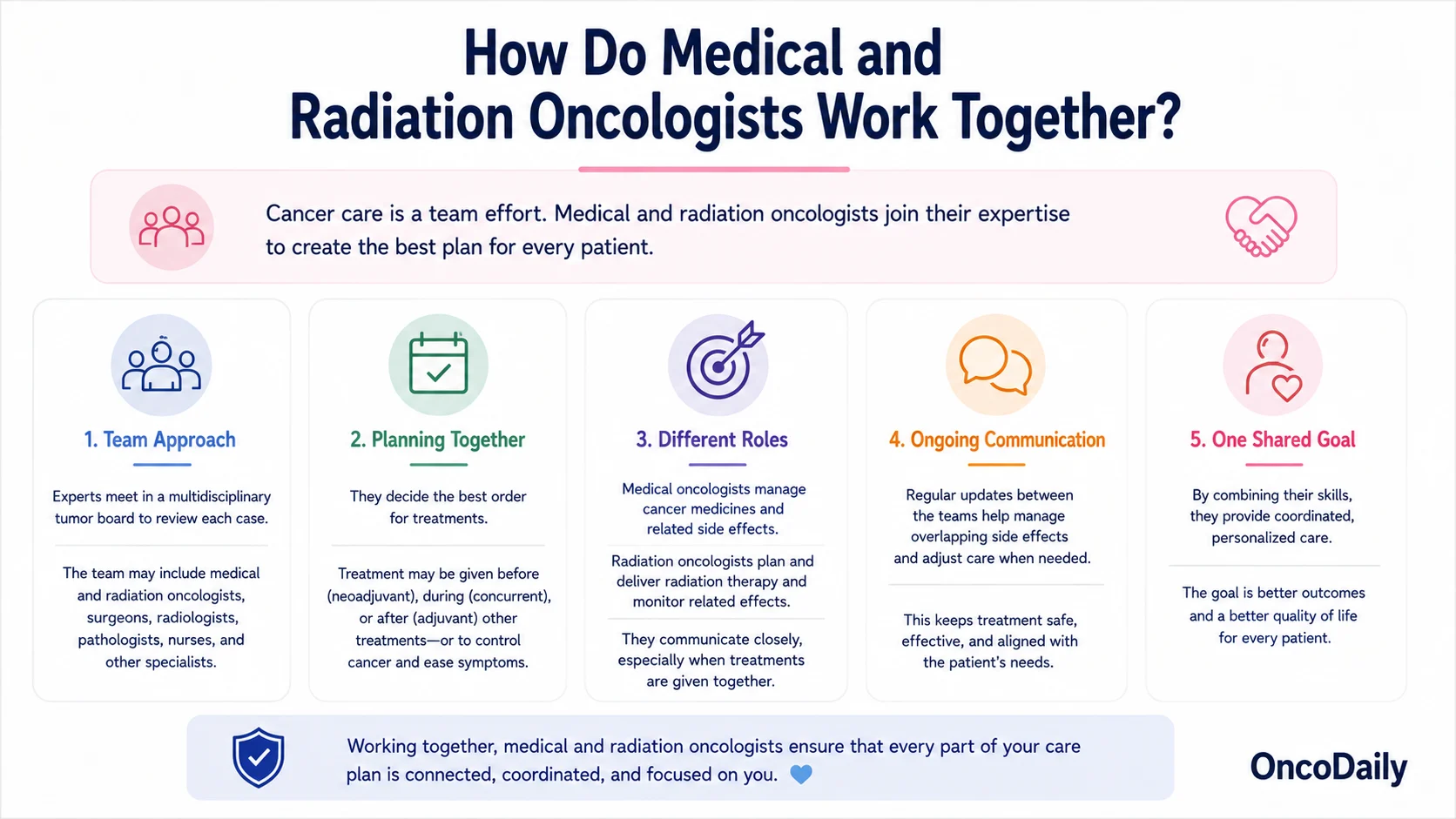
Cancer care often involves more than one type of treatment, which makes collaboration between different oncology specialists essential. Medical and radiation oncologists work together to coordinate systemic and local treatments according to the type and stage of cancer, the treatment goals, and the individual needs of the patient. This type of interprofessional collaboration helps bring different areas of expertise into a single treatment plan.
One important part of this collaboration is the multidisciplinary tumor board, where specialists from different fields review cancer cases together. These teams can include medical oncologists, radiation oncologists, surgeons, radiologists, pathologists, nurses, and other healthcare professionals. By discussing the diagnosis, imaging, pathology, and available treatment options together, the team can develop a coordinated approach to care.
When both systemic treatment and radiation are needed, the specialists also coordinate when each treatment will be given. Depending on the cancer, therapy can be given before another treatment, known as neoadjuvant therapy; at the same time, as in concurrent chemoradiation; or afterward, as adjuvant therapy. In other situations, treatment can focus on controlling the cancer or relieving symptoms.
Each specialist also has a different role during treatment. The medical oncologist manages systemic cancer medicines and their related side effects, while the radiation oncologist plans and oversees radiation therapy and monitors radiation-related effects. Close communication between the two teams is particularly important when treatments are given together because their side effects can overlap.
Ultimately, multidisciplinary care allows specialists to combine their expertise rather than treating different parts of the cancer journey separately. The aim is to create a treatment plan that is coordinated, appropriate for the individual patient, and aligned with the overall goals of cancer care. (Knoop, Wujcik and Wujcik, 2017; National Cancer Institute, 2025)
Written by Marine Marachlian, MD
FAQ
What is the main difference between a medical oncologist and a radiation oncologist?
A medical oncologist mainly treats cancer with medicines such as chemotherapy, immunotherapy, targeted therapy, and hormone therapy. A radiation oncologist treats cancer using radiation directed at a specific area of the body.
Will every cancer patient need both specialists?
No. Some patients may mainly need systemic treatment, while others may need radiation therapy. Many patients see both specialists at different points in their treatment.
Who decides whether I need chemotherapy or radiation?
Treatment decisions are usually made based on the type and stage of cancer, its location, test results, and the goals of treatment. These decisions are often discussed by a multidisciplinary cancer care team.
Can chemotherapy and radiation be given at the same time?
Yes. In some cancers, chemotherapy and radiation are given together. This is called concurrent chemoradiation. In other situations, one treatment is given before or after the other.
Does radiation therapy only treat localized cancer?
Radiation is mainly used to treat a defined area, but it can be used in both localized and advanced cancer. In advanced disease, it can help control specific tumors or relieve symptoms such as pain or bleeding.
Does a medical oncologist only give chemotherapy?
No. Medical oncologists manage several types of systemic cancer treatment, including chemotherapy, immunotherapy, targeted therapy, and hormone therapy.
Are radiation therapy side effects different from drug treatment side effects?
Yes. Radiation side effects are often related to the area being treated, while systemic therapies can cause effects throughout the body. The exact side effects depend on the treatment type, dose, and individual patient.
Which oncologist will I see first?
There is no single order that applies to everyone. The first specialist you meet depends on the type of cancer, how it was diagnosed, and which treatment is being considered first.
Do medical and radiation oncologists communicate with each other?
Yes. They often review treatment plans together, particularly when both systemic therapy and radiation are needed. This can happen through multidisciplinary meetings or direct communication between specialists.
Who will follow me after treatment ends?
Follow-up depends on the cancer and the treatments received. A medical oncologist, radiation oncologist, surgeon, or another specialist may continue monitoring you, and several members of the cancer care team may remain involved over time.