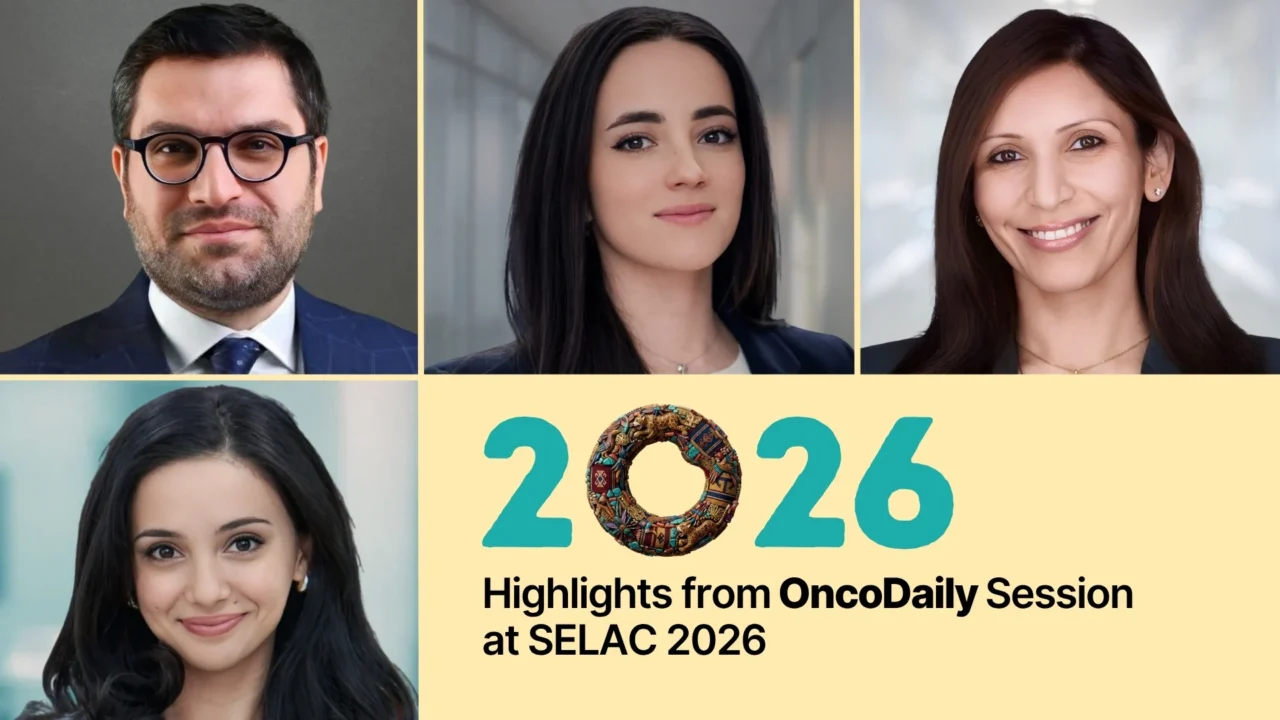
As part of SELAC 2026 Latin American Cancer Week, OncoDaily brought together leading voices in oncology to examine a question shaping cancer care far beyond the walls of any one hospital or conference hall: not only how science advances, but how knowledge is communicated, interpreted, and applied in the real world.
At a time when information often travels faster than evidence, the session focused on a growing challenge in modern oncology: ensuring that scientific progress reaches patients accurately, responsibly, and in a form that can truly improve outcomes.
“Oncology is shaped not only by scientific progress, but how knowledge is communicated, interpreted and applied in real clinical settings.”
This was the central idea running through the discussion: in cancer care, innovation alone is not enough. Clarity matters. Scrutiny matters. Access matters. And increasingly, communication itself has become part of the practice of oncology.
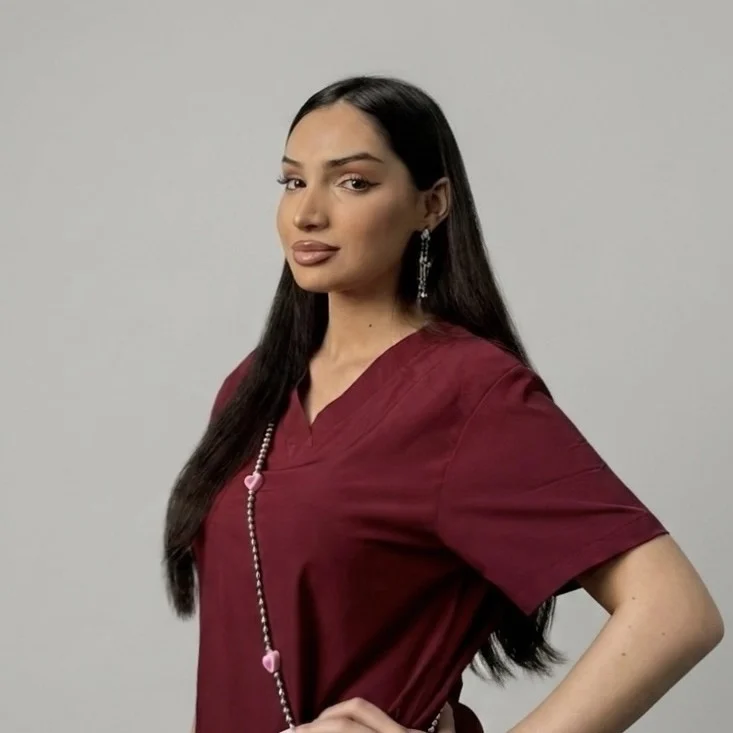
OncoDaily: The Voice of Oncology — Shushan Hovsepyan
Shushan Hovsepyan, Senior Vice President at P53 Inc. (OncoDaily, CancerWorld), Editor-in-Chief of the OncoDaily Medical Journal, and Co-Chair of the SIOP Global Health Network Research & Innovation Working Group, opened the session by defining the role communication now plays in oncology.
Scientific discovery, she argued, no longer exists in isolation. Research enters a fast-moving digital ecosystem where physicians, patients, advocates, and institutions all encounter and interpret information in real time. With social media now embedded in the daily lives of both healthcare professionals and patients, the question is no longer whether oncology is being shaped online, but how responsibly that space is being used.
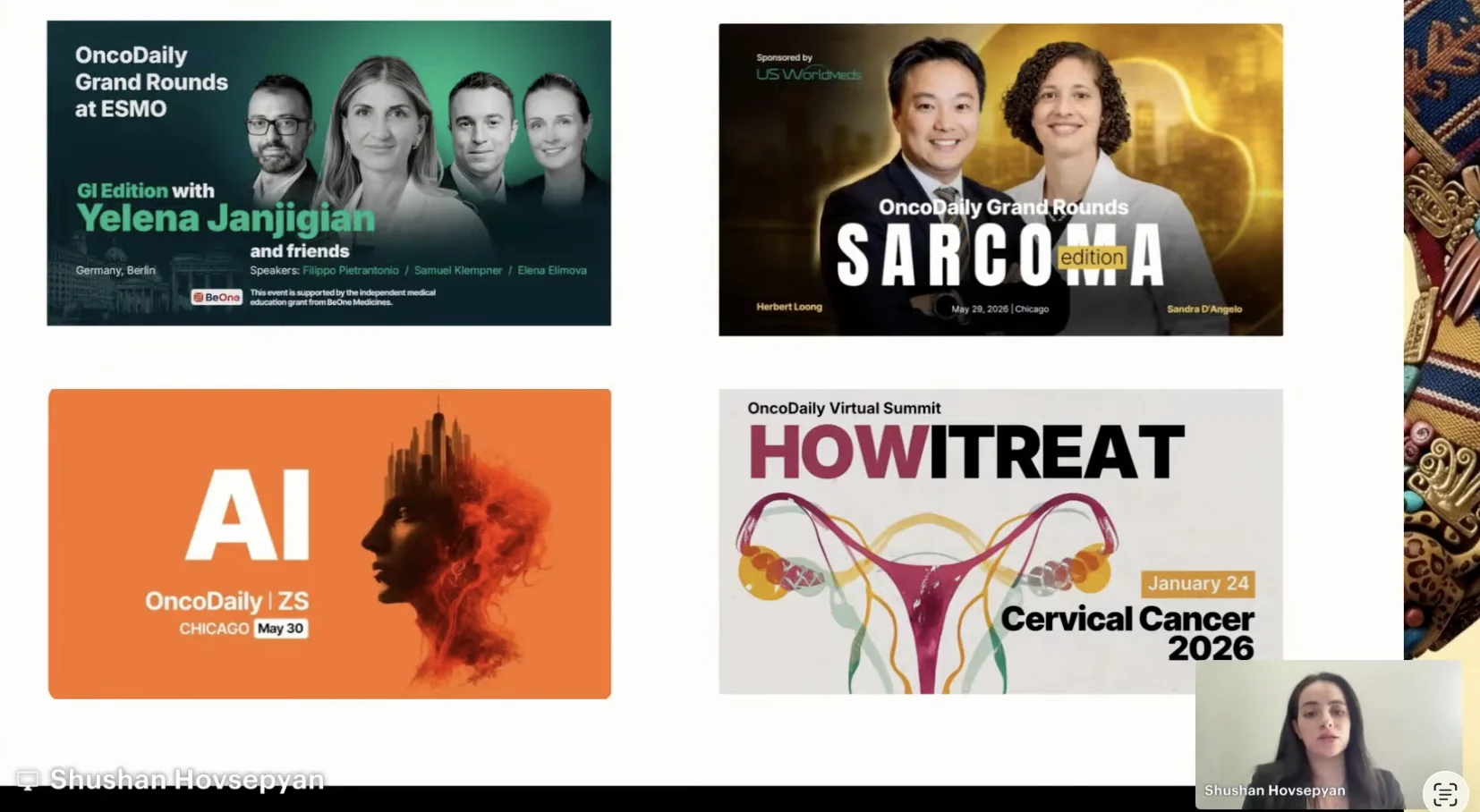
OncoDaily, as she presented it, was built in response to that reality: a global oncology media platform designed to bridge research, clinical care, policy, and public understanding. In her telling, the platform is not merely reporting the field, but helping structure how it is understood.
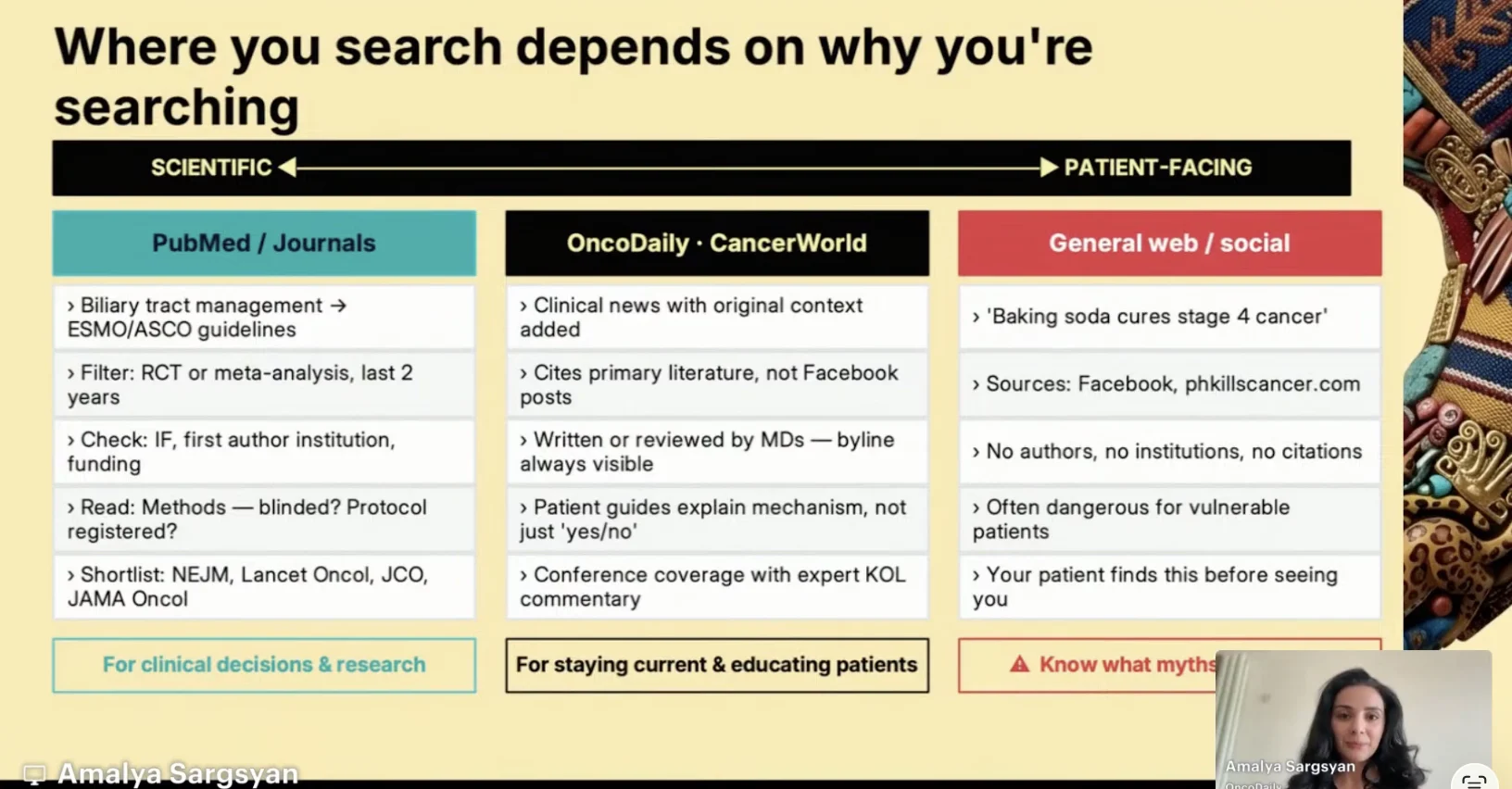
Fighting Misinformation in Oncology — Amalya Sargsyan
Amalya Sargsyan, Vice President for Research & Intelligence at OncoDaily, Head of Sarcoma Service at D’Clinic, and Medical Oncologist at the Yeolyan Hematology and Oncology Center, turned to one of the most urgent and destabilizing issues in the field: misinformation.
Her talk, “How to Contribute to Evidence-Based Oncology and Fight Misinformation,” examined the widening gap between access to information and access to reliable information.
Patients are arriving at clinic visits having already searched their diagnosis, their treatment options, and their prognosis. But being informed, she made clear, is not the same as being accurately informed.
“One in three of your patients is doing research before coming to you.”
That reality changes the role of the oncologist. Physicians are no longer only interpreting scans and prescribing treatment. They are also helping patients navigate a crowded and often misleading information environment in which preprints, social media posts, and flawed interpretations can spread with extraordinary speed.
Using concrete examples, Sargsyan showed how inconsistencies in trial timelines, mismatched patient populations, and suspiciously identical survival curves can go unnoticed at first glance yet signal deeper methodological problems. Even high-profile studies, she suggested, must be read critically.
Her recommendations were practical and direct:
- Examine study design and endpoints carefully
- Verify data against trial registries
- Question inconsistencies in published results
- Engage in open, evidence-based discussion
Her message was not cynical. It was a call to professional vigilance. Scientific evidence does not protect itself simply by existing. It depends on people willing to read closely, question openly, and intervene when something feels wrong.
“Evidence is not self-defending. We are.”
Empowering Oncologists Beyond Clinical Practice — Jasmine Kamboj
Jasmine Kamboj, Community Oncologist and Hematologist at the Mayo Clinic, Board Member of the Minnesota Society of Clinical Oncology, and Co-lead for Policy at ASCO, brought the discussion back to the people delivering cancer care.
Her talk, “Empowering Oncologists,” focused on the expanding identity of the oncologist in 2026.
Research, education, and clinical practice remain central pillars of the profession. But they are no longer the only ones. Increasingly, oncology also demands leadership, advocacy, policy engagement, technology literacy, networking, and resilience.
She linked this shift to a troubling rise in burnout, noting that the complexity of oncology continues to grow while the emotional and professional pressures of the field remain intense.
Through the Empowering Oncologists podcast, developed with OncoDaily, Kamboj described an effort to create a more connected global oncology community—one where professionals can share lessons, challenges, and experiences that extend beyond the clinic.
Her argument was subtle but important: supporting oncologists is not separate from improving cancer care. It is part of it.
Global Cancer Movement: From Inequality to Action — Gevorg Tamamyan
Gevorg Tamamyan, Editor-in-Chief of OncoDaily, Chairman and Professor at Yerevan State Medical University, CEO of the Immune Oncology Research Institute, and President of multiple international oncology organizations, closed the session by widening the lens from communication to inequality.
His talk, “Global Cancer Movement,” addressed one of the defining failures of global oncology: the fact that survival is still shaped too often by geography, infrastructure, and politics rather than biology alone.
“Science has never moved faster… what is failing patients is the system, the geography, the bureaucracy, the silence.”
He described a world in which scientific progress is undeniable, but unevenly distributed. A patient’s diagnosis may be global, but their chances of receiving timely and effective care remain profoundly local.
The Global Cancer Movement, as he framed it, is intended not as a symbolic initiative but as a platform for action—bringing together clinicians, researchers, policymakers, advocates, and patients to close persistent gaps in access, research, treatment availability, and survivorship support.
Among the most striking examples he shared was the Onco Corridor, an initiative aimed at helping patients in conflict zones reach functioning cancer centers able to provide treatment. It was a reminder that in many parts of the world, the challenge is not only discovering better therapies, but building systems capable of delivering them.
Closing Reflections
Across the session, one theme became impossible to ignore: the future of oncology will not be determined by science alone.
It will also be shaped by how evidence is communicated, how misinformation is challenged, how clinicians are supported, and how equitably care is delivered across borders. Between discovery and the patient stands a chain of interpretation, trust, and access. When that chain breaks, even the most important advances can fail to reach the people who need them most.
SELAC 2026 did not present communication as secondary to oncology. It presented it as inseparable from oncology itself.
Find more exclusive oncology content on OncoDaily.
Written by Nare Hovhannisyan, MD