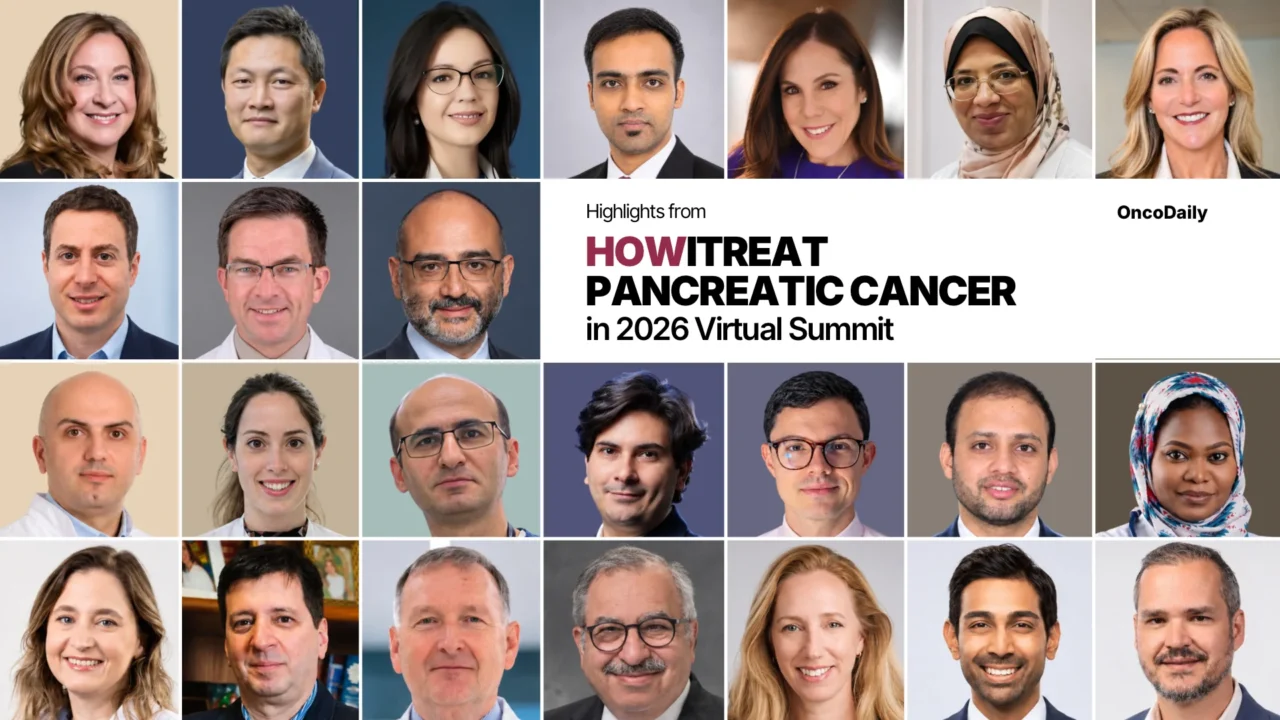
On November 24, 2026, OncoDaily brought together international oncologists, surgeons, researchers, and patient advocates for the “How I Treat Pancreatic Cancer in 2026” Global Virtual Summit, dedicated to contemporary treatment strategies, emerging therapeutic approaches, and the challenges of pancreatic cancer management across different healthcare systems.
The scientific program covered molecularly guided treatment, RAS-targeted therapies, circulating tumor DNA (ctDNA), surgical resectability, early detection, and the management of metastatic pancreatic ductal adenocarcinoma (PDAC).
With experts representing institutions across North America, Europe, Asia, Africa, and South America, the summit offered both scientific and clinical perspectives on pancreatic cancer care in 2026.
Opening the Summit: Pancreatic Cancer Care in 2026
The summit opened with remarks from Dr. Alyson Ocean, medical oncologist at NewYork-Presbyterian/Weill Cornell Medical Center and Weill Cornell Medicine, USA.
The opening scientific presentation by Dr. Aicha Bengueddach, from the 1st November 1954 University Hospital Establishment of Oran, Algeria, addressed the medical management of borderline pancreatic cancer with venous thrombosis, with particular attention to treatment outcomes and survival.
Precision Oncology: Beyond Conventional Chemotherapy
Prof. Talia Golan, from Sheba Medical Center and Tel Aviv University, Israel, addressed the management of pancreatic cancer harboring BRCA alterations and homologous recombination deficiency (HRD).
Her presentation, “BRCA/HRD: How I Treat the Molecular Outliers,” focused on a molecularly defined subgroup of patients for whom genetic characterization has important implications for treatment selection.
Dr. Tiago Felismino, from A.C.Camargo Cancer Center, Brazil, examined the evolving role of circulating tumor DNA in pancreatic cancer, addressing its potential clinical applications and the challenges associated with its implementation.
Jeff Glazier, Chief Executive Officer of General Oncology, USA, presented results involving GO-4, an investigational approach combining melphalan with advanced redox modulation, aimed at overcoming drug resistance in stage IV pancreatic cancer.
Targeting RAS: What Comes Next for Pancreatic Cancer?
RAS-directed treatment was a central scientific theme throughout the summit.
Prof. Davide Melisi, from the University of Verona and the University Hospital of Verona, Italy, addressed the development of RAS-targeted therapeutic strategies for metastatic pancreatic ductal adenocarcinoma in 2026.
Dr. Shiraj Sen, Director of NEXT Oncology Dallas, explored the clinical questions surrounding the translation of RAS-targeted therapies from clinical trials into practice.
Later in the program, Dr. Ilektra Mavroeidi, from University Hospital Essen, Germany, presented “The Next Frontier in PDAC: KRAS-Targeted Therapies and ADCs,” examining two emerging areas of drug development: KRAS inhibition and antibody-drug conjugates.
Together, these presentations addressed the changing therapeutic landscape of a malignancy historically associated with limited molecularly targeted treatment options.
First-Line Treatment and the Search for Earlier Diagnosis
Dr. João Paulo Fogacci de Farias, medical oncologist at Oncologia D’Or, Brazil, examined the first-line treatment algorithm for metastatic PDAC, providing a contemporary perspective on available therapeutic strategies in 2026.
Dr. Thomás Alexandre Eugenio dos Santos, also from Oncologia D’Or, addressed blood-based early detection, focusing on which approaches may be ready for implementation in pancreatic cancer clinics.
The presentation addressed one of the most persistent challenges in pancreatic oncology: identifying the disease before it reaches an advanced stage.
Redefining the Boundaries of Surgical Resectability
The surgical management of pancreatic cancer received particular attention during the summit.
Prof. Markus Büchler, Director of the Botton-Champalimaud Pancreatic Cancer Center at the Champalimaud Foundation, Portugal, addressed the question of where the boundary of pancreatic cancer resectability lies in 2026.
Dr. Armando Porto Carreiro, from the América Medical Complex, Brazil, further examined the boundaries of surgical resectability from a surgical perspective.
Prof. Ivane Kiladze, Associate Professor at Ilia State University and Head of the Oncology Department at Caucasus Medical Center, Georgia, presented the Georgian experience in pancreatic cancer management, covering patient selection, systemic treatment options, and real-world pancreatoduodenectomy outcomes.
Prof. Robert C.G. Martin, from the University of Louisville, USA, presented findings from the DIRECT registry examining the association between irreversible electroporation treatment and overall survival in patients with stage III pancreatic ductal adenocarcinoma.
These presentations addressed the role of surgery and local treatment within multidisciplinary pancreatic cancer management.
Pancreatic Cancer Across Borders: From Global Evidence to Local Practice
An important component of the summit was its focus on country-specific experiences, recognizing that access to diagnostic technologies, specialized surgery, molecular testing, and systemic therapies differs considerably across healthcare systems.
Dr. Uddiptya Goswami, Consultant Medical Oncologist at SP Medifort Hospitals, presented the Indian perspective on pancreatic cancer care.
Dr. Helena de Souza e Mello Kremer, medical oncologist at Clementino Fraga Filho University Hospital and Oncologia D’Or, discussed her approach to treating pancreatic cancer in Brazil.
Dr. Sandeep Sapkota, from the Department of Surgical Oncology at B.P. Koirala Memorial Cancer Hospital, Nepal, addressed the challenges of translating international evidence into real-world clinical practice in Nepal.
The country-focused presentations placed scientific advances within the broader context of healthcare infrastructure, treatment accessibility, and regional clinical experience.
How I Treat Metastatic Pancreatic Cancer
Dr. Alyson Ocean returned to the scientific program with a dedicated presentation on the management of metastatic pancreatic cancer.
Her session addressed contemporary clinical approaches to a disease in which treatment selection, molecular characterization, patient fitness, and individual clinical circumstances remain central considerations.
The presentation brought the summit’s principal scientific themes into the context of everyday clinical decision-making.
Beyond the Diagnosis: A 14-Year Stage IV Pancreatic Cancer Survivor
Alongside the scientific presentations, the program included a patient perspective from Elise Tedeschi, a National Cancer Institute Pancreatic Task Force Patient Research Advocate and 14-year stage IV pancreatic ductal adenocarcinoma survivor.
Her session brought lived experience into a program largely centered on clinical evidence, therapeutic development, and surgical outcomes.
The inclusion of a long-term survivor and patient research advocate emphasized the importance of patient participation in pancreatic cancer research, treatment discussions, and the development of future clinical strategies.
The Questions That Remain: An International Expert Panel
The final panel discussion, titled “Actual Questions in Pancreatic Cancer,” featured:
- Dr. Alyson Ocean – Weill Cornell Medicine, USA
- Dr. Wungki Park – Memorial Sloan Kettering Cancer Center, USA
- Dr. Hannatu Ayuba – Radiation Oncologist, Nigeria, Moderator
- Dr. Sergo Mkhitaryan – Radiation Oncologist, Armenia, Moderator
The panel provided a multidisciplinary setting for examining contemporary questions in pancreatic cancer management, bringing together perspectives from medical and radiation oncology.
The program concluded with closing remarks by Dr. Wungki Park.
Looking Ahead: The Future of Pancreatic Cancer Treatment
From BRCA-associated pancreatic cancer and emerging RAS inhibitors to surgical resectability, blood-based diagnostics, and country-specific clinical experiences, the “How I Treat Pancreatic Cancer in 2026” Global Virtual Summit addressed the scientific and practical questions shaping contemporary pancreatic oncology.
While pancreatic cancer remains one of the most challenging malignancies to treat, advances in molecular characterization, investigational therapies, and multidisciplinary management continue to expand the questions clinicians can ask and the treatment options they can investigate.
Through this international scientific meeting, OncoDaily provided a platform for exchanging clinical experience, discussing emerging evidence, and examining how advances in pancreatic cancer research can be translated into meaningful improvements in patient care.