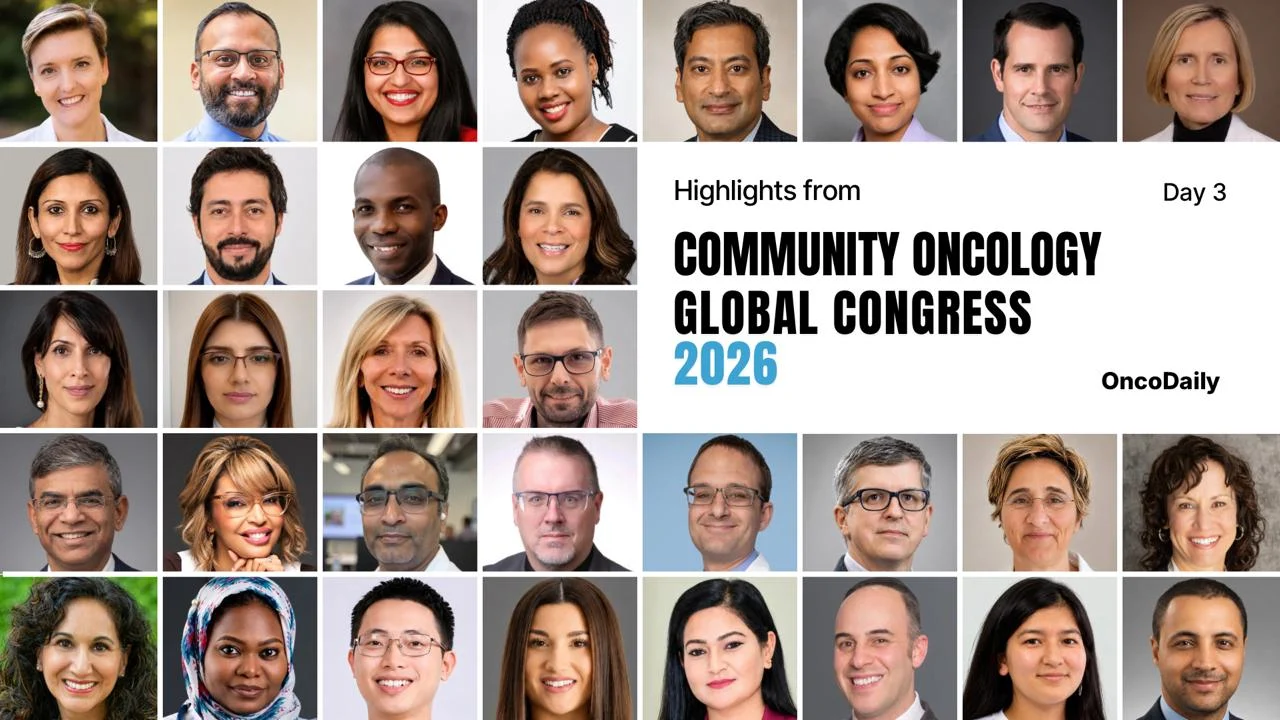
The third and final day of the congress placed the practical realities of community oncology at the centre of the conversation. Under the theme “People, Practice and the Future,” the programme examined the financial, geographic and organisational barriers that continue to shape cancer outcomes worldwide.
Across a full day of discussions, speakers addressed financial navigation, equitable access, patient-centred service design, supportive and palliative care, leadership, real-world evidence and collaboration with industry. The programme concluded with a forward-looking discussion on the priorities that should guide community oncology through 2030.
Financial Toxicity: The Cost of Care Beyond Treatment
Day 3 opened with “Improving Access to Cancer Care: Financial Navigation and Affordability Support,” chaired by Kashyap Patel.
Rajani Jha brought the perspective of a community oncologist working within a resource-constrained healthcare system in Nepal. Hadi Mohamad Abu Rasheed contributed expertise in cancer control, public health and policy, while Felipe Roitberg added a broader community-oncology perspective.
The discussion addressed financial toxicity as a multidimensional problem extending far beyond the price of medicines. Transportation, diagnostic procedures, supportive care and loss of income can all influence whether patients begin and complete treatment. The panel examined how healthcare providers, governments, industry and nongovernmental organisations can make financial-support and reimbursement pathways easier for patients to understand and access.
The session also focused on measures that community cancer centres can implement locally, including early identification of patients at financial risk and more coordinated navigation through available support programmes.
Community Oncology at a Crossroads
The morning continued with “Community Oncology at a Crossroads: Dr Robin Zon on Expanding Access, Innovation, and Equity Worldwide.”
Robin Zon considered the position of community oncology at a time when scientific progress is rapidly changing cancer care, yet access to that progress remains uneven. The session connected innovation with the realities of delivery, emphasising that advances in oncology achieve their full value only when patients can receive them regardless of geography, income or healthcare setting.
The conversation placed community oncology at the intersection of clinical progress, workforce development and health equity, highlighting its role in translating advances into care that reaches patients where they live.
Reaching Patients Left Behind
“Delivering Equitable Cancer Care: Reaching Underserved Communities” was chaired by Angelina Lorello and brought together perspectives from several healthcare settings.
Lara Briseño Kenney contributed a rural and remote community-oncology perspective from New Zealand. Irene Mbinya Nzamu addressed the subject through paediatric haemato-oncology and health-system delivery, while Van Tuat Huynh brought experience related to telehealth and outreach programmes in Vietnam. Felipe Roitberg discussed community-oncology and health-system approaches, and Ala Ebaid added the perspective of a haematology specialist caring for underserved populations.
The panel examined which communities remain most underserved and why these gaps persist. Rural and remote populations, patients treated in resource-limited systems, older adults, frail individuals and people living with multiple comorbidities were central to the discussion.
Mobile services, satellite clinics, telehealth and community outreach were presented as practical ways to extend care beyond major cancer centres. At the same time, speakers considered how partnerships with local organisations can help address the socioeconomic and geographic barriers that technology alone cannot resolve.
Navigation as a Continuum of Care
Patient navigation moved into focus during “Patient Navigation in Community Oncology: Improving Access, Coordination and Outcomes,” moderated by Devika Das.
Ahmed H. Abdelaziz discussed the challenges clinicians face when working across constrained referral and treatment pathways in Egypt. Martha Raymond contributed a patient-advocacy perspective, while Hadi Abu Rasheed addressed the role of navigation in improving access and reducing the burden placed on patients throughout their cancer journey.
The session explored where navigators can make the greatest difference—from diagnosis and referral to active treatment, survivorship and follow-up. Particular attention was given to coordination among physicians, nurses, pharmacists, social workers and community organisations.
The speakers also considered navigation for patients receiving oral anticancer therapy, including adherence support and the early identification of treatment interruptions. Digital platforms were discussed as valuable tools for maintaining contact and coordinating care, while recognising that technology should strengthen rather than replace human support.
Care That Continues Beyond Anticancer Treatment
The afternoon programme began with “Beyond Treatment: Integrating Supportive, Palliative and Survivorship Care into Community Oncology.”
The session brought together Adrian Pogacian, representing psycho-oncology and psychosocial support; Vijay C, contributing a counselling perspective; community oncologist Anjali Sibley; and Terisa Tamang, representing psychosocial care.
Together, they considered how supportive and palliative care can be introduced earlier and more consistently within routine oncology practice. The discussion extended from symptom management to the psychological and social difficulties experienced by patients, caregivers and families.
Survivorship was presented not as the end of cancer care, but as a distinct phase with its own clinical and emotional needs. The session examined transitions between oncology teams and primary care, communication after treatment, long-term follow-up and scan-related anxiety. It also highlighted the need for realistic supportive-care models that community clinics can incorporate into everyday practice.
Preparing the Next Generation of Oncology Leaders
“Leading Community Cancer Centres: Building the Next Generation of Oncology Leaders” shifted the discussion from patient pathways to the people responsible for designing and sustaining them.
Brian Grieb chaired the session and contributed his experience as a community oncologist and clinical-research leader. He was joined by Jasmine Kamboj, a community medical oncologist with leadership responsibilities; Brian Bourbeau, whose work includes quality, patient safety and care delivery; and Joanna Metzner-Sadurski, representing community oncology and scientific leadership.
The panel examined how leadership in a community cancer centre differs from leadership within a large academic institution. Community oncologists may be required to combine clinical responsibilities with operational, financial and strategic decision-making, often while working with limited resources.
Developing resilient multidisciplinary teams, preparing clinicians for leadership roles and managing organisational change without compromising quality were among the session’s central themes. The discussion also looked ahead to the leadership capabilities that community oncology will require over the coming decade.
Designing Cancer Services with Patients
Patients and caregivers took a central role in “Partnering with Patients: Co-Designing Community Cancer Services.”
The conversation brought together Angelina Lorello, a caregiver and patient-experience advocate, and Anjali Sibley, a community oncologist involved in patient-partnership initiatives.
Rather than viewing patients only as recipients of care, the session explored how they can contribute directly to service design and quality improvement. The discussion addressed the creation of effective patient advisory groups, the role of caregivers, health literacy and shared decision-making.
Meaningful partnership requires more than occasional consultation. It depends on transparent communication, clear opportunities for participation and advocacy structures that can be sustained over time.
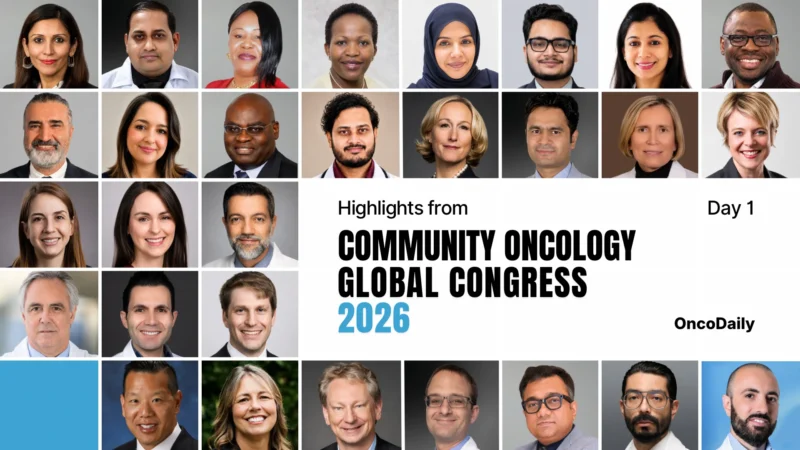
Highlights From Community Oncology Global Congress 2026, Day 1
Measuring What Matters in Community Oncology
The focus then turned to outcomes and accountability during “Value-Based Cancer Care and Real-World Evidence: Measuring Outcomes That Matter,” moderated by Brian Bourbeau.
Kashyap Patel contributed his experience in value-based community cancer care. Zaid Abdel Rahman added perspectives from haematology, cellular therapy and access, while Jahan Aghalar addressed real-world evidence from the viewpoint of community genitourinary oncology. Jonathan Ticku contributed expertise in community oncology and implementation science, and Zacharoula Sidiropulou brought a breast surgical-oncology and patient-centred perspective.
The panel examined what “value” should mean in community oncology and how it can be measured without creating unnecessary administrative burden. Speakers considered which quality indicators genuinely improve care and which may consume time without delivering meaningful benefits to patients.
Real-world evidence was discussed as a resource for both clinical and operational decisions. The session also examined the infrastructure and support practices need to participate successfully in value-based models, as well as the role of implementation science in making effective approaches sustainable.
Building More Effective Partnerships with Industry
“What Community Oncology Needs from Industry: Building Better Partnerships” offered a direct discussion of how collaboration could better serve community practices and their patients.
The session was chaired by Zaid Abdel Rahman. Raghad Abdul-Karim contributed the perspective of an independent community oncology practice in the United States, while Sudharshan Gupta discussed the needs of oncologists working in a resource-limited public system in India. Practice administrator Alti Rahman addressed operational priorities, and oncology pharmacist Christine Pfaff brought the medication-access and pharmacy perspective.
The panel considered which forms of industry support create meaningful value for community centres. Educational initiatives, diagnostic testing, patient-support services and grant programmes were discussed alongside the practical difficulties of introducing and maintaining them.
Speakers also examined barriers to transparent and ethical collaboration. The conversation called for partnerships that respond to the daily realities of community care and continue beyond individual meetings or short-term initiatives.
Community Oncology in Action
The final part of the programme moved from challenges to working examples during “Community Oncology in Action: Successful Initiatives from Around the World.”
Hannatu Ayuba moderated the session, which featured spotlight presentations from Amitabh Ray and Parvez Alam.
The first spotlight examined how innovation can be scaled within community oncology, while the second focused on the foundations of a successful community-oncology programme. The speakers considered how effective initiatives can be adapted across institutions and healthcare systems without losing the features that made them successful.
Implementation barriers, long-term sustainability and outcome measurement were also explored. The session offered practical guidance for centres beginning similar programmes, with emphasis on adapting models to local needs and available resources.
Community Oncology 2030: Turning Priorities into Commitments
The closing panel, “Community Oncology 2030: Building the Future Together,” was moderated by Congress Co-Chair Joanna Metzner-Sadurski.
She was joined by Alti Rahman, representing community-oncology strategy and operations; Congress President Jasmine Kamboj; Piotr Rutkowski; and Mark Walshauser. Together, they considered the highest priorities for community oncology through 2030 and the challenges that require urgent collective action.
The panel looked beyond individual institutions, calling attention to the partnerships needed among healthcare professionals, patients, policymakers and industry. Speakers also discussed how progress should be measured before the next congress and which commitments should guide future editions.
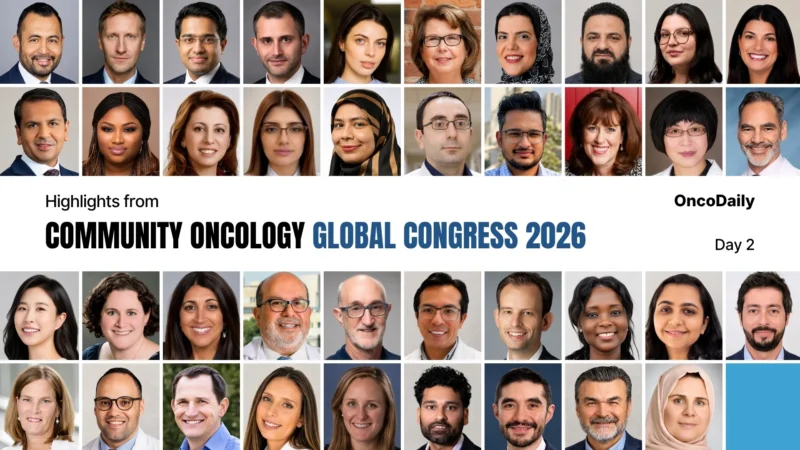
Highlights From Community Oncology Global Congress 2026, Day 2
From Three Days of Discussion to the Work Ahead
Day 3 concluded with closing remarks from Congress President Jasmine Kamboj, Scientific Leadership Representative and Congress Co-Chair Joanna Metzner-Sadurski, and OncoDaily leadership.
The closing session reflected on the congress’s principal outcomes, recognised the contributions of faculty and partners, and outlined opportunities for continued dissemination and collaboration.
The final day made one message clear: the future of cancer care will depend not only on discovering new treatments, but also on building systems capable of delivering them.
Financial support, navigation, leadership, patient partnership, real-world evidence and sustainable collaboration are not separate concerns. Together, they form the foundation of effective community oncology and determine whether progress reaches the patients who need it.