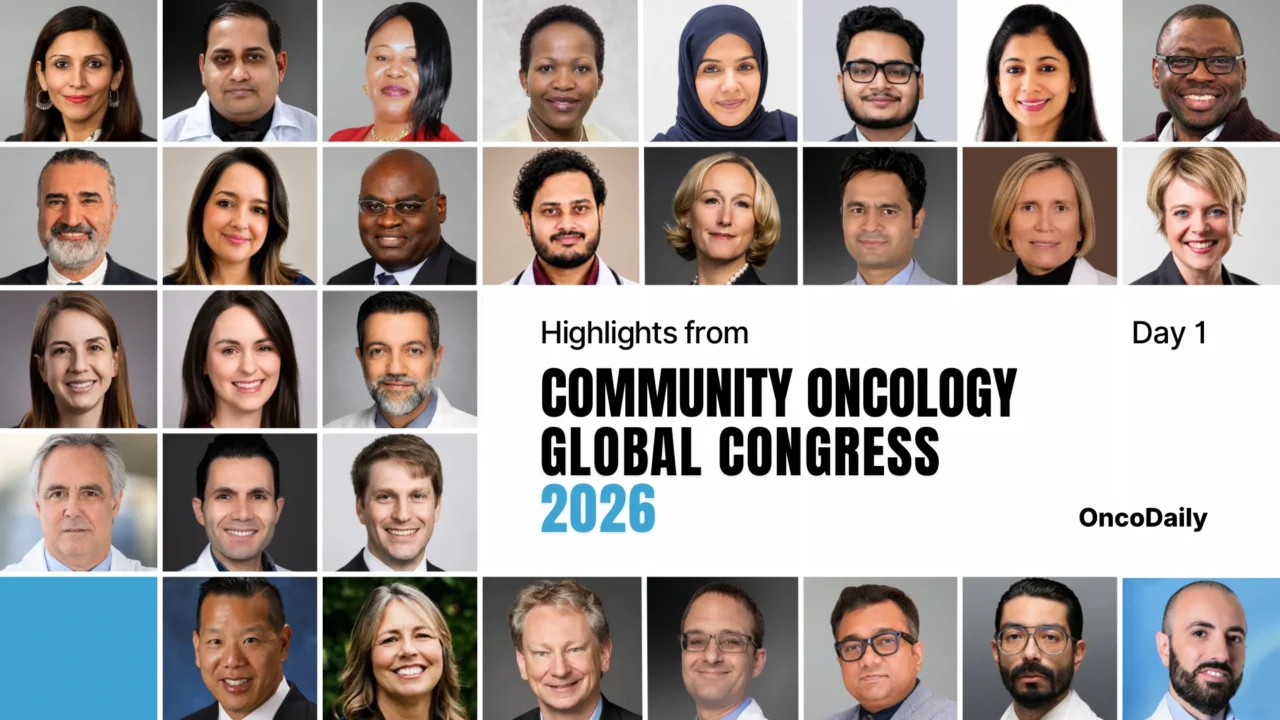
A global programme examined how community oncology can deliver high-quality, sustainable and equitable cancer care across diverse health systems
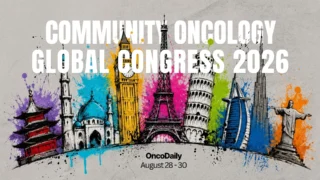
The Community Oncology Global Congress 2026 opened on Friday, August 28, with a full-day programme dedicated to “Global Community Oncology: Access, Systems and Innovation.” From 08:00 to 20:00 CEST, the opening day brought together oncology professionals, health-system leaders, patient advocates and experts from Africa, Asia, Europe, the Middle East and the Americas.
Across the programme, one reality remained central: community practices treat the overwhelming majority of the world’s patients with cancer, yet they are represented in almost none of the forums where cancer care is decided.
Day 1 responded to that imbalance by placing community oncology at the centre of a global discussion spanning precision medicine, regional inequalities, early diagnosis, access to essential medicines, modern therapeutics, molecular diagnostics, biomarker testing and health-system reform.
Opening a Global Stage for Community Oncology
The Congress began with “Why Community Oncology Needs a Global Stage,” delivered by Jasmine Kamboj alongside OncoDaily leadership. The opening remarks established the premise for the three-day meeting: community oncology is where most patients receive cancer care, but its professionals, patients and health-system realities remain insufficiently visible in the conversations that shape global priorities.
By opening with representation rather than a single disease area, the Congress positioned community oncology as a health-system issue. The programme asked not only how treatments can advance, but also how the settings responsible for delivering them can gain a stronger role in decision-making.
At the Centre of Care, Yet Outside the Room
The first panel, “Community Oncology at the Center of Cancer Care: Why Is It Still Underrepresented?” examined the global identity, current challenges and future direction of the field.
Foluke Sarimiye opened the session’s scientific discussion with “The Global Role of Community Oncology.” Her presentation placed community practice within the wider cancer-care landscape and introduced its significance across different countries and care models.
Amol Akhade followed with “The Biggest Challenges Facing Community Oncology Today.” His contribution directed the discussion towards the barriers confronting clinicians and health systems as they seek to provide high-quality cancer care outside major academic centres.
Benda Kithaka concluded the session with “The Future of Community Oncology.” Her perspective shifted the conversation from current underrepresentation towards the development of a more visible, connected and sustainable field.
Together, the three presentations created the foundation for the day: defining the role of community oncology, recognising the barriers it faces and considering what its future should look like.
Making Precision Oncology Work in Everyday Practice
The Congress then moved to “Precision Oncology in Community Practice: Building Sustainable Models of Care.” Moderated by Suman Karanth, the session examined the structures required to bring molecularly informed cancer care into community settings.
Atlal Abusanad presented “Building a Precision Oncology Programme in Community Practice.” Drawing on the perspective of a community oncologist running a functioning local precision programme, the presentation focused on the practical task of establishing precision care beyond a large academic institution.
Gc. Soham Banerjee addressed “Molecular Tumour Boards: Turning Genomic Results into Clinical Decisions.” In addition to presenting the molecular tumour board perspective, Gc. Soham Banerjee contributed as a genetic counsellor. This dual role connected genomic interpretation with the counselling and communication needed to support patients and families.
Under Suman Karanth’s moderation, the session followed precision oncology from programme development to genomic interpretation, counselling and collaboration. The central concern was not testing alone, but the complete system required to translate molecular results into clinical decisions.
Europe’s Cancer-Care Gap Begins After Approval
The next session asked a direct question: “Access Beyond Approval: Why Do European Patients Still Face Unequal Cancer Care?” Moderated by Joana Sadruski, it brought together perspectives on the persistent inequalities affecting access to cancer care across Europe.
Sola Adeleke presented “Community Oncology in Western Europe: Advancing Quality, Innovation and Integrated Care.” The presentation examined community oncology through the interconnected priorities of care quality, innovation and integration.
Yuksel Urun presented “Bridging Europe’s Cancer Care Gap: From Approval to Equitable Access.” The title captured the central distinction of the session: regulatory availability is not the same as real-world access for patients.
Chaired by Joana Sadruski, the session linked these perspectives around a shared European challenge—how to ensure that approved medicines, diagnostics and innovations become available through functioning, equitable systems of care.
What Works When the System Is Still Being Built?
The focus then shifted to Africa and the Middle East with “Building Cancer Care Where the System Isn’t Built Yet: What Actually Works Across Africa and the Middle East?” The session was moderated by Imène Hadji.
Imène Hadji, who also moderated the session, presented “Improving Access to Essential Cancer Services.” Her participation kept the discussion anchored in the services patients need most and the practical challenge of making those services accessible.
Clement Adebamowo addressed “Delivering Cancer Care in Challenging Environments.” The presentation broadened the conversation from individual services to the conditions under which cancer care must function when infrastructure and resources are limited.
Atlal Abusanad and Foluke Sarimiye joined as additional panellists, contributing their perspectives to the regional discussion. Together with the presenters, they helped connect the themes of essential services, sustainability and cancer-care delivery across diverse environments in Africa and the Middle East.
Asia-Pacific: Scaling Quality Across High-Volume Systems
Following the morning sessions, the Congress turned to “Scaling Community Oncology Across Asia-Pacific: Innovation, Workforce and Access.” The session was presented in a standalone presentation and question-and-answer format.
Amol Akhade served as moderator and chair, guiding the discussion on how decentralised models can expand cancer-care access across the region.
Mohana Murali Kolluri delivered “Delivering High-Quality Community Oncology in High-Volume Health Systems.” The presentation focused on the challenge of preserving quality while serving large patient populations. It was placed within the wider session theme of expanding access through decentralised cancer care.
Together, Amol Akhade and Mohana Murali Kolluri brought workforce, innovation and access into the same discussion. The session recognised that scale depends not only on increasing capacity, but also on building systems capable of delivering consistent, high-quality care.
The Long Road to an Early Diagnosis
The session “Why Do Patients Still Arrive Late? Fixing Early Diagnosis and Referral in the Community” examined one of the most persistent problems in cancer care: delays before diagnosis and treatment.
Soumen Das moderated the session and also participated as a presenter, contributing to the broader examination of early diagnosis and referral in community settings.
Deepak Paudel joined as a presenter, adding his perspective to the discussion of why patients continue to reach cancer services late and how referral pathways might be strengthened.
Benda Kithaka contributed the patient advocacy and navigation perspective. Her participation brought the patient journey into a discussion that can otherwise be approached only through clinical or organisational pathways.
By placing Soumen Das, Deepak Paudel and Benda Kithaka in the same session, the programme connected diagnosis and referral with navigation—the process of helping patients move through complex health systems and reach the services they need.
Approved, Yet Still Unavailable
The programme continued with “Approved but Unavailable: Can Biosimilars and Smarter Procurement Close the Essential Medicines Gap?” presented in a pre-recorded standalone format.
Irene Chidothe-Chisale delivered “Ensuring Reliable Access to Essential Cancer Medicines.” Her presentation focused on a fundamental access challenge: an effective medicine cannot improve outcomes if health systems cannot procure it reliably and patients cannot receive it consistently.
By pairing the question of biosimilars and smarter procurement with reliable medicine access, the session moved beyond regulatory approval to the operational realities of supply and availability.
Delivering Modern Treatments Safely in the Community
The afternoon programme continued with “Delivering Modern Cancer Therapies in Community Oncology: Building Expertise and Infrastructure.” The session was moderated by Fernando Maciel Barbosa.
Melissa Johnson presented “Delivering Modern Therapeutics in Community Oncology: What Can Be Done Safely Today?” Her presentation addressed the therapies that can currently be delivered in community practice and placed patient safety at the centre of implementation.
Alice Indini delivered “Managing Toxicities Beyond the Academic Centre.” The presentation focused on a critical part of decentralised treatment: community teams must be prepared not only to administer modern therapies, but also to recognise and manage their toxicities.
Brooke Peters presented “Building the Infrastructure for Safe Community Delivery.” Her contribution addressed the physical and organisational foundations required to support treatment outside major academic institutions.
Under Fernando Maciel Barbosa’s moderation, the three presentations followed a clear sequence: defining what can be delivered safely, preparing teams to manage toxicity and building the infrastructure that makes safe delivery possible.
Closing the Distance Between a Test and a Treatment
“From Test to Treatment: Closing the Diagnostic Gap in Community Oncology” examined the steps between molecular testing and clinical care. Mohana Murali Kolluri moderated the session.
Nicola Fusco presented “Optimising Molecular Diagnostics in Community Oncology.” His contribution focused on the quality and organisation of testing within community care.
Brian Grieb followed with “Reducing Turnaround Time: Building Efficient Diagnostic Pathways.” The presentation addressed speed as a central component of diagnostic access. A test must be embedded in an efficient pathway if its result is to reach clinicians in time to guide treatment.
Glenn Balasky presented “Who Pays for Precision Oncology? Sustainable Models for Diagnostic Access.” His contribution brought financing into the diagnostic pathway and examined the sustainability of access to precision testing.
Jasmine Kamboj joined as an additional panellist, contributing to the discussion connecting molecular diagnostics, turnaround time, affordability and treatment decisions.
Moderated by Mohana Murali Kolluri, the session approached the diagnostic gap as more than a question of technology. It followed the pathway through optimisation, efficiency, financing and clinical use.
Across the Americas, Shared Challenges Demand Shared Solutions
The session “Community Oncology Across the Americas: Shared Challenges, Shared Solutions” explored community care across North and Latin America. Allen Chen served as moderator and chair.
Debra Patt delivered the keynote, “Community Oncology in North America: Innovation, Networks and Value-Based Care.” Her presentation examined the North American model through its networks, approaches to innovation and emphasis on value-based care.
Sergio Contreras Garduño presented “Community Oncology in Latin America: Delivering Care Across Diverse Health Systems.” His contribution highlighted the diversity of systems within the region and the challenge of delivering care across different national and local contexts.
Carlos Barrios presented “Building Stronger Community Oncology Across the Americas.” The presentation expanded the discussion from individual systems to the potential for stronger community oncology across the wider region.
Roupen Odabashian joined as an additional panellist, while Glenn Balasky contributed as the session’s health-system and reimbursement expert. Fernando Maciel Barbosa also participated as an additional panellist.
Guided by Allen Chen, the group addressed five questions: which elements of the North American community oncology model could realistically be adapted to Latin American health systems; how disparities in diagnostics, medicines and specialised care could be reduced; what role community oncology should play in clinical research, quality improvement and innovation; how stronger collaboration between North and Latin America could improve patient outcomes; and which priorities should guide the region over the next five years.
The session did not treat the Americas as a single health system. Instead, its structure created space to compare models, identify shared barriers and consider where regional collaboration could be most useful.
Biomarker Access Does Not End With Testing
“Expanding Biomarker Access in Community Practice” examined the biomarker pathway from innovation to communication with patients. The session was moderated by Melissa Johnson.
Allen Chen presented “Innovations in Biomarker Testing for Community Oncology.” His presentation introduced developments in testing with a specific focus on their use in community practice.
Benjamin Bleiberg delivered “Optimising the Biomarker Testing Pathway.” His contribution focused on how testing is organised, ensuring that access is supported by an effective clinical pathway.
Fernando Maciel Barbosa presented “Partnerships to Expand Access to Precision Medicine.” The presentation highlighted collaboration as a route towards broader access to molecularly guided care.
Terri Conneran concluded the speaker programme with “Right Information, Right Time: Sharing Biomarker Results With Patients.” Her contribution brought the patient communication perspective into the biomarker pathway and focused on how results are shared, not only how they are generated.
Moderated by Melissa Johnson, the session followed biomarker testing across five connected elements: innovation, pathway design, partnership, precision-medicine access and communication with patients.
From System-Level Barriers to a Global Agenda
The final major session, “Setting Priorities for the Future of Community Oncology,” was moderated by Debra Patt.
Roupen Odabashian presented “The Greatest System-Level Barriers in Community Oncology.” His contribution returned the programme to the structural challenges that influence whether community practices can deliver accessible, sustainable and high-quality care.
Jasmine Kamboj followed with “From Discussion to Action: Building a Global Community Oncology Agenda.” Her presentation connected the day’s regional and thematic discussions with the next task: turning identified barriers and priorities into a shared global agenda.
Under Debra Patt’s moderation, the session provided a bridge between analysis and action. It brought the day back to its opening premise—that community oncology needs both global representation and a defined place in the decisions shaping cancer care.
Five Points to Close the Day—and a Look Ahead
Day 1 concluded with “Daily Synthesis and Day 2 Preview.” Scientific moderators summarised the programme in five points, announced the outcome of the barrier vote and introduced the disease-focused programme planned for Day 2.
The closing synthesis completed a programme that had moved across regions while returning repeatedly to the same practical question: how can advances in oncology reach patients through the community systems where most cancer care is delivered?
A Congress Built Around Delivery
Day 1 of the Community Oncology Global Congress 2026 followed the cancer-care pathway from early diagnosis and referral to molecular testing, treatment delivery, toxicity management and patient communication. It also examined the systems surrounding that pathway: workforce, infrastructure, procurement, reimbursement, partnerships and regional collaboration.
Every session approached community oncology from a different angle, but the programme shared one direction. Innovation must be matched by access. Approval must be followed by availability. Testing must lead to timely clinical decisions. Modern treatment must be supported by expertise and infrastructure. Most importantly, the professionals and communities delivering the majority of cancer care must have a stronger voice in shaping its future.
Stay informed with more articles like this on OncoDaily