From an experimental treatment for patients running out of options to a new class of “living medicines,” CAR-T therapy changed cancer treatment. Carl June helped turn decades of immunology into clinical reality and the revolution is still unfolding.
In 2012, six-year-old Emily Whitehead became one of the first children to receive experimental CAR-T cell therapy for relapsed acute lymphoblastic leukemia.
The approach was fundamentally different from conventional cancer treatment. Her own T cells were collected, genetically engineered to recognize CD19 on leukemia cells, expanded in the laboratory, and returned to her body. Emily developed life-threatening cytokine release syndrome, but the toxicity was brought under control and she achieved remission.
Her case became a defining moment for a field that had been developing for decades.
CAR-T was not the work of one scientist. But Carl June played a central role in turning engineered T cells from an experimental concept into a clinically viable cancer treatment.
The question is whether that contribution belongs among the discoveries recognized by the Nobel Prize.
Before CAR-T, Cancer Immunotherapy Was Far From Certain
Before CAR-T therapy became possible, researchers first had to establish that immune cells could be turned into effective anticancer treatments.
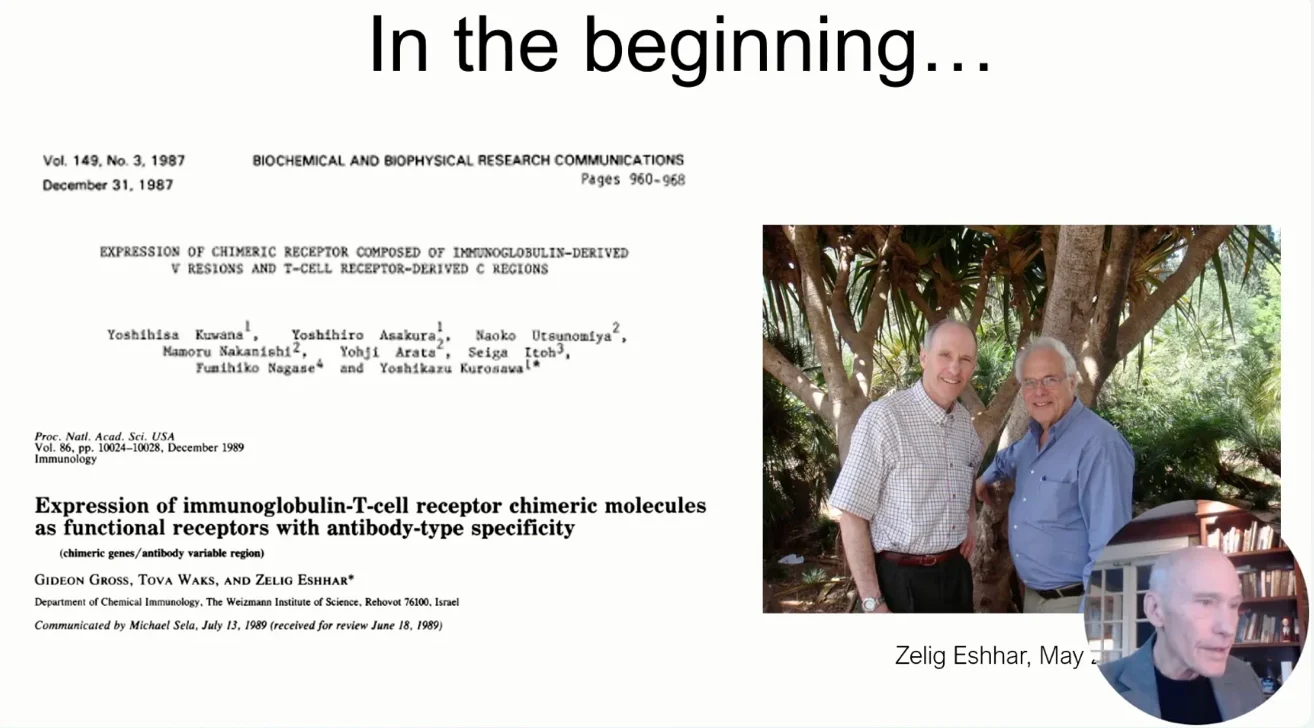
At the National Cancer Institute, Steven Rosenberg and colleagues showed that tumor-infiltrating lymphocytes could be removed, expanded, and returned to patients, producing tumor regression in some cases of advanced melanoma (Rosenberg, 2012). Around the same period, Zelig Eshhar and colleagues developed early chimeric antigen receptor concepts that combined antibody-based targeting with T-cell signaling (Eshhar, 1993).
The first CARs could recognize cancer cells, but they often lacked the persistence needed for sustained responses. Researchers including Michel Sadelain subsequently advanced CAR design by incorporating costimulatory signals such as CD28 and 4-1BB, improving T-cell activation and survival (Sadelain, 2013; Sadelain, 2017).
At the University of Pennsylvania, Carl June and colleagues helped take this biology into patients. In 2011, CD19-directed CAR-T cells produced striking expansion, persistence, and deep remissions in patients with advanced leukemia (Kalos, 2011; Porter, 2011).
CAR-T had moved from an intriguing idea toward a new form of cancer treatment.
How CAR-T Therapy Works
The principle behind CAR-T therapy is relatively straightforward: collect a patient’s T cells, genetically reprogram them to recognize cancer, expand them, and infuse them back into the patient (June, 2018).
The cells are engineered to express a chimeric antigen receptor, or CAR. The external portion recognizes a selected antigen on a target cell, while internal signaling domains activate the T cell. Unlike conventional T-cell recognition, CARs can bind directly to surface antigens without relying on the usual MHC-dependent pathway (Sadelain, 2017).
Many CAR-T therapies target CD19, which is found on B cells and several B-cell malignancies. When the engineered cell encounters CD19, it becomes activated and kills the target. Because normal B cells also carry CD19, healthy B cells can be depleted as well.
What makes CAR-T different from most medicines is what happens after infusion. These cells can expand, circulate, kill their targets, and sometimes persist for years.
That is why CAR-T has been described as a ‘living drug.’
The concept sounds simple. Making it work safely and reproducibly in people was anything but.
Carl June’s Role in the CAR-T Breakthrough
It is inaccurate to say Carl June simply ‘invented CAR-T.’ His contribution was more specific: helping solve several of the biological and practical problems that stood between an engineered T cell in the laboratory and a treatment that could work in patients.
One challenge was T-cell activation and expansion. June’s work on T-cell biology and costimulation helped establish methods for activating and growing human T cells while maintaining clinically useful function (June, 2015).
Persistence was another problem. Recognition of a cancer antigen was not enough if the engineered cells disappeared quickly. The Penn program used a CD19-directed CAR containing the 4-1BB costimulatory domain. In early clinical studies, those cells expanded dramatically after infusion and remained detectable while producing deep antitumor responses (Porter, 2011; Kalos, 2011).
June’s group also helped bridge laboratory science and clinical treatment: collecting T cells, genetically modifying them, expanding them under controlled manufacturing conditions, infusing them into patients, and monitoring both response and toxicity.
Working with Bruce Levine, David Porter, Michael Kalos, Stephan Grupp and others, the Penn program helped show that genetically engineered T cells could function as a durable therapy in human beings.
That translational step was crucial.
The Patient Who Changed the CAR-T Story
Emily Whitehead’s treatment demonstrated both the promise and the danger of the new therapy.
Soon after her CAR-T infusion, the engineered cells began expanding. Then Emily became critically ill, developing high fever, severe hypotension and respiratory failure.
The treatment was working but the immune response it generated had become dangerous.
The syndrome is now known as cytokine release syndrome (CRS). Testing showed markedly elevated interleukin-6, or IL-6, suggesting a possible way to control the inflammatory reaction (Grupp, 2013; Maude, 2014).
Emily was treated with tocilizumab, an antibody that blocks the IL-6 receptor. Her condition improved rapidly, while the CAR-T cells continued their antitumor activity.
She subsequently achieved remission.
The significance of her case went beyond one extraordinary clinical outcome. It demonstrated that engineered T cells could eliminate otherwise resistant leukemia while revealing a potentially life-threatening toxicity that the field would need to understand.
Tocilizumab later became an important treatment for significant CAR-T-associated CRS, and monitoring for fever, hypotension, hypoxia and other inflammatory complications became routine in cellular therapy programs (Lee, 2014; Neelapu, 2018).
CAR-T had proved powerful enough to control cancer. Clinicians now had to learn how to control CAR-T.
Then Came the Remissions No One Could Ignore
The early patients changed the question.
Researchers were no longer asking only whether engineered T cells could work. They were asking whether they could produce deep, lasting remissions after conventional treatment had failed.
In early studies, CD19-directed CAR-T therapy produced major responses in relapsed or refractory leukemia and lymphoma, including complete remissions in patients with few remaining options (Porter, 2011; Maude, 2018; Neelapu, 2017).
Then came regulatory approval.
In 2017, the FDA approved tisagenlecleucel for certain children and young adults with relapsed or refractory B-cell acute lymphoblastic leukemia. Axicabtagene ciloleucel followed for selected adults with relapsed or refractory large B-cell lymphoma. CAR-T later expanded into other B-cell malignancies and multiple myeloma, including BCMA-directed therapies (Munshi, 2021; Berdeja, 2021).
But perhaps the strongest evidence came from time.
In 2022, Melenhorst and colleagues described two patients with chronic lymphocytic leukemia who remained in remission more than a decade after CAR-T therapy, with engineered cells still detectable years after treatment (Melenhorst, 2022).
CAR-T does not cure everyone. Some patients never respond and others eventually relapse.
Still, long-term survivors changed the vocabulary of the field.
Oncology is appropriately cautious with the word cure. But when a single cellular therapy is followed by remission lasting a decade or more, even that cautious vocabulary begins to be tested.
CAR-T Did Not Solve Cancer
The extraordinary responses should not obscure the limitations.
CAR-T therapy can cause serious toxicity. Cytokine release syndrome may lead to fever, hypotension, hypoxia and organ dysfunction, while immune effector cell-associated neurotoxicity syndrome (ICANS) can cause confusion, language disturbance, seizures and other neurologic complications. Better recognition and management have made these toxicities more controllable, but treatment still requires specialized teams and close monitoring (Neelapu, 2018; Lee, 2019).
Relapse also remains a major problem. Cancer cells may reduce or lose the antigen targeted by the CAR, while the engineered T cells themselves may fail to expand sufficiently, become exhausted, or disappear over time.
Solid tumors present an even greater challenge. They often lack a uniform cancer-specific antigen, and CAR-T cells must reach the tumor, penetrate physical barriers, and remain functional within an immunosuppressive microenvironment.
Access adds another limitation. Autologous CAR-T requires a patient’s cells to be collected, genetically modified, expanded, tested, and returned for infusion. Manufacturing can take weeks, and treatment remains concentrated in specialized centers.
These limitations do not diminish CAR-T’s importance. They define it more accurately.
Its significance is not that it solved cancer, but that it established a new therapeutic principle: a patient’s own immune cells could be genetically engineered into a treatment capable of producing durable remissions.
Where the CAR-T Revolution Goes Next
The next chapter may extend far beyond the blood cancers in which CAR-T first succeeded.
Researchers are developing dual-target, armored and logic-gated CARs to improve recognition and function in solid tumors (Newick, 2017; Martinez, 2019).
Another major goal is to move beyond individualized manufacturing. Allogeneic, or “off-the-shelf,” CAR-T cells could potentially be manufactured from donor cells in advance, reducing waiting times and making treatment more scalable. Preventing rejection and graft-versus-host disease remains a central challenge (Depil, 2020).
Other immune cells are being engineered as well. CAR-NK cells, for example, are being explored as a potentially more readily available cellular platform (Liu, 2020).
And perhaps the most unexpected development is occurring outside cancer.
CAR-T therapy is now being studied in severe autoimmune diseases, including systemic lupus erythematosus, systemic sclerosis and inflammatory myopathies. Rather than killing malignant B cells, the goal is to eliminate B-cell populations contributing to autoimmunity and allow the immune system to rebuild.
Early results have generated considerable interest, although larger trials and longer follow-up are still needed.
That expansion points to something larger than CAR-T itself.
The lasting contribution of the technology may be the proof that human immune cells can be genetically programmed as medicines.
Carl June at IMMUNO 2026
That unfinished future was also central to Carl June’s appearance at OncoDaily’s IMMUNO 2026 Global Virtual Congress on Immuno-Oncology.
His presentation, “Evolution of CAR-T and the Road to Solid Tumours,” focused on the field’s greatest unresolved challenge: translating the success of CAR-T in blood cancers into solid tumors.
June was direct about the gap:
There’s been massive success in blood cancer with second-generation and next-generation CAR T cells. Unfortunately, in solid tumors we have not had those massive advances.
The contrast captures the current state of the field. CAR-T has transformed treatment for several hematologic malignancies, but antigen heterogeneity, poor trafficking, an immunosuppressive tumor microenvironment and the risk of damaging healthy tissue make solid tumors considerably more difficult.
June also discussed approaches being explored to move the field forward, including allogeneic “off-the-shelf” CAR-T cells and in vivo CAR engineering using viral vectors or lipid nanoparticles (OncoDaily, 2026).
His appearance at IMMUNO 2026 was therefore less a retrospective than a look at unfinished science.
The first era of CAR-T asked whether engineered T cells could work in patients.
The next is asking how much further they can go.
What Makes a Discovery Nobel-Worthy?
The question is not simply whether CAR-T has saved lives. Many treatments do.
The more difficult question is whether it changed the way science understands treatment itself.
CAR-T makes that case in several ways.
First, it changed scientific thinking. It established that human immune cells could be genetically redirected and administered as living medicines. A therapeutic product no longer had to be only a chemical compound or antibody. It could be an engineered cell capable of sensing, expanding and acting inside the human body (Sadelain, 2017; June, 2018).
Second, CAR-T changed clinical practice. The early leukemia studies were followed by regulatory approvals and the creation of an entirely new infrastructure around cell collection, manufacturing, lymphodepletion, toxicity management and long-term surveillance.
Third, it changed what some patients could realistically hope for. Patients with heavily pretreated leukemia and lymphoma, once facing very limited options, achieved complete remissions after a single infusion and in some cases remained in remission more than a decade later (Melenhorst, 2022).
The question of scientific credit is more difficult.
CAR-T was built by many investigators. Steven Rosenberg helped establish adoptive cellular therapy. Zelig Eshhar developed early chimeric receptor concepts. Michel Sadelain made major contributions to CAR design and T-cell engineering. Numerous researchers advanced gene transfer, manufacturing, clinical testing and toxicity management.
Carl June did not invent every element of CAR-T.
His importance lies in helping make those elements work together in patients.
June and his collaborators helped move engineered T-cell therapy from biological possibility to clinical reality. That distinction is more scientifically accurate and ultimately more compelling than the mythology of a lone inventor.
The 2026 Nobel Prize in Physiology or Medicine ultimately went elsewhere. But Nobel recognition is not limited to the year in which a scientific achievement becomes publicly discussed.
The more enduring question is whether CAR-T represents the kind of discovery that altered the trajectory of medicine.
It changed how scientists think about immune cells. It created a new form of cancer therapy. It produced durable remissions in patients who had exhausted other options. And it opened a field that is now moving into solid tumors, autoimmune disease and increasingly sophisticated forms of cellular engineering.
That is a substantial case.
The Legacy Is Already Being Written
Nobel Prizes are decided in Stockholm. The consequences of scientific discoveries are measured somewhere else: in laboratories, hospitals, and the lives patients are able to return to.
In 2012, Emily Whitehead received an experimental treatment because her options were disappearing.
Today, CAR-T cell therapy is part of modern oncology, and the idea behind it is expanding into new diseases and new forms of engineered medicine.
Emily grew up.
Whether Carl June is ever called to Stockholm is a question for the Nobel Committee.
What is already clear is that CAR-T has earned a permanent place in the history of medicine.
FAQ
What is CAR-T cell therapy?
CAR-T cell therapy is a form of immunotherapy in which a patient’s T cells are collected, genetically engineered to recognize a specific cancer target, expanded in the laboratory, and infused back into the patient.
What was Carl June’s role in developing CAR-T therapy?
Carl June and his collaborators helped solve key problems in T-cell activation, expansion, persistence, manufacturing, and clinical translation, helping move CAR-T from an experimental concept into a treatment that could produce durable responses in patients.
Which cancers can currently be treated with CAR-T therapy?
CAR-T therapy is mainly used for certain blood cancers, including some leukemias, lymphomas, and multiple myeloma. Its effectiveness in most solid tumors remains limited and is an active area of research.
Why is CAR-T therapy called a “living drug”?
Unlike conventional medicines, CAR-T cells are living cells that can expand after infusion, circulate through the body, recognize target cells, and sometimes persist for years.
Has Carl June won a Nobel Prize for CAR-T therapy?
No. Carl June has not received a Nobel Prize. However, his work on CAR-T therapy has received major scientific recognition, and his contribution is frequently discussed in the context of discoveries considered worthy of Nobel-level recognition.