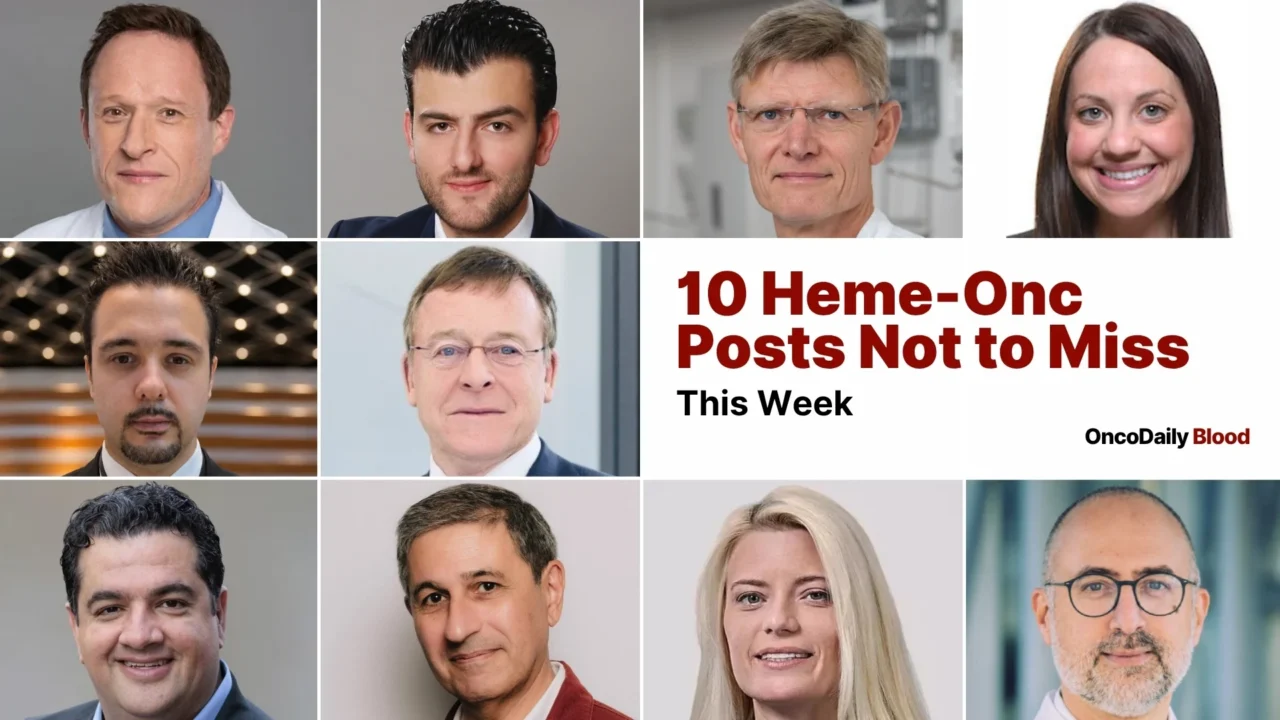
This week’s posts address radiotherapy in early-stage Hodgkin lymphoma, CD20-directed CAR T-cell therapy in Waldenström macroglobulinemia, and a new CAR T target in acute myeloid leukemia. Safety and symptom burden also feature: skin cancers in myelofibrosis patients on JAK inhibitors, and whether methylphenidate can reduce persistent fatigue in patients with hematologic malignancies.
Long-term outcomes after transplant and remission are the focus of work on DNA repair and T-cell exhaustion after allogeneic transplantation, which may compromise graft-versus-leukemia immunity, and on belumosudil in chronic graft-versus-host disease. Molecular studies follow clonal evolution after acute promyelocytic leukemia, identify new therapeutic targets in aggressive lymphomas, and use artificial intelligence to predict IDH1 mutations from leukemia morphology.
Here are 10 heme-onc posts not to miss from the first week of November.
Jean-Jacques Kiladjian – Professor of Medicine, Université Paris Cité; Head of the Clinical Research Division, INSERM; President of France Intergroupe des Néoplasies Myéloprolifératives , France
“From clinical observation of unusual aggressive skin secondary cancers in patients with myeloproliferative neoplasms treated with JAK inhibitors to the basic lab, a beautiful example of the continuum of medical research. Kudos to the team, and great collaboration with the dermatology department, pharmacology and pharmacovigilance units.”
Torsten Haferlach – Founder and CEO, MLL Munich Leukemia Laboratory, Germany
” What makes digitalization substantial in medicine? For me, its value is shown by whether it enables more precise diagnoses, supports medical decisions and improves patient care.
A recent joint study on the AI -based detection of indications of IDH1 mutations in AML shows the potential of combining morphology, molecular genetics and international collaboration. At the same time, advances in ALL therapy illustrate the importance of differentiated diagnostics and reliable progression data. For such developments to reach patients, the framework conditions must also be right.
The debates on electronic patient records and GeDIG, the new AI roadmap of the WHO Europe and proposals for European medical device regulation therefore touch on a common task: to effectively combine research, data and care. In my new article, I classify these developments – and describe how we should measure digital substance.
What gives digital transformation in medicine real substance? For me, its value lies in enabling more precise diagnoses, supporting clinical decisions, and improving patient care.
A recent collaborative study exploring AI-based prediction of IDH1 mutation status in AML illustrates the potential of connecting morphology, molecular genetics, and international expertise. Advances in ALL treatment also highlight the growing importance of precise diagnostics and reliable data on treatment response. Translating these developments into patient care requires the right conditions.
Germany’s debates on electronic patient records and digital health legislation, WHO Europe’s new AI roadmap, and proposals to reform European medical device regulation all address parts of the same challenge: connecting research, data, and clinical practice effectively. In my latest article, I discuss these developments and the standards by which we should judge meaningful progress in digital health.”
Behzad Amoozgar – Assistant Professor of Medicine, Blood and Marrow Transplantation and Cellular Therapy, Loma Linda University Health, California, USA
” Happy to share our latest publication in Blood Advances!
In this multicenter study of 810 patients with early-stage Hodgkin lymphoma, we found that omitting radiation therapy was associated with worse disease control, particularly in patients with bulky disease or positive interim PET scans.
Our findings highlight the importance of individualized, risk-adapted treatment rather than a one-size-fits-all approach.”
Mohamad-Kamal Yaakoub – Medical Doctor, Städtisches Klinikum Karlsruhe; Researcher, Städtisches Klinikum Dessau, Germany
” Contributing to Clinical Research in Hematology and Stem Cell Transplantation. I am pleased to have participated in the multicenter retrospective study:
“Efficacy and Safety of the ROCK2-Inhibitor Belumosudil for Chronic GVHD: Results from a Multicenter Retrospective Analysis of a Large German-Austrian Cohort of the Belumosudil MAP.”
Chronic graft-versus-host disease (cGVHD) remains a significant complication following allogeneic hematopoietic stem cell transplantation. Research into novel therapeutic approaches, including ROCK2 inhibition with belumosudil, is an important step toward improving treatment options and outcomes for affected patients.
I am grateful for the opportunity to contribute to this collaborative research effort and would like to thank all colleagues and participating centers involved in this study. Clinical research and collaboration are essential to advancing hematology and improving patient care.”
Henrik Frederiksen– Clinical Professor, Odense University Hospital – Svendborg Hospital; Chair of the Professional Committee, Danish Comprehensive Cancer Center, Denmark
“Can a medication commonly used to treat ADHD help reduce fatigue in patients with blood cancers?
We are pleased to share the results of a Danish randomized, double-blind, placebo-controlled crossover trial, now published in the Journal of Clinical Oncology (JCO). Cancer-related fatigue is one of the most common symptoms experienced by patients with hematological malignancies and are a major unmet issue for many patients before, during, and after cancer treatment. In this nationwide study, involving 152 patients from all eight hematology departments in Denmark, we investigated whether methylphenidate could alleviate persistent cancer-related fatigue.
Our key findings:
Methylphenidate significantly improved patient-reported fatigue compared with placebo, with a difference exceeding the predefined threshold for clinical relevance. Patients experienced an average of 0.7 additional waking hours per day during methylphenidate treatment. Adverse effects were more frequent with methylphenidate but were predominantly mild.
The findings suggest that methylphenidate may offer a meaningful treatment option for selected patients with hematological malignancies experiencing persistent fatigue. Importantly, exercise and psychological interventions remain first-line approaches.”
Jonathan Schatz – Professor of Medicine, University of Miami Miller School of Medicine, Florida, USA
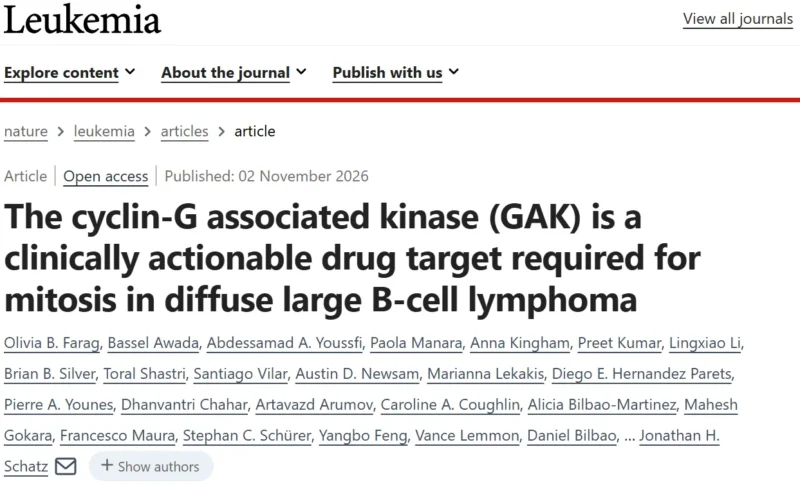
“Our new article on a new target in the treatment of aggressive lymphomas is online now!”
Wencke Walter – Head of Innovation and Bioinformatics Scientist, MLL Munich Leukemia Laboratory, Germany
” My colleagues from the MLL Münchner Leukämielabor have recently published an unusual case. An 81-year-old patient with acute promyelocytic leukemia reached complete molecular remission on chemotherapy-free ATO + ATRA. Years later, he developed a second myeloid neoplasm.
What we learned from the case:
The clone was there from the start. Retrospective NGS of the diagnostic sample showed ASXL1, TET2 and PRPF8 mutations at ~50% VAF. These stayed stable across all time points, so PML::RARA was most likely acquired in an already pre-leukemic clone.
Branched clonal evolution: a PHF6 clone appeared alongside thrombocytopenia in 2018, then disappeared. By 2023, EZH2 and CBL clones took over, with leukocytosis, monocytosis and a hypercellular marrow. The diagnosis was MDS/MPN-NOS (with oligomonocytic CMML in the differential).
Why it matters: Secondary neoplasms after APL are usually attributed to prior chemotherapy. This case shows that in elderly patients, underlying clonal hematopoiesis can drive a second disease independently of treatment.”
Mazyar Shadman – Deputy Chief Medical Officer, Professor of Clinical Research, and Medical Director of Cellular Immunotherapy, Fred Hutch Cancer Center, Seattle, Washington, USA
“Just published in Blood: results from our Fred Hutch investigator-initiated trial of CD20 CAR T-cell therapy in patients with Waldenström macroglobulinemia (WM)—to our knowledge, the largest reported series of CAR T-cell therapy in this disease.
The third-generation CD20 CAR T-cell product was developed in Dr. Brian Till’s lab at Fred Hutch, and I had the pleasure of serving as PI of the clinical study. One of the true joys of academic medicine is seeing science move from the lab to the clinic and, ultimately, to our patients.
WM remains one of the few B-cell non-Hodgkin lymphomas without an approved CAR T-cell therapy. We hope to take this work to the next level and ultimately make this approach available to patients with WM. Grateful to our patients and the entire research and clinical team who made this possible.”
Danielle Kirkey – Pediatric Oncologist, Seattle Children’s Hospital; Physician-Scientist, Fred Hutch Cancer Center, Seattle, Washington, USA
“Excited to share that our Phase 1 first-in-human CLEC2A CAR T trial is now active for Relapsed/Refractory AML (NCT07905027)!! This has been my focus for the past 5+ years and it is the honor of my career to bring this novel therapy to our patients in highest need!
CLEC2A is highly enriched in KMT2A-rearranged AML. Please reach out to me (danielle.kirkey@seattlechildrens.org) or the immunotherapy team at Seattle Children’s if you know of a patient or family who may benefit from CLEC2A CAR T cells. A special thank you to Soheil Meshinchi MD., Ph.D., Fred Hutch and the team at Hematologics for helping to bring this therapy to the clinic!”
Dimitrios Mougiakakos – Director, Department of Hematology, Oncology, and Cell Therapy, Otto von Guericke University Magdeburg, Germany
“In 2023, we showed that oxidative DNA damage in reconstituting T cells after allogeneic stem cell transplantation was associated with impaired antileukemic function, increased relapse risk, and inferior survival.
We subsequently demonstrated that pharmacological activation of the DNA repair enzyme OGG1 could enhance DNA repair and improve T-cell resilience and function.
Our third study, now published, adds another piece to the puzzle: a subset of reconstituting CD8⁺ T cells fails to adequately induce base excision repair despite substantial oxidative DNA damage, while other DNA damage response pathways remain inducible. This maladaptive response is associated with T-cell exhaustion and reduced polyfunctionality, potentially compromising graft-versus-leukemia immunity.
Together, these findings highlight “DNA fitness” as a promising avenue for improving T-cell therapies – within and beyond allogeneic transplantation. Many thanks to the entire team and our collaborators! Enjoy the read – I look forward to your thoughts and discussion.”