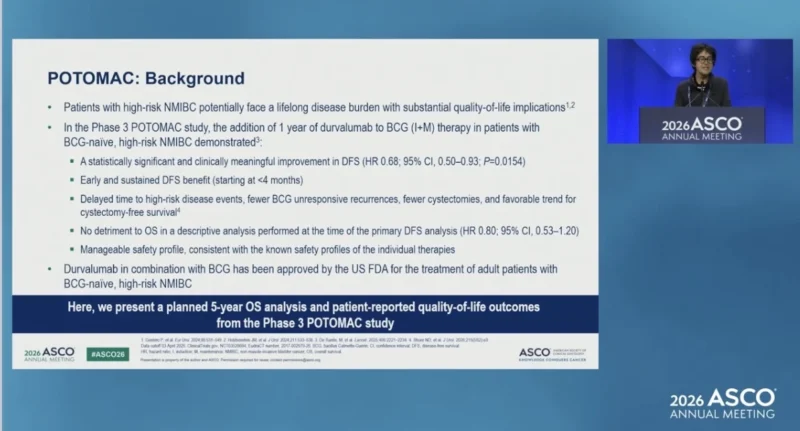
At the 2026 ASCO Annual Meeting, Maria De Santis, MD, from Charité Universitaetsmedizin Berlin and the Medical University of Vienna, presented updated findings from the phase 3 POTOMAC trial evaluating durvalumab in combination with BCG induction and maintenance therapy in patients with BCG-naive, high-risk non–muscle-invasive bladder cancer.
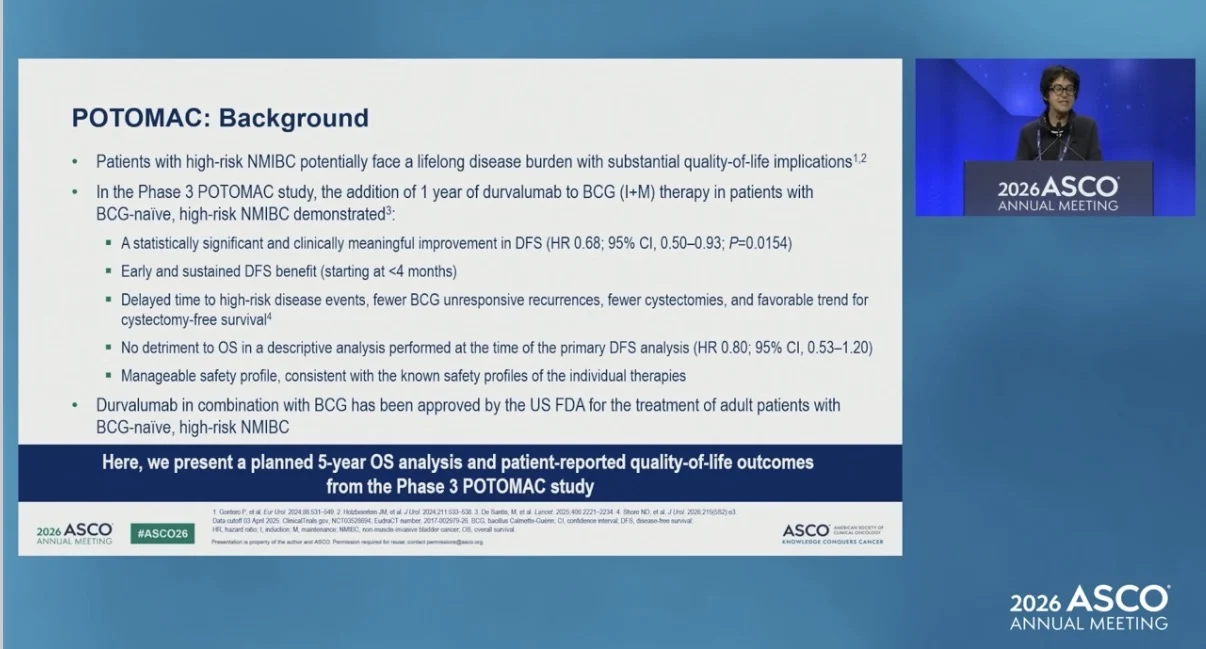
In the primary analysis of POTOMAC, one year of durvalumab combined with BCG induction and maintenance demonstrated a statistically significant and clinically meaningful improvement in disease-free survival compared with BCG alone, with a manageable safety profile.
At ASCO 2026, investigators presented the planned updated 5-year overall survival analysis together with patient-reported outcomes.
Study Design
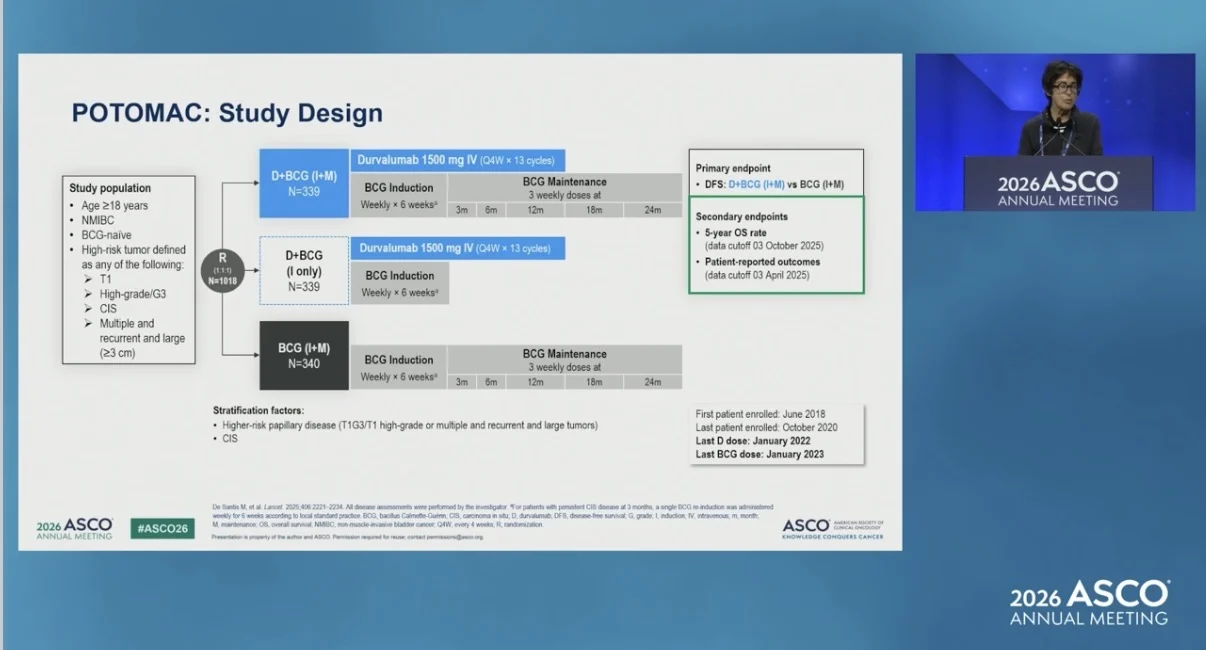
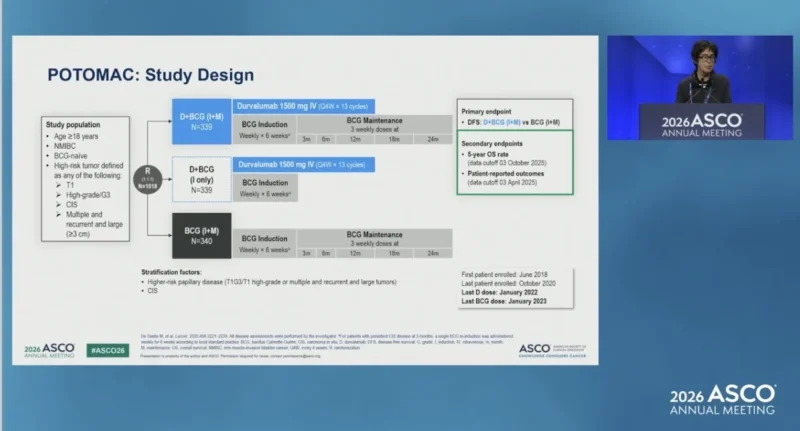
POTOMAC is a phase 3 randomized study in patients with BCG-naive, high-risk non–muscle-invasive bladder cancer.
Patients were randomized 1:1:1 to one of three treatment groups:
- durvalumab plus BCG induction and maintenance,
- durvalumab plus BCG induction only,
- or BCG induction and maintenance alone.
Secondary endpoints included the 5-year overall survival rate and patient-reported outcomes.
Quality-of-life assessments were performed using EORTC QLQ-C30 every 8 weeks and EORTC QLQ-NMIBC24 plus PRO-CTCAE every 4 weeks. Prespecified priority subscales included global health status/quality of life, physical functioning, and fatigue, as well as urinary symptoms, intravesical treatment issues, future perspective or worries, and sexual functioning. A change of plus or minus 10 points from baseline was considered clinically meaningful.
Results
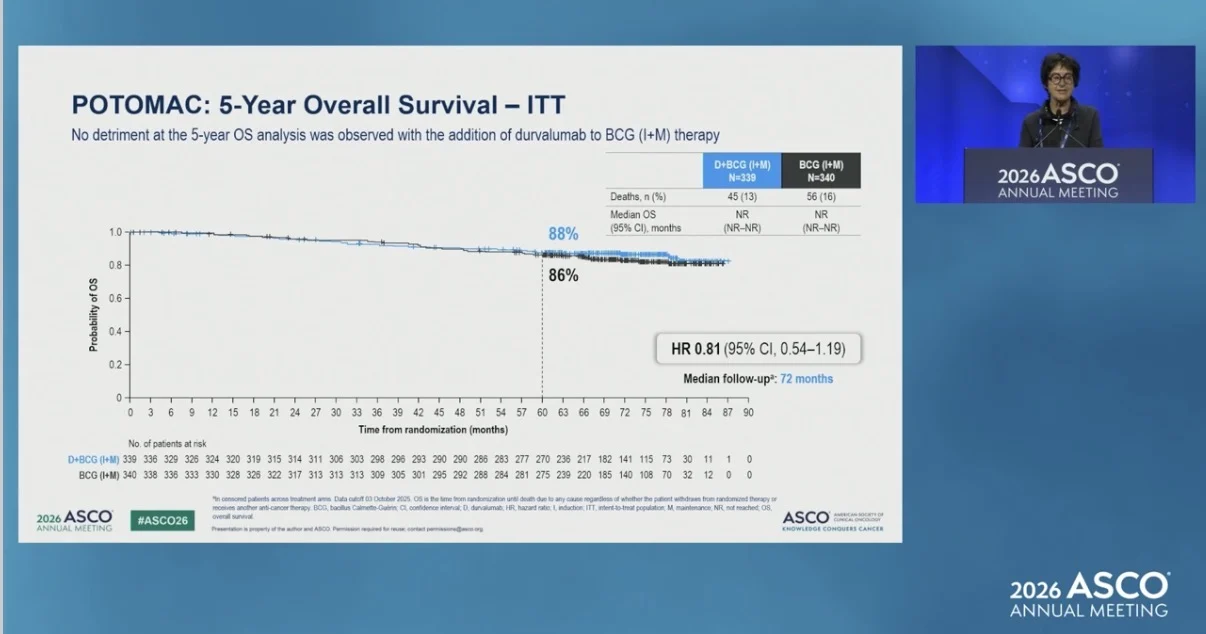
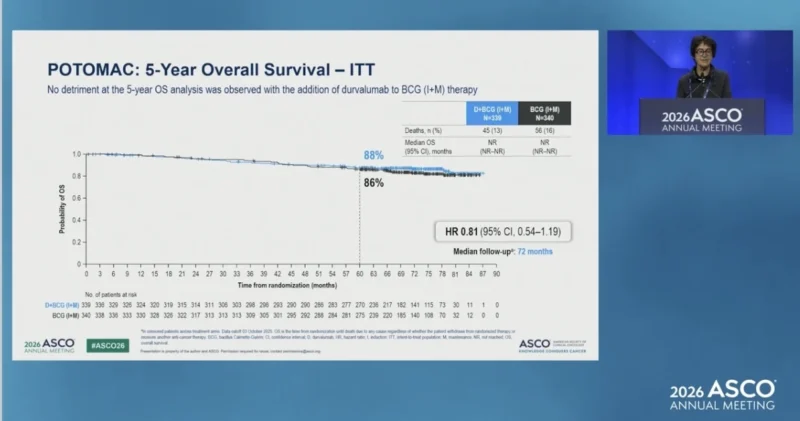
At the October 3, 2025 data cutoff, median follow-up was 72 months. For the comparison between durvalumab plus BCG induction and maintenance versus BCG induction and maintenance alone, the overall survival hazard ratio was 0.81 (95% CI, 0.54–1.19).
The 5-year overall survival rate was 88% with durvalumab plus BCG induction and maintenance compared with 86% with BCG induction and maintenance alone. Median overall survival was not reached in either arm.
Patient-reported outcomes were analyzed at the April 3, 2025 data cutoff. Baseline questionnaire completion was high: 74% versus 79% for EORTC QLQ-C30 and 80% versus 82% for EORTC QLQ-NMIBC24. Baseline PRO scores were generally similar between treatment groups.
Across QLQ-C30 measures, adjusted mean changes from baseline showed modest deterioration in global health status/quality of life and physical functioning and increased fatigue in both treatment arms, with generally similar changes between groups. Between-arm differences were −2.7 for global health status/quality of life, −2.6 for physical functioning, and 4.0 for fatigue.
For QLQ-NMIBC24, adjusted mean change-from-baseline scores were not clinically meaningful and were similar between treatment arms across urinary symptoms, intravesical treatment issues, future perspective/worries, and sexual functioning.
Across abdominal pain, diarrhea, and painful urination, PRO-CTCAE worsening rates through Week 106 were similar between arms. Urinary frequency worsening was numerically higher with durvalumab plus BCG than with BCG alone, but the difference was ≤10%.
Previous Results From POTOMAC
The previous analysis of the phase 3 POTOMAC trial was published in The Lancet, Volume 406, Issue 10516, on November 8, 2025. POTOMAC evaluated durvalumab plus BCG in patients with BCG-naive, high-risk non–muscle-invasive bladder cancer. In the final analysis, one year of durvalumab combined with BCG induction and maintenance improved disease-free survival compared with BCG induction and maintenance alone.
At a median follow-up of 60.7 months, durvalumab plus BCG induction and maintenance reduced the risk of recurrence or death by 32% versus BCG alone. The 24-month disease-free survival rate was 86.5% with durvalumab plus BCG induction and maintenance versus 81.6% with BCG alone.
Overall survival was immature, but no detriment was observed with durvalumab. The safety profile was described as manageable, and no treatment-related deaths occurred.

Read more about POTOMAC Trial on OncoDaily.
Conclusion
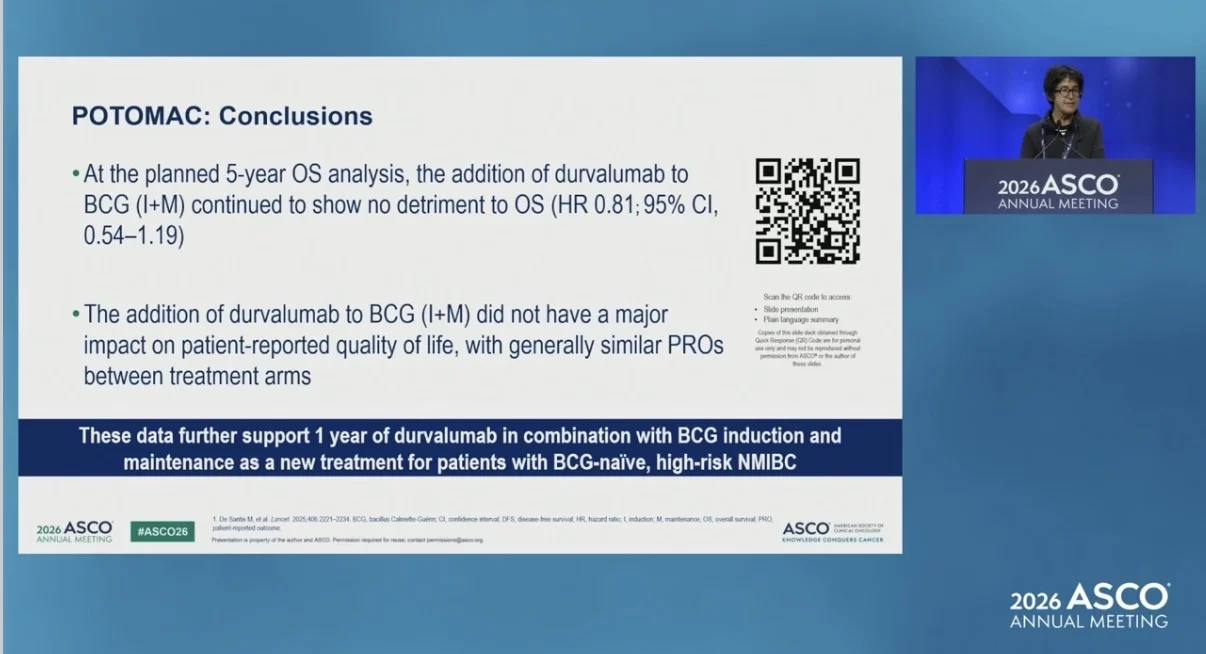
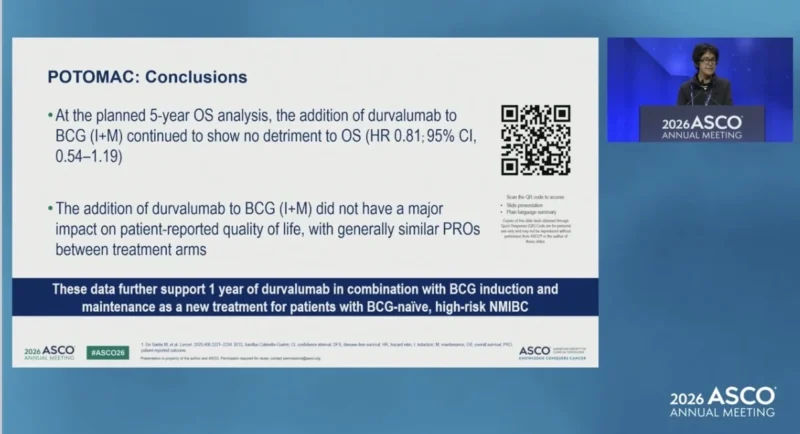
Updated POTOMAC findings presented at ASCO 2026 showed that adding one year of durvalumab to BCG induction and maintenance continued to show no detriment to overall survival after more than 5.5 years of follow-up in patients with BCG-naive, high-risk non–muscle-invasive bladder cancer. Patient-reported outcomes were generally similar between treatment groups, with no major impact on quality of life reported with the addition of durvalumab.
The full abstract is available in official ASCO website.