At the 2026 ASCO Annual Meeting, Peter H. O’Donnell, MD, from the University of Chicago, presented health-related quality of life results from the Phase 3 KEYNOTE-905/EV-303 study in patients with muscle-invasive bladder cancer who were ineligible for or declined cisplatin therapy.
The study evaluated neoadjuvant and adjuvant enfortumab vedotin plus pembrolizumab with radical cystectomy and pelvic lymph node dissection compared with radical cystectomy and pelvic lymph node dissection alone.
The analysis showed that adding neoadjuvant and adjuvant enfortumab vedotin plus pembrolizumab did not decrease health-related quality of life 18 weeks after surgery compared with radical cystectomy and pelvic lymph node dissection alone.
What Is the KEYNOTE-905/EV-303 Study?
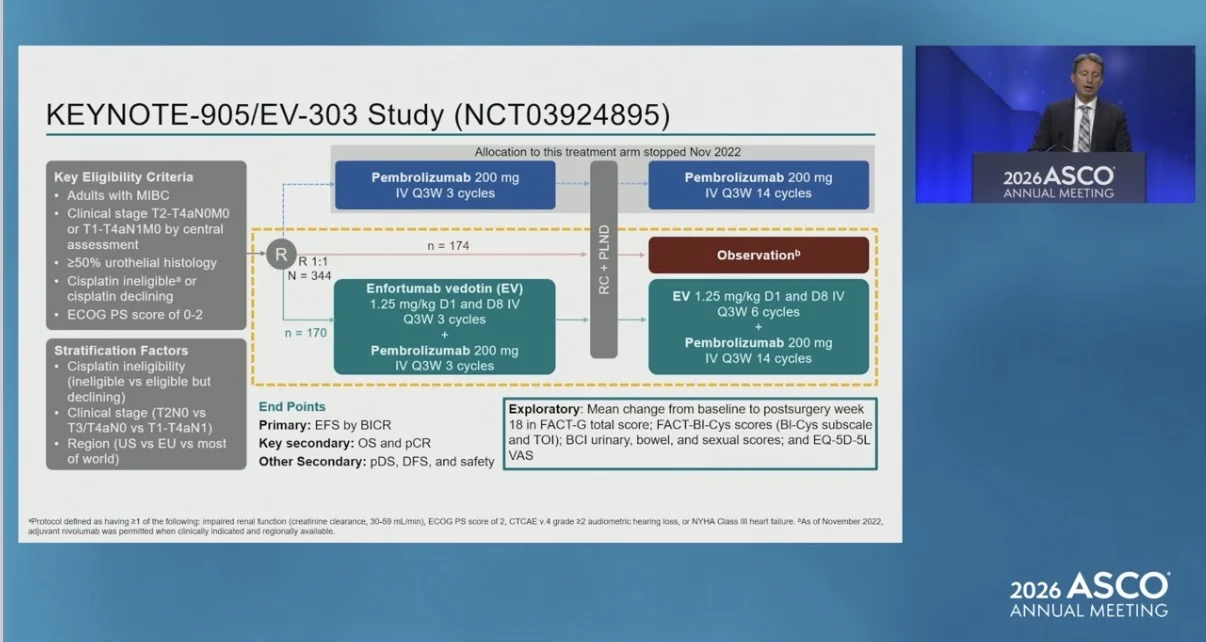
KEYNOTE-905/EV-303 is a Phase 3 study in patients with muscle-invasive bladder cancer who were ineligible for or declined cisplatin therapy. Patients were randomized 1:1 to receive either neoadjuvant and adjuvant enfortumab vedotin plus pembrolizumab with radical cystectomy and pelvic lymph node dissection, or radical cystectomy and pelvic lymph node dissection alone.
The primary endpoint was event-free survival by blinded independent central review. Key secondary endpoints included overall survival and pathologic complete response. Other secondary endpoints included pathologic downstaging, disease-free survival, and safety. Health-related quality of life was evaluated as a prespecified exploratory endpoint.
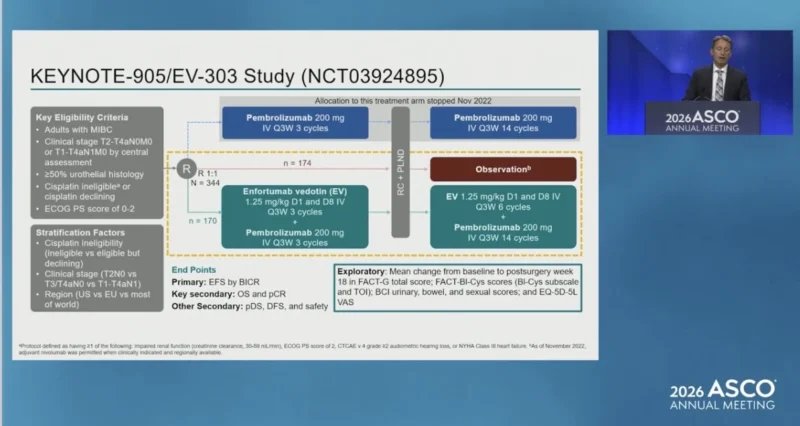
In KEYNOTE-905/EV-303, neoadjuvant and adjuvant enfortumab vedotin plus pembrolizumab with radical cystectomy and pelvic lymph node dissection showed significant and meaningful improvements in event-free survival, overall survival, and pathologic complete response compared with radical cystectomy and pelvic lymph node dissection alone. This ASCO 2026 analysis reported prespecified exploratory health-related quality of life outcomes.

Read more about KEYNOTE-905/EV-303 Trial on OncoDaily.
How Was Quality of Life Assessed?
Health-related quality of life was analyzed in patients who completed at least one patient-reported outcome assessment. The assessments included EQ-5D-5L, Functional Assessment of Cancer Therapy–Bladder-Cystectomy with FACT-General, and Bladder Cancer Index. In the enfortumab vedotin plus pembrolizumab arm, assessments were performed predose on day 1 of neoadjuvant cycles 1, 2, and 3; before and after surgery; and predose on day 1 of adjuvant cycles 1, 2, 4, 8, and 12. In the control arm, assessments were performed before and after surgery. In both treatment arms, assessments were also performed at treatment discontinuation, every 12 weeks for up to 2 years, and every 24 weeks thereafter.
Key Findings
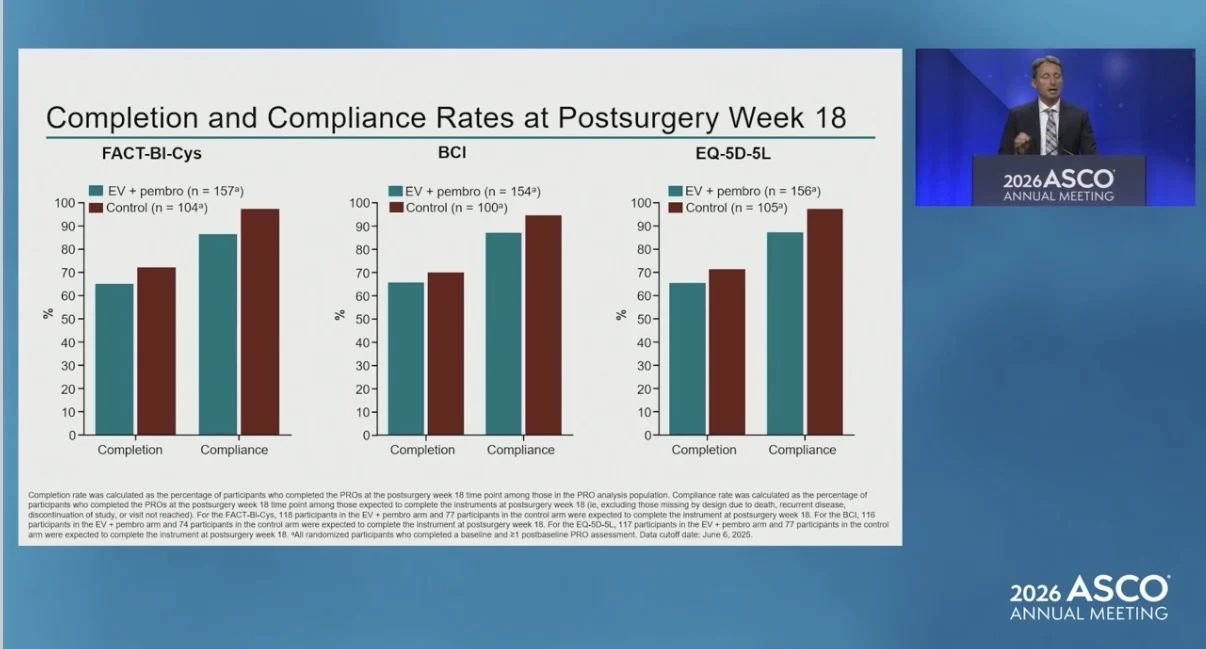
At 18 weeks after surgery, patient-reported outcome completion rates were approximately 65% or higher across the reported instruments, while compliance rates were higher, reaching approximately 86% or more across instruments. Overall, mean changes from baseline followed a generally similar pattern across the reported patient-reported outcome measures; however, the PRO analysis evaluated changes within each arm separately, and no formal between-group comparison was made.
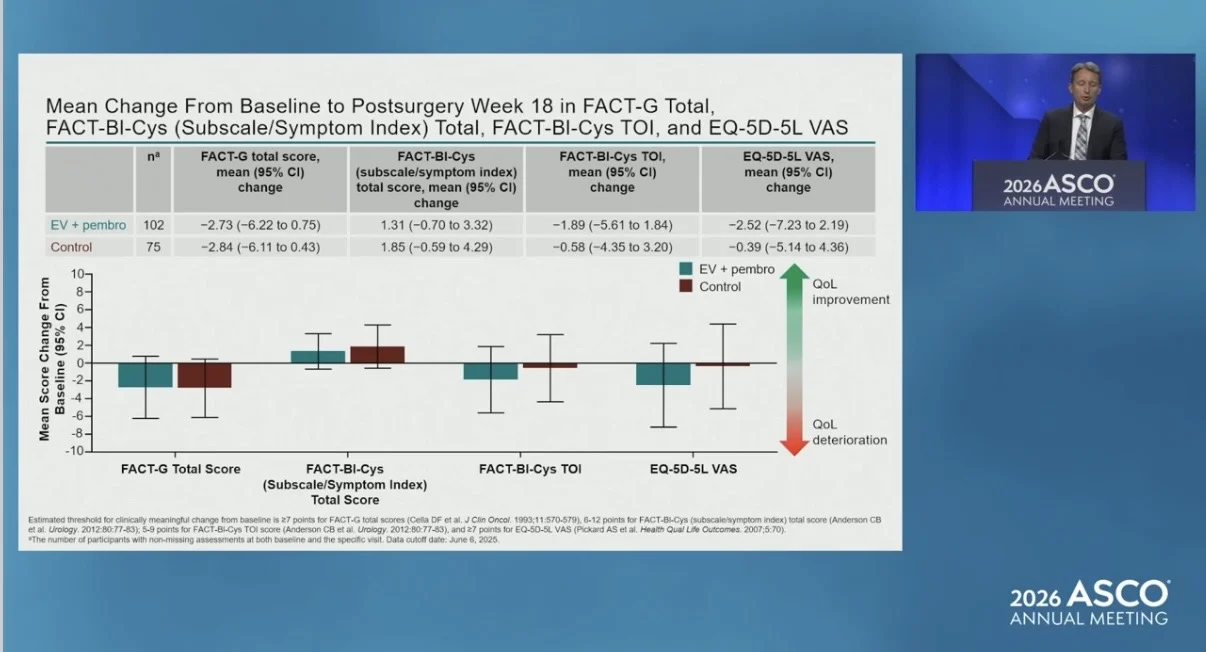
At postsurgery week 18, mean changes from baseline in FACT-G total score were −2.73 in the EV plus pembrolizumab arm and −2.84 in the control arm. FACT–Bladder-Cystectomy subscale/symptom index total scores changed by 1.31 and 1.85, respectively, while FACT–Bladder-Cystectomy Trial Outcome Index scores changed by −1.89 and −0.58.
EQ-5D-5L visual analog scale scores changed by −2.52 in the EV plus pembrolizumab arm and −0.39 in the control arm. These changes did not exceed established thresholds for clinically meaningful deterioration in general HRQoL, cystectomy-specific HRQoL, or overall health status.
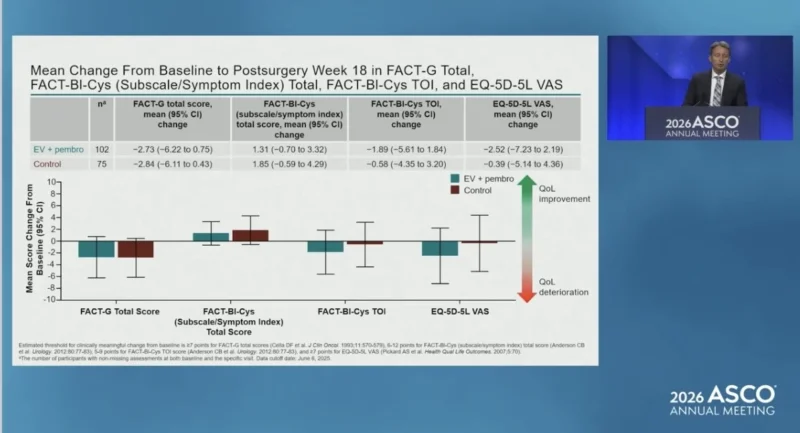
Bladder Cancer Index urinary scores showed limited change in both groups. Bowel and sexual scores decreased in both arms, with the largest decline observed in the sexual domain. Across all patient-reported outcome assessments, mean changes from baseline over time followed a generally similar pattern across treatment groups.
Quality of Life After Surgery
The addition of neoadjuvant and adjuvant enfortumab vedotin plus pembrolizumab did not decrease health-related quality of life 18 weeks after surgery compared with radical cystectomy and pelvic lymph node dissection alone. Bladder Cancer Index bowel and sexual scores worsened in both treatment arms, consistent with prior reports of the impact of radical cystectomy.
What This Means for Patients
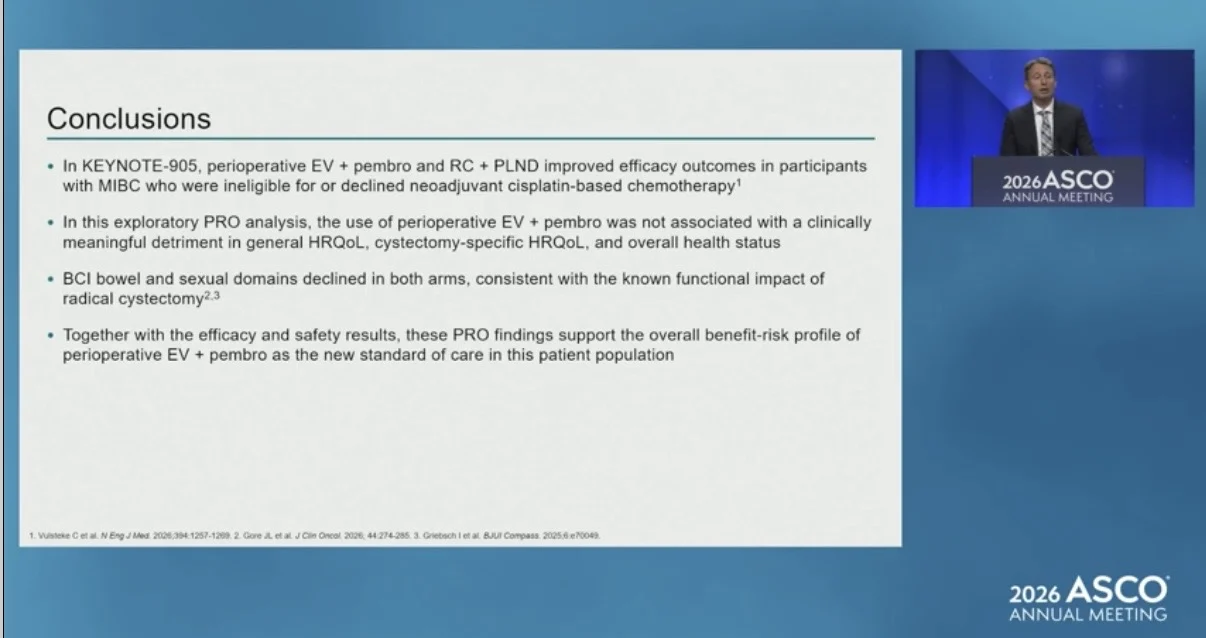
In this exploratory patient-reported outcomes analysis from KEYNOTE-905/EV-303, perioperative enfortumab vedotin plus pembrolizumab with radical cystectomy and pelvic lymph node dissection was not associated with clinically meaningful deterioration in general health-related quality of life, cystectomy-specific health-related quality of life, or overall health status.
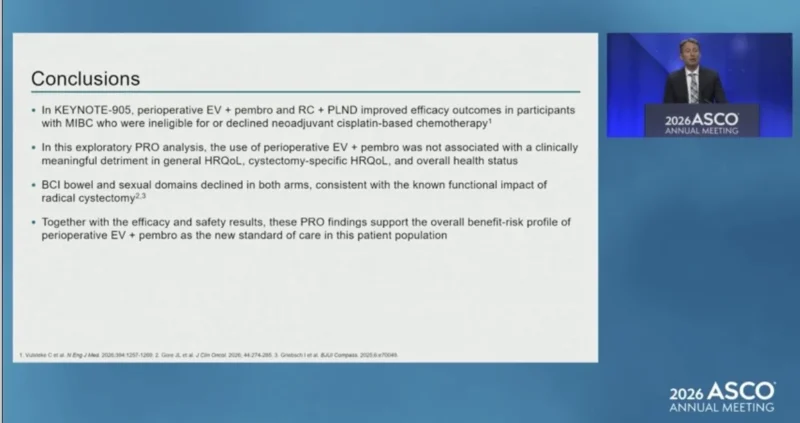
BCI bowel and sexual domains declined in both treatment arms, consistent with the known functional impact of radical cystectomy. Together with the efficacy and safety results from KEYNOTE-905/EV-303, these patient-reported outcome findings support the overall benefit-risk profile of perioperative enfortumab vedotin plus pembrolizumab in patients with muscle-invasive bladder cancer who are ineligible for or decline cisplatin therapy.
The full abstract is available on the official ASCO website.

You can also read about EV-302 at ASCO 2026 on OncoDaily.