The first week of November 2026 brought new research and expert perspectives across GI Oncology, with updates spanning colorectal cancer, esophageal cancer, biliary tract cancer, pancreatic cancer, hepatocellular carcinoma, and anal cancer. Recent publications and clinical studies explored treatment strategies, biomarkers, and approaches to patient management.
This week’s selection includes research on the biological mechanisms of ctDNA shedding in colorectal cancer, the PROSIT study examining immune exclusion in high-risk stage II colon cancer, and the role of EUS(-FNA) in esophageal and gastroesophageal junction cancer staging. Other posts cover real-world outcomes with gemcitabine, cisplatin, and durvalumab compared with TOPAZ-1 in advanced biliary tract cancer, and findings from the phase II GeNeS1S trial in advanced pancreatic cancer.
Further discussions explore response-adapted surgery after neoadjuvant immunotherapy in dMMR/MSI-H colon cancer, neoadjuvant versus definitive chemoradiotherapy in cN3M0 esophageal cancer, and locoregional therapies combined with immunotherapy in hepatocellular carcinoma. The selection also highlights ctDNA dynamics during pembrolizumab treatment in HPV-associated anal cancer and findings from the phase II UNICORN trial evaluating neoadjuvant botensilimab plus balstilimab in resectable colon cancer.
Together, these 10 posts highlight recent developments in GI oncology, from biomarker research and immunotherapy combinations to treatment outcomes and surgical decision-making.
Ellen Heitzer — Professor, Medical University of Graz; Head, Christian Doppler Laboratory for Liquid Biopsy for Early Cancer Detection | Austria
“Why do some colorectal cancers release detectable circulating tumor DNA (ctDNA) into the bloodstream, while others remain invisible to liquid biopsy?
Our latest study, “Tissue architecture and immune niches govern ctDNA release in colorectal cancer,” provides new insights into the biological mechanisms underlying this variability.
Combining tumor-informed plasma sequencing in 59 patients with detailed histopathological analyses, immunophenotyping, spatial transcriptomics and in situ mutation detection, we identified distinct tissue features associated with ctDNA shedding.
Our key findings:
ctDNA detectability increases with tumor burden.
ctDNA shedders exhibit characteristic tissue architecture, including expanded pseudolumina containing necrotic debris and disruption of epithelial barriers.
Increased myeloid cell infiltration in both luminal structures and surrounding stroma is associated with ctDNA release.
Spatial analyses and in situ mutation detection suggest that necrotic material within pseudoluminal structures represents an important focal reservoir of tumor-derived DNA entering the circulation.
Why does this matter?
Understanding these mechanisms may help us better interpret negative liquid biopsy results and ultimately refine the clinical application of ctDNA-based diagnostics.
A big thank you to all co-authors and, most importantly, the patients who made this study possible. Special thanks to our interdisciplinary team at the Medical University of Graz and our clinical partner, and scientific collaborators in Stockholm for their contributions to this work.
Congratulations to everyone involved!”
Alberto Puccini — Medical Oncologist, Humanitas Cancer Center, Milan | Italy
“Our PROSIT study is now published in Translational Oncology!
Using whole-transcriptome sequencing on high-risk stage II colon cancer from the phase III TOSCA trial, we identified an Immune Exclusion phenotype: low immune activation and high TGF-β signaling. It was linked to shorter disease-free survival, independently of MSI status and sidedness. A compact 7-gene signature captured the same biology.
The results are exploratory and need validation. Still, after a very long project, I’m really happy with these promising results.
Huge thanks to Lorenzo Ferrando, Luca Mazzarella and of course Prof. Alberto Sobrero, plus all co-authors, the TOSCA investigators and the patients.”
Nicholas Hornstein — GI Medical Oncologist, Northwell Health; Fellowship Training, MD Anderson Cancer Center; Internal Medicine Training, UCLA Health | United States
“Would you like a glimpse of the future? Where solid tumor oncology may be heading?
Look no further.
Agenus may have had some ups and downs in the past (BATMAN -> ROBBIN), but Bot Bal looks like it has the capacity to absolutely change how we manage MSS solid tumors.
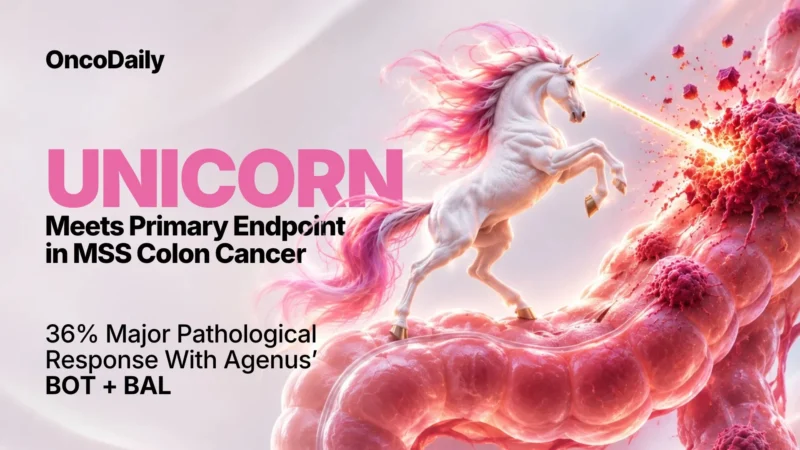
UNICORN, now in Nature Medicine. Phase 2, non-randomized, window-of-opportunity. Resectable rT3-4 colon cancer. One dose of botensilimab, two doses of balstilimab, surgery around day 30-40.
Highlights:
MPR 36% (5/14) in MSS disease, pCR 29%. Omg. (compare to FOLFOX in FOxTROT: 8%)
Bot alone in MSS: 0%. The PD-1 matters.
dMMR Bot Bal: MPR 100%, pCR 93%
12-month EFS 100% in both Bot Bal cohorts
Yes there is tox. irAEs in 54%, mostly flu-like symptoms, and only one grade 3 (hyperthyroidism). No grade 3 diarrhea.
Every MSS responder cleared ctDNA before surgery, that’s a helpful tool for predicting response in a disease that may fibrose and stay visible on imaging.
The holy grail is almost here: melting the majority of rectal cancers away. In MSI-H we have AZUR-1. In MSS, perhaps we have this in the future.”
Judith Quik — MD; PhD Candidate in Upper GI Surgery | Netherlands
“New publication in Diseases of the Esophagus!
Lessons learned from a decade of EUS(-FNA) staging in esophageal and GEJ carcinoma: towards a selective staging strategy
Is EUS(-FNA) still needed on top of modern FDG-PET? We looked back at 402 patients staged at the Netherlands Cancer Institute – Antoni van Leeuwenhoek.
In 91.3% of patients, EUS(-FNA) did not change the radiation field.
When it did, the changes mattered. In 4.1% of FDG-PET node-negative patients EUS-FNA EUS-FNA identified malignant lymph nodes.
Its value depends on the treatment plan. It matters most before chemoradiotherapy and adds little before perioperative FLOT with surgery.
We propose using EUS(-FNA) as a selective staging tool rather than a routine one.”
Andrea Casadei Gardini — Associate Professor, Università Vita-Salute San Raffaele | Italy
“How well do the survival outcomes from TOPAZ-1 translate to everyday clinical practice?
In our new study in the Journal of Gastroenterology, we analyzed 1,382 patients with advanced biliary tract cancer treated with first-line cisplatin, gemcitabine, and durvalumab across 55 centers in 12 countries. We compared overall survival with the TOPAZ-1 arm that received the same regimen, using reconstructed patient-level trial data.
What did we find?
Overall cohort: Observed survival was longer in the real-world cohort, including after balancing measured baseline characteristics (HR 0.84, p = 0.018).
TOPAZ-1 eligible (n = 910): Observed survival was longer than in the trial arm (unadjusted HR 0.76, p < 0.001).
TOPAZ-1 ineligible (n = 441): Observed survival was similar to that in the trial arm (unadjusted HR 0.98, p = 0.85).
The last finding is the one I find most interesting. Patients who would have been excluded from TOPAZ-1 are precisely the group for whom we have less direct trial evidence. This comparison gives us a survival benchmark for those patients in routine care.A special thank you to Silvia Camera for her excellent work on this study. And thank all co-authors”
Erman Akkus — MD; Medical Oncology and Internal Medicine; GI Oncology; Yedikule EAH | Türkiye
“Triplet chemotherapy with Gemcitabine, Nab-paclitaxel, and S-1 achieves high response and conversion rates in advanced pancreatic cancer: A multicenter phase II study (GeNeS1S trial)”
Gertjan Rasschaert, MD — Consultant in GI Oncology, UZ Leuven; Colorectal Cancer Research, Tejpar Lab, KU Leuven | Belgium
“For selected patients, the future question may no longer be ‘Can surgery be omitted?’ but ‘What evidence of residual disease would make surgery necessary?’
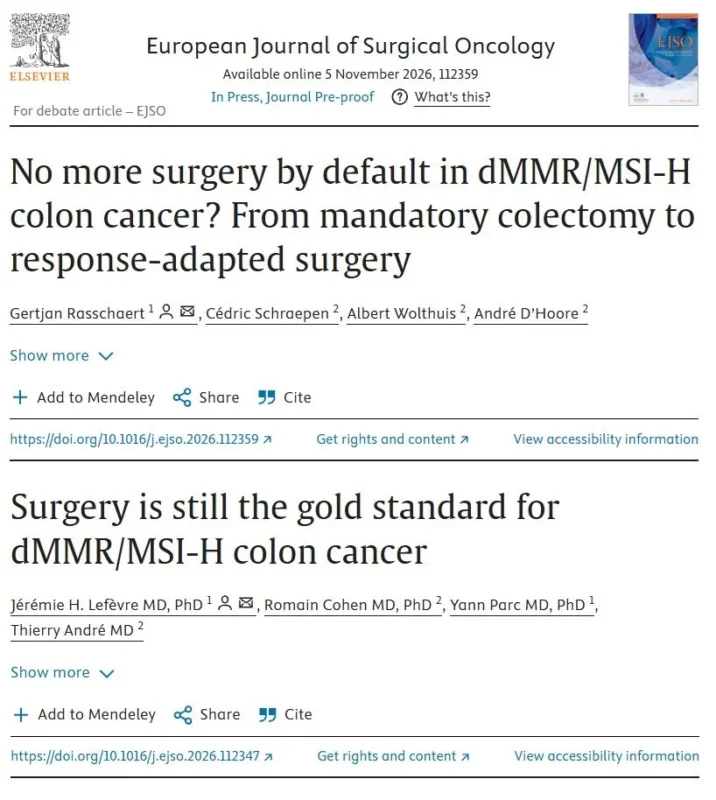
Happy to see our ‘For Debate’ article “No more surgery by default in dMMR/MSI-H colon cancer? From mandatory colectomy to response-adapted surgery” now published in EJSO — alongside the counterpoint from our friends and colleagues in Paris.
The idea grew out of a debate Jeremie Lefevre and I had at the ESCP26 Congress in Prague in September. With the extraordinary responses we now see after neoadjuvant immunotherapy in dMMR/MSI-H colon cancer, the question is no longer simply whether immunotherapy works — but whether surgery must remain mandatory in every patient in whom it works completely.
As an oncologist, I feel particularly fortunate to work at UZ Leuven with progressive surgeons who are open-minded to argue for less surgery from within surgery itself when the biology and the interests of the patient ask us to.
That same mindset was there already from day one when we started building our Belgian neoadjuvant CRC platform around AZUR-4 a couple years ago. Very fittingly, AZUR-4 now completed full recruitment last month.
And perhaps even more importantly, the operational success of that platform is now allowing us to bring several new neoadjuvant trials to Belgium. More on those very soon.
Many thanks to Cédric Schraepen, Albert Wolthuis, André D’Hoore — and to Jérémy and our Paris colleagues Jérémy Lefèvre, Romain Cohen, Yann Parc and Thierry André for keeping this debate moving forward.
From mandatory surgery to conditional surgery.”
Arjen van der Veen — Radiation Oncology Resident, University Medical Center Utrecht (UMC Utrecht) | Netherlands
“Our new paper on cN3M0 esophageal cancer has been published in the Green Journal!
We found no significant difference in survival between neoadjuvant and definitive chemoradiotherapy. Many thanks to everyone involved, in particular Charlotte Hafkamp and Peter van Rossum for our close colleboration!”
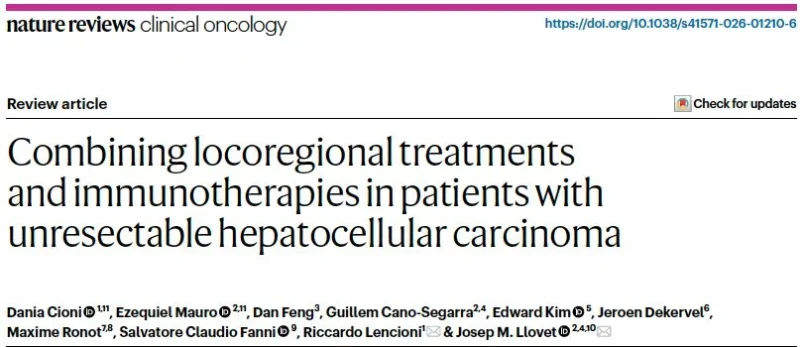
Ezequiel Mauro, MD, PhD — Clinical Coordinator of the ASPIRE Study Translational research in Liver Cancer, Liver Unit, IDIBAPS, Hospital Clínic Barcelona | Spain
“A hot topic in HCC: Locoregional therapies combined with immunotherapy. Are we ready to move forward?
Delighted to share our new review published in Nature Portfolio (Nature Reviews Clinical Oncology), exploring the biological rationale and emerging clinical evidence supporting LRT + immunotherapy in unresectable HCC.
Five phase III trials. Five positive PFS results.
EMERALD-1, LEAP-012, TALENTACE, SHR-1210-III-336, and EMERALD-3 have consistently demonstrated improvements in PFS.
Importantly, these trials were specifically designed and statistically powered to demonstrate a PFS benefit, NOT an OS benefit. And they successfully achieved their primary objective.
The critical question is: What should we do with five positive phase III trials that have delivered exactly what they were designed to demonstrate?
Should we continue waiting for mature OS data (2nd endpoint), or is the consistency of the PFS benefit sufficient to reconsider our treatment strategies?
An important discussion for the HCC community!”
Phebe Mawuena Afi Havor — Cancer Researcher in BradyNichollsLab | Doctoral Candidate Moffitt Cancer Center | Global Health Emerging Leader | Applied Mathematician | STEM Enthusiast | United States
“I’m excited to share that our preprint is now live on bioRxiv & medRxiv!
“Coupled Modeling of Tumor Volume and ctDNA Dynamics in HPV-Associated Anal Squamous Cell Carcinoma”
Response to anti-PD-1 immunotherapy in advanced HPV-associated anal cancer varies widely, and it’s usually assessed through imaging that happens infrequently and lags behind what the tumor is actually doing. Circulating tumor DNA (ctDNA) can be sampled often and reflects tumor activity in near-real time, but it’s rarely built into mechanistic models of treatment response.
Using longitudinal tumor volume and HPV ctDNA data from 26 patients treated with pembrolizumab, we found:
Baseline ctDNA tracked tumor burden but did not separate responders from non-responders
After just one treatment cycle, responders had a larger relative drop in ctDNA, six weeks before their next scan
We built an ordinary differential equation model linking tumor volume to the ctDNA released by tumor cells. Sensitivity, identifiability, and model-selection analyses reduced it to just two patient-specific parameters: proliferation and shedding rates
The model reproduced each patient’s tumor volume and ctDNA trajectories, including a transient ctDNA spike at treatment onset
Tumor proliferation was faster in non-responders
Together, this supports model-based, ctDNA-guided monitoring of immunotherapy response, which could mean earlier and more personalized treatment decisions for patients.Huge thanks to my advisor Dr. Renee Brady-Nicholls and our collaborators Dr. Brandon Huffman, Dr. James Cleary, and James Jabalee, and to the Integrated Mathematical Oncology department at Moffitt Cancer Center.”
Find out 10 Must-Read Posts in GI Oncology from the October 19 to 31 on OncoDaily.