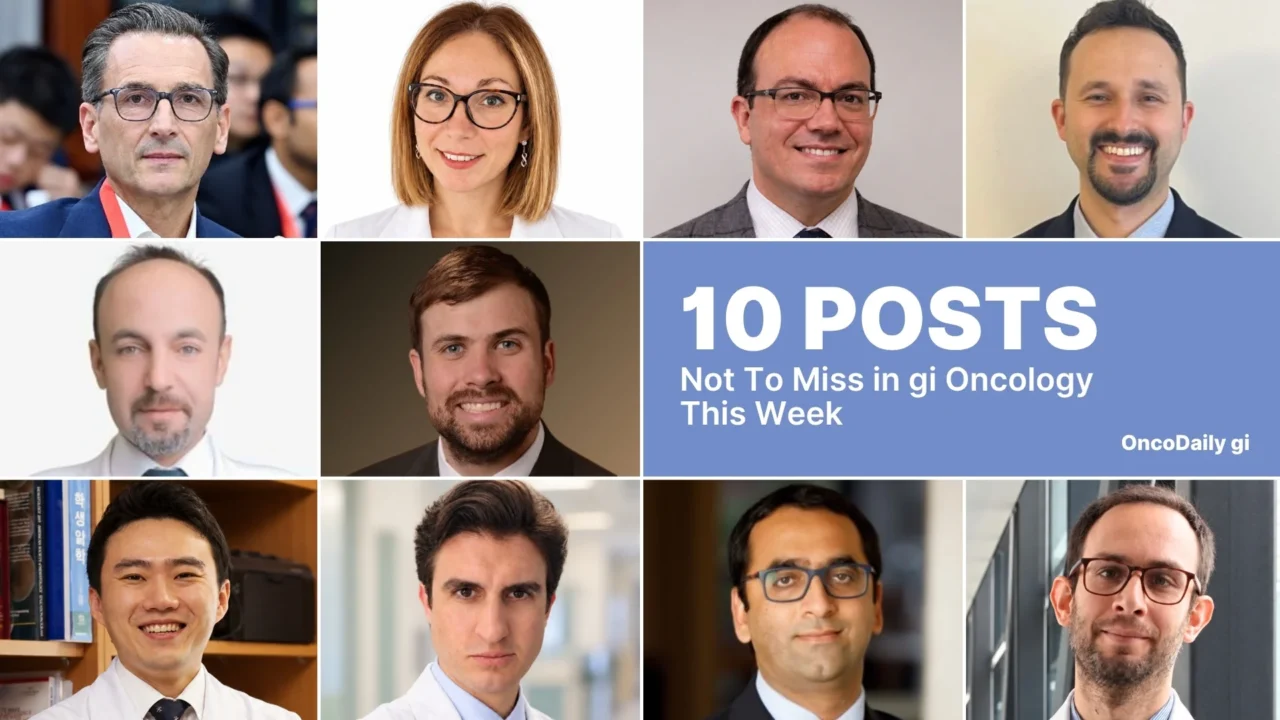
From October 19 to 31, GI Oncology discussions brought together important updates across biliary tract cancer, colorectal cancer, gastric cancer, pancreatic cancer, rectal cancer, esophageal cancer, and precision oncology, including new clinical trial findings, real-world evidence, regulatory developments, and research presented at ESMO 2026.
This selection includes updates on molecular profiling and access to matched targeted therapies in advanced biliary tract cancer, ctDNA-based molecular selection for anti-EGFR rechallenge in metastatic colorectal cancer, real-world studies exploring biomarker integration in metastatic gastric cancer and fruquintinib in heavily pretreated metastatic colorectal cancer, the phase 2 MASTERPLAN trial evaluating perioperative chemotherapy with or without stereotactic body radiotherapy in high-risk localized pancreatic cancer, and the FDA’s accelerated approval of dostarlimab for dMMR/MSI-H locally advanced rectal cancer.
Other posts highlight 5-year outcomes from the NICHE-2 trial evaluating neoadjuvant nivolumab plus ipilimumab, the phase 2 FIDES-01 study of derazantinib in previously treated cholangiocarcinoma with FGFR2 aberrations, transanal rectal transection and single-stapled anastomosis for natural orifice specimen extraction in rectal cancer surgery, findings from the ARION trial evaluating durvalumab added to chemoradiotherapy in esophageal cancer, and a KRAS-targeted vaccine study presented at ESMO 2026 alongside its publication in Nature Medicine.
Together, these posts reflect the continued evolution of GI oncology across biomarker-driven treatment selection, targeted therapy, immunotherapy, radiotherapy, surgical innovation, cancer vaccines, regulatory advances, and real-world clinical research.
Changhoon Yoo — Medical Oncologist; Associate Professor, Asan Medical Center | South Korea
“Same first-line therapy, different second chances: what a US–Korea comparison tells us about precision oncology in biliary tract cancer
Proud to share our new paper in ESMO Gastrointestinal Oncology, a collaboration between Asan Medical Center and MD Anderson Cancer Center.
We compared 375 patients with advanced BTC treated with first-line gemcitabine–platinum plus an immune checkpoint inhibitor (GP-ICI) at MDACC (n=121) and AMC (n=254).
First-line GP-ICI works consistently across continents. Despite very different tumor-site distributions (iCCA 72% at MDACC vs. eCCA 42% at AMC), ORR, PFS, and OS were comparable, and cohort was not an independent prognostic factor.
The gap opens after progression. Median post-progression survival was 13.1 vs. 5.8 months (P=0.002).
Molecular profiling and drug access drive the difference. Actionable alterations were equally common (28.4% vs. 32.5%), with IDH1/FGFR2 enriched at MDACC and HER2 at AMC.
However, 95.9% vs. 47.2% of patients underwent profiling, and 75.8% vs. 12.8% of patients with actionable alterations received matched targeted therapy.
Matched targeted therapy was associated with substantially longer PPS (HR 0.15; HR 0.33 in time-dependent analysis).
The message is clear: in BTC, the actionable target is often already there. What determines outcome is whether we test for it and whether patients can actually access the matched drug. In Korea, limited NGS reimbursement and unreimbursed agents such as ivosidenib, futibatinib, trastuzumab deruxtecan, and zanidatamab remain real barriers that we must close.”
Davide Ciardiello — Medical Oncologist, Division of Gastrointestinal and Neuroendocrine Tumors, European Institute of Oncology (IEO) | Italy
“Proud ti share our latest study that has been presented today as s poster 807 at the ESMO meeting with a concomitant pubblication in ESMO Open.
For anti-EGFR rechallenge therapy It is time to consider a better molecular selection ‘negative hyperselection’ rather than RAS/BRAF +/-EGFR.
To confirm this data we are currently conducting the ROMANCE trial (NCT07381764) evalueting irinotecan plus cetuximab rechallenge therapy vs trifluridine/tipiracil+bevacizumab in patients with ctDNA negative hyperselected tumors.”
Maria Maddalena Laterza, MD, PhD — Medical Oncologist, Ospedale Santa Maria delle Grazie; OncoDaily Ambassador | Italy
“Wrapping up another inspiring day at ESMO Congress 2026 in Madrid!
Proud to contribute as OncoDaily Ambassador and as part of the GOY (Gruppo Oncologico Young) to the advancement of oncology research.
Today, we presented two real-world studies exploring:
The importance of early biomarker integration in multidisciplinary decision-making for metastatic gastric cancer, highlighting its potential to improve treatment selection and clinical outcomes.
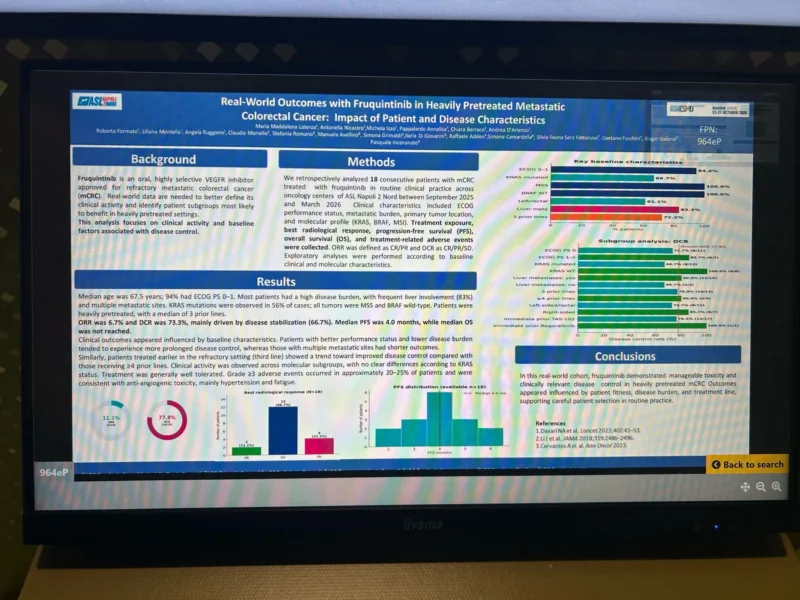
Fruquintinib in heavily pretreated metastatic colorectal cancer, exploring real-world effectiveness and the impact of patient and disease characteristics on treatment outcomes.
Two different studies, one shared goal: turning real-world evidence into better, more personalized cancer care.
Proud of our team and grateful for this opportunity to share our research with the international oncology community!”
Erman Akkus — MD; Medical Oncology and Internal Medicine; GI Oncology; Yedikule EAH | Turkey
“Perioperative chemotherapy and stereotactic body radiotherapy versus perioperative chemotherapy alone in patients with high-risk, localised pancreatic cancer (MASTERPLAN): an open-label, phase 2, multicentre, randomised trial of the Australasian Gastro-Intestinal Trials Group”
Michael Sapienza — Chief Executive Officer; Advocate; Caregiver; Strategist; Fundraiser; Connector | United States
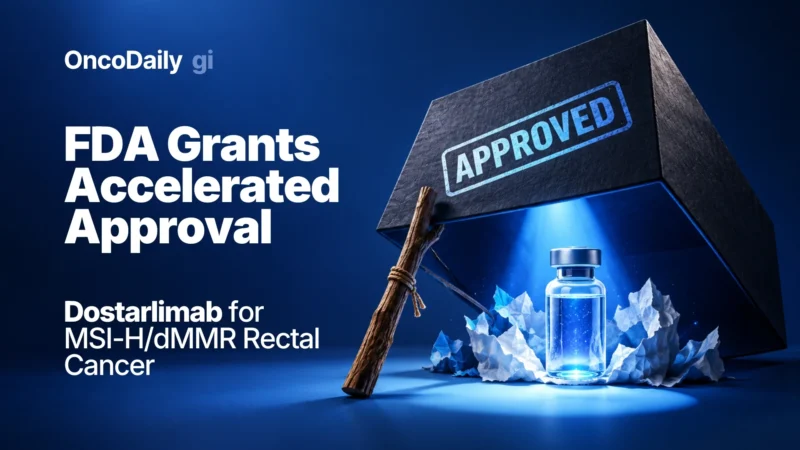
“Big news for the CRC community: the FDA has granted accelerated approval to dostarlimab (Jemperli), an immunotherapy treatment for adults with stage II/III mismatch repair-deficient (dMMR) or microsatellite instability-high (MSI-H) locally advanced rectal cancer.
This is groundbreaking news for eligible patients because it may help them avoid chemotherapy, radiation, and surgery, which can affect quality of life long after treatment ends.
People facing rectal cancer are often thinking not only about treating their disease, but also about what life will look like afterward. This approval is a meaningful advance for patients and their families. It is also an important reminder that biomarker testing at diagnosis is essential. It’s the only way to identify patients who may be eligible for new treatments, and help them understand all of their options.”
Yakup Ergün — Medical Oncologist; Clinical Trial Interpretation, Critical Appraisal and Practical Treatment Algorithms | Turkey
“NICHE-2 | 5-year results
Just 2 doses of neoadjuvant nivo + 1 dose of ipi, followed by surgery…
Not a single recurrence after nearly 5 years of follow-up, and 5-year OS was 100%!
What more could we ask for?
I’m truly at a loss for words”
Arndt Vogel — Professor of Gastrointestinal Oncology, Department of Gastroenterology, Hepatology and Endocrinology, Hannover Medical School | Germany
“Pivotal Phase 2 study of derazantinib for previously-treated CCA with FGFR2 aberrations: FIDES-01
HEP_Journal
ORR 22%, DCR 72%, mPFS 8.2 mo, mOS 17.2 mo
some efficacy in mut/amp GA
Overall consistency, and Pemi, Futi & Lira approved”
Fabio Carbone — Colorectal Surgeon | Italy
“Beyond minimally invasive surgery: can we make rectal cancer surgery even less invasive?
Delighted to share our latest study, now published in Surgical Endoscopy!
We investigated how transanal rectal transection and single-stapled anastomosis (TTSS) can facilitate natural orifice specimen extraction (NOSE), avoiding an additional abdominal incision during restorative total mesorectal excision (TME).
Our propensity score-matched analysis of 208 patients with low rectal cancer demonstrated:
Fewer wound complications: 2.9% vs 14.4% (p = 0.003)
Lower odds of wound complications: OR 0.17 (95% CI 0.05–0.62; p = 0.007)
Significantly less postoperative pain at 24 and 48 hours
Comparable overall postoperative morbidity
The key message?The future of minimally invasive colorectal surgery is not simply about smaller incisions or more advanced technology. It is about rethinking surgical strategies to minimise tissue trauma whilst preserving surgical precision and oncological principles.
Integrating transanal NOSE into the TTSS approach may represent another step towards truly incision-sparing rectal cancer surgery.
Further prospective validation is warranted.
My sincere thanks to all co-authors for their invaluable contributions, particularly Prof Antonino Spinelli and Michele Carvello for their leadership and commitment to advancing colorectal surgery.”
Jeff Ryckman, MD, MSMP — Physician; Former Medical Physicist; Founder, RadOncReview.org | United States
“ARION adds to the negative IO+CRT story in esophageal cancer.
Durvalumab + FOLFOX/50 Gy in 25 fx: PFS HR 0.91 (95% CI 0.55-1.49), OS HR 0.99.
Only 112 pts, mostly SCC. No demonstrated benefit from adding durva here.”
Pashtoon Kasi, MD, MS — Oncologist and Researcher; Colorectal Cancer, ctDNA, Liquid Biopsies and Precision Oncology; City of Hope, Irvine | United States
“ESMO26
Our trial of the KRAS vaccine presented today alongside concurrent publication in Nature Medicine!
The RAS-revolution continues. Excited about future development, role of ctDNA, and combinatorial strategies.
G12D R V S A C & G13D”
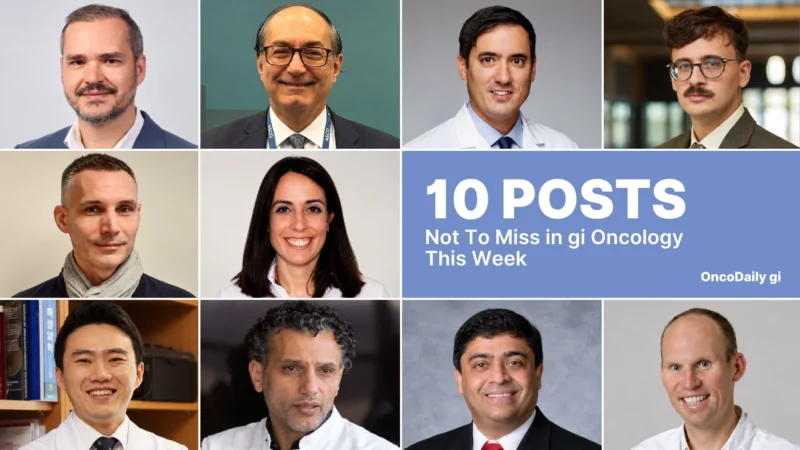
Find out 10 Must-Read Posts in GI Oncology from the October 12 to 18 on OncoDaily.