Key takeaways
- A slow molecular response does not always mean treatment failure, and switching TKIs too early may expose patients to unnecessary toxicity.
- The strongest TKI is not necessarily the best choice for every patient, as age, comorbidities, tolerability, and treatment goals all influence long-term CML management.
- Not all BCR::ABL1 mutations respond to the same treatment, making mutation testing essential for selecting the next TKI when resistance develops.
- Resistance can be detected before it becomes clinically apparent, as NGS can identify low-frequency mutations that conventional Sanger sequencing may miss.
- Compound mutations can leave patients resistant to multiple TKIs, highlighting the importance of early molecular assessment and timely consideration of stem cell transplantation in difficult-to-treat cases.
At LeukO 2026: Global Virtual Congress on Leukemias, organized by OncoDaily, Giuseppe Saglio, Emeritus Professor of Hematology and Internal Medicine at the University of Turin, Italy, explored one of the most challenging aspects of chronic myeloid leukemia (CML) management: resistance to tyrosine kinase inhibitors (TKIs), particularly resistance driven by BCR::ABL1 mutations.
TKIs have transformed CML treatment, allowing most patients to achieve long-term disease control. But not every patient responds as expected, and some eventually develop resistance to multiple therapies.
With newer agents such as asciminib expanding treatment options, understanding the mechanisms behind resistance has become increasingly important. Yet a poor molecular response does not always mean that a treatment has failed, and changing therapy too quickly can expose patients to unnecessary toxicity.
When should clinicians continue treatment, when should they switch, and how can molecular testing help them make the right decision?
Choosing the Right TKI From the Beginning
BCR::ABL1 tyrosine kinase inhibition remains the foundation of CML treatment. Although several combinations involving TKIs have been investigated, they have not demonstrated sufficient clinical benefit to become routine practice, and some have increased toxicity and reduced treatment tolerability.
The growing number of available TKIs has made treatment selection more individualized.
Imatinib remains an established first-line option, while second-generation agents such as nilotinib and dasatinib can achieve faster and deeper molecular responses. Asciminib, which works through a different mechanism, has introduced another option for newly diagnosed patients in countries where it is approved and accessible.
However, choosing the most potent treatment is not always the best strategy for every patient.
Italian clinical practice data presented by Saglio showed that approximately half of patients began treatment with imatinib, while the remainder predominantly received second-generation TKIs.
Age was an important factor influencing the choice of treatment.
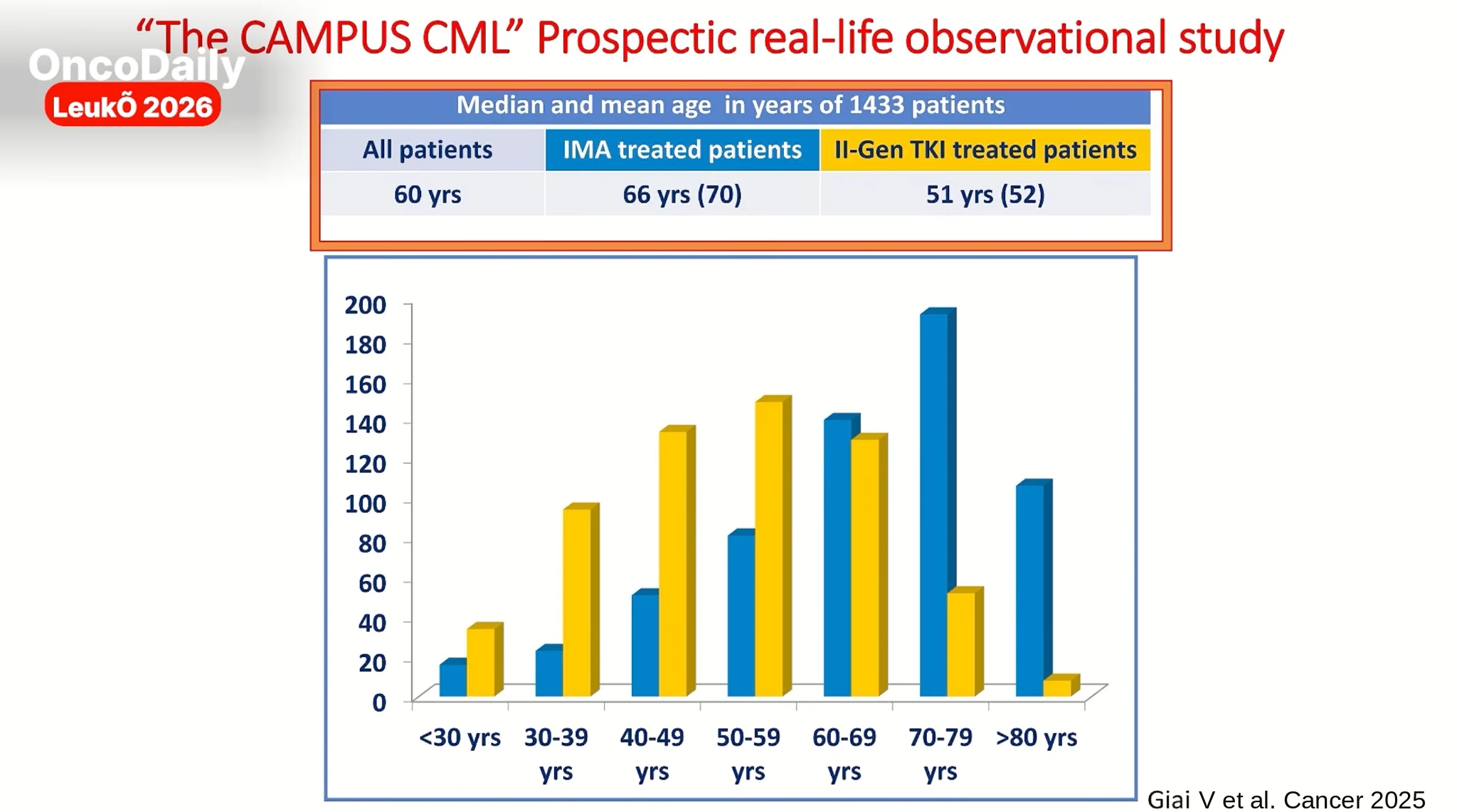
Physicians tended to prescribe second-generation TKIs to younger patients, particularly when achieving a deep molecular response and potentially attempting treatment-free remission were important goals.
Older patients were more frequently treated with imatinib. The mean age was approximately 66 years among imatinib recipients, compared with 51 years among those receiving second-generation TKIs.
This difference reflects an important consideration in CML management: although newer-generation TKIs can produce deeper molecular responses, they have not consistently demonstrated an overall survival advantage over imatinib in first-line comparative trials.
For some patients, particularly those with significant comorbidities, long-term tolerability and maintaining disease control may take priority over achieving the deepest possible response.
Why Do Patients Change Treatment?
Data from more than 1,500 patients also illustrated how treatment discontinuation patterns differ between TKIs.
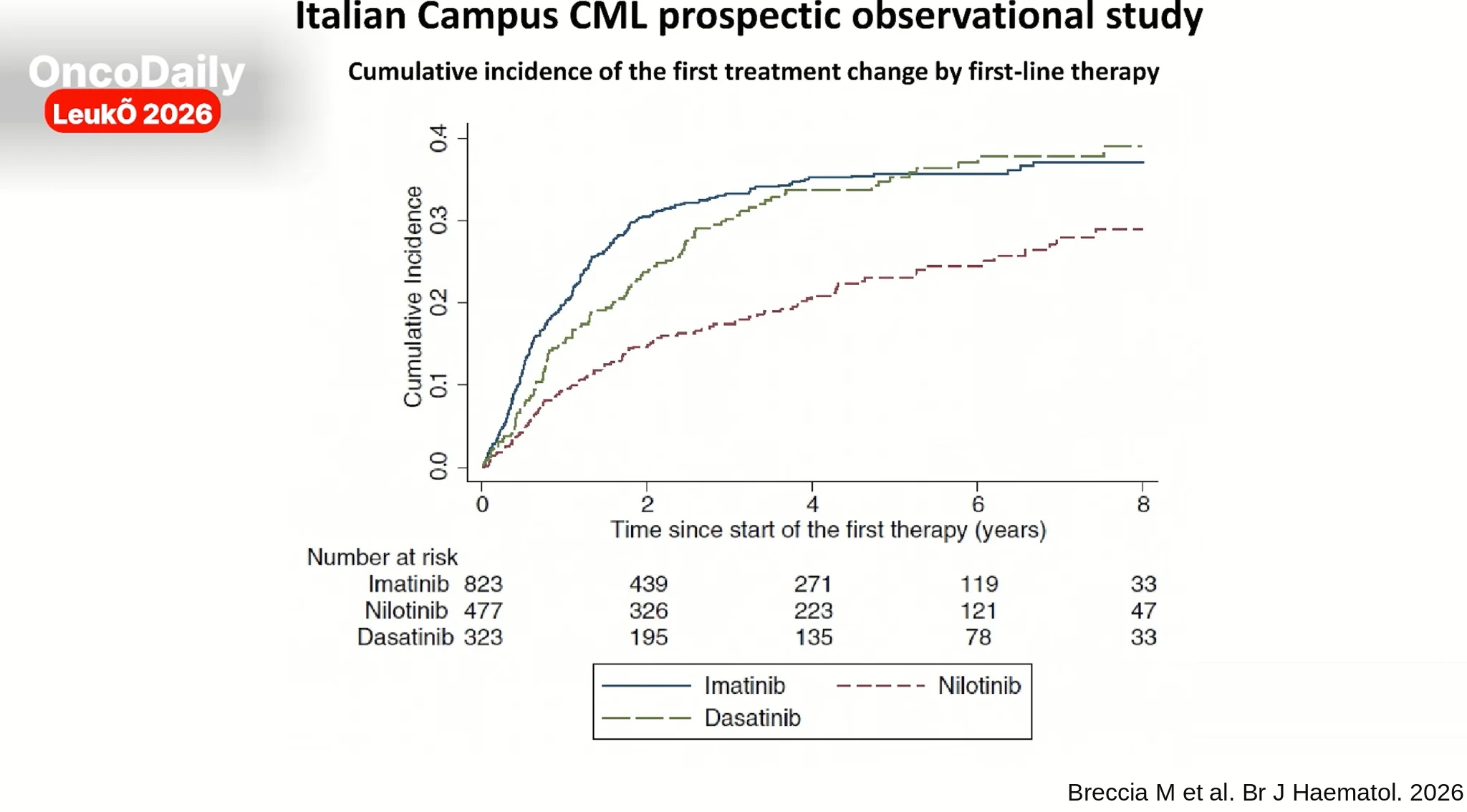
Approximately 30% of patients receiving imatinib or dasatinib discontinued their initial treatment during follow-up, while nilotinib showed greater treatment persistence in the population presented.
The reasons were different.
Dasatinib discontinuation was more frequently associated with intolerance, particularly pleural effusion, which can develop after several years of treatment. Intolerance affected approximately 20% of dasatinib-treated patients, compared with around 10% of those receiving nilotinib.
Resistance showed the opposite pattern, occurring more frequently with imatinib than with second-generation TKIs.
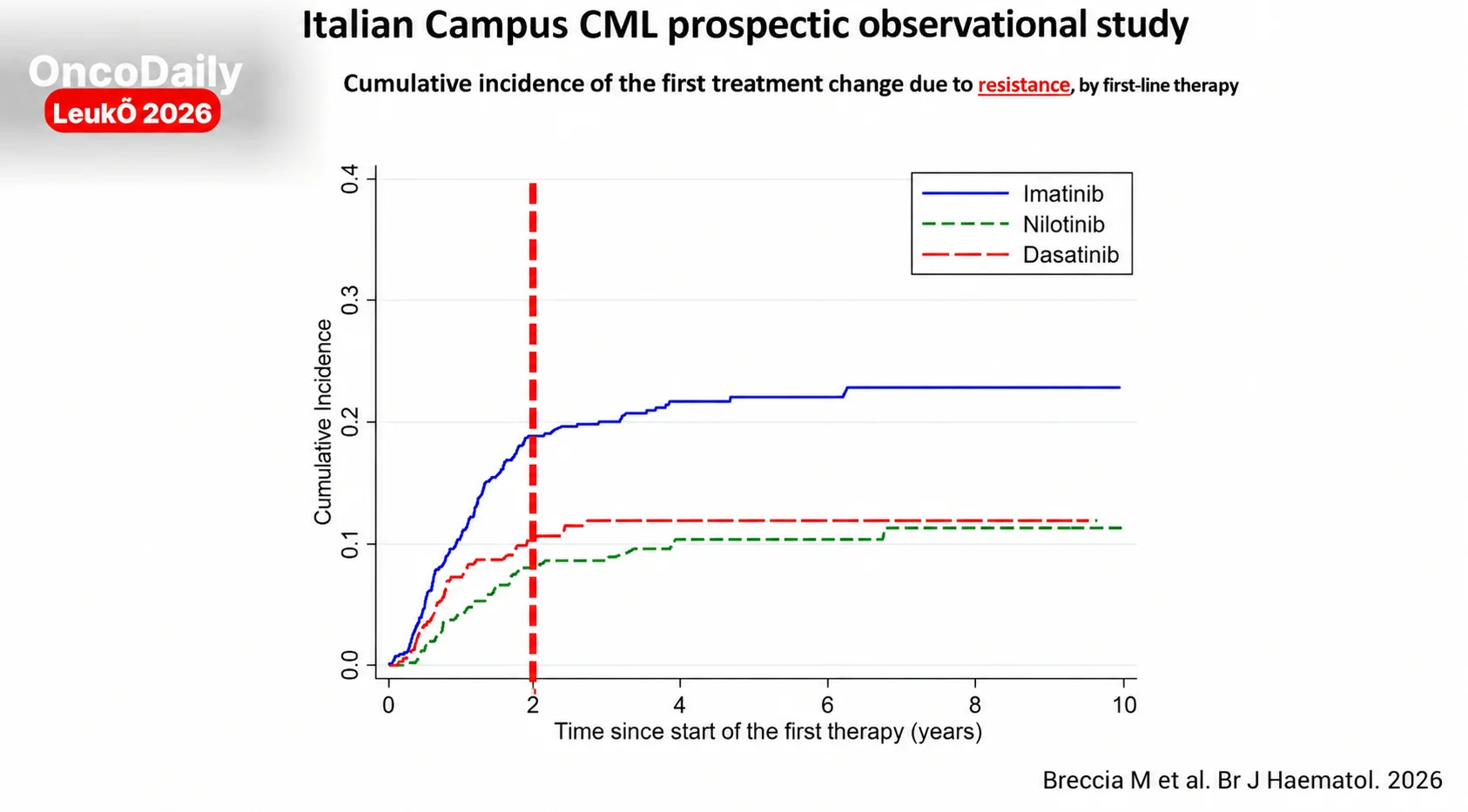
These differences matter because switching treatment for toxicity is not the same as switching because the leukemia has become resistant.
Recognizing the reason for an inadequate response or treatment discontinuation is essential before choosing the next therapy.
When a Slow Response Is Not Treatment Failure
One of the most important changes in CML management concerns how clinicians interpret molecular response milestones.
The 2025 European LeukemiaNet (ELN) recommendations, which Saglio helped develop, introduced a more individualized approach to assessing treatment response.
Previously, molecular results that failed to reach specific thresholds were often classified as treatment failure, prompting consideration of a TKI switch.
The updated recommendations use three categories:
- Favorable: Treatment is working as expected, and switching is generally unnecessary.
- Warning: Response is less than optimal, requiring closer assessment and potentially a treatment change.
- Unfavorable: There is a greater risk of resistance, and switching treatment is generally preferred after considering the clinical context.
The important change is that a single molecular result should not automatically determine whether treatment is changed.
For example, a patient who has not reached the expected BCR::ABL1 threshold but whose transcript levels continue to decline may still achieve a clinically meaningful response.
Long-term findings from the German CML Study IV helped inform this approach.
The study showed that some patients who missed early molecular milestones nevertheless achieved favorable long-term survival while remaining on their initial treatment.
Patients with BCR::ABL1 levels between 1% and 10% at certain later assessments could still experience relatively good long-term outcomes, particularly when their molecular response was stable or improving.
However, persistent high disease burden remains concerning. Patients with BCR::ABL1 levels above 10% after 12 months had substantially worse outcomes, supporting the need for further investigation and treatment modification.
The distinction between a delayed response and genuine resistance is therefore critical.
Before changing therapy, clinicians should examine the trend in molecular results, assess adherence, review dose reductions or interruptions, and consider the patient’s comorbidities and treatment goals.
For a younger patient aiming to achieve a deep molecular response and eventually attempt treatment-free remission, switching to a more potent TKI may be appropriate. For an older patient with stable disease and substantial comorbidities, the risks and benefits may be different.
The goal is to recognize resistance early without abandoning a treatment that may still be providing meaningful disease control.
How Does CML Become Resistant to TKIs?
Understanding the biological mechanisms of resistance is essential when deciding which treatment to use next.
Saglio distinguished between two broad mechanisms.
- The first involves the inability of a TKI to effectively inhibit BCR::ABL1 kinase activity. This can occur when mutations alter the structure of the kinase, preventing a drug from binding effectively. Other contributing mechanisms include amplification of BCR::ABL1 or inadequate intracellular drug exposure.
- The second involves the emergence of additional biological changes that allow leukemia cells to survive or expand despite suppression of BCR::ABL1. These may include clonal evolution, additional cytogenetic abnormalities, or mutations affecting other myeloid-associated genes.
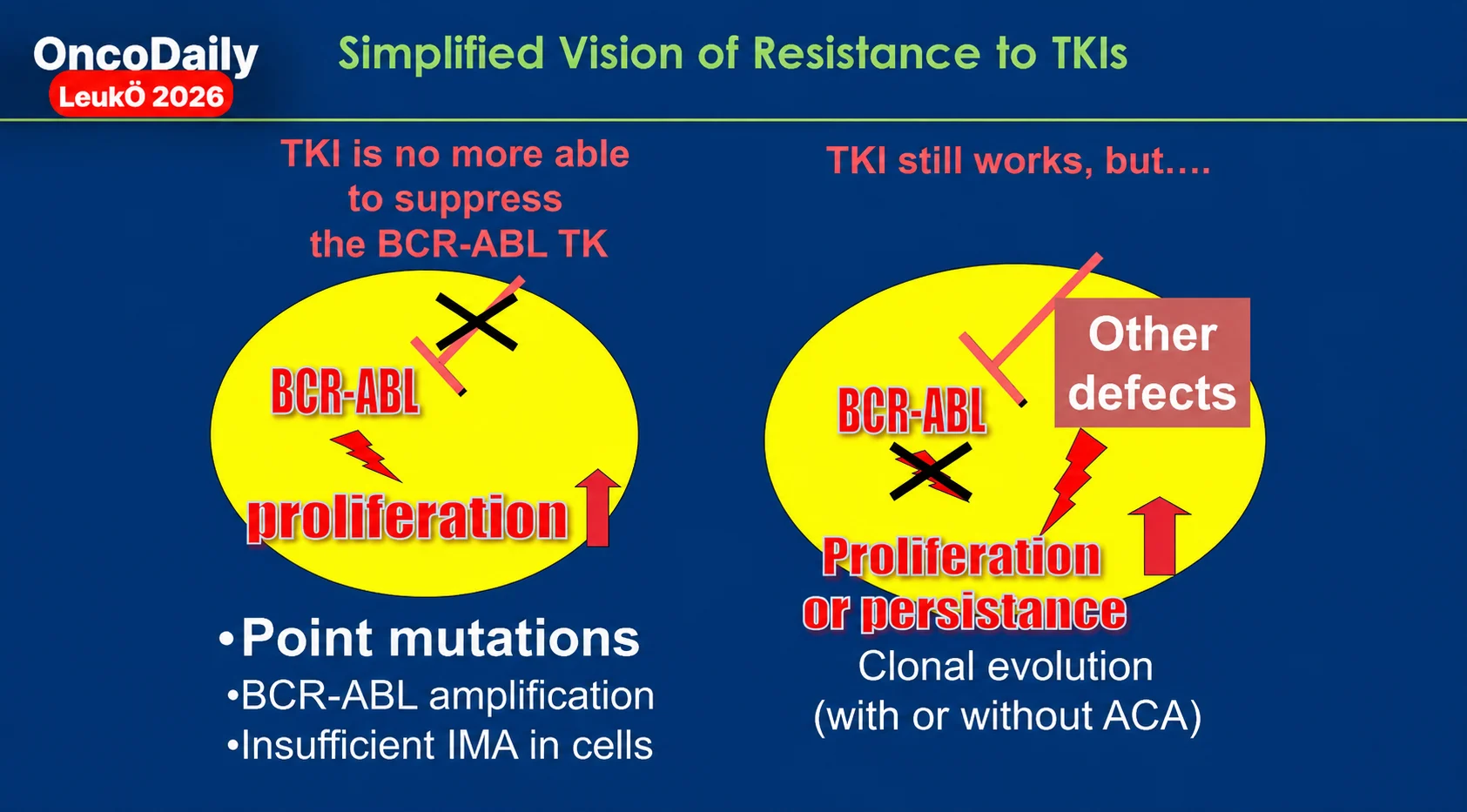
Among these mechanisms, BCR::ABL1 kinase domain mutations remain particularly important because they can directly influence TKI selection.
Different mutations confer resistance to different agents, making mutation identification valuable when a patient develops an unfavorable molecular response.
One of the best-known examples is T315I, a mutation that prevents effective inhibition by several conventional TKIs.
Ponatinib has become an important option for patients with T315I-mutated CML, although its use requires careful assessment of cardiovascular risk. Asciminib at a higher, mutation-specific dose is another option in appropriate settings.
Other mutations, including E255K, F317L, and F359V, have different sensitivity profiles, influencing which TKI is most likely to be effective.
Treatment selection after resistance should therefore be guided by the specific mutation whenever testing is available, rather than simply moving from one drug to the next.
Asciminib: A Different Target, but Resistance Is Still Possible
The introduction of asciminib represents an important development in CML treatment because it inhibits BCR::ABL1 through a mechanism distinct from conventional ATP-competitive TKIs.
Traditional agents, including imatinib, dasatinib, nilotinib, and ponatinib, interact with the ATP-binding site of the kinase.
Asciminib instead binds to the ABL1 myristoyl pocket, stabilizing an inactive conformation of BCR::ABL1 and suppressing its kinase activity.
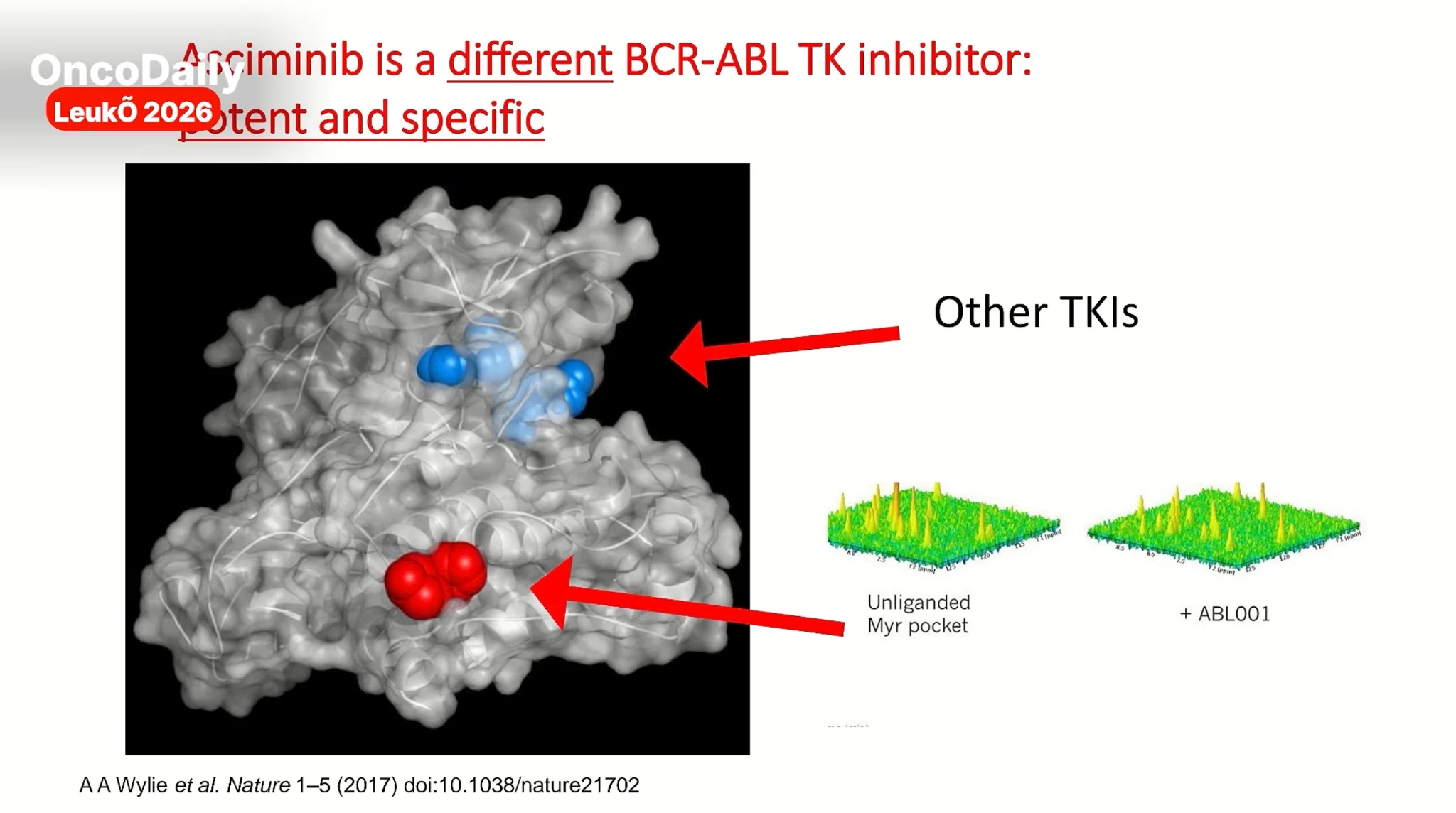
This alternative binding site offers a potential advantage against certain mutations that reduce sensitivity to ATP-competitive inhibitors.
Clinical trials, including ASC4FIRST, have demonstrated encouraging efficacy and tolerability with asciminib, supporting its growing role in both first-line and later-line treatment.
However, its different mechanism does not eliminate the possibility of resistance.
As expected, some resistance-associated mutations occur directly within or near the myristoyl-binding pocket, interfering with asciminib’s activity.
More unexpectedly, research has identified mutations located elsewhere in the BCR::ABL1 molecule that can also reduce sensitivity to asciminib.
Saglio drew particular attention to M244V and F359V.
Although these mutations are situated outside the myristoyl pocket, they can affect the kinase’s conformation in ways that interfere with asciminib-mediated inhibition.
The findings suggest that resistance is not determined solely by whether a mutation directly alters a drug’s binding site. Structural changes elsewhere in the protein can also influence whether the inhibitor remains effective.
Emerging data from first-line asciminib studies indicate that resistance-associated mutations are relatively uncommon, an encouraging finding for the drug’s long-term use.
Nevertheless, identifying the mutations that do emerge remains important, particularly as asciminib becomes more widely used earlier in treatment.
When Multiple Mutations Occur Together
An additional challenge arises when leukemia cells acquire compound mutations, meaning two or more mutations are present within the same BCR::ABL1 molecule.
These mutations may confer resistance to several TKIs simultaneously, including drugs that would otherwise be active against the individual mutations.
Compound mutations involving T315I are particularly concerning because they can substantially limit available treatment options.
They also illustrate why sequential exposure to multiple TKIs does not always provide a lasting solution.
Resistant subclones may already exist at low levels before they become clinically apparent. Under treatment pressure, clones that are less sensitive to a particular TKI can survive and expand.
Over time, additional mutations may accumulate, making disease control increasingly difficult.
This raises an important therapeutic question: Could identifying resistant clones before they become dominant help prevent the development of more complex resistance?
The answer may lie in more sensitive molecular testing, which can detect emerging mutations earlier and provide a clearer picture of why treatment is failing.
Saglio presented an illustrative case in which a patient initially treated with imatinib developed an E255K mutation after an incomplete molecular response.
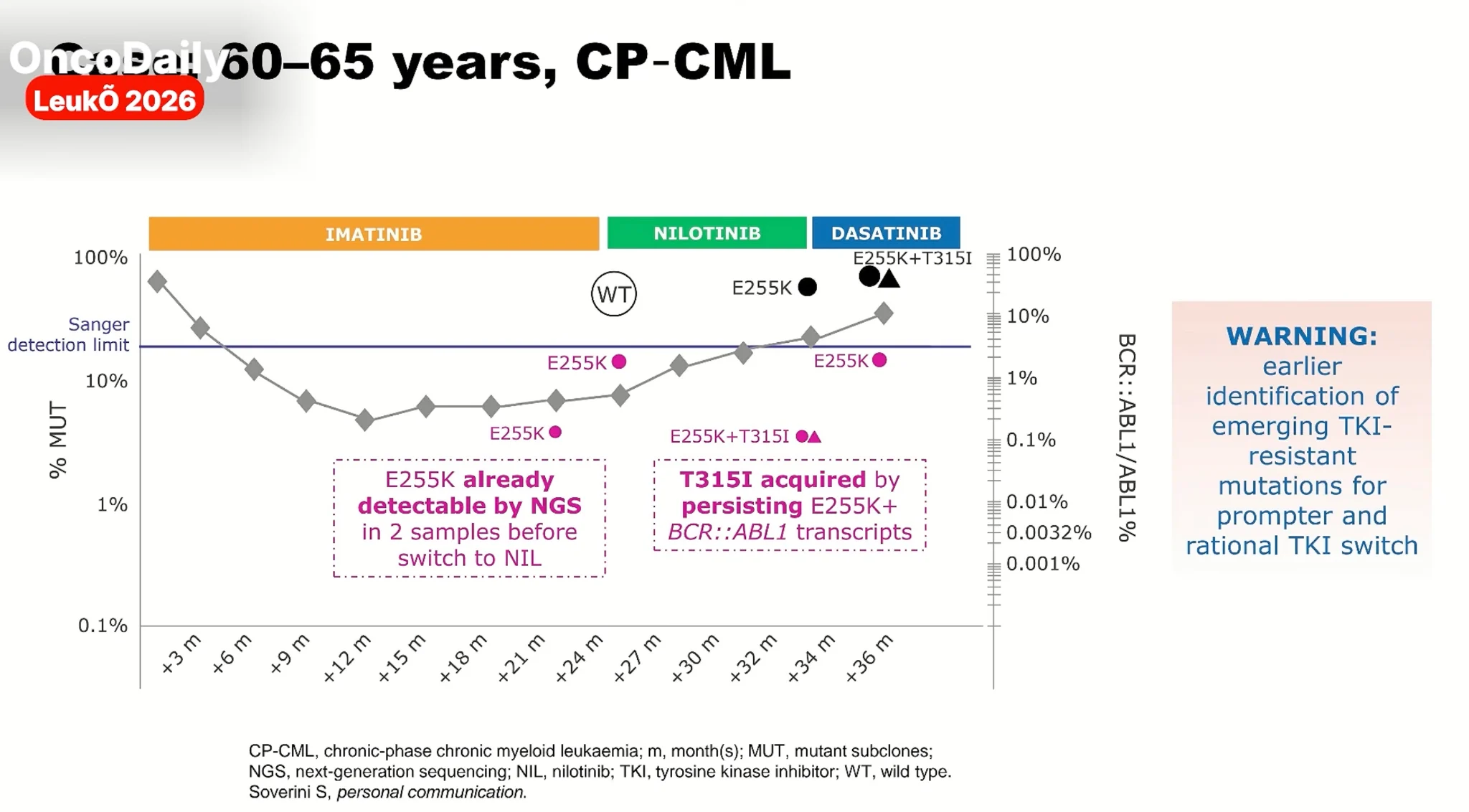
Treatment was subsequently changed to nilotinib and then dasatinib as resistance persisted.
Over time, a compound mutation emerged, substantially limiting the available therapeutic options.
Importantly, more sensitive molecular testing could identify resistant mutations before they became detectable through conventional methods.
Traditional Sanger sequencing generally requires a mutated clone to represent approximately 20% of the leukemic population before it can be reliably detected.
By contrast, validated next-generation sequencing (NGS) assays can identify resistant clones at substantially lower frequencies, sometimes around 1–2%.
This improved sensitivity may help detect emerging resistance earlier, when a change in therapy could prevent further expansion of the resistant clone.
NGS can also help identify compound mutations, provided the assay is designed to determine whether mutations occur within the same BCR::ABL1 molecule.
These capabilities are particularly relevant for patients receiving multiple lines of therapy or those with rising BCR::ABL1 levels despite treatment.
However, detecting a mutation does not always mean that an immediate treatment switch is necessary. Its clinical significance depends on the mutation identified, its frequency, whether it confers resistance to the current TKI, and the patient’s molecular response over time.
The 2025 ELN recommendations favor validated NGS-based mutation testing when resistance is suspected, while recognizing that Sanger sequencing remains acceptable where NGS is unavailable.
For many patients worldwide, access to specialized mutation testing is still limited.
In those settings, treatment decisions must rely more heavily on molecular response patterns, clinical characteristics, previous therapies, and the known resistance profiles of available TKIs.
What Happens When Multiple TKIs Have Failed?
Despite the growing number of available TKIs, resistance after multiple lines of therapy remains a significant challenge. For patients who initially received imatinib, switching to a second-generation TKI may restore disease control. Following resistance to these agents, ponatinib or asciminib may offer further options, depending on the mutation profile, previous treatment, and comorbidities. Newer agents, including olverembatinib, are also expanding treatment possibilities.
For patients with persistent disease despite several TKIs, allogeneic stem cell transplantation remains an important option. The 2025 ELN recommendations support early donor searches in eligible patients who develop resistance to second-generation TKIs, particularly as treatment options become more limited.
Ultimately, successful management of resistant CML depends on knowing when to act and when to continue a treatment that is still providing benefit. Molecular monitoring and mutation testing can guide these decisions, helping clinicians recognize emerging resistance without making unnecessary treatment changes.
The more precisely resistance can be identified, the better the opportunity to select an effective treatment before the disease becomes increasingly difficult to control.
Written by Eliz Baloyan, MD, Features Writer and Editor at OncoDaily and CancerWorld