LeukO 2026: Global Virtual Congress on Leukemias will take place on September 3–4, 2026, bringing together international leaders in hematology, leukemia research, transplantation, cellular therapy, supportive care, and patient advocacy for two days of scientific exchange.
Held virtually as part of the OncoDaily O Series, the congress will cover more than 40 scientific topics, spanning leukemia diagnosis and molecular characterization, contemporary treatment strategies, emerging therapies, transplantation, survivorship, global access, and healthcare policy.
The program is designed around both the rapidly changing science of leukemia and the practical challenges clinicians face when translating advances into care.
Two Days Across the Full Spectrum of Leukemia Care
Leukemias remain an important part of the global cancer burden. Although survival has improved substantially over recent decades, outcomes continue to vary according to leukemia subtype, patient age, disease biology, access to specialized treatment, and regional healthcare resources.
Relapse, treatment resistance, treatment-related toxicity, and unequal access to advanced leukemia care remain particularly important challenges in acute leukemias, high-risk disease, and relapsed or refractory settings.
Against this background, LeukO 2026 will bring specialists from across disciplines and regions into one international forum focused on current evidence, clinical practice, and the future direction of leukemia care.
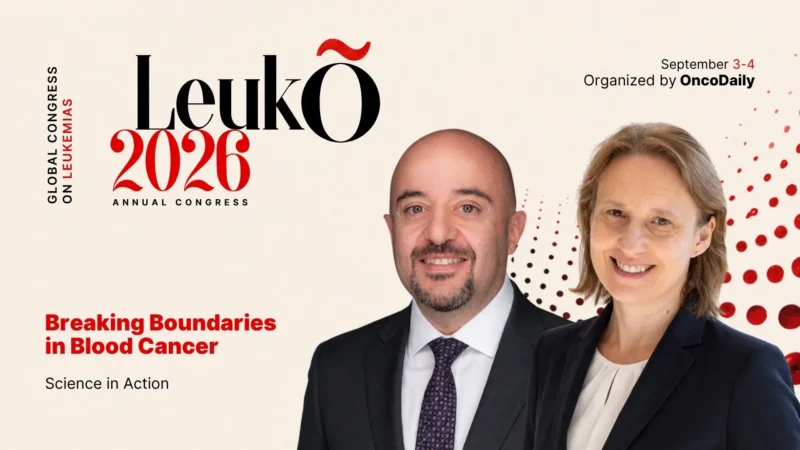
Scientific Leadership by Marina Konopleva and Rami Komrokji
The congress will be led by Marina Konopleva, Director of the Leukemia Program at Montefiore Einstein Comprehensive Cancer Center, Co-Director of the Translational Blood Cancer Institute, and Professor of Oncology and Molecular Pharmacology at Albert Einstein College of Medicine.
She will be joined in the scientific leadership by Rami Komrokji, Vice Chair of the Department of Malignant Hematology at Moffitt Cancer Center, Senior Member of the Malignant Hematology and Experimental Therapeutics Program, and Professor of Medicine and Oncologic Sciences at the University of South Florida College of Medicine.
Together, they will lead a program bringing perspectives from clinical practice, translational research, emerging therapeutics, and global leukemia care.
An International Faculty Across Hematology and Oncology
LeukO 2026 will feature an international group of specialists and advocates working across adult and pediatric leukemia.
Confirmed speakers include Giuseppe Saglio, Naval Daver, Maro Ohanian, Gabriele Todisco, Alexander Perl, Naveen Pemmaraju, Sarah Tasian, Scott Howard, Donjeta Bali Alia, Rawad Rihani, Anna Avagyan, and Maha AlDoughaim.
The congress will also include perspectives from patient advocacy and the broader leukemia community, with participation from Manette Le Grange, Executive Director of ACT 4 Children; Natalia Vilcu-Bajurean, President of Life Without Leukemia; Pat Garcia-Gonzalez, Chief Executive Officer of The Max Foundation; and Chandan Kumar, an acute lymphoblastic leukemia survivor.
From Molecular Genetics to MRD: Starting With the Foundations
The scientific program will begin with the foundations of modern leukemia care.
Sessions will examine global epidemiology, contemporary diagnostic approaches, molecular genetics, risk stratification, and minimal and measurable residual disease assessment.
The program will also explore the emerging role of artificial intelligence and digital pathology in leukemia diagnosis, reflecting the growing importance of technology alongside molecular and laboratory advances.
These discussions will establish the framework for disease-specific sessions addressing the major leukemia subtypes.
CML and CLL: Treatment Beyond Disease Control
Dedicated sessions on chronic myeloid leukemia (CML) will examine long-term treatment outcomes, treatment-free remission, resistant disease, BCR::ABL mutations, asciminib, and next-generation tyrosine kinase inhibitors.
For chronic lymphocytic leukemia (CLL), the program will address diagnosis and prognostication, continuous versus fixed-duration BTK inhibitor therapy, venetoclax-based regimens, Richter transformation, and approaches to relapsed or refractory disease.
Together, these sessions will examine how treatment strategies continue to evolve as increasingly sophisticated therapeutic options become incorporated into clinical practice.
AML: From Frontline Therapy to Molecularly Targeted Treatment
Acute myeloid leukemia (AML) will represent another major focus of LeukO 2026.
The program will cover diagnostic and prognostic advances, frontline treatment for fit patients, management of older and unfit patients, and strategies for relapsed or refractory AML.
Molecularly targeted treatment will be examined through discussions involving FLT3, IDH1/2, TP53, and other molecular targets, alongside MRD-guided treatment approaches and post-transplant maintenance.
The sessions will connect molecular characterization with increasingly individualized therapeutic decision-making across different stages of AML care.
ALL: A Rapidly Changing Treatment Landscape
The congress will also dedicate extensive attention to acute lymphoblastic leukemia (ALL).
Sessions will examine contemporary management of B-cell ALL, as well as CAR-T cell therapy, bispecific antibodies, relapsed or refractory ALL, T-cell ALL, and recent innovations in pediatric ALL.
By bringing adult and pediatric perspectives into the same congress, LeukO 2026 will provide a broad view of how treatment strategies are developing across age groups and disease settings.
Rare Leukemias Step Into the Spotlight
Beyond the major leukemia subtypes, the scientific program will include dedicated discussions of rare leukemias and related hematologic malignancies.
Topics will include adult T-cell leukemia/lymphoma, hairy cell leukemia, large granular lymphocytic leukemia, chronic neutrophilic and eosinophilic leukemias, mixed phenotype acute leukemia, and blastic plasmacytoid dendritic cell neoplasm.
Their inclusion broadens the congress beyond the most frequently discussed diseases and creates space for clinical challenges encountered less commonly in routine practice.
“How I Treat” and Practice-Changing Clinical Questions
A featured international “How I Treat” series will bring practical perspectives from leukemia specialists representing different countries.
The program will also explore practice-changing clinical trials, next-generation trial design, leukemia during pregnancy, and advances in pediatric leukemia research.
These sessions will place emerging evidence alongside the decisions clinicians encounter in everyday practice, connecting scientific developments with their implications for patient management.
Beyond CAR-T: Transplantation and Cellular Therapy
The second day of LeukO 2026 will extend the discussion into hematopoietic stem cell transplantation and cellular therapy.
Sessions will examine cellular therapies beyond CAR-T, graft-versus-host disease, and post-transplant care.
As transplantation and cellular therapies remain integral to the management of many high-risk and relapsed leukemias, the program will address not only treatment delivery but also the challenges that follow these intensive therapeutic approaches.
Supportive Care Is Part of Leukemia Care
LeukO 2026 will also place significant emphasis on the complications and long-term consequences of leukemia treatment.
Supportive care sessions will address infectious complications, hematologic emergencies, treatment-related toxicities, fertility, survivorship, and long-term quality of life.
By including these issues alongside disease-directed therapies, the program reflects the broader continuum of leukemia care—from initial diagnosis and active treatment to survivorship and long-term follow-up.
The Global Question: Who Can Access Modern Leukemia Care?
The final part of the congress will move beyond individual treatments to examine leukemia care from a global healthcare perspective.
Sessions will focus on delivering high-quality leukemia care in resource-limited settings, improving access to novel therapies, applying real-world evidence and value-based care, and developing national leukemia networks, registries, and multidisciplinary care models.
These discussions will address one of the central challenges facing modern leukemia care: ensuring that advances in diagnostics and treatment translate into meaningful improvements for patients across different healthcare systems.
Who Should Attend LeukO 2026?
LeukO 2026 is designed for hematologists, hemato-oncologists, pathologists, molecular diagnostics and laboratory specialists, transplant and cellular therapy teams, oncology nurses, pharmacists, clinical researchers, fellows, medical students, supportive care professionals, healthcare policymakers, health economists, and patient advocates involved in leukemia care.
Participants will have the opportunity to review current standards and emerging approaches across CML, CLL, AML, ALL, and rare leukemias while exploring developments in molecular diagnostics, risk stratification, MRD assessment, targeted therapies, immunotherapies, transplantation, and supportive care.
The program will also examine relapse and treatment resistance, toxicity management, survivorship, clinical trial innovation, real-world evidence, access to novel therapies, and disparities in leukemia care.
A Global Meeting Point for the Leukemia Community
Over two days, LeukO 2026: Global Virtual Congress on Leukemias will connect experts and members of the wider leukemia community around the scientific, clinical, and healthcare-system questions shaping the field.
From molecular diagnosis and targeted therapy to transplantation, survivorship, access, and national leukemia networks, the congress will provide a global platform to examine current evidence, address real-world challenges, and advance more coordinated, accessible, and effective leukemia care.
LeukO 2026 will take place virtually on September 3–4, 2026