





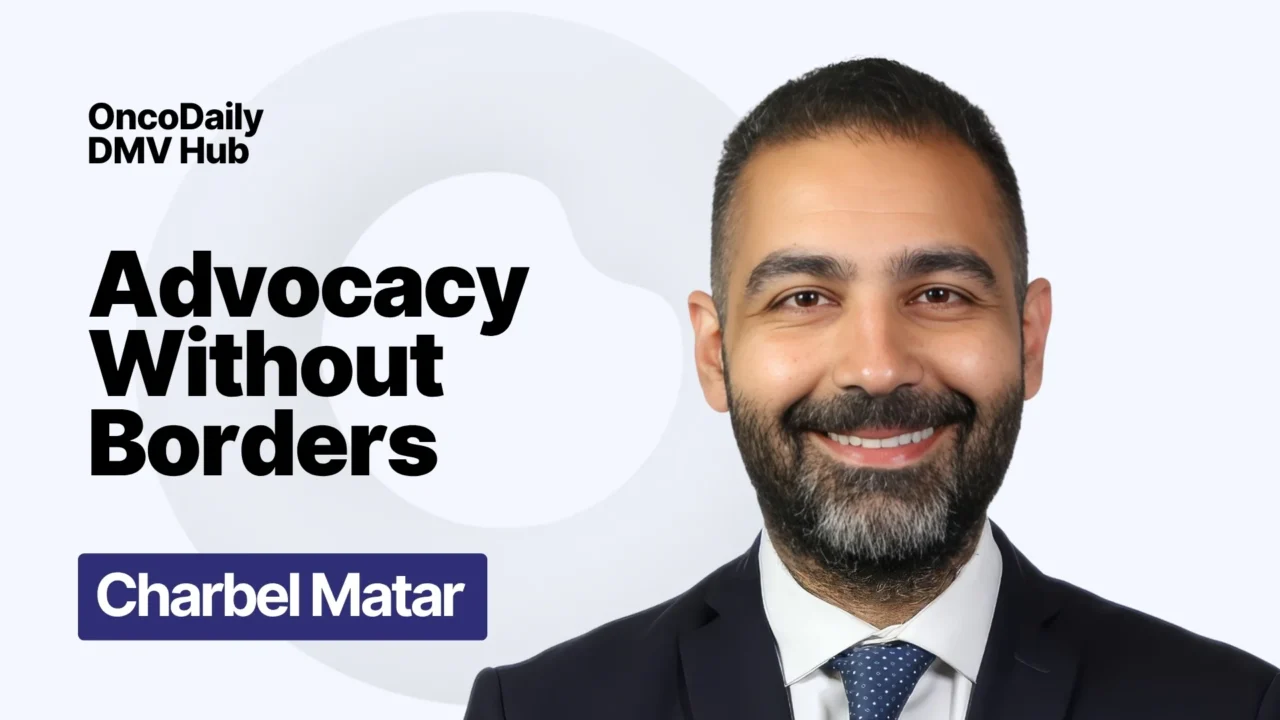
What does it mean to advocate for cancer patients on Capitol Hill, and why should it matter to an oncologist in Nairobi, a researcher in São Paulo, or a patient navigator in Beirut? That question sits at the heart of OncoDaily’s vision for its new regional hub in the DMV area, and it was brought into sharp focus during the recent ASCO Advocacy Summit.
Representing my institution, GWU, and the state of Virginia, I joined colleagues in Washington, D.C., to engage directly with lawmakers on issues shaping cancer care delivery across the United States. The conversations were national in scope, but the challenges they surfaced were unmistakably global.
Three Priorities, One Reality
Three themes structured our discussions on Capitol Hill, and each one extends well beyond U.S. borders.
The first was telehealth. Legislative efforts such as the CONNECT for Health Act aim to make virtual care a permanent, accessible part of oncology practice. For patients facing geographic or logistical barriers, whether in rural Virginia or in regions where oncology expertise is scarce, scalable virtual care models are not a convenience. They are a lifeline.
The second priority was the burden of prior authorization and administrative delay. When treatment approvals are held up by regulatory inefficiencies, outcomes suffer, and time, in oncology, is rarely recoverable. Across healthcare systems worldwide, the gap between a clinical decision and its execution remains a persistent and underappreciated obstacle to quality care.
The third focus was research funding. Progress in oncology depends on sustained, long-term investment. Yet global disparities in research infrastructure mean that many regions remain underrepresented in clinical trials and unable to generate locally relevant data. The result is a compounding inequity: the populations with the greatest unmet need often have the least evidence guiding their care.
From Capitol Hill to a Global Platform
These three issues, access, efficiency, and equity in research, are not American problems with international echoes. They are shared problems that happen to be discussed, on this occasion, in an American setting.
That distinction matters, and it shapes the rationale for OncoDaily’s expanding presence in the DMV region. Positioned at the intersection of clinical care, academia, and federal policy, the DMV offers a rare environment where policy conversations and global oncology perspectives can genuinely inform one another. This bidirectional exchange is precisely what OncoDaily aims to foster. The new regional hub is not simply an expansion. It is an investment in building the kind of connected oncology community that the complexity of this field demands. One where advocacy is not confined to a single country, a single summit, or a single moment, but is instead a continuous, globally informed practice.
The ASCO Advocacy Summit was a reminder of how much depends on the systems surrounding cancer care. The next step is to ensure that the conversations shaping those systems draw from, and give back to, the full breadth of the global oncology community.