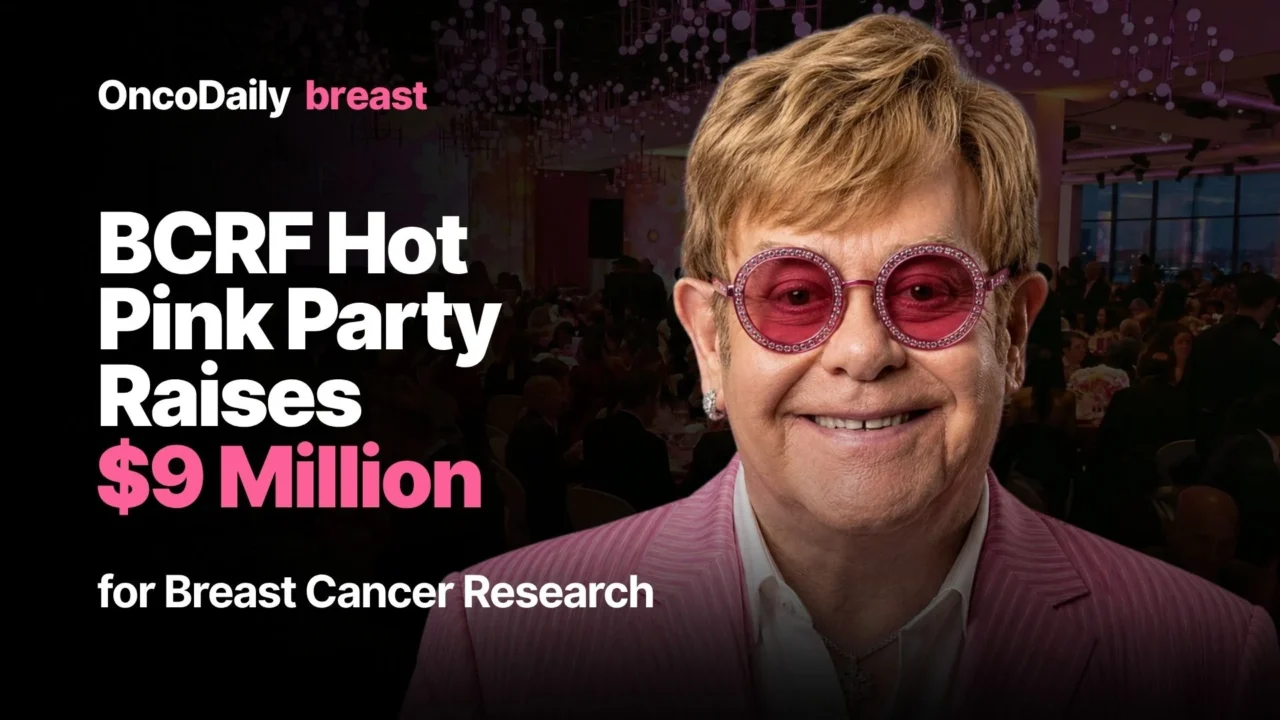
The Breast Cancer Research Foundation’s BCRF Hot Pink Party brought together philanthropy, advocacy, fashion, and music in New York City, raising $9 million to support breast cancer research. Held on May 12, 2026, at The Glasshouse in Manhattan, the annual gala placed research at the center of a highly visible cultural moment, with Elton John delivering the evening’s headline performance in signature hot pink.
The event, hosted by Elizabeth Hurley, BCRF Global Ambassador, gathered longtime supporters, public figures, philanthropists, and leaders committed to advancing breast cancer research. Guests included Ashanti, Vera Wang, Jill Kargman, Neil Patrick Harris, David Burtka, Eric Ripert, and other notable attendees. The evening reflected the familiar visual language of the Hot Pink Party bold pink tones, floral décor, and a strong sense of shared purpose, but its message remained firmly grounded in research and survivorship.
A Gala Built Around Research, Not Just Recognition
For BCRF, the Hot Pink Party is more than a social event. It is one of the foundation’s most recognized fundraising platforms, continuing a long tradition of bringing public attention and private support to breast cancer research. The BCRF website’s NYC Hot Pink Party archive highlights the event’s ongoing role in the foundation’s public engagement efforts, including past gatherings that combined celebrity participation, patient stories, philanthropy, and research-focused messaging.
This year’s $9 million fundraising total carries added significance in the context of BCRF’s broader research mission. Founded in 1993 by Evelyn H. Lauder, BCRF supports research across tumor biology, genetics, prevention, treatment, metastasis, and survivorship. For 2025–2026, the foundation states that it will award $74.75 million in annual grants to more than 260 scientists at leading institutions worldwide.
Honoring Leonard Lauder’s Enduring Legacy
The 2026 Hot Pink Party also carried a deeply personal note. Elton John’s performance served as a tribute to Leonard A. Lauder, BCRF’s honorary chair, who died in June 2025. Leonard Lauder played a central role in the foundation’s history alongside Evelyn H. Lauder and Dr. Larry Norton, helping build BCRF into one of the most influential forces in breast cancer research philanthropy.
The foundation’s origins date back to 1993, when Evelyn H. Lauder and Dr. Larry Norton began shaping a new research-focused model for breast cancer funding. BCRF’s official history describes that early vision as one rooted in the belief that research could change outcomes for patients, and that sustained funding was essential to make progress possible.
Awards Spotlighted Philanthropy and Quiet Service
The evening also recognized individuals whose work has supported BCRF’s mission. Actress and breast cancer survivor Sheetal Sheth presented the Leslie Goldstein Unsung Hero Award to Angela Le, honoring a contribution defined by service and dedication. Later, William P. Lauder presented Anthony von Mandl with the Evelyn H. Lauder Spirit of Philanthropy Award, acknowledging his long-standing commitment to the foundation.
These recognitions gave the event a broader emotional frame. Alongside the glamour of the evening, the awards highlighted the quieter forms of commitment that sustain cancer research: philanthropy, advocacy, loyalty, and the work of people who help keep a mission visible year after year.
Elton John Closed the Night in Hot Pink
The evening ended with Elton John at the piano, dressed in vivid pink, including matching glasses. His six-song set included “Your Song,” “Mona Lisas and Mad Hatters,” “Tiny Dancer,” “I Guess That’s Why They Call It The Blues,” “Don’t Let the Sun Go Down on Me,” and “I’m Still Standing.” His performance brought together celebration and remembrance, honoring Leonard Lauder while closing the gala with a sense of resilience and continuity.
For many attendees, the moment captured the spirit of the Hot Pink Party itself: a night where cultural visibility becomes a vehicle for scientific progress. The pink theme, the public figures, and the emotional tributes all served one central purpose to keep breast cancer research at the forefront and to support the scientists working toward better prevention, treatment, survivorship, and ultimately, cure.
Find more exclusive oncology content on OncoDaily
Written by Nare Hovhannisyan,MD