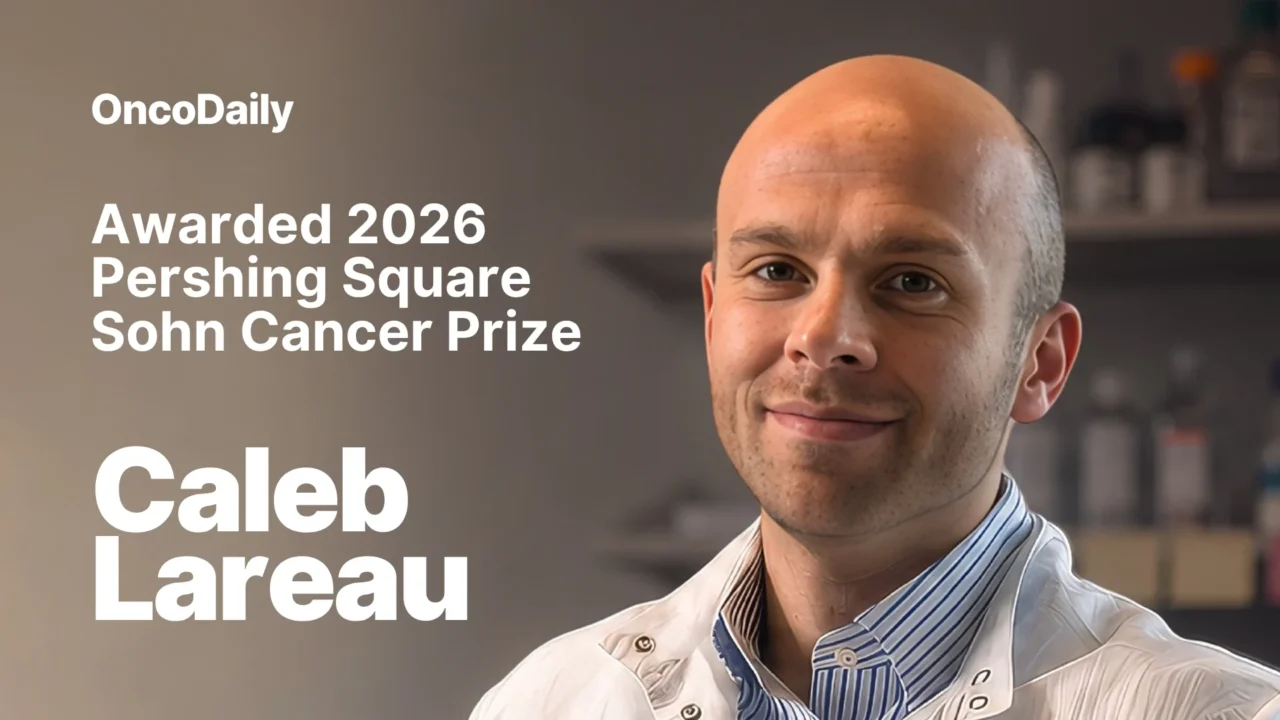
Caleb Lareau, a computational biologist at Memorial Sloan Kettering Cancer Center, has been named a recipient of the 2026 Pershing Square Sohn Cancer Prize.
The award, presented by the Pershing Square Sohn Cancer Research Alliance, provides $750,000 in funding to early-career investigators pursuing high-impact, unconventional research. Designed to bridge critical funding gaps, the prize supports projects that may otherwise struggle to secure traditional grants while holding strong potential to transform cancer care.
Targeting Toxicity Without Compromising Efficacy
Chemotherapy remains one of the most effective tools in oncology, yet its lack of selectivity continues to limit its full potential. By affecting both malignant and healthy cells, treatment-related toxicity often restricts dosing and contributes to suboptimal outcomes.
Dr. Lareau’s project directly addresses this challenge. His team is developing engineered protein “sponges” designed to absorb and neutralize chemotherapy drugs, but only outside tumor sites. This approach aims to preserve the drug’s anti-cancer activity within tumors while reducing systemic toxicity.
“If successful, this project will yield new combinations of treatments that would increase cancer killing while minimizing the side effects for patients,” Dr. Lareau noted.
Engineering Precision: A New Direction in Drug Delivery
At the core of this research is the design of novel proteins capable of binding chemotherapy agents with high specificity. These proteins are intended to act selectively in circulation, preventing unnecessary exposure of healthy tissues while allowing drugs to remain active where they are most needed.
The project integrates advanced protein engineering with high-throughput screening and preclinical modeling. The ultimate goal is to enable higher, more effective chemotherapy dosing without increasing harm to patientsa longstanding limitation in cancer treatment.
Expanding Opportunities for Early-Career Scientists
The 2026 Pershing Square Sohn Cancer Prize marks an expansion of the program, doubling the number of awardees and extending eligibility beyond the New York metropolitan area to institutions across the United States.
Beyond financial support, recipients gain access to a broader platform, presenting their work to scientific and industry audiences. This structure fosters collaboration and accelerates the translation of promising discoveries into clinical impact.
A Research Program at the Intersection of Biology and Technology
Dr. Lareau serves as an assistant member in the Computational and Systems Biology Program at MSK. His research focuses on understanding how cells adapt, expand, and evolve over time, with a strong emphasis on technology development.
His academic path includes a PhD from Harvard Medical School and postdoctoral training at Stanford University School of Medicine, where he explored genomic approaches to improve the safety and efficacy of emerging immunotherapies.
At MSK, his laboratory continues to advance tools that integrate computational biology with experimental systems, aiming to address complex questions in cancer and chronic disease.
Beyond Cancer: Insights Into Viral Biology and Chronic Disease
In addition to his work in oncology, Dr. Lareau has contributed to research exploring the relationship between viral infections and long-term health outcomes. A recent study published in Nature identified genetic variants associated with elevated activity of Epstein-Barr virus and increased risk of chronic disease, highlighting the role of immune system variability in viral control.
His lab is also involved in the Human Virome Program, an initiative led by the National Institutes of Health to map the viruses present in the human body and better understand their influence on health and disease.
Find more exclusive oncology content on OncoDaily.
Written by Nare Hovhannisyan,MD