






Susanna Fletcher Greer, Chief Scientific Officer of the V Foundation, shared a post on LinkedIn:
“For many patients, the hardest part of cancer is when a treatment works and the disease still comes back. In aggressive lymphoma, that reality remains far too common. New research funded by the V Foundation shows how a targeted drug can weaken the cancer and help CAR T therapy eliminate the cells most likely to cause relapse. This is how we move from short term response to lasting remission.
Breaking Walls and Building Remission for Lymphoma Patients
One of the hardest realities in cancer care is this: the treatment works, the scans improve, and then the disease comes back. For too many patients with aggressive B cell lymphomas, that is unfortunately their experience with the disease. An immunotherapy called CAR T has changed the outlook for some, but nearly half of patients who respond to current treatments will eventually relapse. The challenge is not just shrinking their tumors. It’s eliminating the tiny number of cells that survive treatment, which ultimately can drive the cancer’s return.
A new the V Foundation funded study from Dr. Jianguo Tao’s lab at the UVA Comprehensive Cancer Center and the University of Virginia explores a strategy they designed to do both things.
To better understand this study, think of a tumor like a fortress. The tumor cells rely on internal survival signals (the guns and ammunition stored within the fortress), and the environment around them also helps keep the immune system out (the fortress walls). The Tao team show a way to break both defenses at the same time.
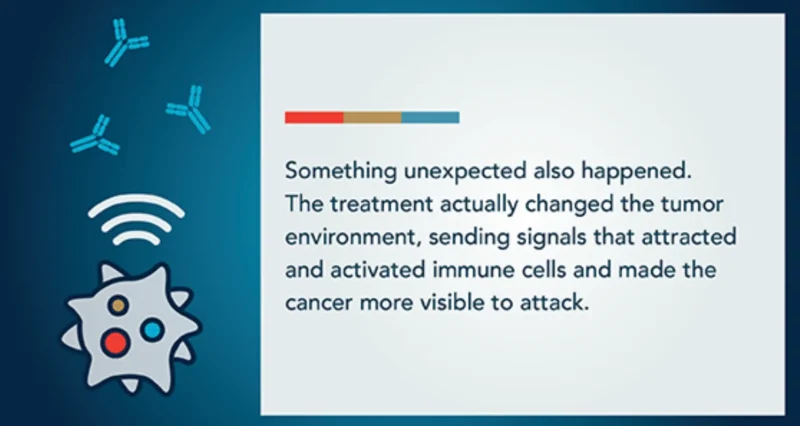
Dr. Tao studied a drug that blocks a key survival protein called MCL 1. As expected, many treated lymphoma cells died. But something unexpected also happened. The treatment actually changed the tumor environment, sending signals that attracted and activated immune cells and made the cancer more visible to attack.
When the Tao team followed this approach with CAR T therapy, the combination worked far better than either treatment alone. In preclinical models, the two therapies reinforced each other, leading to near complete tumor clearance and longer survival.
This is a true one two punch strategy, and a very cool one. The drug weakens the cancer and exposes it. Then the engineered immune cells then move in to finish the job.
What stands out to me, and makes this study important, is that the treatment targets the tiny group of cells most likely to cause relapse. Instead of ignoring this small population that survives early treatment, this approach takes advantage of their vulnerable state before they have a chance to divide and the lymphoma returns.
Progress against cancer is often about turning what historically were temporary responses into lasting remission. Studies like this one from the Tao lab show how smart combinations, used at the right time, help make that possible.
At the V Foundation, this is the kind of work we believe in. Research that not only helps patients respond, but helps them stay cancer free.”
Other articles featuring Susanna Fletcher Greer on OncoDaily.