Raymond Chan, Deputy Vice-Chancellor of Research at Flinders University, shared a post on LinkedIn:
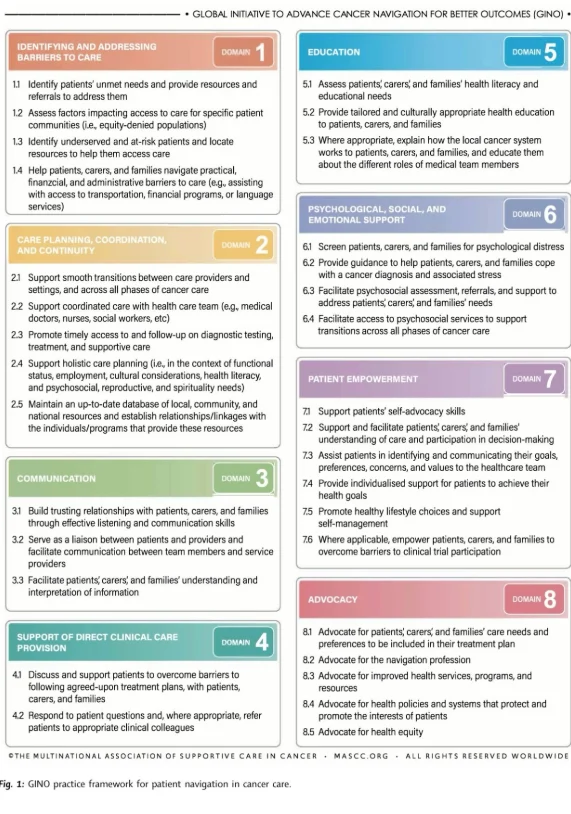
“I’m pleased to share our newly published paper on patient navigation in cancer care, developed through the Global Initiative to Advance Cancer Navigation for Better Outcomes (GINO) – published in eClinicalMedicine – The Lancet Discovery Science.
Why this matters:
Patient navigation is widely recognised as effective in improving access to cancer care – yet its scope has remained inconsistently defined across settings and countries. This lack of clarity can limit implementation, scale, and evaluation.
In this study, we worked with 81 international experts from 29 countries (~40% LMICs) using a modified Delphi process to reach consensus on what patient navigation practice should include. The result is the GINO Practice Framework – a globally informed, consensus-based framework describing the core practices of cancer patient navigation.
What the framework offers:
- A clear articulation of the scope of patient navigation
- Relevance across high-income and low- and middle-income settings
- Practical guidance to support program development, implementation, and evaluation worldwide
We hope this framework will be useful to clinicians, navigators, researchers, advocates, and policymakers working to improve equity and outcomes in cancer care.”
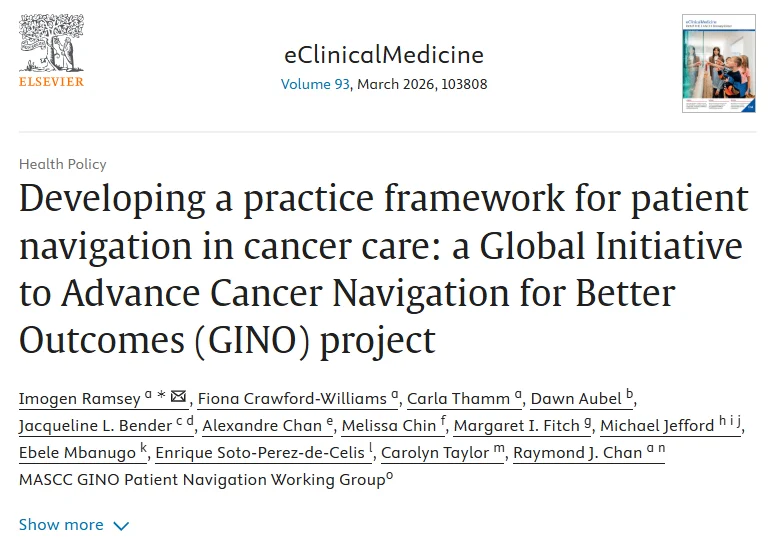
Title: Developing a practice framework for patient navigation in cancer care: a Global Initiative to Advance Cancer Navigation for Better Outcomes (GINO) project.
Authors: Imogen Ramsey, Fiona Crawford-Williams, Carla Thamm, Dawn Aubel, Jacqueline L. Bender, Alexandre Chan, Melissa Chin, Margaret I. Fitch, Michael Jefford, Ebele Mbanugo, Enrique Soto-Perez-de-Celis, Carolyn Taylor, Raymond J. Chan, MASCC GINO Patient Navigation Working Group
Other articles featuring Raymond Chan on OncoDaily.