






Raul Tirinescu, Oncology Specialist at M Hospital Bucharest shared a post on LinkedIn:
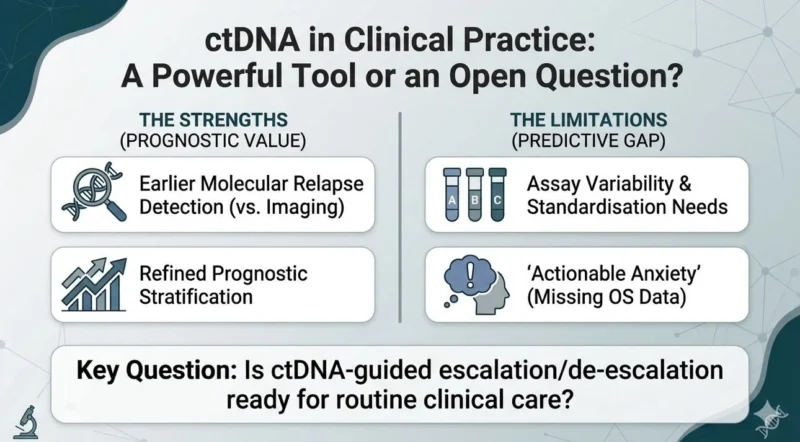
“ctDNA in Clinical Practice: A powerful tool or an open question?
Circulating tumor DNA (ctDNA) assays such as Signatera are increasingly entering clinical discussions in solid tumors, particularly colorectal and breast cancer. Their ability to detect minimal residual disease (MRD) offers a level of sensitivity that conventional imaging cannot achieve.
From a clinical standpoint, the strengths are clear: earlier identification of molecular relapse, refined prognostic stratification, and the potential to guide adjuvant treatment decisions. A persistently negative ctDNA result is reassuring; a positive result often precedes radiologic progression by months.
However, important limitations remain. Pre-analytical variability, assay sensitivity in low-shedding tumors, and the lack of standardized thresholds impact reliability. More importantly, in most settings, ctDNA positivity still does not consistently translate into a validated change in management that improves overall survival. We are often left with actionable anxiety rather than actionable intervention.
At present, ctDNA remains a powerful prognostic tool, but its predictive role is still evolving and not fully integrated into routine decision-making per current guidelines.
The key question for the near future: Are we approaching a point where ctDNA-guided escalation or de-escalation of therapy will become standard practice-or are we still lacking the evidence to act confidently on these results?”
Other articles about ctDNA on OncoDaily.