






Raul Tirinescu, Oncology Specialist at M Hospital Bucharest shared a post on LinkedIn:
“Is it time to move Lutetium-177 PSMA therapy earlier in prostate cancer?
In metastatic castration-resistant prostate cancer (mCRPC), PSMA-targeted radioligand therapy has rapidly become one of the most important therapeutic innovations of the past decade.
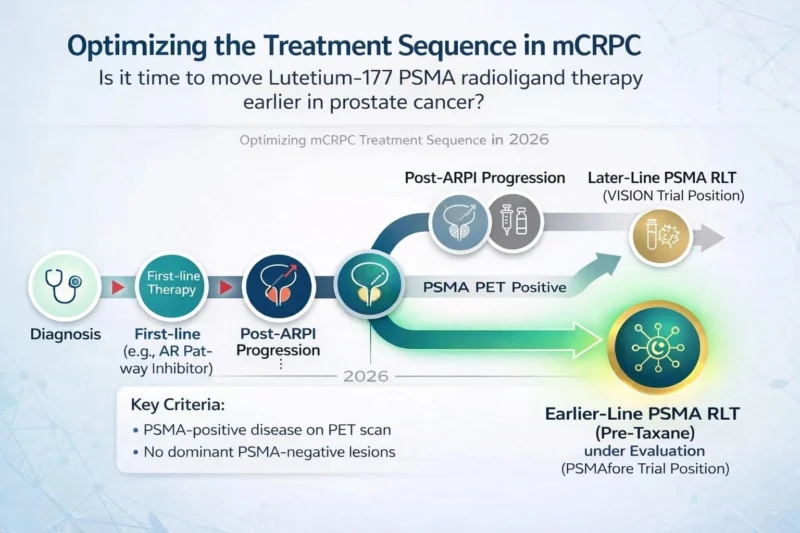
Randomized trials such as VISION demonstrated a clear overall survival benefit with Lutetium-177 vipivotide tetraxetan added to standard of care in patients with PSMA-positive mCRPC previously treated with AR pathway inhibitors and taxanes.
These data established PSMA-targeted radioligand therapy as an important option in later-line disease.
More recently, trials such as PSMAfore have explored moving this treatment earlier in the disease course, even before chemotherapy.
However, the real-world patient often differs from the ideal trial population.
We know that:
Radioligand therapy can achieve meaningful responses with a manageable toxicity profile, particularly compared with additional systemic chemotherapy.
But in patients with rapidly progressive disease, visceral metastases, or high tumor burden, many clinicians still favor established systemic approaches such as taxane chemotherapy to achieve faster disease control. The dilemma is becoming increasingly relevant in daily practice.
Clinical question for colleagues:
- In PSMA-positive mCRPC, do you still reserve Lutetium-177 PSMA therapy for later lines after chemotherapy?
- Or are you increasingly considering radioligand therapy earlier in the treatment sequence, especially after progression on AR-targeted therapy?
Curious to hear how colleagues integrate this evolving option into routine practice.”
Other articles about Prostate Cancer on OncoDaily.