Preetam Jain, Consultant Medical Oncologist and Hemato-Oncologist at Bombay Hospital and Medical Research Centre, shared a post on X:
“Cemiplimab shows durable 6-year survival benefit in PD-L1 high advanced NSCLC – ecancer
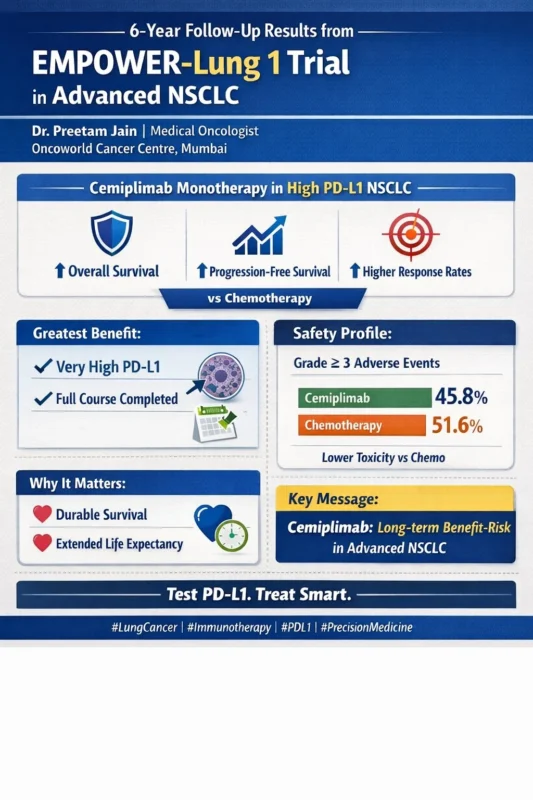
6-year follow-up in advanced NSCLC – EMPOWER-Lung 1 trial
Long-term data matters. It tells us not just if a drug works—but how durable that benefit truly is. The 6-year follow-up of the EMPOWER-Lung 1 trial brings important clarity.
2/First-line cemiplimab monotherapy in advanced NSCLC with high PD-L1 expression:
- Improved Overall Survival
- Better Progression-Free Survival
- Higher Response Rates
Compared to standard chemotherapy.
3/What stands out most?
- Patients with very high PD-L1 expression derived the greatest benefit
- Those completing the full course had remarkable long-term outcomes
This reinforces the biology-driven approach in lung cancer
4/ Safety profile:
Grade ≥3 adverse events
- Cemiplimab: 45.8%
- Chemotherapy: 51.6%
Lower toxicity burden compared to chemo, with sustained efficacy.
5/ Why is this important?
Because in advanced lung cancer, we are no longer just aiming for response…
We are aiming for durable survival and meaningful life extension.
6/ This study strengthens the role of immunotherapy as frontline standard in selected patients.
Right patient. Right biomarker. Right treatment.
That’s precision oncology in action.
7/ Take-home message:
Cemiplimab offers a compelling long-term benefit-risk profile in high PD-L1 advanced NSCLC.
And reminds us—
Testing PD-L1 is not optional. It is essential.
And reminds us—
Testing PD-L1 is not optional. It is essential.
8/ As oncologists, our responsibility is clear:
- Identify eligible patients early
- Use biomarkers wisely
- Maximize survival—not just short-term response.”