Parag Roy, Medical Oncologist at Tata Main Hospital shared a post on LinkedIn:
“FDA Approval Alert | A New Targeted Option for PIK3CA Wild-Type HR+/HER2- Metastatic Breast Cancer
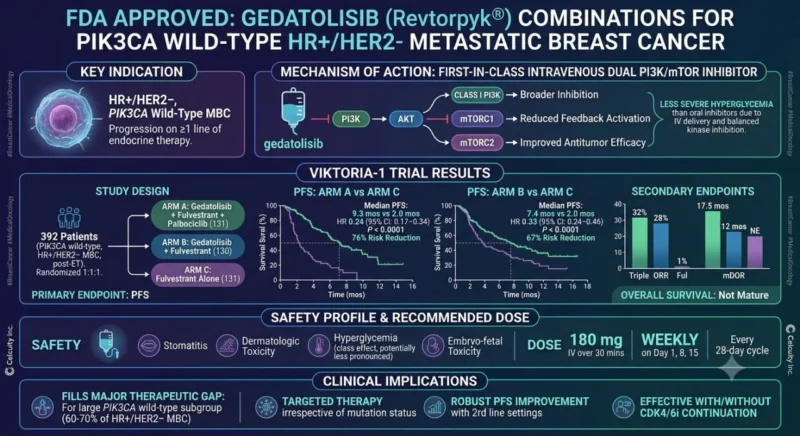
The FDA has approved gedatolisib (Revtorpyk®) in combination with fulvestrant, with or without palbociclib, for patients with HR-positive, HER2-negative locally advanced or metastatic breast cancer without a PIK3CA mutation, following progression on endocrine therapy.
This approval marks an important milestone, as it expands targeted treatment options for the majority of patients with HR+/HER2− metastatic breast cancer who are PIK3CA wild-type.
What makes gedatolisib different?
Gedatolisib is a first-in-class intravenous dual PI3K/mTOR inhibitor, targeting both:
- Class I PI3K
- mTORC1 and mTORC2
Unlike earlier PI3K inhibitors, its activity is not dependent on PIK3CA mutations, enabling broader applicability while providing comprehensive inhibition of the PI3K/AKT/mTOR signaling pathway.
VIKTORIA-1 Trial Highlights
Study Design
- Phase III, randomized, open-label
- 392 patients with HR+/HER2− advanced/metastatic breast cancer
- PIK3CA wild-type disease
- Progression after endocrine therapy
Treatment Arms
- Gedatolisib + Fulvestrant + Palbociclib
- Gedatolisib + Fulvestrant
- Fulvestrant alone
Key Results
Triple combination
- Median PFS: 9.3 vs 2.0 months
- HR 0.24
- 76% reduction in the risk of progression or death
Double combination
- Median PFS: 7.4 vs 2.0 months
- HR 0.33
- 67% reduction in risk
Objective Response Rate
- 32% (triple therapy)
- 28% (double therapy)
- 1% (fulvestrant alone)
Overall survival data remain immature.
Safety Profile
The most common clinically relevant adverse events include:
- Stomatitis
- Dermatologic toxicities
- Hyperglycemia
- Embryo-fetal toxicity
Clinical Perspective
This approval addresses a long-standing unmet need for patients with PIK3CA wild-type endocrine-resistant HR+/HER2- metastatic breast cancer. The impressive improvement in progression-free survival reinforces the importance of continued targeting of the PI3K/mTOR pathway beyond endocrine resistance and introduces a new precision medicine strategy for a broader patient population.
It will be interesting to see how gedatolisib is integrated into future treatment algorithms and sequencing strategies alongside CDK4/6 inhibitors and emerging endocrine therapies.
What are your thoughts on where gedatolisib will fit into the evolving treatment landscape of HR+/HER2- metastatic breast cancer?”