





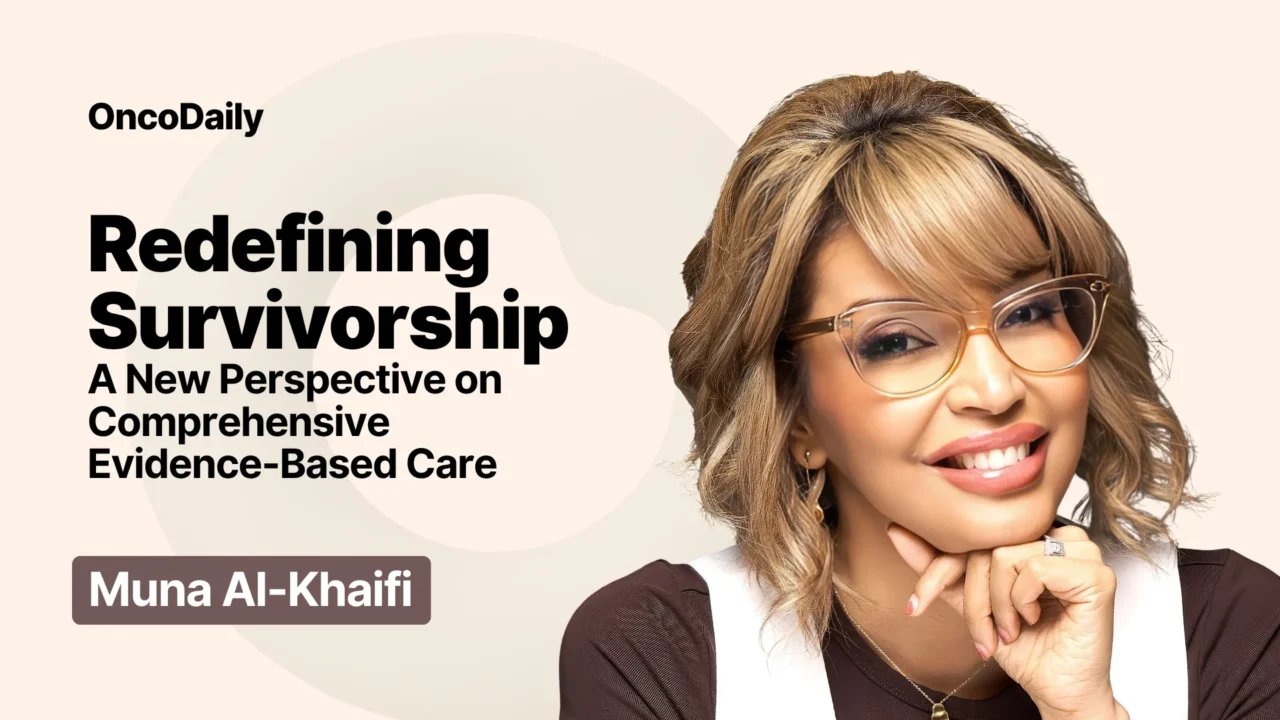
Muna Al-Khaifi, Lead of Breast Cancer Survivorship Program and GP Oncologist at the Skin Cancer Clinic at Sunnybrook, introduces this article as part of a new series on cancer survivorship. This piece explores why improving survival is no longer enough, and why greater focus on quality of life across the cancer continuum is essential in modern oncology:
“Redefining Survivorship: A New Perspective on Comprehensive, Evidence-Based Care
We have transformed cancer survival-but we have not yet transformed quality of life across the cancer continuum.
Advances in early detection, systemic therapies, and supportive care have led to substantial improvements in cancer outcomes. Today, more individuals are living longer after a cancer diagnosis than ever before. But survival, while essential, is not enough. Cancer survivorship begins at diagnosis and extends across the balance of life. It represents a complex and evolving phase of care shaped by the physical, psychological, and social consequences of cancer and its treatment.
I am Dr. Muna Al-Khaifi, I am a General Practitioner Oncologist with clinical expertise in cancer survivorship, onco-menopause, and breast diagnostics.
Currently, I practice at the Marvelle Koffler Breast Centre at Mount Sinai Hospital. Additionally, I serve as an Assistant Professor in the Department of Family and Community Medicine at the University of Toronto. Previously, I led the Breast Cancer Follow-Up and Survivorship Program at Sunnybrook, where I developed care models for patients transitioning after treatment.
My research focuses on survivorship care, particularly in onco-menopause, sexual health, and treatment-related toxicities, as well as the role of digital health in improving outcomes. I am active in initiatives to enhance survivorship standards and recently co-chaired the Ontario Cancer Survivorship Quality Standard. As a medical educator, I have implemented a cancer survivorship curriculum in family medicine residency and led international education initiatives. My academic work also explores the integration of humanities in medical education to enhance empathy and clinical skills in future physicians.
I am pleased to introduce Redefining Survivorship, a new OncoDaily article series exploring survivorship across the cancer continuum-and why improving quality of life requires greater attention, research, and system-level support.
The global burden of cancer continues to rise, with projections estimating over 35 million cases worldwide by 2030. At the same time, advances in screening, early detection, and treatment have significantly improved survival outcomes. These gains represent major progress-but they have also led to a rapidly growing population of cancer survivors. For many patients, completing treatment is often expected to signal a return to baseline health. In reality, survivorship is rarely that straightforward.
A substantial proportion of survivors experience long-term and late effects related to cancer or its treatment, including persistent physical symptoms such as fatigue, chronic pain, neuropathy, and sexual dysfunction. Many also face ongoing psychological challenges, including anxiety, depression, fear of recurrence, and difficulty readjusting to life after intensive care.
Beyond these, survivors may experience cognitive impairment, sleep disturbance, and changes in body image or identity. Social and occupational disruptions are also common, as individuals struggle to return to work, maintain relationships, or resume prior roles. Financial toxicity further compounds these challenges, placing additional strain on patients and families. Collectively, these issues underscore survivorship as a complex and multidimensional phase requiring sustained, structured care.
Why This Series Matters
Redefining Survivorship is designed to bridge the gap between improved survival and the lived realities that follow cancer diagnosis and treatment.
Through this series, we aim to:
- Deliver evidence-based, clinically relevant insights for healthcare professionals and survivors.
- Translate research into practical, real-world applications.
- Highlight emerging innovations in survivorship care.
- Address both common and under-recognized challenges, including sexual health, fertility, psychosocial well-being, and financial toxicity.
By integrating clinical expertise with patient-centered perspectives, this series seeks to make survivorship care more accessible, actionable, and relevant across diverse care settings.
What to Expect
Each article in this series is designed to be practical, clinically relevant, and applicable across care settings, with a focus on translating evidence into real-world survivorship care. Topics will span key domains, including long-term and late effects, surveillance, onco-menopause and sexual health, psychosocial well-being, and care coordination. The series will also address system-level challenges, including multidisciplinary care delivery, coordination across teams, and navigation of complex healthcare systems.
Drawing on current research, clinical expertise, and real-world experience, these articles will explore how to apply evidence into practice, support effective survivorship care models, and provide practical strategies to improve care delivery across settings.
Together, this series aims to provide a clear, actionable framework to support clinicians, inform patients, and advance the delivery of high-quality survivorship care.
As cancer outcomes continue to improve, the definition of success in oncology must evolve beyond survival alone to include the quality of life patients experience with, through, and beyond cancer.
References
- World Health Organization. Global Cancer Observatory: Cancer Tomorrow.
- American Cancer Society. Cancer Treatment and Survivorship Facts and Figures.
- Institute of Medicine. From Cancer Patient to Cancer Survivor: Lost in Transition.
- National Comprehensive Cancer Network. NCCN Guidelines: Survivorship.
- American Society of Clinical Oncology. ASCO Survivorship Guidelines.”
Other articles featuring Muna Al-Khaifi on OncoDaily.