






Joshua Omale, Pediatric Oncology Advocate, Innovation Council Member at Coalition Against Childhood Cancer (CAC2), shared a post on LinkedIn:
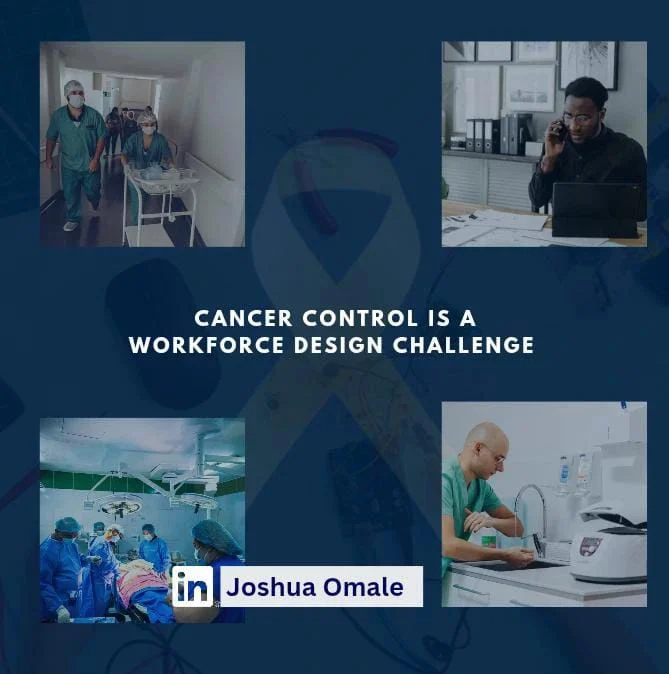
“Cancer control is a workforce design problem.
Cancer systems do not function because infrastructure exists. They function because roles are clear.
Early detection depends on who is trained to suspect. Referral speed depends on who is empowered to act. Continuity depends on who is accountable for follow-through.
In many low-resource settings, cancer control struggles not because knowledge is absent, but because responsibility is diffuse.
- Primary care workers are not equipped to recognize red flags early.
- Referral authority is centralized or delayed.
- Oncology centers absorb preventable overload due to weak triage design.
- Data is collected without being operationalized.
This is not primarily a clinical failure. It is a workforce architecture failure.
Strong systems define explicitly:
- who screens
- who escalates
- who confirms
- who tracks
- who closes the loop
When responsibilities are structured, supported, and measured, patients move. When they are assumed, care drifts.
Cancer control is often framed as a technology challenge. In reality, it is a human systems challenge.
Drugs do not recognize early symptoms. People do.
Reliability in cancer care is built on workforce clarity, not goodwill.
If we want earlier diagnoses and stronger survival outcomes, we must design the human architecture as intentionally as we design treatment protocols.”
Other articles featuring Joshua Omale on OncoDaily.