
Jae L. Ross, Assistant Attending Psychologist at Memorial Sloan Kettering Cancer Center, shared Puneet Sharma’s, Cancer Survivor, Founder of Cancer24x7, post on LinkedIn, adding:
“Thank you, Puneet Sharma and Cancer24x7, for continuing to bring attention to these important conversations.
Psycho-oncology support should not end when treatment ends.
Survivorship brings its own psychological, emotional, and relational challenges, and many people continue to carry the stigma that can accompany a cancer diagnosis long after treatment is over.
I’m grateful for the opportunity to be part of a conversation about how we can better support people, not only through cancer treatment, but as they navigate the emotional landscape that continues alongside it and beyond.”
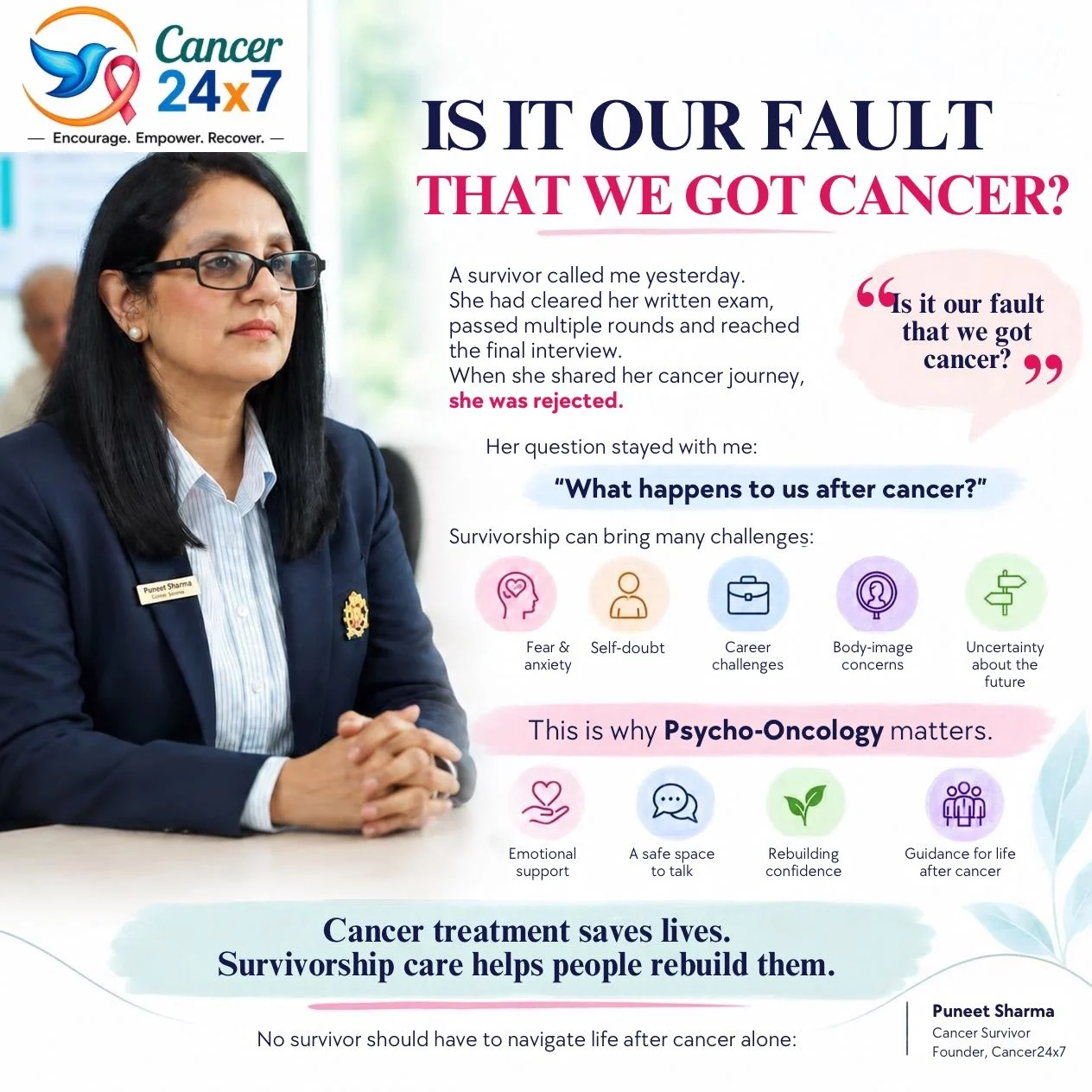
Quoting Puneet Sharma’s post:
“Survivorship is not the end of the cancer journey. It is a new chapter.
Yesterday, I received a call from a cancer survivor. What began as a simple conversation became a 45-minute conversation that stayed with me.
She had cleared her written exam, passed several rounds and reached the final interview. During the final conversation, she shared that she had been through cancer.
She was rejected.
Then she asked me:
‘Is it our fault that we got cancer?’
That question stayed with me.
Cancer can leave behind much more than physical scars. Survivors may experience self-doubt, anxiety, body-image concerns, career challenges, fear of the future and uncertainty about what comes next.
She also asked:
‘Should I see a psychologist or a psychiatrist? My loved ones are suggesting different therapies. What should I do?’
This conversation reminded me why psycho-oncology needs to be an integral part of cancer care and survivorship.
Sometimes, survivors don’t need someone to simply tell them to ‘stay positive.’
They need someone who will listen without judgement, understand their concerns, and help them find the right support.
By the end of our conversation, she felt clearer about her survivorship journey. She also reminded me that our previous conversation about reconstruction had helped her understand that part of her journey better.
It made me realize once again:
‘Survivorship needs care too.’
Let’s create more spaces where survivors can talk openly about their fears, dreams, careers, relationships, body image and life after cancer.
Because:
- Cancer treatment saves lives.
- Survivorship care helps people rebuild them.
No survivor should have to navigate life after cancer alone.”
You can also read: Recognizing the Emotional and Psychological Realities Patients Face Alongside Cancer Treatment – CancerWorld